





Joshua Tree
What to Know Before You Visit Joshua Tree
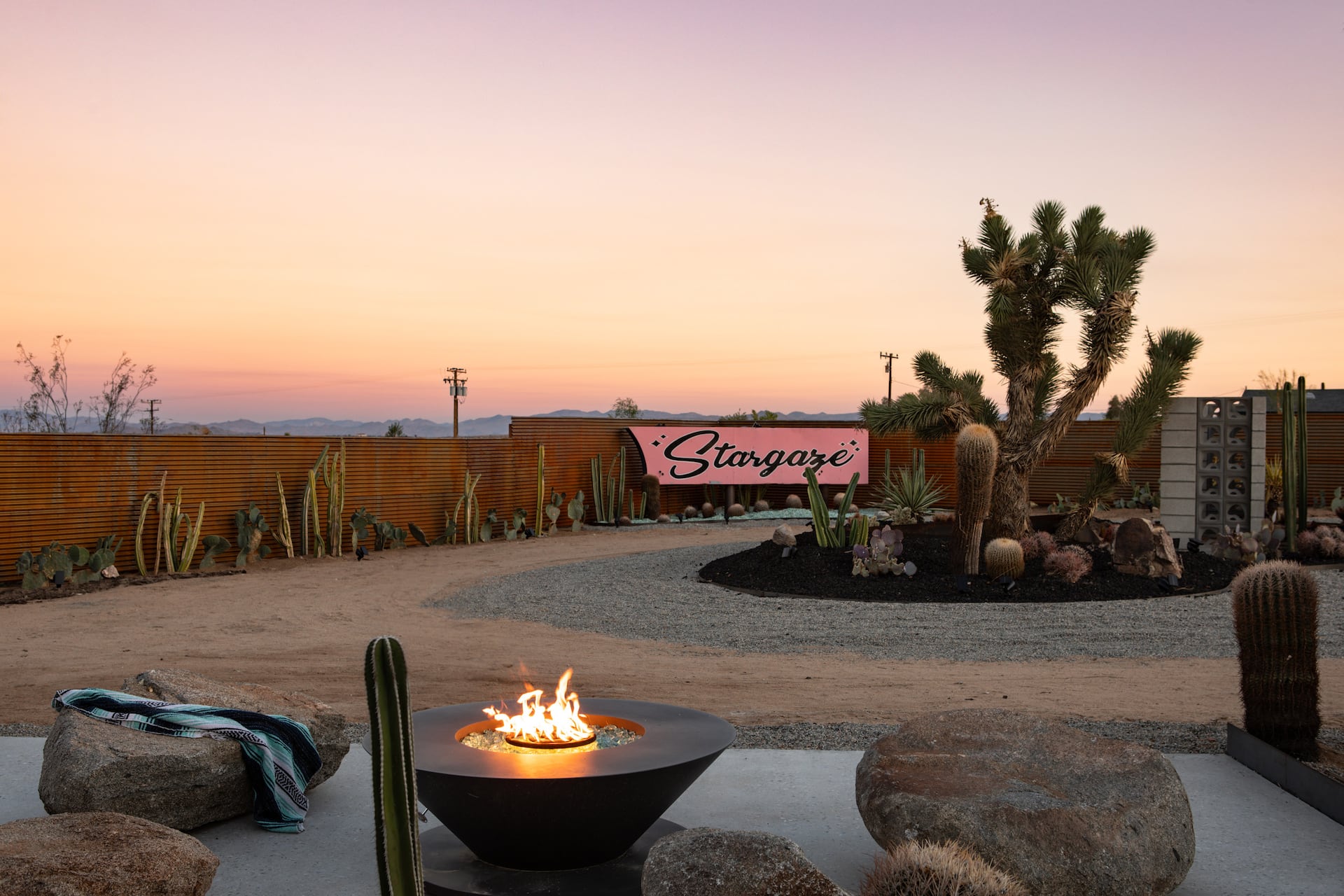
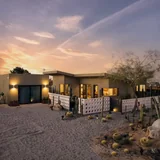
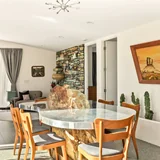
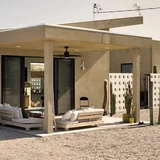
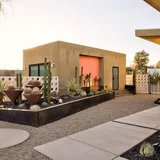
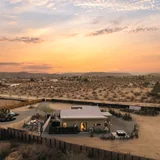
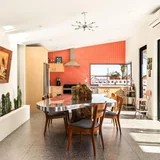
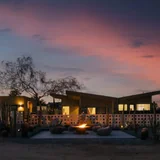
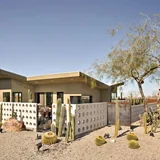
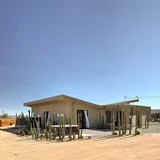
Joshua Tree National Park runs on a handful of things that are easy to learn and worth knowing before you drive up: what it costs to get in, which gate to use, how much water to pack, and why your phone stops working somewhere around the entrance sign. None of it is complicated. This is what we tell guests at Stargaze Escape, our house in Yucca Valley about a 25-minute drive from the park's west entrance, gathered in one place so your first visit goes smoothly.
The Three Entrances
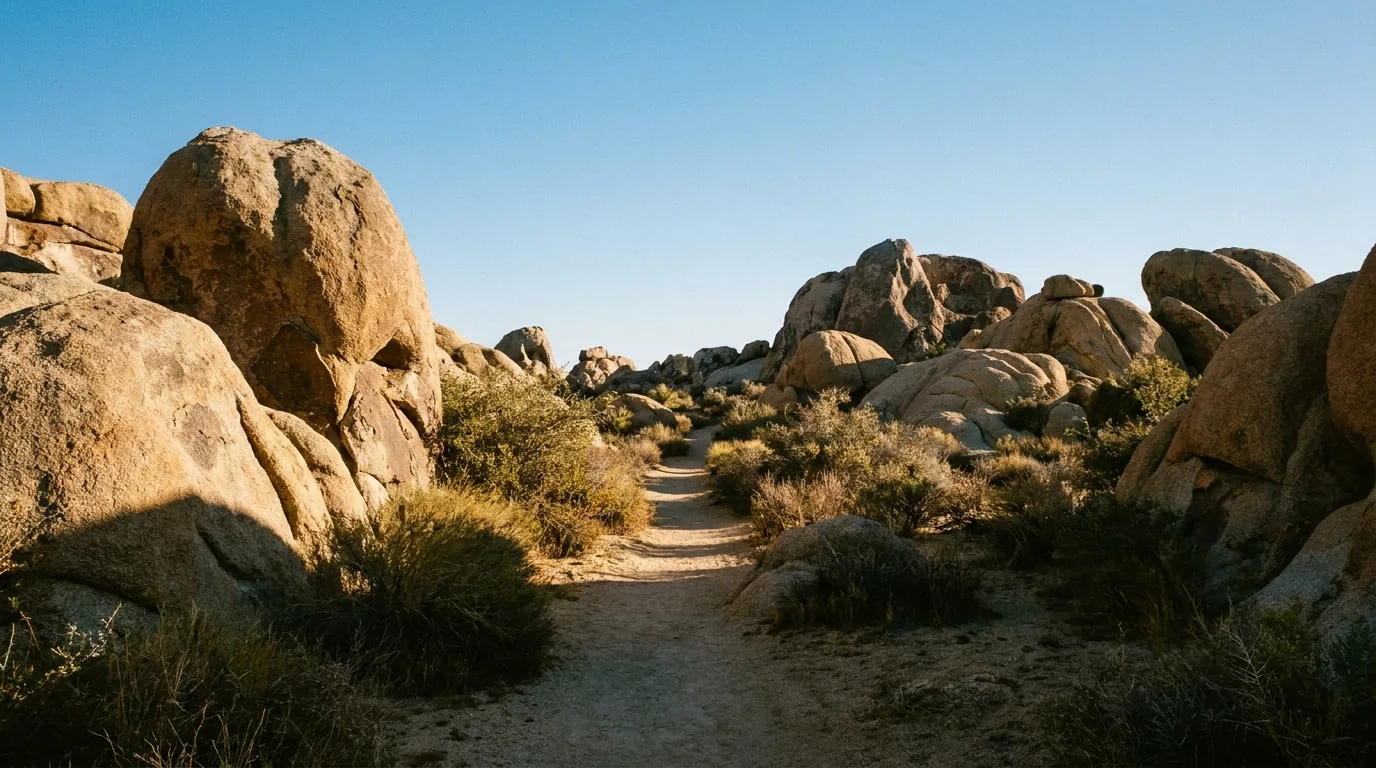
Joshua Tree has three entrance stations, and the one you choose depends on where you are staying and what you want to see first. All three lead into the same park, but they open onto different corners of it, and the drive between them inside the park is a long one, so check a map before you count on hopping between gates.
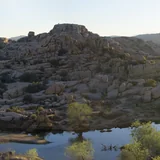
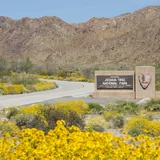
The West Entrance is the busiest and the closest to us. It sits at the edge of the town of Joshua Tree, about five miles south of the junction of Highway 62 and Park Boulevard. From the house it is roughly a 25-minute drive, and this is the gate most first-time visitors use because it drops you straight into the classic Joshua tree and boulder country around Hidden Valley and Barker Dam. On a spring weekend the line of cars here can back up well before mid-morning, so getting there early is the single best thing you can do. If you want the drive laid out in detail, see our notes on driving to Joshua Tree and the practical getting here page for the house.
The North Entrance is in Twentynine Palms, about three miles south of where Highway 62 meets Utah Trail. The park's headquarters and main address sit near here, at 74485 National Park Drive in Twentynine Palms. This gate makes sense if you want to start at the Oasis of Mara, the paved and accessible loop at park headquarters, or if you are coming in from the eastern end of the Morongo Basin. It also tends to be a little calmer than the West Entrance on busy mornings.
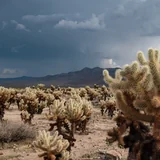
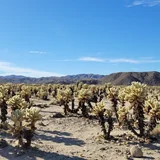
The South Entrance, near Cottonwood Spring, is the outlier. It opens off Interstate 10, about 25 miles east of Indio and roughly seven miles north of I-10 exit 168. It is the entrance closest to Palm Springs and the Coachella Valley, and it is the way in if you are driving up from that side or looping through the park on a longer road trip. From the south you reach the lower, hotter Colorado Desert first, with the Cholla Cactus Garden and the ocotillo, then climb north toward the Joshua trees. If you plan to come and go from this end, our guide to the cholla garden and the south covers what is down there.
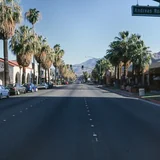
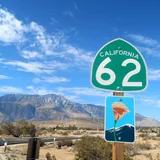
One practical caution: the park occasionally closes an entrance for short stretches for road construction or weather. The West Entrance had a brief construction closure early in 2026, as one example. These are temporary, but if you are driving a long way for a single day, check the park's current alerts before you leave so a closed gate does not surprise you. The main artery you will be on for all of this is Highway 62, and our Highway 62 guide walks the whole corridor from the I-10 junction east through Yucca Valley and Joshua Tree.
Getting There and How Far It Is
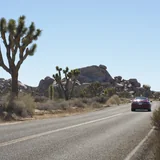
Most guests reach us by car, and the drive is part of the trip out. Yucca Valley sits in the high Mojave at roughly 3,300 feet, about a thousand meters up, which is why it stays cooler than Palm Springs down in the low desert. The house is about a 25-minute drive from the park's west entrance and roughly 50 minutes from Palm Springs. The road you will spend the most time on is Highway 62, the Twentynine Palms Highway, which leaves Interstate 10 near Whitewater and climbs east into the Morongo Basin. Yucca Valley and the town of Joshua Tree sit only about seven miles apart, roughly a twelve-minute drive.
Coming from Los Angeles, plan on around 120 miles and about two to two and a half hours by way of I-10 east to Highway 62, though the LA basin can add a fair bit to that on a bad afternoon. San Diego is roughly 150 miles and about two and a half hours; Orange County is a little closer, around two to two and a half hours depending on the route and traffic. Las Vegas runs about 200 miles and three and a half hours, and Phoenix is farther still, roughly 280 to 290 miles and closer to four hours. Treat every one of these as a rough estimate — weekend park traffic and the Highway 62 climb out of the I-10 junction can stretch them by half an hour or more, so check your own route the day you drive.
If you are flying in, Palm Springs International is the closest airport, about a 45-minute to one-hour drive to this side of the park. Ontario International is farther west, roughly an hour and a quarter to an hour and three-quarters out, and tends to have more flights while skipping most of the Los Angeles traffic. Los Angeles International, San Diego, and Las Vegas are all workable but longer hauls, on the order of two and a half to three and a half hours. Whichever way you come, the last leg is the same climb up Highway 62; the getting here page has the directions to the door.
Fees and Passes
Joshua Tree charges an entrance fee, and it is per vehicle rather than per person, which makes it a bargain for a carful of people. A private-vehicle pass is around $30 and covers everyone in the car for seven days. A motorcycle is about $25 for seven days, and if you arrive on foot or by bicycle it is roughly $15 per person for seven days. Fees at national parks get revised from time to time — Joshua Tree went from $25 to $30 a few years back — so treat these as close estimates and confirm the current figure with the park before you go.
If you plan to visit more than once, or you are staying long enough to come and go a few times, a pass may be cheaper than repeat day fees. The Joshua Tree National Park Annual Pass runs about $55 and covers entry to this park for a year. The America the Beautiful Interagency Annual Pass, which works at national parks and other federal recreation sites across the country, is $80 for U.S. residents. For 2026 the park service introduced a separate, higher-priced annual pass for non-residents, so if you are visiting from abroad you will likely pay more than the $80 figure — this is a new change and worth verifying directly with the park before you buy. There are also free or discounted passes for seniors, active military, people with disabilities, and fourth-graders, each with its own rules.
The park also publishes a short list of fee-free days each year, when entrance is free for everyone. For 2026 these fell on dates such as Presidents Day in February, Memorial Day in May, the Independence Day weekend in early July, the park service birthday in late August, and Veterans Day in November, among others. That roster is reset every year, and a few of the newer patriotic fee-free days now apply to U.S. citizens and residents only, so do not reuse a past year's dates — check the current-year list before you count on a free entry.
You can pay at the entrance station or buy a pass online ahead of time. If you buy a physical pass or a day receipt, keep it on the dashboard where a ranger can see it, since gates are sometimes unstaffed and rangers check inside the park.
Reservations and Timed Entry
Here is one thing that surprises people who have visited other big parks recently: as of 2026, Joshua Tree does not require a timed-entry ticket or an entrance reservation to drive in. You do not need to book a slot in advance the way you now do at Arches or parts of Rocky Mountain. The park's own guidance says it plainly — there is no reservation system to enter. You show up, pay or show your pass, and drive through.
Timed entry has been floated for crowded parks in the past, so if you are reading this well after 2026 it is worth a quick check on the park's website in case that changes. But for now, the only planning a day trip needs is deciding which gate to use and getting there early on busy weekends.
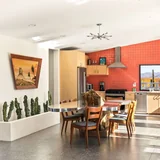
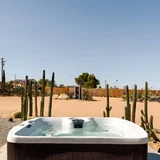
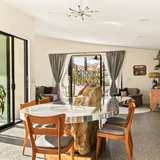
Camping is the exception. If you want to stay overnight inside the park, that is a separate booking. Joshua Tree has nine campgrounds. Six of them — Black Rock, Cottonwood, Indian Cove, Jumbo Rocks, Ryan, and the Sheep Pass group site — take reservations, and those book up early for spring and fall weekends. The other three — Belle, Hidden Valley, and White Tank — are first-come, first-served. Only Black Rock and Cottonwood have running water and flush toilets; the rest have pit toilets and no water at all. Many guests skip park camping entirely and use the house as a base, which means a real bed, a full kitchen, and a hot tub to come back to after a dusty day. If you are still mapping out the trip, our post on planning a trip to Joshua Tree pulls the pieces together.
Cell Service Inside the Park
Plan for your phone to be a camera and not much else once you pass the entrance. Cell reception inside Joshua Tree is very limited and should never be relied on. You may catch a bar or two on a high point near a boundary, but through most of the park's interior there is nothing, and no signal means no maps, no search, and no calling for help if something goes wrong.
The fix is simple and free: download what you need before you arrive. The park service recommends downloading offline maps ahead of time, and the official NPS app lets you save the Joshua Tree map to your phone so it works with no signal. Do the same with any trail directions, a stargazing app, or a playlist for the drive. The house has wifi, so the easiest routine is to load everything the night before over a fast connection rather than fumbling with it at the gate.
Because you cannot count on calling out, tell someone your plan before you drive in — which trail, which entrance, and when you expect to be back. If you are heading in as a couple or on your own, that one text to a friend is worth more than any gadget. A paper park map from the entrance station or a visitor center is a good backup too; it does not need a battery.
Water in the Park
There is no water available in the interior of the park. No taps at trailheads, no fountains at the famous viewpoints, nothing at the roadside pullouts. Whatever water you and your group will drink, you carry in with you. This is the rule people underestimate most, and it is the one most likely to turn a good day into a miserable one.
A common guideline is at least one gallon, roughly four liters, per person per day — and more when it is hot or you are hiking. That is a lot of weight, so fill up before you go. The easiest move is to fill your bottles and a jug at the house kitchen before you drive in, and keep extra in the car so you can top off between stops. Freeze a couple of bottles overnight in summer and they will still be cold at midday.
If you do need to refill inside or near the park, potable water is only at a few developed sites around the edges: the Joshua Tree National Park Visitor Center in downtown Twentynine Palms has a water-bottle filling station, and Cottonwood Visitor Center at the south end and the Black Rock Nature Center near Yucca Valley also have water. Among the campgrounds, only Black Rock and Cottonwood have drinkable water. Do not count on reaching one of those in the middle of a hike — they are near the boundaries, not out in the boulder fields. The Oasis of Mara, by the way, is a lovely and easy paved walk in its own right (part of the trail has been closed after flood damage, so check the park's alerts); our Oasis of Mara guide covers the spot.
Gas, Food and Supplies
Just as there is no water inside, there are no gas stations, restaurants, grocery stores, or hotels within the park. Once you are through the gate, you are on your own for fuel and food until you come back out. So stock up in the gateway towns first — Yucca Valley, the town of Joshua Tree, and Twentynine Palms all have gas, and it is a good habit to top off the tank before you enter rather than after a long day of driving park roads.
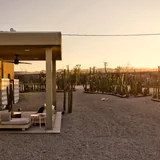
For groceries, the main provisioning stop is Stater Bros., which has two stores in Yucca Valley and one in Twentynine Palms. Pick up sandwich makings, fruit, snacks, and plenty of water on your way in, and pack a cooler so you can eat lunch at a scenic pullout instead of driving all the way back to town hungry. The house has a full kitchen and an outdoor grill, so many guests cook breakfast, pack a picnic for the park, and come home to a proper dinner; our notes on cooking in the desert kitchen and the full amenities list cover what is on hand.
The park has four visitor contact stations, all near the edges, and they are worth a stop for maps, restrooms, current trail and weather conditions, and a ranger to ask. The Joshua Tree Visitor Center sits in downtown Joshua Tree near the West Entrance; the Joshua Tree National Park Visitor Center is in downtown Twentynine Palms near the North Entrance; the Cottonwood Visitor Center is at the south end on Pinto Basin Road near the I-10 entrance; and the Black Rock Nature Center is at Black Rock Campground on the Yucca Valley side. Hours are seasonal and shift through the year, so if you are planning to hit one at a particular time, check the day's hours first rather than assuming.
The visitor centers are also where families pick up the free Junior Ranger booklet. Kids of any age work through a handful of activities — a drawing, a bit of writing, watching for wildlife, sitting in on a ranger talk — and earn a badge at the end, and there is an at-home version that mails a badge if you run out of time in the park. If you are travelling with children, our post on Joshua Tree with kids has more on shaping the day around them.
The Park Rules That Matter
Most of Joshua Tree's rules come down to a single idea: leave the desert the way you found it. It is a slow-growing landscape, and damage here does not heal quickly. A few specifics are worth knowing before you go so you are not guessing at a trailhead.
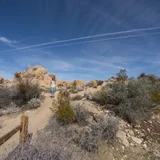
Stay on established roads. Off-road and cross-country driving is prohibited, because tire tracks crush desert soil and plants that take decades to recover and can scar the ground for years. Park in the pullouts and lots provided, not out on the shoulder crust. On foot, stick to the trails and washes where you can; the dark, crusty ground between plants is living soil, and a bootprint through it lasts a long time.
Fires only go in the metal grates the park provides at campgrounds and picnic areas — never out on the ground, and never during a fire restriction, which is common in the dry months. This is wildfire country and the desert does not forgive a stray ember, so if restrictions are posted, follow them to the letter. Pack out everything you bring in, including food scraps like orange peels and pistachio shells, which do not belong in this ecosystem and draw animals to roadsides where they get hit by cars.
Quiet and courtesy round it out: keep noise down so other visitors and the wildlife get the desert's stillness, don't blast music at viewpoints, and give animals a wide berth. For the fuller picture on treading lightly out here, our post on desert safety and leave no trace goes deeper, and it applies just as much to the land around the house as it does inside the park.
Drones, Pets and Collecting
Three specific rules trip people up often enough to spell them out on their own. The first is drones. Launching, landing, or flying any drone inside the park is banned without written approval from the superintendent, which everyday visitors will not have. It does not matter how good the shot would be — leave the drone at the house. The rule protects wildlife, climbers, and the quiet that draws people here, and rangers do enforce it.
The second is collecting. Removing anything natural or cultural is prohibited: rocks, plants, cactus joints, wood, wildflowers, and any artifact you might come across. Take photos, not souvenirs, and leave what you find where it lies so the next person finds it too. This is a standard national-park rule, and it is one the desert especially needs, since a rock or a bleached branch out here can be part of the scenery for a very long time.
The third is pets, and the rules are stricter than many dog owners expect. Pets are not allowed on any hiking trail, in the backcountry, or inside park buildings — not even carried in a pack. They are permitted only within 100 feet of roads, parking areas, picnic areas, and campgrounds, plus the two paved walks at the Oasis of Mara and Keys View, and they must be leashed at all times on a leash no longer than six feet. In practice that means the park is not a place to hike with your dog. Most dog owners head instead to the surrounding BLM public lands around the Morongo Basin for a real walk, though you should confirm the current rules with the local BLM field office first. The house is dog-friendly and fully fenced, so your dog has room to stretch out while you are in the park; we welcome dogs but cannot host cats, due to a household allergy. Our guide to visiting Joshua Tree with a dog and the pet-friendly page cover how to make the trip work for a travelling dog.
Heat, Cold and Safety
Joshua Tree covers two deserts — the higher, cooler Mojave in the west and north, where the Joshua trees grow, and the lower, hotter Colorado in the south and east — and the weather can swing hard between them and between seasons. Yucca Valley itself sits at roughly 3,300 feet, high enough that it runs cooler than Palm Springs down in the low desert, but the park still gets genuinely extreme at both ends of the year.
Summer is the season to respect most. Daytime highs regularly top 100°F, which is exactly why summer is the least crowded time of year. If you visit then, hike at first light, be off the trail by mid-morning, carry far more water than you think you need, and treat the middle of the day as time for shade rather than a summit push. Winter flips it: days can be pleasant, but nights drop to freezing, and a clear January evening at a viewpoint gets cold fast, so bring layers even if the afternoon felt warm. Spring and fall are the mildest and most comfortable, with daytime temperatures often in the 65 to 80°F range — and spring, roughly March through May, is also the busiest and most crowded stretch, especially in a good wildflower year. For a season-by-season breakdown, see when to visit the high desert.
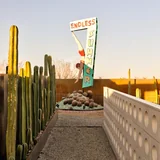
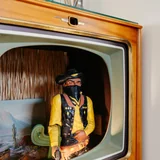
A few safety points beyond temperature. Brief thunderstorms are possible in mid-to-late summer, and they can trigger flash flooding, so stay out of washes and low spots when storms threaten — desert floods come fast and from rain you may not even see. Watch where you put your hands and feet around rocks; the park is home to rattlesnakes, including the sidewinder, which are most active at dusk and on warm nights. If you come across a desert tortoise, keep your distance and never handle one — they are a threatened species and it is illegal to touch or move them, and a frightened tortoise can lose water it needs to survive. Wear sun protection, watch your footing on the granite, and remember the cell-service problem: tell someone where you are going. When the day gets hot, the best plan is often a morning in the park and an afternoon back at the house in the stock-tank pool, which sits under a vintage painted "Endless Summer" metal sign.
One more word to settle any nerves: the desert's animals are far less of a problem than first-timers fear. Almost everything out here wants nothing to do with people and will move off if you give it room. The tarantulas you might spot crossing a road on a fall evening are generally wandering males looking for a mate, and the park service calls them timid — they will not bite unless they are seriously provoked. The desert hairy scorpion, the big one, is night-active and its sting is mild to most people; a cheap ultraviolet flashlight will light one up a glowing blue-green if you are curious after dark. Shake out your shoes in the morning, watch where you put your hands on the rocks, keep your distance from anything with a rattle, and you have covered the real risks. Our field notes on sharing the desert wildlife run through who lives out here and how to give them space.
Best Hours Inside the Park
The park is open 24 hours a day, every day of the year. When the entrance stations are unstaffed at night, the gates stay open, so you can drive in and out around the clock. That opens up the best hours to be inside, which are not the middle of the day.
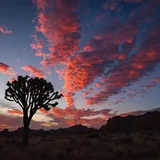
Early morning is the sweet spot. It is cooler, the light is soft and low on the rocks, the parking lots at popular trailheads are not yet full, and the animals are out. Coyotes, jackrabbits, cottontails, and many of the park's mammals are most active at dawn and dusk, so a first-light drive along Park Boulevard often turns up wildlife you would never see at noon. Late afternoon brings a second good window as the heat eases and the boulders warm to amber and gold before sunset — the hours climbers and photographers wait for. For where to point the camera, our post on photographing Joshua Tree has the spots.
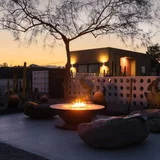
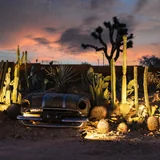
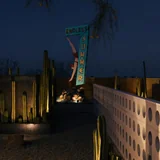
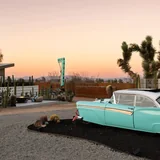
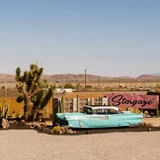
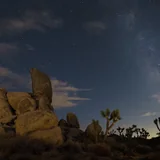
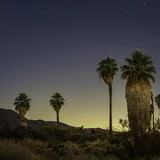
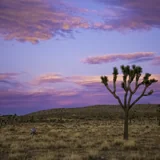
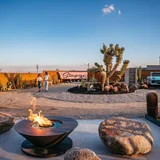
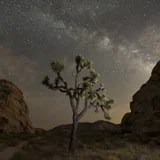
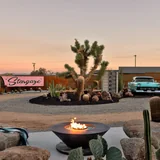
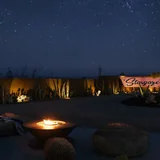
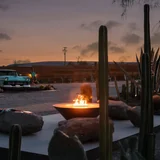
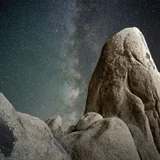
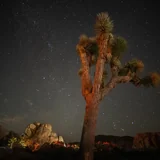
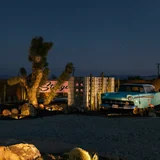
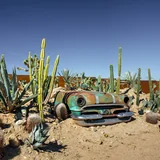
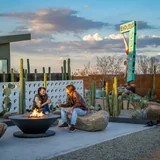
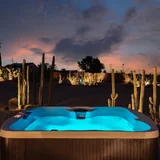
Then there is the night, which is one of the real reasons to be here. Joshua Tree was designated an International Dark Sky Park in 2017, and on a clear, moonless night the interior is dark enough to show the structured band of the Milky Way with the naked eye. The bright galactic core is best from roughly late spring into early autumn; in the depths of winter it drops out of the sky, though the winter constellations more than make up for it. If you want to stay for the stars, you do not even have to: the darkness carries right to the house. Many guests skip the late drive home and stargaze from the restored 1950s car parked on the gravel out back — it has a custom stargazing roof that can be pulled back, and it works as an open-air bed — with the gas fire pit going and the hot tub open year-round. One review summed it up, calling the property a place with "photo-worthy spots everywhere." Our guide to where to stargaze under dark sky covers the best viewing, in the park and around the house.
If you want more than a glance upward, the park rangers run free night sky programs through much of the year — anything from the basics of reading a star chart and finding constellations to deeper talks on the planets and on keeping the desert dark. The schedule is seasonal and posted by the park, so check what is on for your dates. Once a year, usually over several nights in October, the park also holds a Night Sky Festival, with telescopes brought in by Southern California astronomy clubs, guided viewing, and talks; it is ticketed, the dates move every year, and it can sell out, so look it up on the park's current event page rather than trusting a past year's schedule. One small habit helps: your eyes need roughly twenty to thirty minutes in the dark to adjust, and a single look at a white phone screen resets that, so bring a dim red light and let your eyes settle. That same darkness reaches the yard here, so many guests wait out the adjustment from the hot tub or the car bed instead of a late drive home.
On busy spring and holiday weekends, timing your gate arrival is the whole game. Roll up to the West Entrance close to opening light and you will breeze through; arrive at ten or eleven and you may sit in a line of cars in the sun. When you have your dates and your gate sorted, book the house as your base, and read planning a trip to Joshua Tree next to build the rest of the days around it.