











Practical
Desert Safety and Leave No Trace
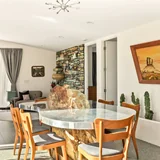
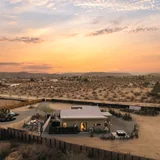
The high desert around Joshua Tree is a calm, welcoming place to spend a few days, and it stays that way when you arrive prepared. Heat, dry air, sudden summer storms and a few sharp plants are all easy to manage once you know what to expect. This is a plain guide to staying safe and treading lightly on the land, from your first fill of water to the last look at the stars. Stargaze Escape sits in Yucca Valley, about a 25-minute drive from the park's west entrance, and it makes a comfortable base for all of it.
The mindset for the high desert
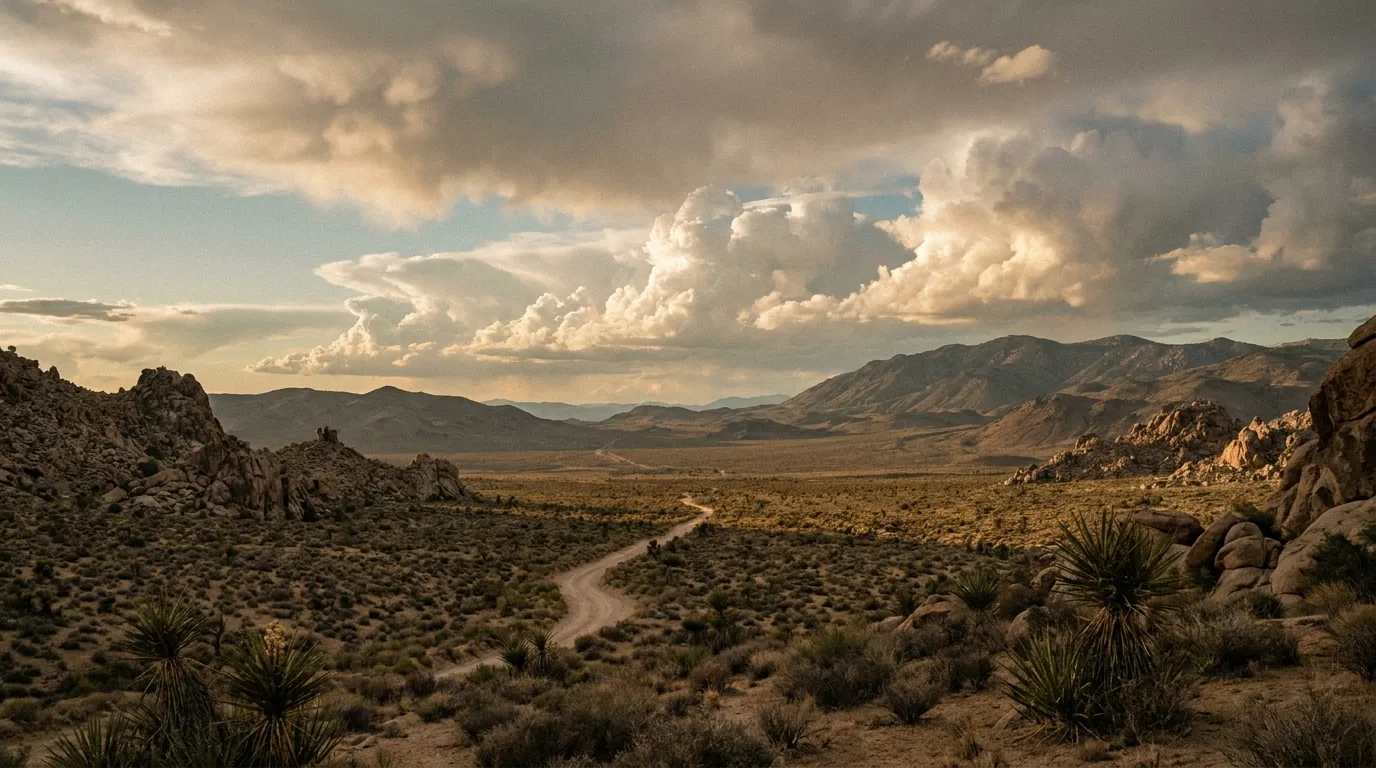
People sometimes picture the desert as hostile. It is not, as long as you meet it on its own terms. The land around Joshua Tree National Park has its own rhythm: hot and bright in the middle of the day, cool and quiet at the edges, dry almost all the time. Animals here move at dawn and dusk and rest through the heat, and the simplest safety advice is to do the same.
A few facts set the scene. Yucca Valley sits at roughly 3,300 feet, up in the high Mojave, which keeps its heat a step milder than the low desert around Palm Springs. The national park itself is open 24 hours a day, every day of the year, and as of 2026 there is no timed-entry ticket and no reservation needed to drive in. The entrance fee is around $30 per vehicle for a seven-day pass; a Joshua Tree annual pass runs about $55, and the interagency America the Beautiful pass is $80 for U.S. residents. For 2026 the park also lists a handful of fee-free days and, new this year, a separate higher-priced annual pass for non-residents. All of those figures move over time, so check the current price and the fee-free dates with the park service before you go rather than trusting a number in a blog post.
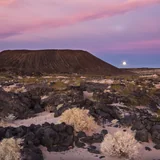
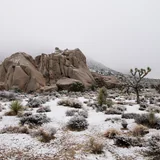
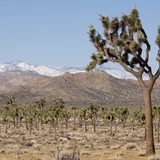
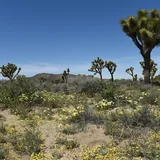
The park spans two deserts. The higher, cooler Mojave in the west and north is Joshua tree and yucca country; the lower, hotter Colorado Desert in the east and south grows ocotillo, cholla and creosote. That range means conditions differ across a single day of driving, so plan for both. Our house gives you a home to return to after each outing, close enough to the west entrance that you can come and go without a long haul. Read a little about the surroundings on the area page before your first morning out.
Heat and water
Water is the one thing you cannot improvise out here, so it comes first. Summer daytime temperatures around Yucca Valley and inside the park regularly climb past 100°F, roughly 38°C; July highs average near 96°F, and nights often stay in the 60s and 70s. Summer is the least crowded season for exactly this reason. Spring and fall are milder, with daytime temperatures often around 65 to 80°F, and even winter days feel warm in direct sun, though nights can drop to freezing.
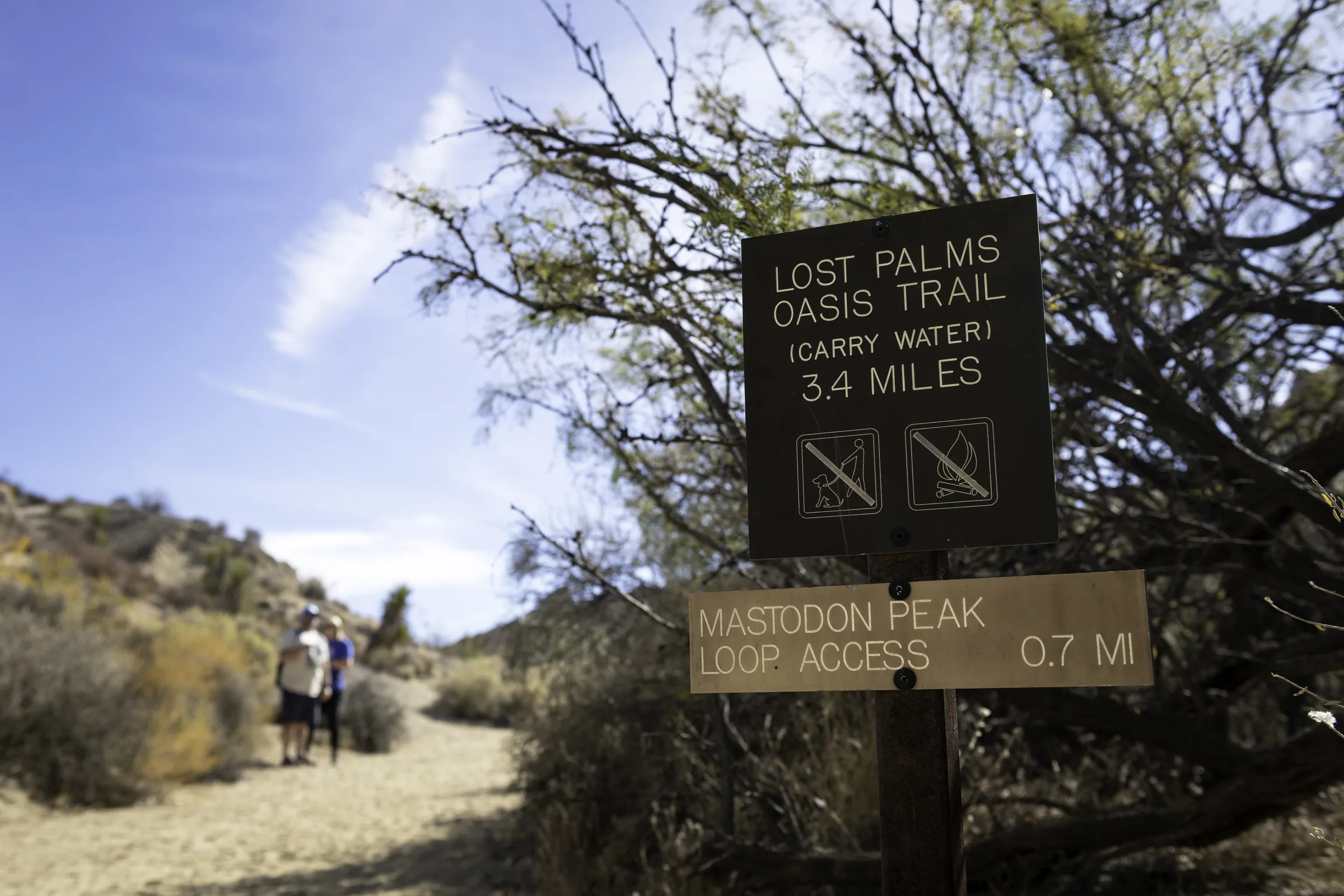
Here is the part visitors underestimate: there is no water available anywhere in the interior of the park. None. The park service tells people to carry all their own, and a common guideline is at least one gallon, about four liters, per person per day, more if you plan to hike. You can only refill potable water at a few developed spots near the park edges, such as the water-bottle filling station at the Joshua Tree National Park Visitor Center in downtown Twentynine Palms, the Cottonwood Visitor Center on the south end, and the Black Rock Nature Center in Yucca Valley. Among the campgrounds, only Black Rock and Cottonwood have drinking water. There are also no gas stations, restaurants or stores inside the park, so fuel up and stock up in the gateway towns of Yucca Valley, Joshua Tree or Twentynine Palms before you head in.
The habits that keep you comfortable are boring and they work. Drink before you are thirsty. Carry more water than you think you need, and keep a full jug in the car as backup. Time your longer walks for early morning or late afternoon and rest in shade through the worst of the midday heat, the way the round-tailed ground squirrel goes dormant in extreme heat and most small desert mammals wait for night. If anyone in your group feels dizzy, gets a headache or stops sweating, get them into shade, give them water and cool them down. Children, older travelers and dogs feel the heat sooner than a fit adult, so watch them closely and offer water often. Ground and bare rock that sit in full sun can get hot enough to burn a dog's paws, which is one more reason to walk in the early morning. A few salty snacks alongside the water help your body hold on to what you drink.
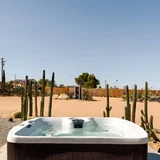
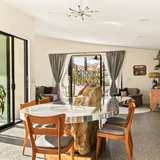
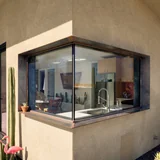
The house helps here more than you might expect. Fill your bottles and pre-chill water in the full kitchen before you leave in the morning, and you come back at the end of a hot day to a stock-tank pool and hot tub that make the heat feel like part of the fun rather than a problem. For a fuller checklist of what to bring, our post on packing for the high desert goes item by item.
Sun and dry air
The desert dries you out in two ways at once, and the second one is quieter than the heat. At this elevation the sun is strong, and the air is so dry that sweat evaporates before you notice it. You can lose a lot of water without ever feeling damp, which is how people end up dehydrated on a mild-feeling day.
Cover up rather than relying on sunscreen alone. A brimmed hat, sunglasses and light long sleeves do more than any lotion, and they keep working when the sunscreen wears off. Reapply sunscreen anyway, especially on the back of the neck, the ears and the tops of the hands, which are easy to forget. Lip balm and a small bottle of moisturizer help with the dryness. Winter is not an exception: daytime highs in December through February often sit in the upper 50s to low 60s, pleasant for walking, but the sun at midday is still bright enough to burn.
Dry air also means big temperature swings between day and night, so layers matter. A morning that starts near freezing can warm thirty degrees by noon and cool off just as fast after sunset. Pack a warm layer even on a hot day, because you will want it around the fire pit later. Our guide to packing for the high desert covers the clothing side in more detail, and the short version is: bring more layers than the forecast suggests.
Flash floods and washes
A wash is a dry, sandy streambed, and there are a lot of them. Most of the year they are the easiest places to walk, flat and open, which is exactly why they are the ones to respect. Brief monsoon thunderstorms are possible from roughly July through September, and they can trigger flash flooding. The danger is that rain falling on higher ground miles away can send a wall of water down a wash while you stand under a clear blue sky, with no warning from the weather right above you.
The rule is simple: when there is any chance of a storm, stay out of washes and narrow canyons, and do not camp or park in them. If you see the sky building with clouds or hear thunder, move to higher ground and wait it out. This is the same force that shaped the park's famous rock piles over long stretches of time, as flash floods washed away the softened material around the buried boulders and left them stacked. A single afternoon of it is more than enough to sweep a car or a person off their feet. Some trails, like the route to Willow Hole, follow washes into the rocks, so check the forecast before you commit to one.
Roads flood too. If you come to water running across a road, turn around rather than trying to cross; you cannot see how deep it is or whether the roadbed is still there. Desert ground does not soak up a downpour well, so water moves fast and drains slowly. Storms can also knock out the drive back to the house, so give yourself a wide margin and head in early if the weather looks unsettled. A wet desert day has its own quiet pleasures, and if you get rained out we wrote about how to enjoy a rainy day in the high desert from the house.
Snakes, scorpions and bees
The desert's small residents are far less frightening than their reputation, but they do ask for a little attention to where you put your hands and feet. The park records 45 reptile species, including 26 kinds of snake. Rattlesnakes such as the sidewinder are common in the sandy country and are most active at dusk and at night in the warm months; reptiles in general are busiest in spring and fall and shelter from midday heat and winter cold. Almost every snakebite happens when someone tries to handle or kill the animal, so the safest approach is to give it room and walk away.
Put those two facts together and the practical advice writes itself. Watch where you step, especially near rocks and shrubs. Do not reach or step into a crevice you cannot see into, step onto rocks and logs rather than blindly over them, and use a light after dark. If you meet a snake, stop, back off and let it leave; it wants nothing to do with you.
Scorpions are nocturnal. The desert hairy scorpion, the largest in North America at around 5.5 inches, glows blue-green under ultraviolet light, so a cheap UV flashlight turns a night walk into a quiet treasure hunt and shows you exactly where they are. Its venom is mild to people, closer to a bee sting than a real hazard, but the sensible habit is to shake out shoes, towels and bedding left outside before you use them. Tarantulas look alarming and are the opposite of dangerous: the park service calls them timid, noting they will not bite people unless seriously provoked. The big ones you see wandering in the open in autumn are almost always males out looking for a mate.
Bees are worth a word because water draws them. In a dry landscape a pool, a hot tub or even a sweaty arm can attract desert bees looking to drink, especially in the heat of the day. If one investigates you, stay calm and move away slowly instead of swatting, which is what turns a curious bee into a defensive one. Keeping the outdoor areas tidy and drinks covered helps. Larger animals keep their distance on their own. Coyotes, bobcats and kit foxes are mostly active at dawn, dusk and through the night, and the surest way to keep them wild is to never feed them or leave food out where they can reach it. And a note on the gentle giants: the Mojave desert tortoise is a threatened species, and it is illegal to touch or move one. If you are lucky enough to see a tortoise crossing a road, give it space and let it pass on its own. For a friendlier tour of who lives out here, our field guide to Mojave wildlife is a good next read.
Cactus spines
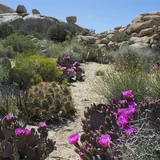
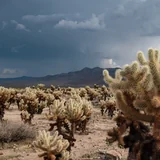
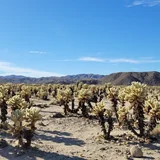
The plant most likely to get you is the teddy bear cholla. It looks soft and fuzzy, and it is anything but. Its stem segments detach at the lightest touch and ride away on barbed spines, which is why it earns the nickname jumping cholla; the park service puts it plainly and warns visitors not to try to pet this teddybear. The dense stand at the Cholla Cactus Garden, in the Pinto Basin about 12 miles south of the north entrance, is a beautiful stop, and it is one to admire from the loop trail rather than up close.
If a cholla joint does hitch a ride, do not grab it with your fingers. Carry a cheap fine-tooth comb and a pair of tweezers; slide the comb under the segment and flick it off, then pull any remaining spines with the tweezers. The barbs make them stubborn, so take your time. Watch your footing near low-growing cholla, keep small children close, and keep dogs well clear, since a cholla segment in a paw or a mouth is a miserable end to a walk. Barrel cactus and agave carry their own stiff spines too, so the same care applies across the board.
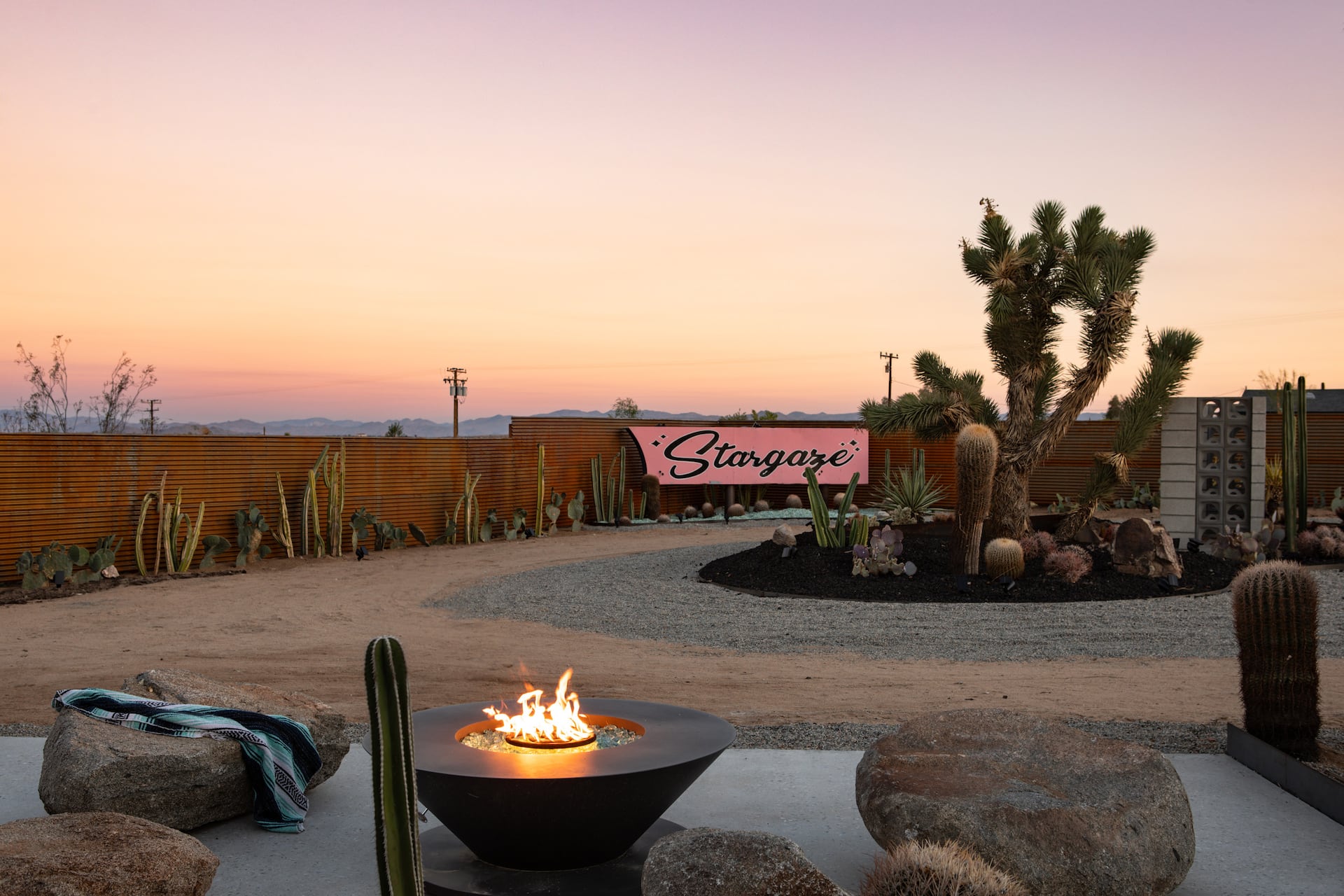
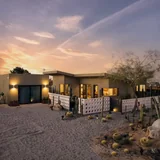
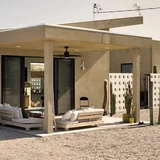
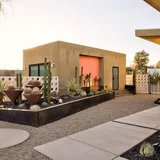
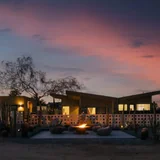
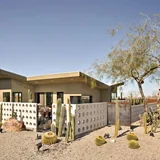
The habit carries back to the house. Our lot is a fully fenced desert garden planted with thousands of cacti, agave and Joshua trees, which is lovely to wander at golden hour and just as prickly as the wild ones. Enjoy the plants, watch where you brush past them, and leave the cacti and rocks as you found them, which is one of our house rules as much as it is good practice out in the park.
Roads, cars and cell service
Cell reception inside the park is very limited and should never be relied on. The park service tells visitors to download offline maps before arriving, using the official park app or another map you can open without a signal, and that is the single most useful thing you can do before driving in. Do not count on your phone to navigate, call for help or look up the way back once you pass the entrance.
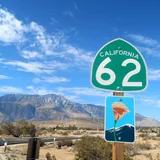
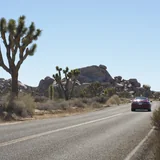
Because there is no fuel inside the park, start with a full tank; the gateway towns of Yucca Valley, Joshua Tree and Twentynine Palms are where you gas up and grab supplies. Highway 62, the Twentynine Palms Highway, is the main east-west road through the Morongo Basin, and it links the towns along the park's north side. The town of Joshua Tree is only about seven miles from Yucca Valley, roughly a twelve-minute drive, so provisioning is quick. For the lay of the land on the way in, our guide to getting here on Highway 62 maps out the route and the trip in from the major cities.
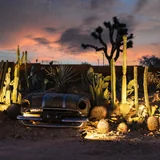
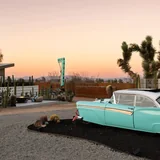
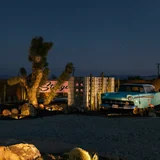
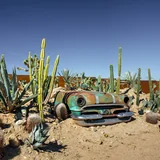
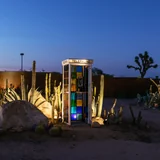
On park roads, stay on the pavement and the established dirt roads. Off-road and cross-country driving is prohibited because it damages desert soil and plants that take a very long time to recover, and the sandy shoulders are a trap: pull off onto soft sand and you can bog down fast, far from any help. Keep an eye out for animals on the road at dawn and dusk, when coyotes, jackrabbits and others are on the move. Carry water, a spare tire you know how to change, and a paper map or downloaded one, and tell yourself you may not get a signal if something goes wrong. Back at the house, parking is free and easy; the restored 1950s car bed in the yard, with its custom stargazing roof, is parked on the gravel and going nowhere, which is the only car out here you do not have to keep fueled.
Getting lost and telling someone your plan
It is easier to lose your bearings here than you would think. The boulder country all looks alike once you are inside it, the Wonderland of Rocks is a maze of domes and passages, and a path that seemed obvious on the way out can vanish on the way back. Footprints scatter across open sand, and there are few tall landmarks to steer by.
The fix is old-fashioned and reliable. Before you set out, tell someone your route and when you expect to be back, and use the house as your anchor point for that plan. Download your map offline, carry it, and check it more often than feels necessary. Start hikes early so you are not racing the light or the heat, and bring more water than the walk seems to require, even on the short ones; a strenuous climb like Ryan Mountain is only three miles round trip but gains about 1,050 feet to a summit near 5,457 feet, and it will ask a lot of you in the sun. Keep your group together so no one walks off alone, and use the park's visitor centers, four of them spread around the edges of the park, to ask a ranger about current conditions before you start. Families can pick up a free Junior Ranger booklet there, which keeps kids looking closely at the trail and the wildlife instead of racing ahead. If you do become disoriented, the standard advice is to stop, stay put, and find shade rather than wandering further, which makes you easier to find and keeps you cooler. Note your expected return time against the house's quiet hours, which begin at 10pm, so anyone waiting knows when to worry.
Fire and the dark sky
Two evening subjects belong together out here, because both come down to being careful with light and flame. Wildfire is a real and growing worry in this landscape. Joshua trees are slow-growing yuccas that are poorly adapted to fire, and increasingly frequent wildfire is one of the threats to their future, so fire discipline is not a formality. Keep any flame under control, never toss a cigarette, and check current fire restrictions before lighting anything; campfires are only allowed in the metal grates provided at campgrounds, and even those get suspended when conditions are dry. Drones are also prohibited in the park, which is worth remembering before you pack one.
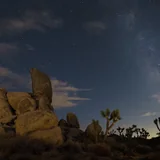
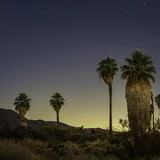
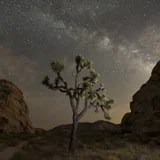
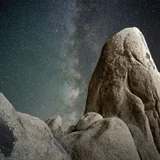
The reward for a dark, careful desert is one of the best night skies in Southern California. Joshua Tree was named an International Dark Sky Park in 2017 at the Silver Tier level, and its darker interior reaches roughly Bortle Class 2 to 3, dark enough to show the structured band of the Milky Way with the naked eye, though the exact darkness depends on where you stand and which way you look, so treat that as a guide rather than a promise. A few simple habits protect the dark for everyone. Your eyes need about 20 to 30 minutes in darkness to adapt, and a single glance at a white phone screen or flashlight resets that, so use a dim red light instead and aim it at the ground. Turn off headlights at viewpoints and keep bright beams out of other people's eyes. If you want company for the night sky, park rangers run free programs through the seasons, from reading a star chart to talks on protecting the dark, and the park holds an annual Night Sky Festival in the fall, usually over a few nights in October. That festival is ticketed, it can sell out, and the dates shift every year, so check the current schedule with the park rather than planning around a fixed weekend. For photographs, a wide, fast lens, a high ISO and single exposures of around 15 to 25 seconds on a steady tripod are a sensible starting point, then adjust to your camera and the darkness of the night.
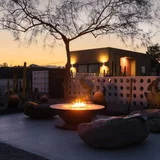
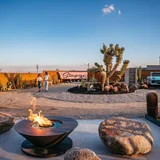
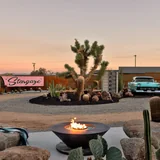
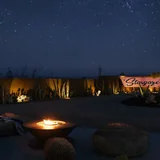
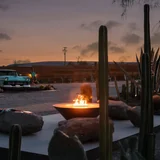
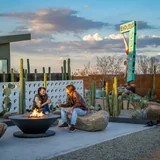
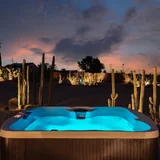
The house is set up for exactly this. The gas fire pit burns clean with no logs, no embers and no wood smoke, ringed by natural boulders, so you get the warmth and the glow without the sparks that make wildfire country nervous. The hot tub is open all year for cold clear nights, and the car bed in the yard, with its stargazing roof pulled back, is built for lying back and watching the sky. The bright core of the Milky Way is generally up from roughly late spring into early autumn, so time your visit if that is your goal, and check a sky planner for the specific night. If you want to be a good neighbor to the dark, our note on how to keep the night dark goes further.
Leave no trace
Treading lightly is the other half of desert safety, because the land recovers slowly and a lot of people pass through it. The widely used Leave No Trace framework comes down to seven habits, and every one of them fits Joshua Tree.
- Plan ahead and prepare. Carry enough water, check the weather and current park alerts, and know where you are going before you lose signal.
- Stay on durable surfaces. Walk on trails and bare rock, drive on established roads, and keep off the fragile soil crust and plants between them.
- Pack out your waste. Carry out all trash, including food scraps and dog waste, and use the restrooms at trailheads and visitor centers.
- Leave what you find. Collecting or removing rocks, plants, cactus, wood, wildflowers or artifacts is prohibited in the park; leave everything where it lies for the next person to see.
- Minimize fire impacts. Use only the provided fire grates, obey restrictions, and never leave a flame unattended.
- Respect wildlife. Keep your distance, never feed animals, and remember that a kangaroo rat can live without ever drinking water, so your snacks do it no favors. Keep pets leashed on a leash no longer than six feet, within 100 feet of roads and campgrounds, and off the trails, where they are not allowed.
- Be considerate of others. Keep noise down, yield on narrow trails, and protect the quiet and the dark that people come here for.
Those habits start at the house, which is dog-friendly, though our home cannot host cats because of a household allergy. We ask for quiet hours from 10pm, no parties, no glass near the pool or hot tub, and the same care for the cacti and rocks in the garden that the park asks for in the wild. It is the easiest kind of stewardship: leave the place as you found it, and check the park service's current rules and alerts before you go, since regulations and conditions do change. You can read them together on what to know before you visit Joshua Tree.
A calm base for the desert
None of this is meant to scare you off. The high desert is a forgiving place for anyone who carries enough water, watches the sky, gives the wildlife room and leaves the plants and rocks alone. Do those few things and you are free to enjoy the rest: the boulder trails, the Milky Way, the long light at the end of the day. Stargaze Escape gives you a fenced, comfortable home 25 minutes from the west entrance to fill your bottles, cool off in the stock-tank pool, warm up in the hot tub and watch the stars from the car bed when the driving is done. When you are ready to plan the trip, check current fees and alerts with the park service, then book your stay and start mapping your days.