


Day trips
Cabot's Pueblo Museum, Desert Hot Springs
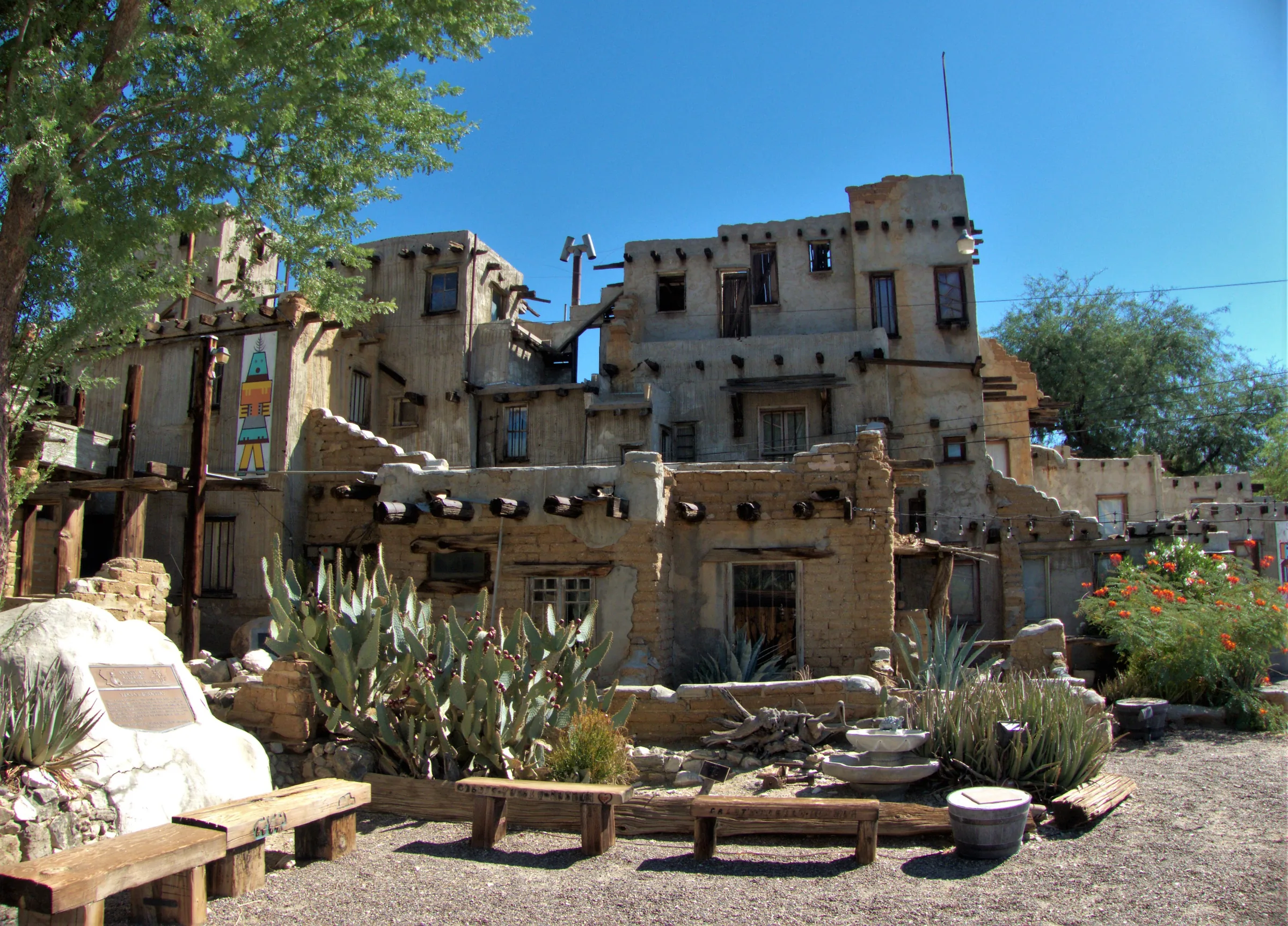
In Desert Hot Springs, about 45 minutes from the house, stands a four-story pueblo that Cabot Yerxa built by hand from reclaimed and found materials over some 20 years. The Hopi-inspired building is now a city-owned museum, and you see the inside on a guided or audio tour. It makes a good half-day on the way to or from Palm Springs.
Who Cabot Yerxa was
Cabot Yerxa (1883 to 1965) came to this corner of the Coachella Valley in 1913, at 30, and homesteaded 160 acres in what is now Desert Hot Springs. Digging a well near his home, he struck hot mineral water, and he later found cold water from the Mission Springs Aquifer. The hot and cold supplies sit on either side of the Mission Creek Fault, with the hot spring around 110°F, and he named the spot Miracle Hill.
The museum describes him as an adventurer, artist and human rights advocate. Its Water Gallery includes photographs of a teenage Yerxa in Alaska with Inupiat people, and a page from an Inupiat word list that, by the museum's account, he sold to the Smithsonian in 1901. He built the pueblo to display his collection of Native American art and objects from around the world, and to highlight Native American culture and contributions.
The pueblo
Yerxa started building in 1941, at 58, by the museum's account (some sources give 1939), and kept at it for about two decades. The result covers roughly 5,000 square feet over four stories, with 35 rooms, 150 windows, 65 doors and 30 separate rooflines. The materials were reclaimed and found around the Coachella Valley, including old telephone poles in the walls and salvaged glass in the windows. Inside, the rooms are filled with photos, artifacts and historic items from Yerxa's life. Upstairs is the apartment of his wife, Portia, with a vintage sewing machine, a small kitchen and her library.
It opened to visitors in 1950 as Cabot's Old Indian Pueblo, and Portia ran it with him until his death. After Yerxa died in 1965 she returned to Texas, and Cole Eyraud later bought the abandoned complex (with partners, by one account) and restored it. Today the City of Desert Hot Springs owns the museum, the nonprofit Cabot's Museum Foundation runs it, and it is listed on the National Register of Historic Places.
Waokiye and the grounds
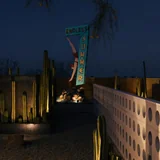
Outside stands Waokiye, a giant carved head by the sculptor Peter Wolf Toth, carved in the late 1970s and unveiled in 1978. It belongs to Toth's Trail of the Whispering Giants, more than 70 large carved heads made as tributes to Native Americans, starting in 1972, with at least one in every U.S. state; Waokiye is number 27 in the series. It was carved from the log of a giant sequoia estimated at 750 years old. The name is Lakota for "traditional helper." Sources disagree on its height, but it towers over the garden.
Beyond the pueblo, paths lead to more of Yerxa's outbuildings and a meditation garden. Cabot's Trading Post & Gallery, opened by the foundation in 2008, sells work by local artists. A grounds-only ticket covers the grounds plus the Water and Exhibition Galleries if you'd rather skip the tour.
Tours, tickets and hours
The interior is open only by tour. You can choose a guided tour or a self-guided audio tour, each about 45 minutes. The museum's 2026 prices are $16 for a guided tour ($14 for seniors, military and children 6 to 12), $13 for the audio tour ($11 reduced), and $5 for grounds only; children under 5 are free. Tickets are sold online at any hour, and tour times are limited, so book ahead.
From October 1 to May 31, guided tours run at 9:30am, 11:30am and 1:30pm Tuesday through Friday, audio tours run at set times Tuesday through Friday plus 9am to 3pm on Saturday and noon to 3pm on Sunday, and grounds-only visits run 9am to 4pm Tuesday through Saturday and noon to 4pm on Sunday. The final tour entry is at 2:30pm, and online ticket sales close about an hour and a half before each guided tour. Summer hours, from early June to late September, are much shorter: a few days a week, mostly mornings. The museum also runs seasonal events, which in 2026 include a haunted house in late October, artisan days and cultural weekends.
Getting there and pairing
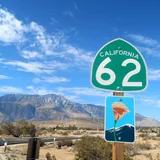
The museum is at 67616 East Desert View Avenue, about 45 minutes from the house by Highway 62 down through Morongo Valley. Desert Hot Springs sits at about 1,076 feet, more than 2,000 feet lower than Yucca Valley, and the low desert is usually hotter, so in warm months go early and carry water. On the way down, Big Morongo Canyon Preserve in Morongo Valley makes a good stop, and Whitewater Preserve lies in the same direction.
Desert Hot Springs is known for its mineral-water spas, covered in our hot springs and spas guide. Palm Springs is a short drive south, so Cabot's also fits into a Palm Springs day trip or a ride on the Palm Springs Aerial Tramway.
Know before you go
- Tours only inside. Guided or audio tours, about 45 minutes each; buy tickets online.
- Prices and hours change. Figures here are from the museum's 2026 visit page; confirm before you go.
- Closed days. Mondays aren't on the regular schedule, and summer hours are short.
- Four stories, built by hand. If stairs are a concern, ask the museum what the tour covers before booking.
- Heat. The low desert usually runs hotter than Yucca Valley; bring water.
- Events. Check the museum's calendar for seasonal events before you pick a date.
Then drive back up the hill for a soak in the hot tub at the house, or check dates for your trip.
Keep exploring
Coachella & Stagecoach: Basing Yourself in the High Desert
Staying up in the high desert for Coachella or Stagecoach — a calmer, often cheaper base about an hour from the Indio polo fields. The trade-offs, the traffic and how to plan.
Read →
Three Classic Desert Road Trips
Three classic road trips from the high desert — Route 66 and Roy's Café at Amboy, the surreal Salton Sea and Salvation Mountain, and an easy Pioneertown loop. Distances and desert-driving tips.
Read →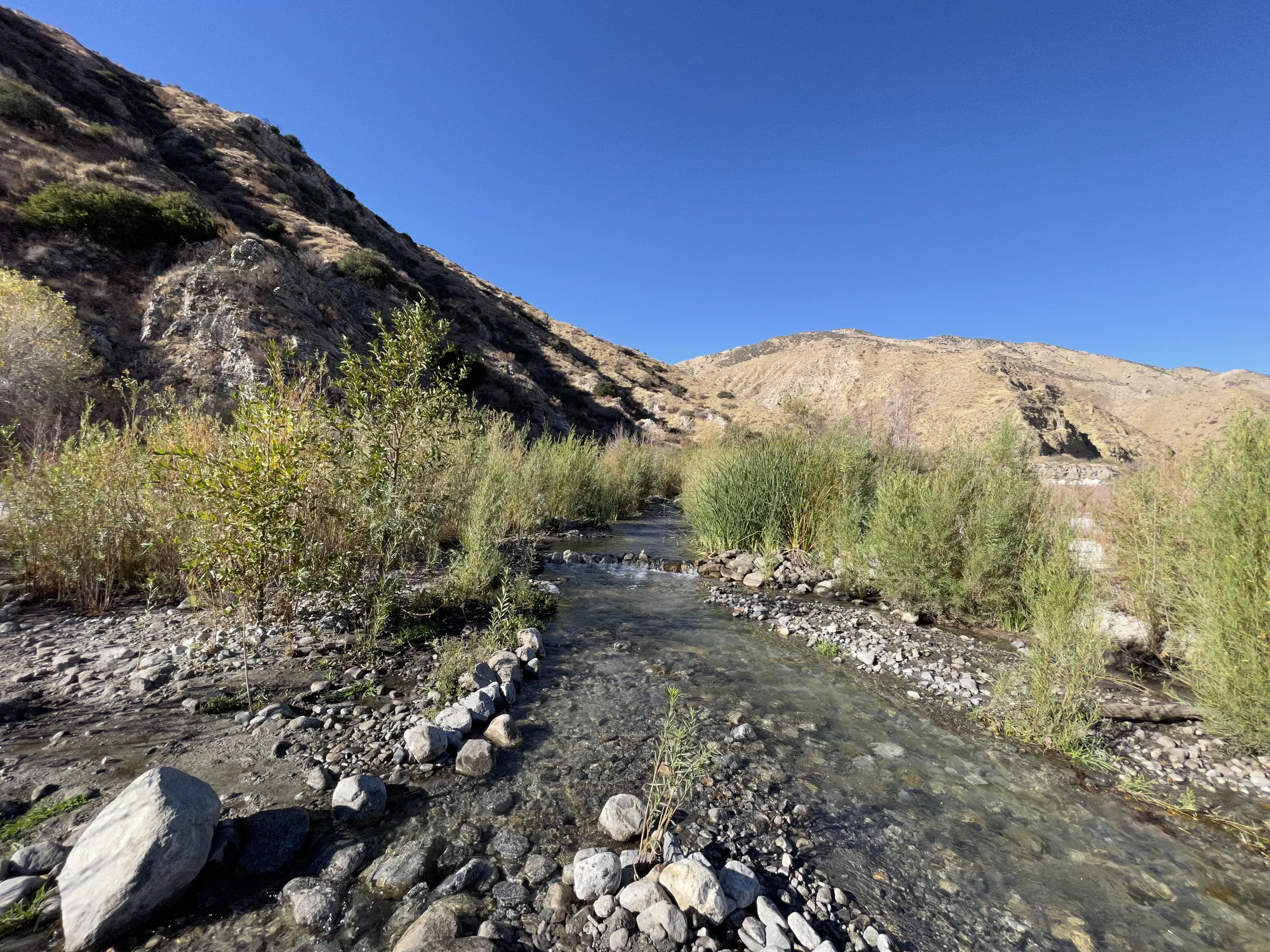
Whitewater Preserve
A free canyon preserve with a year-round river, shaded picnic lawns and trails to the Pacific Crest Trail, under an hour from Yucca Valley. Dogs welcome.
Read →