





















Month by month
Joshua Tree in March
March is Joshua Tree's busiest month. In every year from 2022 through 2025 it drew more visitors than any other month, and it is easy to see why: mild afternoons, longer evenings once the clocks change and, after a wet winter, wildflowers across the park's middle elevations. Here is what March brings and how to enjoy it without spending the morning in a line of cars at the gate.
March weather
NOAA's 1991-2020 normals for its Yucca Valley station, at about 3,250 feet and the nearest long-term record to the house, give March an average high of 67.2°F and an average low of 39.9°F. That 27-degree gap between afternoon and night is the widest of the first four months, so a March day can start in a jacket and end in short sleeves. Nights still dip to freezing on about three nights in an average March, and on about twelve the low is 40°F or colder. On the warm side, about 15 days reach 70°F and around three reach 80°F.
Rain tapers off. The station averages 0.78 inch in March over about three days, well under January's figure. Down at NOAA's Twentynine Palms station, about 1,300 feet lower, March averages 74.1°F by day and 49.3°F at night with about a third of an inch of rain, and roughly eleven afternoons reach 80°F. If you are heading to the park's lower southern end in late March, expect it to feel warmer than the house.
Wind and the odd storm
Spring is often windy. The park warns that its weather can include gale-force winds, and its wildflower guide notes that frequent springtime windstorms, without more rain behind them, can end or prevent a bloom. On a gusty day, a sheltered canyon walk is more pleasant than an exposed summit, and a hat with a chin strap or a snug cap stays on.
A March storm can also bring water fast. On March 12, 2020, rain and flash flooding led the park to close Pinto Basin Road, all of its dirt roads and the Joshua Tree Visitor Center. The park's advice from that day applies to any rainy visit: roads get slick, so drive with care, watch for debris, rocks and standing water, and never drive through running water.
Clocks, the equinox and daylight
Daylight saving time begins on Sunday, March 14, 2027, and it changes the shape of the day. U.S. Naval Observatory tables for Yucca Valley show sunrise at 6:15 am and sunset at 5:42 pm on March 1, then 5:59 am and 5:52 pm on Saturday the 13th. The next day the clocks jump, and by March 15 sunrise is 6:56 am and sunset 6:53 pm. By March 31 the sun is up at 6:34 am and sets at 7:06 pm, for about twelve and a half hours of daylight. The spring equinox falls on March 20, 2027, at 1:25 pm Pacific time.
The change moves the night later too. Full darkness arrives at about 7:05 pm on March 1, and after the switch it comes at about 8:17 pm in mid-month and 8:31 pm by the 31st. After the change the sun is up just before 7 am, which still leaves time to reach a park gate before 8. Stargazers, meanwhile, wait an hour longer for dark.
The busiest month in the park
The visitor numbers make the case. National Park Service statistics recorded about 432,000 recreation visits in March 2022, 434,000 in March 2023, 401,000 in March 2024 and 412,000 in March 2025, the top month of the year each time. In 2025 that was about one in seven of the park's roughly 2.93 million visits, or about 13,300 a day. The highest March in recent years came in 2019, at about 469,000, the year of a super bloom that followed a winter with about 229 percent of average precipitation.
The park names weekends, holidays and spring break season, which it puts at March through mid-April, as its busiest times. Campgrounds fill most weeknights as well as weekends, and the first-come sites go fast: the park says that if you don't arrive by late morning or early afternoon on Friday, there is little chance of getting one. Several parking areas, including Hidden Valley, Barker Dam, Keys View, Split Rock and Lost Horse Mine, may close temporarily once they are full.
How to beat the lines
The park's own advice is short and works:
- Arrive before 8 am. The West Entrance is about 25 minutes from the house, so leave by about 7:30.
- Go to the popular stops first. Visit Barker Dam, Hidden Valley and Lost Horse Mine before 9 am, before their lots fill. The Hidden Valley Nature Trail is an easy mile, which makes it a good first stop.
- Consider another gate. The park says the North Entrance in Twentynine Palms and the South Entrance off Interstate 10 move faster than the West Entrance, the busiest. Twentynine Palms is roughly 40 minutes from the house.
- Buy your pass ahead. A pass bought on Recreation.gov shortens the wait at the entrance station. Our guide to entrances and fees lays out the options.
There is no timed-entry or reservation system to drive into the park, as of 2026, so an early start is your main tool.
Spring break with children
A lot of March visitors are families on spring break, and the park has a simple program for them. Children of any age can pick up a free Junior Ranger activity booklet at any visitor center or entrance station, work through activities such as drawing, writing, watching wildlife and attending a ranger program, and earn a badge. There is also an at-home version that sends the badge by mail.
For a short, easy outing near the park's south entrance, the Bajada Nature Trail is a quarter-mile loop with about 20 feet of elevation gain and signs about Colorado Desert plants. Twentynine Palms has the Oasis of Mara, which the Serrano settled and where Chemehuevi people also lived from the 1860s. Its paved trail is normally the park's easiest walk, but the park closed it after monsoon damage in September 2025 and said it would stay closed until repairs are finished, so check the park's alerts before you drive over. The park also suggests the North Entrance in Twentynine Palms as a quicker way in on busy days.
Wildflowers in March
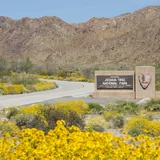
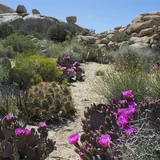
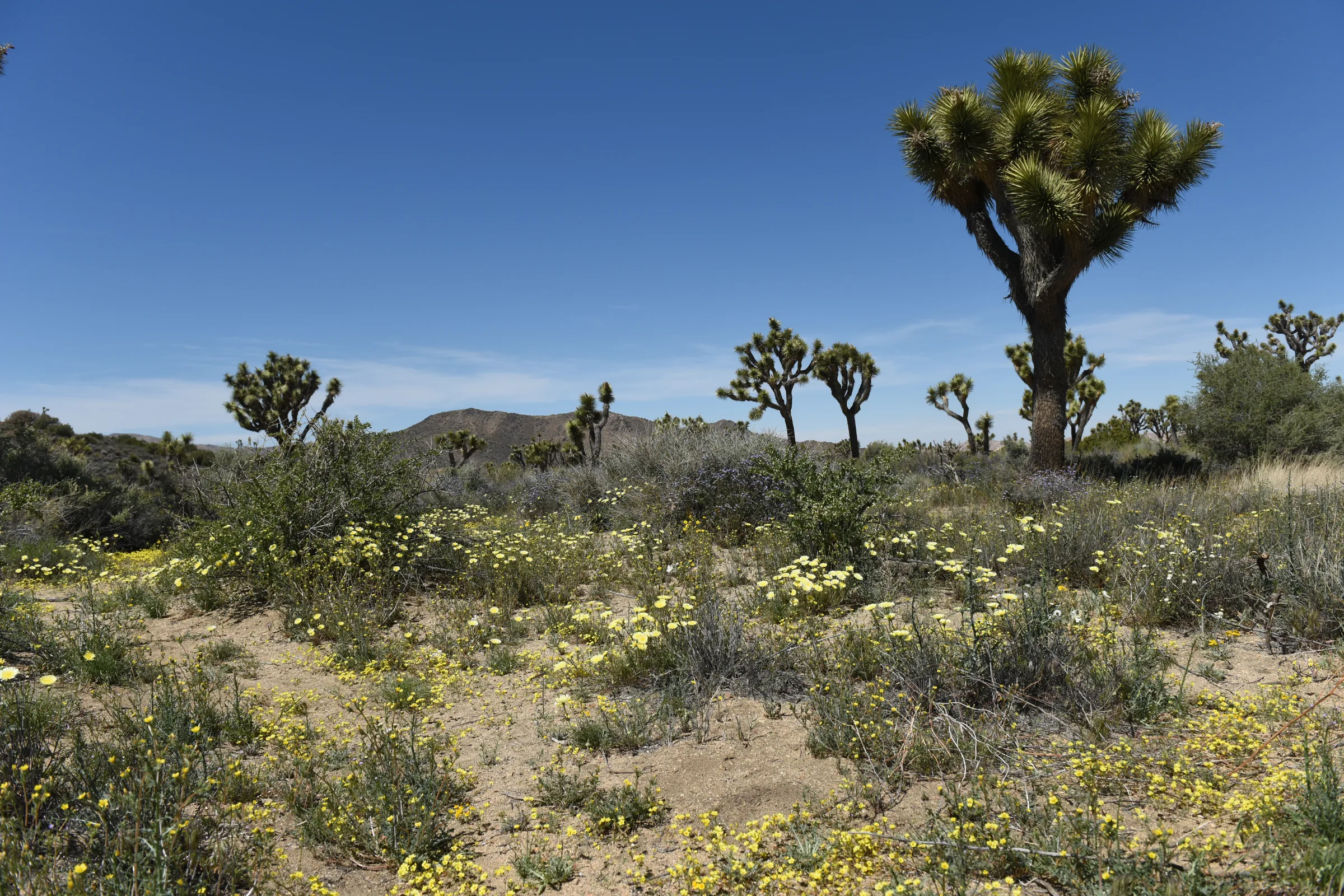
March is when the bloom moves uphill. The park's bloom guide gives early March to early May as the window for elevations between 3,000 and 5,000 feet, including the Hidden Valley, Indian Cove, Jumbo Rocks and Twin Tanks areas. The flowers it lists for that band are desert dandelion, desert globemallow, brittlebush, Indian paintbrush and pincushions. Brittlebush is a common gray-green shrub that puts up masses of yellow, daisy-like flowers on long stalks.
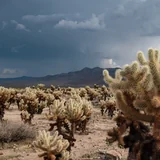
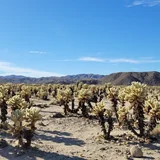
Lower down, the southern lowlands keep blooming until about mid-April. Cactus and shrubs join in too: teddybear cholla in the Cholla Cactus Garden blooms from March to May, and ocotillo, most common around the Pinto Basin and Cottonwood, sends up red-orange tube-shaped flowers in the same window. None of it is guaranteed. Bloom quality depends on winter rain and on the wind, and timing shifts every year, so check the park's current bloom updates before you plan a day around flowers. Our wildflower guide explains how the season works.
The park's own slogans cover the etiquette: stay on the trail, let the wildflowers prevail, and take photos, not flowers. Picking or collecting plants is against park rules.
The March night sky
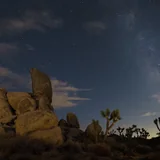
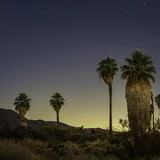
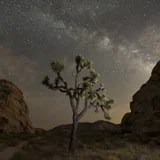
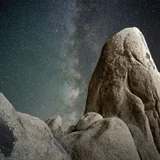
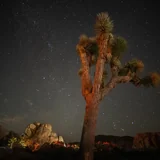
The sky changes in March as the winter stars slide west after dark and the spring constellations take over: Leo, the galaxy-rich region around Virgo and Coma Berenices, and the Big Dipper riding high. Before dawn, the bright core of the Milky Way starts to return low in the southeast, after being essentially missing all winter. The American Meteor Society's calendar shows no major meteor showers in March.
March sits in the middle of the evening zodiacal light season. The glow is dust in the inner solar system lit by the sun, a faint cone rising from the west once evening twilight is over, and it is easiest to see in the months around the March equinox, when the ecliptic stands nearly upright against the western horizon. It needs a dark sky without the moon. The U.S. Naval Observatory puts the new moon on March 8, 2027 and the full moon on March 22, so the evenings of the first half of the month are the ones to watch. Read more in the night sky over Joshua Tree.
Events in March
Several things happen around the Morongo Basin and the Coachella Valley in March. Dates move every year, so confirm with each organizer.
- BNP Paribas Open. The pro tennis tournament at the Indian Wells Tennis Garden runs February 28 to March 14, 2027.
- Mojave Experience. A desert rock music festival that held its first edition at Joshua Tree Lake RV and Campground in March 2026. The campground's calendar lists the 2027 edition for March 20 and 21 and notes loud music until late, though other listings differ by a day, so confirm the dates before you plan around it.
- 29 Palms Rotary Club Carnival. An annual carnival with rides and games at Luckie Park in Twentynine Palms. In 2026 it ran March 19 to 22.
- Desert X. The Coachella Valley's outdoor contemporary art exhibition is moving to a longer season. Its next edition is scheduled from October 30, 2027 to May 7, 2028, which would put March 2028 inside it.
Our page on high desert events covers the rest of the year.
March at the house
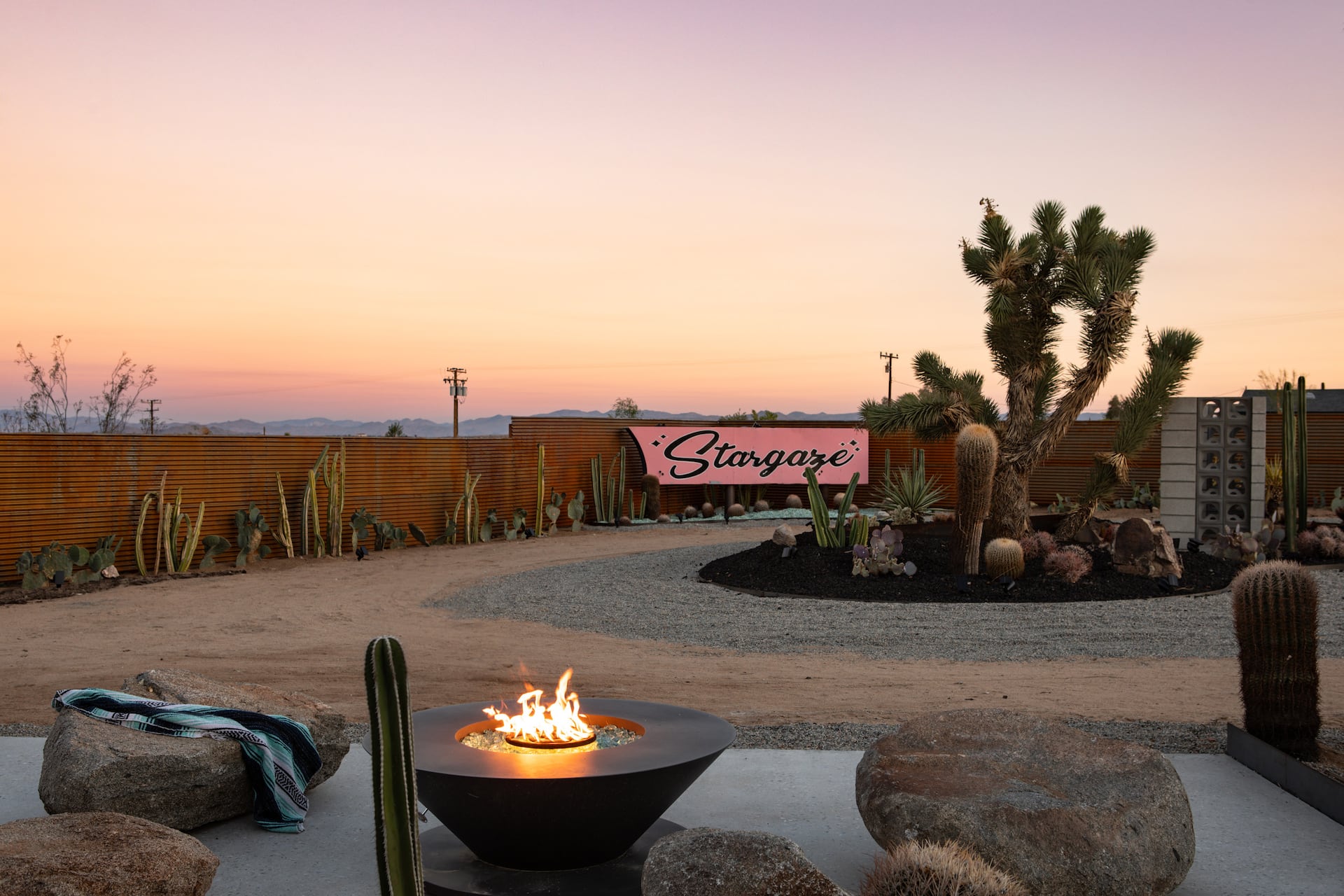
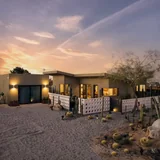
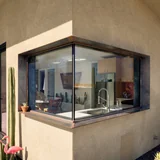
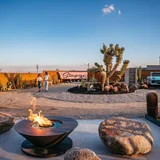
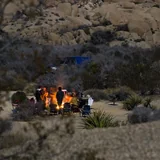
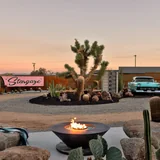
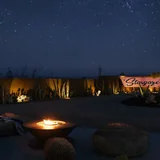
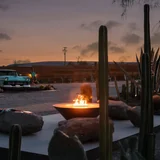
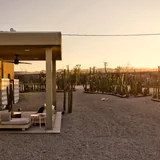
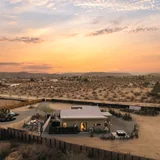
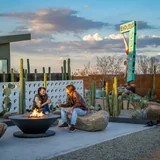
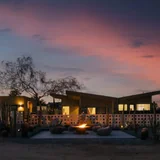
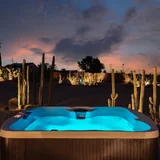
March is a good month to bring a friend or two. The house sleeps four in two king bedrooms, with a full kitchen inside and a BBQ grill outside for the longer evenings once sunset moves past 7 pm. The private hot tub, open all year, and the gas fire pit ringed by natural boulders take care of the nights in the 40s and below.
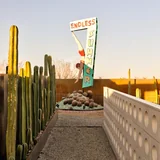
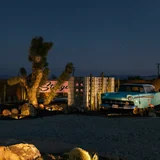
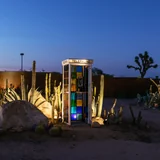
The stock-tank pool sits under its vintage painted "Endless Summer" sign, behind a star-perforated steel privacy screen. With about half of March's afternoons reaching 70°F, the later weeks of the month are when it starts to come into play.
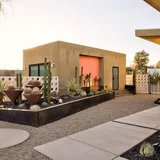
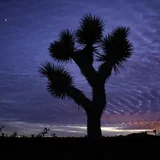
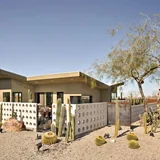
Dogs are welcome on the fully fenced lot. In the park, pets must stay within 100 feet of roads, parking areas, picnic areas and campgrounds, on a leash no longer than six feet, and are not allowed on trails. The paved Keys View walk is an exception, and so is the paved Oasis of Mara trail once it reopens. See our pet-friendly page for the house details. The lot is landscaped with thousands of cacti, agave and Joshua trees, so leave the cacti and rocks as you found them.
March packing list
- Layers that pack small. A light jacket and a warm midlayer for the 27-degree swing between dawn and mid-afternoon.
- A wind shell and a hat that stays on. Spring gusts are common.
- Sun protection. Sunscreen, sunglasses and a brimmed hat for long midday hours on open trails.
- Breakfast to go. If you are aiming for the gate before 8 am, pack food and water the night before, since there is nothing to buy inside the park.
- A park pass bought ahead. It saves time at the entrance on busy mornings.
- A six-foot leash. If your dog is coming, that is the park's maximum.
March is the park at its most popular, and a little planning makes it easy. Check dates at the house, then look ahead to Joshua Tree in April, when the bloom reaches the highest ground.
Keep exploring
Joshua Tree in January
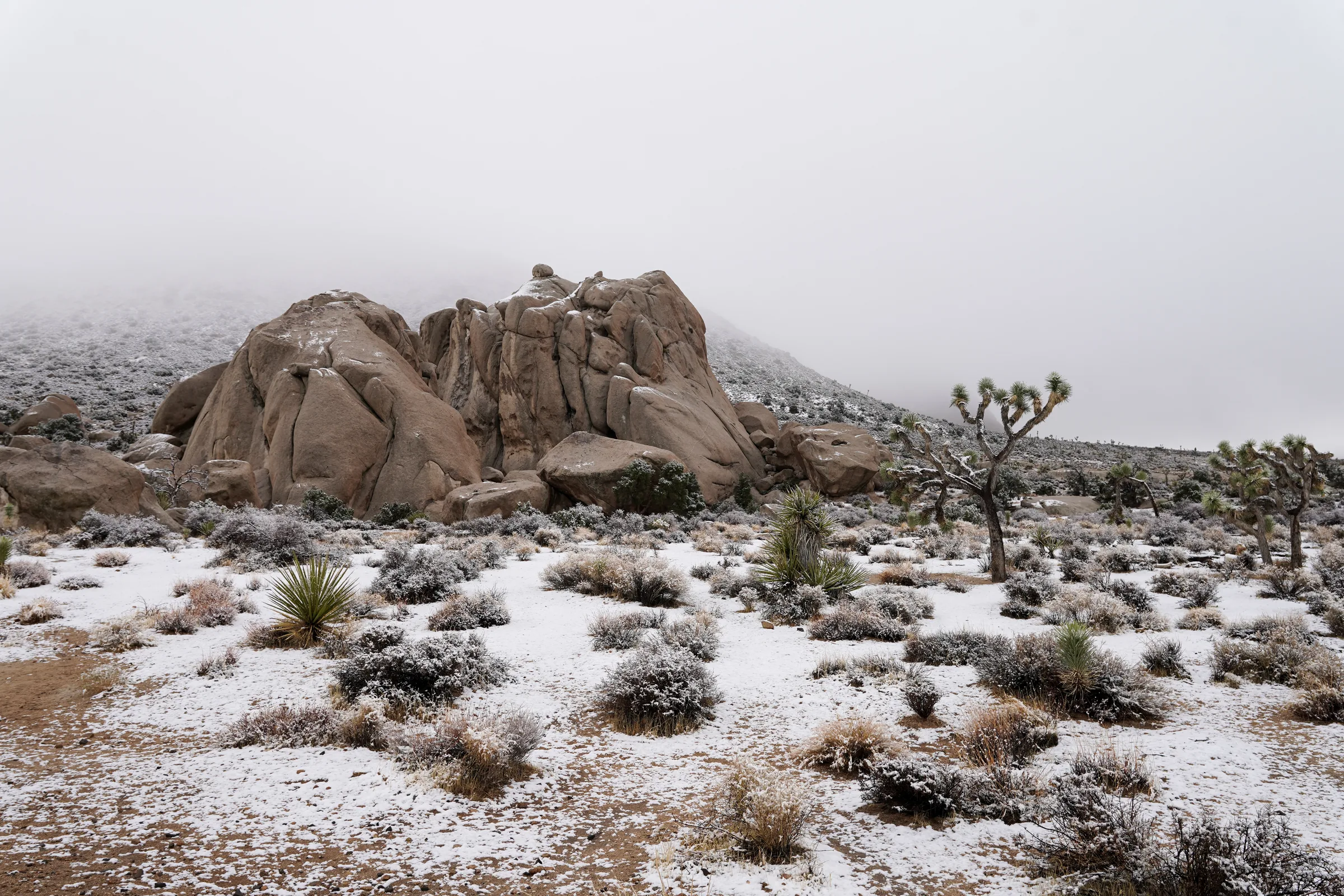
Joshua Tree in January: NOAA weather normals for Yucca Valley, short days, snow and road closures, crowd numbers, the Quadrantids and Palm Springs events.
Read →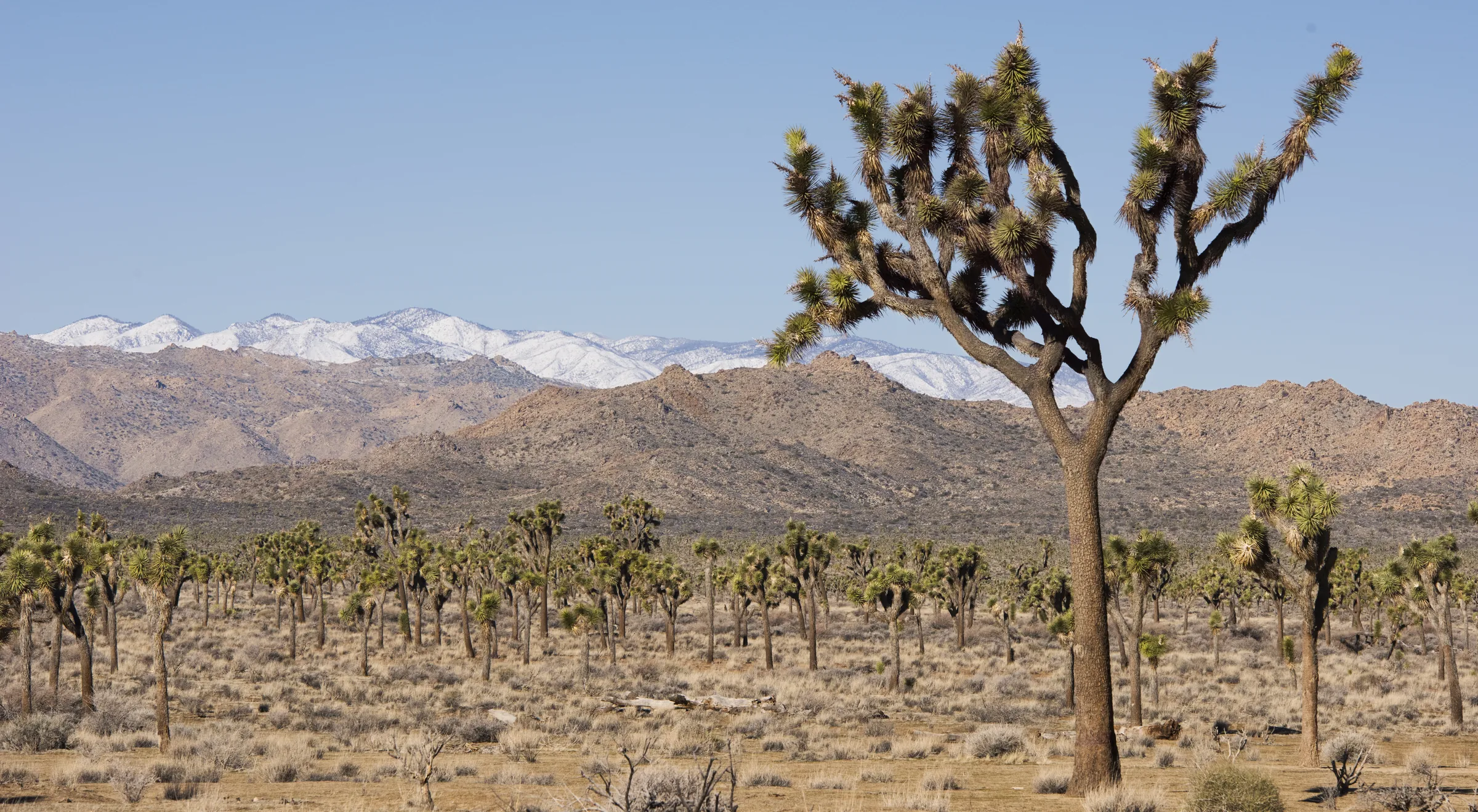
Joshua Tree in February
Joshua Tree in February: Yucca Valley weather normals, longer days, the start of spring crowds, Joshua tree blooms, Modernism Week and Mars and Jupiter in 2027.
Read →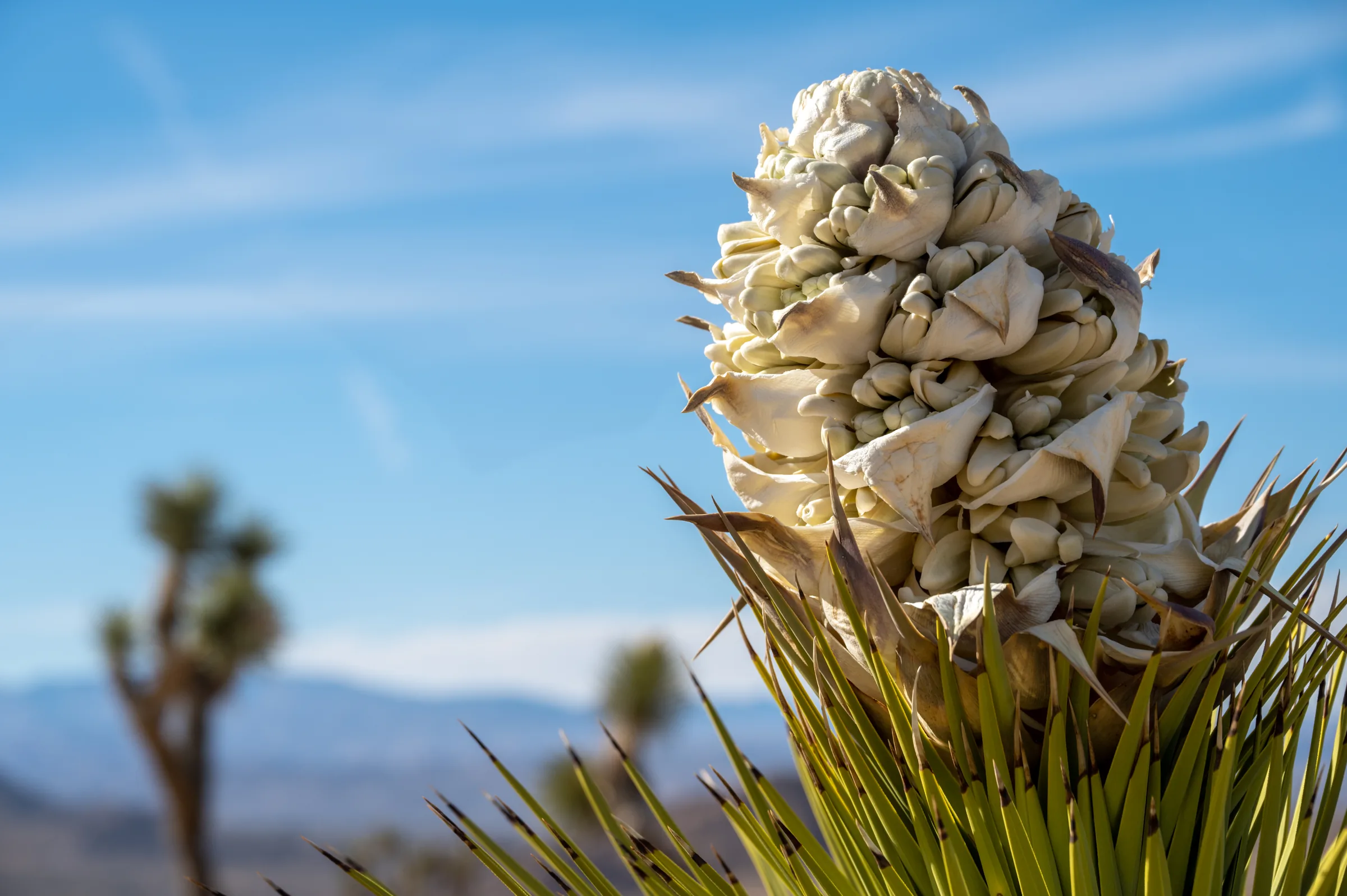
Joshua Tree in April
Joshua Tree in April: warming NOAA weather normals, blooms on the high ground, Coachella and Stagecoach weekends, waking wildlife, the Lyrids and what to pack.
Read →