






Practical
Visiting Joshua Tree With a Dog
Bringing a dog to Joshua Tree takes a little planning, because the national park keeps dogs close to the roads and off the trails. That does not mean you have to leave your dog behind. With the right timing, enough water, and a fenced yard to come home to, a high-desert weekend works well for a dog and its people. Here is where dogs can and cannot go in the park, what to do instead, and how to keep paws and noses safe in the desert.
The park's rules for dogs
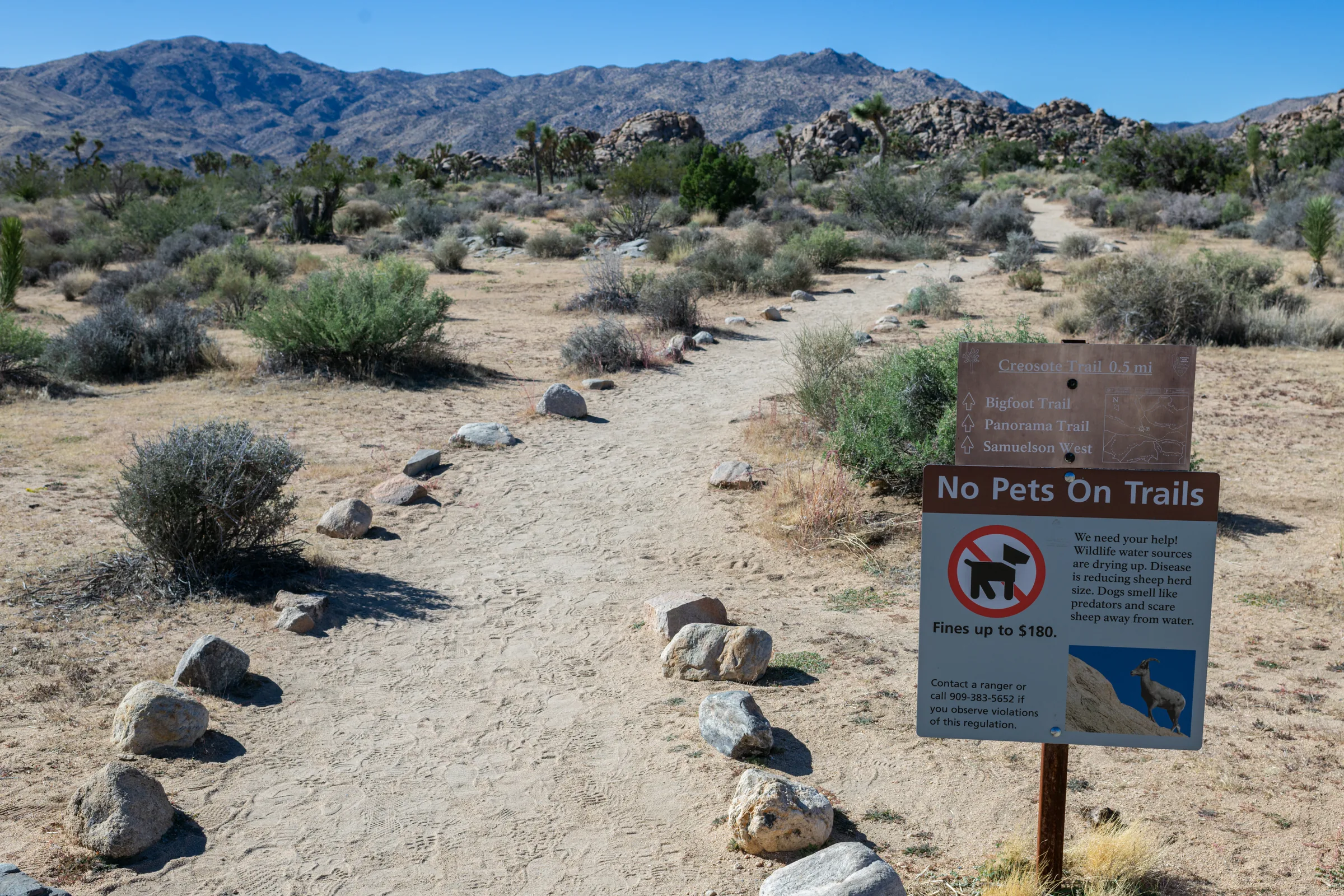
Joshua Tree handles dogs the way most national parks do, which catches a lot of first-time visitors off guard. The short version is that your dog can come into the park with you, but it has to stay near the pavement. The National Park Service does not allow pets on any hiking trail, in the backcountry, or inside park buildings. That holds even if you carry your dog in a pack or a backpack. A carried dog is still a dog on the trail as far as the rule is concerned, so a sling or a rucksack will not get you past a ranger.
Where dogs are allowed, they have to be leashed at all times, on a leash no longer than six feet. A retractable lead let out to twenty feet does not meet the rule, so pack a fixed six-foot leash and use it. You are also expected to bag your dog's waste and carry it out, and to bring water for the dog the same as you would for yourself. Nobody in the park is going to hand you a bowl or a bag.
None of this is meant to make life hard for dog owners. The desert here is fragile, and it is full of animals that a loose dog will chase and plants that will hurt a curious nose. A dog wandering off the pavement can step on a rattlesnake or a clump of cactus before you even see it. The rules keep your dog, the wildlife, and the plants out of each other's way. They also change from time to time, so it is worth reading the park service's current pet policy before you travel rather than trusting an old blog post. Our own house rules for dogs live on the pet-friendly page, and they are simpler than the park's.
Where dogs are allowed in the park
The practical shape of the rule is a hundred-foot band. Leashed dogs are permitted within about 100 feet, roughly 30 meters, of roads, parking areas, picnic areas, and campgrounds. In plain terms, that means the paved pullouts along Park Boulevard, the picnic tables, the campground loops, and the unpaved roads that are open to cars. If you can drive to it or park beside it, your dog can usually stand there with you on a leash. Step onto the dirt trail that leaves that parking lot, and the dog has to stay behind.
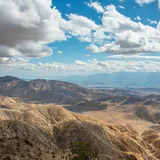
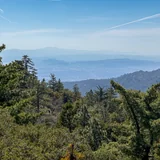
There are two paved walks where dogs are welcome, and they are the only trails in the park a dog can legally set foot on. The first is the loop at Keys View, the drive-up overlook that sits at roughly 5,185 feet. A short paved path there looks out over the Coachella Valley, the San Andreas Fault, the Salton Sea, and the San Jacinto and San Gorgonio peaks on a clear day. The lower viewpoint path is only about a tenth of a mile, so it is a quick stretch rather than a hike, but it gives a dog a real view.
The second is the Oasis of Mara, a paved half-mile loop at park headquarters in Twentynine Palms, near the park's North Entrance. It runs nearly level, with benches and interpretive panels along the way, and it is gentle enough for an older dog or a hot afternoon. If you want a single easy park stop that works with a dog, this is the one, though part of the trail has been closed after flood damage, so check the park's alerts before you go. Our guide to the Oasis of Mara covers the history of the spring and what you will see along the loop.
Campgrounds round out the list. The park has nine of them, and leashed dogs are allowed in the campground loops, so if you were camping rather than staying in town, the dog could come along for that part. For most visitors basing out of a house, the useful takeaway is simpler: pullouts, picnic areas, and those two paved walks are how a dog sees Joshua Tree from the inside.
Where dogs are not allowed
Every named trail in the park is closed to dogs, and that includes the short, easy ones people assume must be fine. The one-mile Hidden Valley loop, the Barker Dam loop at about 1.1 miles, the quarter-mile Cholla Cactus Garden loop, the Skull Rock and Arch Rock and Split Rock trails, the strenuous three-mile climb up Ryan Mountain: dogs cannot walk any of them. The rule does not scale with difficulty. A flat quarter-mile nature loop is off-limits the same as a summit hike.
The backcountry is closed to dogs as well, so there is no version of this where you slip past the trailhead and walk the open desert inside the park with your dog. Park buildings, including the visitor centers, are also off-limits to pets, which matters if you were hoping to duck into the air conditioning with the dog on a hot afternoon. And to say it once more, because it is the point people most often try to work around: carrying the dog does not change the rule. A dog in a backpack on a trail is still a dog on a trail.
Service animals are treated differently under federal disability law, and their access is not the same as a pet's. If you travel with a service dog, it is worth confirming the current details with the park directly before you go, since the specifics can shift and the staff can tell you exactly where the animal may accompany you. For an ordinary pet dog, though, plan the day around the fact that the famous trails are simply not open to it, and build the visit from the parts of the park that are.
Getting to the park and the basics
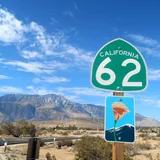
A dog trip runs more smoothly if you have the park's basics straight before you drive in. From a base in Yucca Valley the west entrance is about a twenty-five-minute drive, and it is the busiest of the park's three entrances, sitting in the town of Joshua Tree about five miles south of the Highway 62 and Park Boulevard junction. Our getting here page has the directions from the house.
There are no gas stations, restaurants, or stores inside the park, so fill the tank and pick up anything you need, dog food and water included, in one of the gateway towns first. There is no timed-entry ticket or entrance reservation to drive into Joshua Tree, at least as of 2026, so you can turn up at the gate. Entry runs around $30 per vehicle for a seven-day pass, with a park-specific annual pass around $55, but national-park fees change from time to time, so check the current rate before you go. The park also sets aside a handful of fee-free days each year, but the dates reset annually, so look up the current list.
The most useful fact for a dog owner is the one that makes the heat manageable: the park is open twenty-four hours a day, every day of the year, and the gates stay open even when the entrance stations are unstaffed at night. That is what lets you start at first light and be back at the house before the ground bakes. The visitor centers, like all park buildings, are closed to dogs, so leave the dog outside with a person if you need to duck in for a map. Our rundown of what to know before you visit covers the rest of the first-timer logistics.
Walking a dog on BLM land nearby
Because the in-park trails are closed to dogs, most dog owners in the area do their real walking on the public land that surrounds the Morongo Basin. A great deal of the open desert around Yucca Valley, Joshua Tree, and Twentynine Palms is managed by the Bureau of Land Management rather than the national park, and leashed dogs are generally welcome to walk the flats and the dirt roads out there. It is a way to give a dog a proper stretch on desert ground without breaking any park rule.
The honest caveat is that access, leash rules, and the condition of these roads change, and the boundaries between public land and private homesteads out here are not always obvious on the ground. Those private parcels are real, not hypothetical. A Depression-era homesteading law handed out five-acre lots of this desert, and the little cabins that went up on them, the "jackrabbit homesteads," still dot the basin, some lived in and many long abandoned. On foot with a dog, a boundary you cannot see is easy to cross by mistake. This is local knowledge, not a posted rule, so treat it softly and check before you rely on it. The BLM's California field office for this area, out of Barstow, is the right place to confirm what is currently open, where you can park, and what the leash and cleanup rules are on a given stretch. A quick call or a look at their current maps saves you from wandering onto someone's five-acre parcel.
Wherever you end up, the desert-safety habits matter more off the park's pavement than on it. Keep the dog on the leash, watch for cactus and snakes in the brush, carry more water than you think you need, and turn back before the heat builds. Our post on desert safety and leaving no trace goes through the wider version of all of this, and most of it applies to a dog as well as to a person. Pack out the waste bags too, the same as you would inside the park.
Dog-friendly stops in town
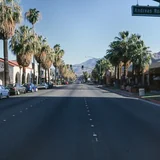
The towns along Highway 62 are where a dog trip comes together, because the park itself gives a dog so little to do. Yucca Valley has a couple of reliable dog-friendly spots. Frontier Cafe, on the western edge of town, is a coffeehouse with a dog-friendly patio; it pours organic coffee made with Joshua Tree Coffee beans and does breakfast, lunch, pastries, and vegan and gluten-free options. It is an easy first stop on the way to the park, coffee in one hand and the leash in the other. The Tiny Pony Tavern, also in Yucca Valley, has a dog-friendly backyard, scratch cooking, and a weekend brunch, which makes it a good end-of-day landing spot.
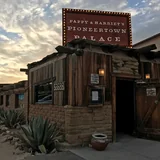
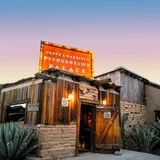
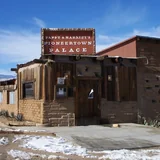
Up in the hills above Yucca Valley, Pioneertown is an outdoor Old West film set with a walkable dirt main street, so it is a pleasant place to stroll a leashed dog and look at the facades, even though you should not assume every business there takes dogs inside. Most sit-down restaurants out here seat dogs only on a patio, if at all, so a patio or an open backyard is what you are looking for. Our Pioneertown guide lays out what is there and how the little town works. For provisions, the two Stater Bros. markets in Yucca Valley are the main grocery anchor, so that is where to stock up on dog food you forgot and water before you head into the desert.
One steady truth about the hi-desert is that hours are short and they change. Many of the good spots keep limited or seasonal days, and places open and close often out here. Before you drive to any cafe or tavern counting on its patio, check the business's own site or social page or give them a call, and do not treat any hours you read as permanent. It is a small habit that spares you from arriving with a hungry dog at a locked door.
Heat and hot ground
The desert's heat is the single biggest risk to a dog here, and it works on two fronts: the air temperature and the ground. Summer daytime highs inside the park regularly climb past 100°F, which is 38°C, and July in the basin averages a high near 96°F. Yucca Valley sits at roughly 3,300 feet, and that elevation takes some of the edge off compared with Palm Springs down in the low desert, but the park interior and the country to the south run hotter than the town does. The park covers a transition between two deserts: the higher, cooler Mojave across the west and north, and the lower, hotter Colorado Desert to the south and east, where a summer afternoon is fiercer still. Across the year the area's temperatures typically run from about the mid-30s to the mid-90s Fahrenheit, though individual days push well past both ends. On a summer afternoon, the middle of the day is dangerous for a dog, full stop.
The ground is the part people forget. Pavement, sand, and dark rock soak up sun and get far hotter than the air, and a dog's paw pads burn on hot ground long before you would think twice about it. The simple test is to press the back of your hand flat to the ground and hold it there for a few seconds. If you cannot keep it there comfortably, it is too hot for paws, and the walk waits. This is why the timing matters so much: the park is open twenty-four hours a day, so start at dawn and save the rest for after sunset, when the ground has given its heat back to the sky.
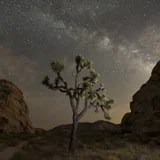
The shoulder seasons are kinder but not foolproof. Spring and fall bring daytime temperatures around 65 to 80°F, which is comfortable for a dog in the shade, though a paved surface in direct afternoon sun can still cook. Winter flips the problem: days are cool, often in the upper 50s to low 60s, and nights drop into the 30s and 40s and can reach freezing. A thin-coated dog will want a coat after dark, especially if you are out for the stars. Read the forecast for the actual days you are visiting, because individual days out here run hotter and colder than the averages suggest.
When to visit with a dog
Beyond the day's timing, the season you choose shapes a dog trip more than most people expect. Spring and fall are the mildest months to be outside with a dog, as the temperatures above lay out, but they pull very different crowds. Spring, roughly March through May, is the park's busiest and most crowded season, wildflower weather that fills the pullouts, and a packed lot is harder work with a leashed dog than an empty one. If you come then, start at first light and keep to the quieter corners. Fall draws visitors too but tends to feel calmer, which makes it one of the easier times to bring a dog.
Summer runs the other way. It is the least busy season, and the reason is the heat: daytime highs regularly climb past 100°F, so a summer trip with a dog becomes a dawn-and-dusk affair with long midday hours back at the fenced house. Winter is quiet in its own way, with cool days and cold nights that can reach freezing, so a thin-coated dog will want a layer once the sun is down. One seasonal detail is easy to miss: the park's reptiles, rattlesnakes among them, are most active in spring and fall, the very stretch when the walking is best, which is one more reason to keep the leash short in the months you most want to let the dog roam. Whatever month you pick, read the forecast for your actual dates rather than the season's averages.
Cactus, snakes, and desert wildlife
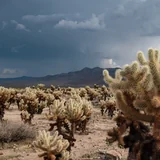
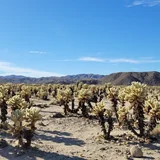
The plant a dog owner should fear most is the teddy bear cholla, the pale, fuzzy-looking cactus that gives the Cholla Cactus Garden its name down in the Pinto Basin. It looks soft and it is anything but. Its stem segments detach at the lightest touch and ride away on barbed spines, which is why it is also called the jumping cholla. The park service is blunt about it.
Do not attempt to pet this teddybear.
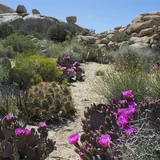
A curious dog that noses a cholla comes away with a face or a paw full of barbed segments that are miserable to remove. The plant is thickest in the Cholla Cactus Garden, about twelve miles south of the north entrance, where it grows so densely that the park suspects the whole stand may be a single plant cloned from fallen joints that rooted where they dropped. But cholla is not confined to the garden; it and other cactus grow all over the region, including on the ground around the house. Keep the dog leashed and out of the plants, and carry a wide-tooth comb or a pair of pliers so you can lever a stuck segment off if it happens. That single tool has saved many a desert dog's evening.
Snakes are the other reason the leash rule exists. The park records 26 snake species, and sidewinder rattlesnakes are common in the sandy stretches. They are most active at dusk and into the night in the warm months, and the park's reptiles in general are busiest in spring and fall when the temperature suits them. A leashed dog kept near the road is far less likely to meet one than a dog nosing through brush. Coyotes are common across the park too, and they are most active at dawn, dusk, and night, especially in hot weather, which is one more reason a small dog should never be off the leash out here.
Coyotes are not the only mammals a dog will scent out here. Bobcats live in the rocky canyons, kit foxes trot the open flats after dark, and black-tailed jackrabbits and desert cottontails are common across the basin; most move at dawn, dusk, or through the night, exactly when a dog is most likely to lunge after something it should leave alone. None of it is a reason to keep the dog home. It is a reason to keep the leash on.
A few more residents are worth a dog owner's attention. The Mojave desert tortoise is a threatened species, and it is illegal to handle or disturb one; it spends most of its life underground, so if your dog finds a tortoise or a burrow, steer it well clear. In autumn you may see a tarantula crossing a road, usually a male that has left its burrow after years underground to look for a mate; the park service calls them timid animals that will not bite unless seriously provoked, but a dog that paws at one is provoking it. Desert hairy scorpions come out at night, and their venom is mild to people, though again, keep an interested nose away. Our post on sharing the desert with wildlife covers who else you are likely to meet and how to give them room.
Carrying water and finding shade
There is no water anywhere in the interior of the park, and that is not a figure of speech. No taps, no fountains, nothing. The park service tells visitors to bring all their own, with a common guideline of at least one gallon, about four liters, per person per day, and you should carry extra on top of that for the dog. Fill everything before you go in. Potable water is available only at a handful of developed sites near the edges: the Joshua Tree National Park Visitor Center in downtown Twentynine Palms, the Cottonwood Visitor Center at the south end, and the Black Rock Nature Center in Yucca Valley. Do not plan on refilling deep in the park, because you cannot.
Pack a collapsible bowl so the dog can actually drink what you carry, and offer water more often than you think it needs. Shade is the scarce thing out here; the desert has little natural cover, and a boulder's shadow moves as the sun does. Plan shade breaks the way you plan water breaks, and keep them short in summer. Above all, never leave a dog in a parked car, even for a few minutes and even with the windows cracked. A closed car heats up frighteningly fast in this climate, on mild days as well as hot ones, and it is the most avoidable danger on the whole trip.
One more piece of the logistics: cell reception inside the park is very limited and should not be relied on. Download your offline maps before you arrive and tell someone your plan, because you may not be able to call for help from a pullout. Our high-desert packing list runs through the water, sun, and cold-night gear in more detail, and it is easy to fold the dog's share into the same bag.
Coming back to a dog-friendly house
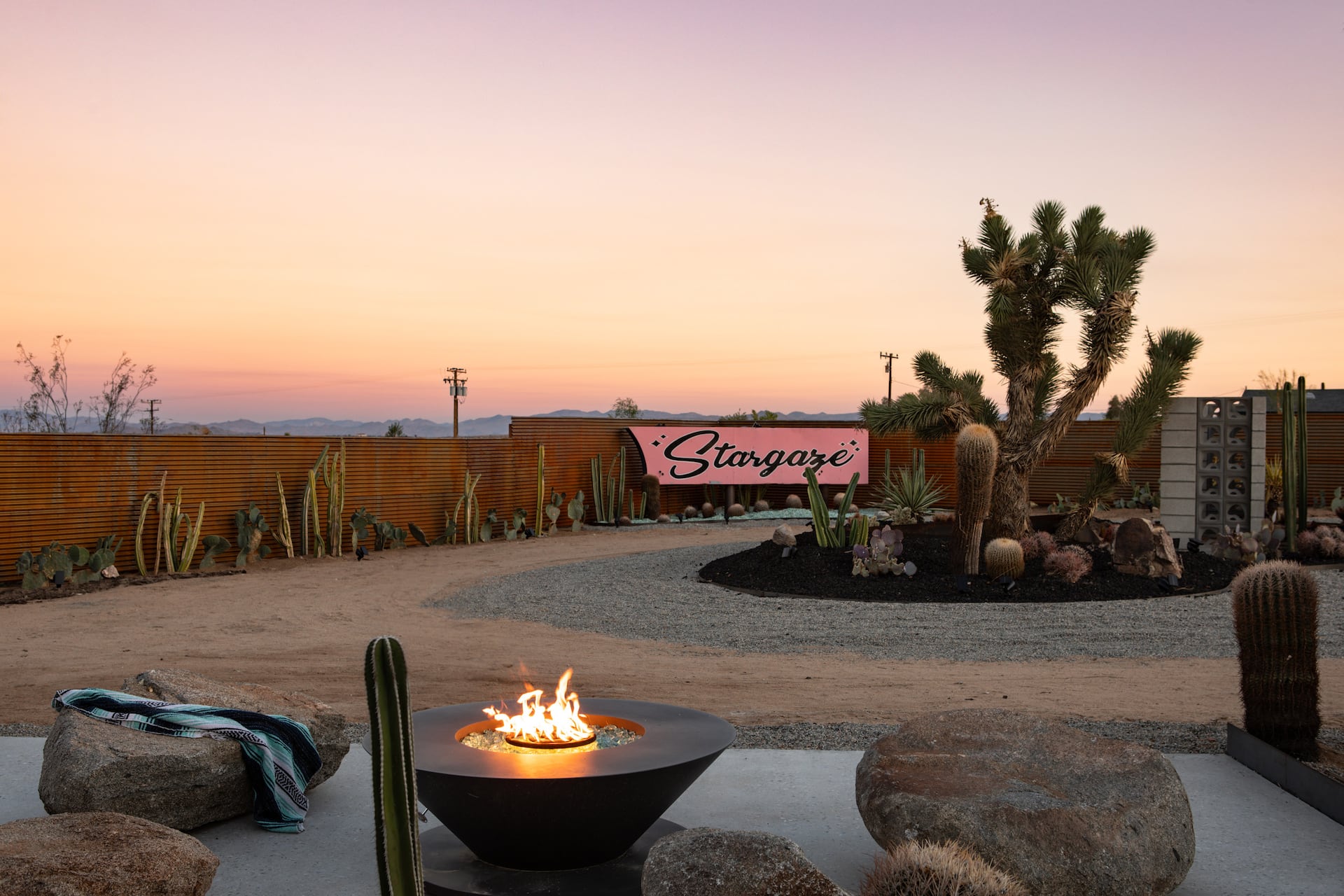
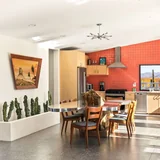
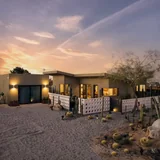
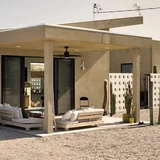
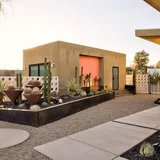
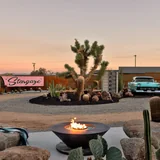
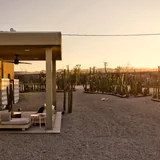
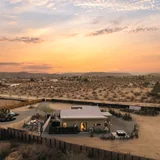
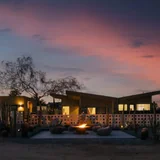
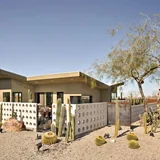
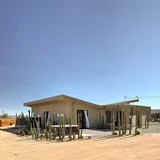
Stargaze Escape is dog-friendly, and after a desert day that matters more than it sounds. Dogs are welcome here; cats are the exception, because of a household allergy, so this is a place for the dog in the family rather than the cat. The whole house is yours, it sleeps four across two king bedrooms, and it sits on a fully fenced desert lot. That fence is the quiet luxury of the trip: it means the dog can be off the leash in the yard while you are around, decompressing after hours of being clipped to a six-foot lead in the park.
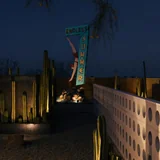
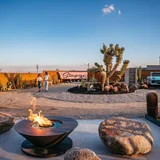
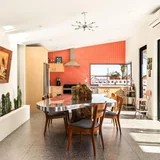
The lot is landscaped with thousands of cacti, agave, and Joshua trees, which is beautiful and also means the cholla caution follows you home. Keep an eye on a dog exploring the yard, steer it away from the plants, and leave the cacti and rocks as you found them, the same as the park asks. Inside, there is air conditioning and heating, so the dog has a cool place to sleep off the midday heat while you plan the evening, and a full kitchen so you are not hunting for a dog-friendly restaurant every night.
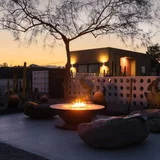
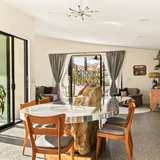
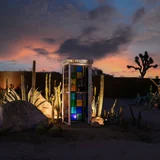
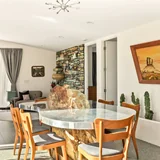
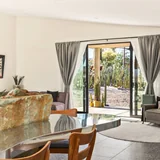
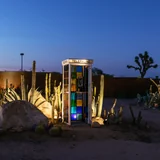
A freestanding soaking tub sits by a wide window onto a private courtyard, and a star-perforated steel wall screens the pool; there is a stained-glass telephone booth, a dining table built around a natural boulder, and a BBQ grill outside. The metalwork that turns the old car into a bed and rings the fire pit was fabricated by Emerick's Ironworks. The house is rated 5.0 across 54 reviews and marked a Guest Favourite on Airbnb, and one review sums up the yard as having "photo-worthy spots everywhere."
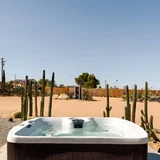
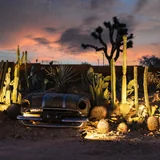
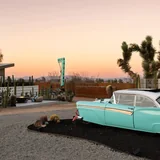
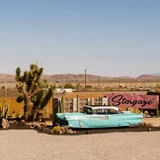
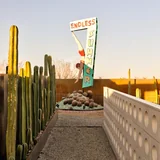
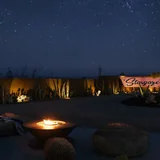
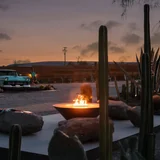
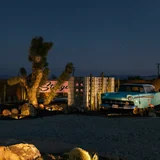
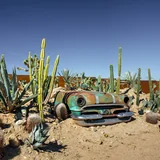
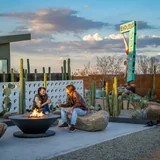
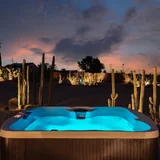
The pool and the rest of the yard are for the people. There is a stock-tank pool and a hot tub under a vintage painted "Endless Summer" metal sign, a gas fire pit ringed with natural boulders for the cold nights, and a restored 1950s car parked on the gravel and turned into an open-air bed you can lie back in to watch the stars. A few sensible house rules keep it easy: quiet hours from 10pm, no parties, and no glass near the pool or hot tub. The house is about a twenty-five-minute drive from the park's west entrance, close enough for a dawn start and an early return before the day turns hot.
A dog-friendly day plan
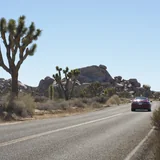
Here is a shape for a day that respects the heat and the rules. Start early, before the ground warms. Have breakfast at the house or grab coffee on the dog-friendly patio at Frontier Cafe in Yucca Valley, then drive the twenty-five minutes to the west entrance while it is still cool. Inside the park, work the dog-legal spots: stop at the pullouts and picnic areas along Park Boulevard where the dog can stretch within the hundred-foot band, and drive up to Keys View so the dog can join you on the paved overlook path for the long view over the valley.
Because the trails themselves are closed to dogs, this is a good day to split up if there is more than one of you. One person can take a short hike such as Hidden Valley or Barker Dam while the other stays with the dog at a shaded picnic area, then swap. If you would rather keep the group together, treat the morning as a scenic drive with dog-friendly stops and save the real hiking for another day when the dog can rest at the house. Either way, aim to be heading out before the midday heat lands.
Spend the hot middle of the day back at the fenced house, the dog cool indoors or resting in the shade with its water bowl, while you take the pool or the hot tub. In the late afternoon, when the ground cools, head out again: a leashed walk on BLM land after you have checked the current access, a stroll down Pioneertown's dirt main street, or the easy paved loop at the Oasis of Mara over in Twentynine Palms. Come back for the gas fire pit and the stars from the car bed, mind the 10pm quiet hours, and let the dog sleep off a good desert day.
If that sounds like the kind of trip you and your dog would take, look over the dates and book your stay, then read the pet-friendly page so you arrive knowing exactly how the house works for a dog. Pack the six-foot leash, the collapsible bowl, and the cactus comb, and you are set.