







Itinerary
Joshua Tree With Kids
Joshua Tree is an easy place to bring children. The trails are short, the boulders are shaped for clambering, and the animals are odd enough to hold a young explorer's attention through a whole morning. This guide covers the gentle hikes, the safe scrambles, the free Junior Ranger badge, the heat and the spines to plan around, and the slow afternoons back at the house near Yucca Valley, about 25 minutes from the park's west entrance. Pack water and sun hats, keep the hard walking to the cooler hours, and the high desert becomes a good trip for small legs.
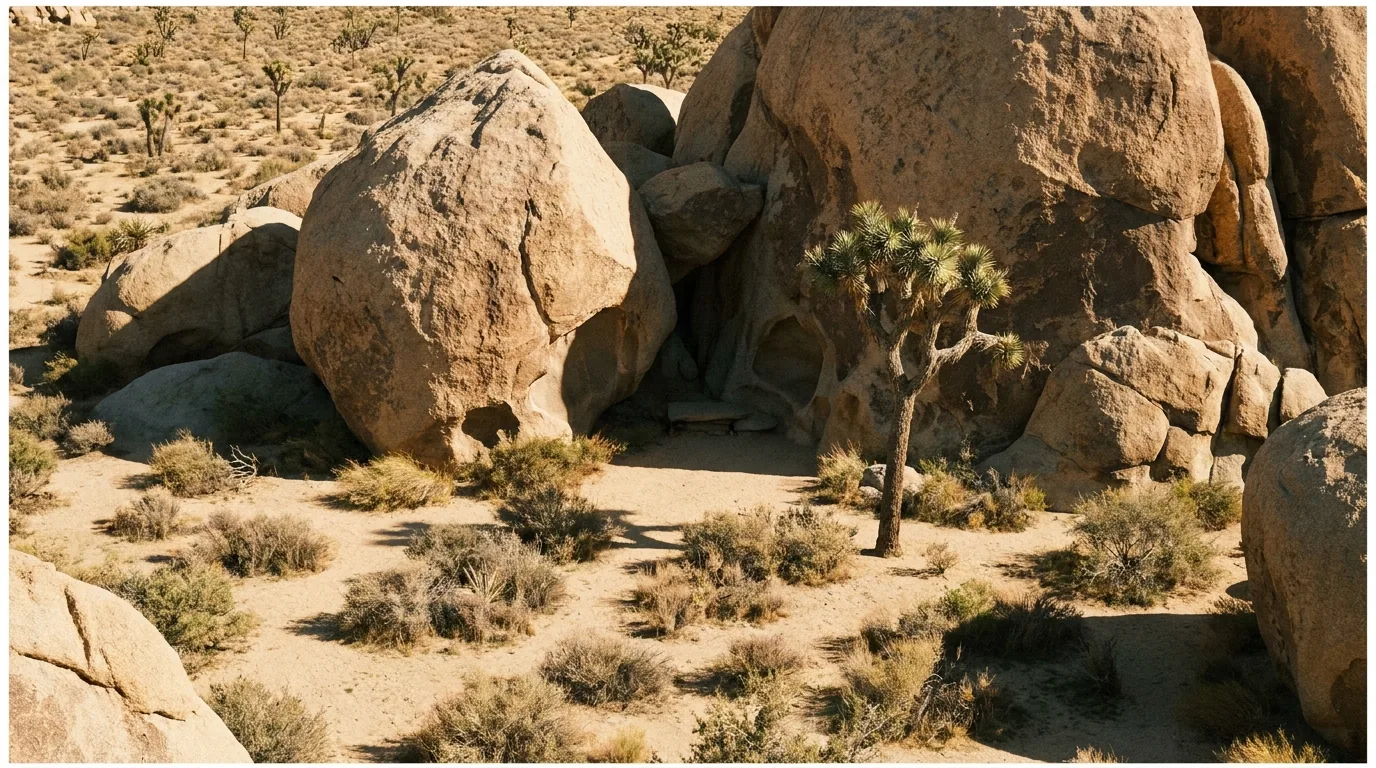
What kids like about Joshua Tree
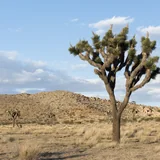
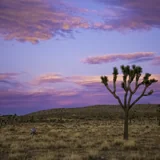
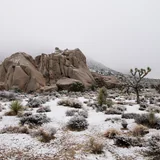
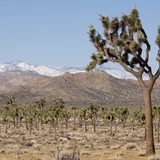
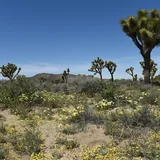
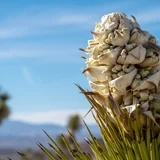
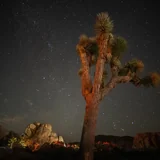
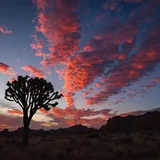
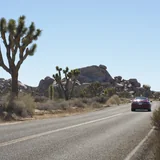
The park spans two deserts, the higher, cooler Mojave across the west and north and the lower, hotter Colorado to the east and south, which is why the plants and animals shift so much as you drive across it. For kids, the draw is plain: the Joshua trees look like something drawn by hand, the rock piles are enormous, and there are lizards everywhere. The Joshua tree itself makes a good first lesson. It is a yucca (its botanical name is Yucca brevifolia), not a true tree at all, with no growth rings and no real wood, and modern DNA places it in the agave family. Tell a child that each one grows only about half an inch to three inches a year, that the average tree lives around 150 years and a few may pass 300, and that the tallest reach over 40 feet, and the strange shapes start to make sense.
The animals do a lot of the work. The park has recorded over 250 bird species, and because the desert plants are sparse, birds are easier to spot here than in most parks. Kids can look for the cactus wren, the largest wren in North America, which builds bulky nests down in the spines of cholla; the greater roadrunner, a ground-running member of the cuckoo family that would rather run than fly; and Gambel's quail, which travel in coveys, the males wearing a teardrop plume on the head. The kangaroo rat is a fine dinner-table fact — it can live its whole life without ever drinking water, pulling moisture from the seeds it eats. Most desert mammals, including coyotes, kit foxes, and jackrabbits, keep to dawn, dusk, and night to dodge the heat, so early mornings and the hour before dark are your best chance to see something move.
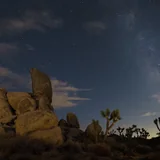
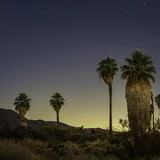
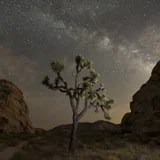
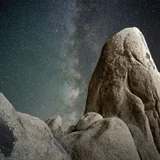
After dark the sky is the attraction. Joshua Tree was named an International Dark Sky Park in 2017, at the Silver Tier level, which means the interior is dark enough to show the structured band of the Milky Way to the naked eye. Rangers run free night-sky programs through the season, from reading a star chart to naming constellations, and they are pitched to work for families. Older kids can learn a constellation or two; younger ones just like that there are so many stars. You do not have to go far for it, since the sky over the house is dark too, which is one reason the trip works even with an early bedtime.
Short trails for small legs
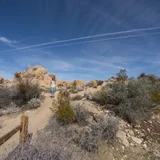
Joshua Tree's best family hikes are short, flat, and full of things to look at, so a mile can take an hour when a five-year-old stops at every lizard. The distances below come from the park service; other sources round them a little differently, so treat them as "about" and check the current trail information before you go. Our full rundown lives in the guide to the best hikes in Joshua Tree, but a few stand out for small legs.
- Hidden Valley. An easy loop of about a mile with roughly 100 feet of climbing, circling a rock-enclosed valley that was once rumored to hide stolen cattle. Big boulders on every side make it feel like an adventure without any real exposure.
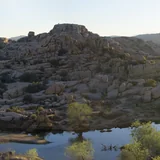
- Barker Dam. An easy loop of about 1.1 miles (some sources say closer to 1.3) with around 50 feet of gain. It passes monzogranite boulders, a historic water tank and dam, and a rock-art panel; after wet winters there may be water at the dam, which draws birds.
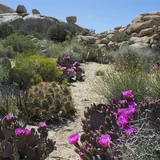
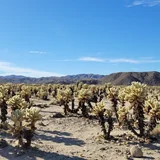
- Cholla Cactus Garden. A flat quarter-mile loop with about 10 feet of elevation change through a dense stand of teddybear cholla. Beautiful, and very much a look-don't-touch trail, which is worth explaining before you get out of the car.
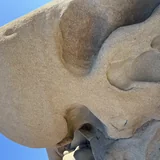
- Skull Rock. An easy loop of about 1.7 miles near Jumbo Rocks, with the skull-shaped boulder sitting right beside the road, so you can see it even if the whole loop is too much.
- Cap Rock. A short, easy nature loop of about 0.4 mile on mostly level ground, named for the flat boulder perched on top of the formation.
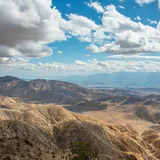
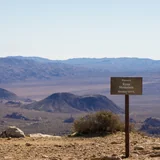
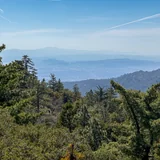
Two more are worth knowing. Arch Rock is an easy lollipop of about 1.4 miles from the Twin Tanks trailhead, but a much shorter spur of roughly a third to a half mile reaches the same granite arch from the White Tank campground, which is the start to choose with young kids. And if you drive nowhere else, Keys View is a paved quarter-mile loop at about 5,185 feet that looks out over the Coachella Valley, the San Andreas Fault, and, on a clear day, the Salton Sea and the San Jacinto and San Gorgonio peaks; it is a lot of view for very little walking, which is what you want with a tired toddler. For slightly older children ready for more, Split Rock is a moderate 2.5-mile loop through boulder piles with about 150 feet of gain.
Boulder scrambling with kids
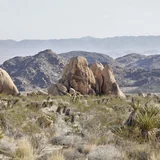
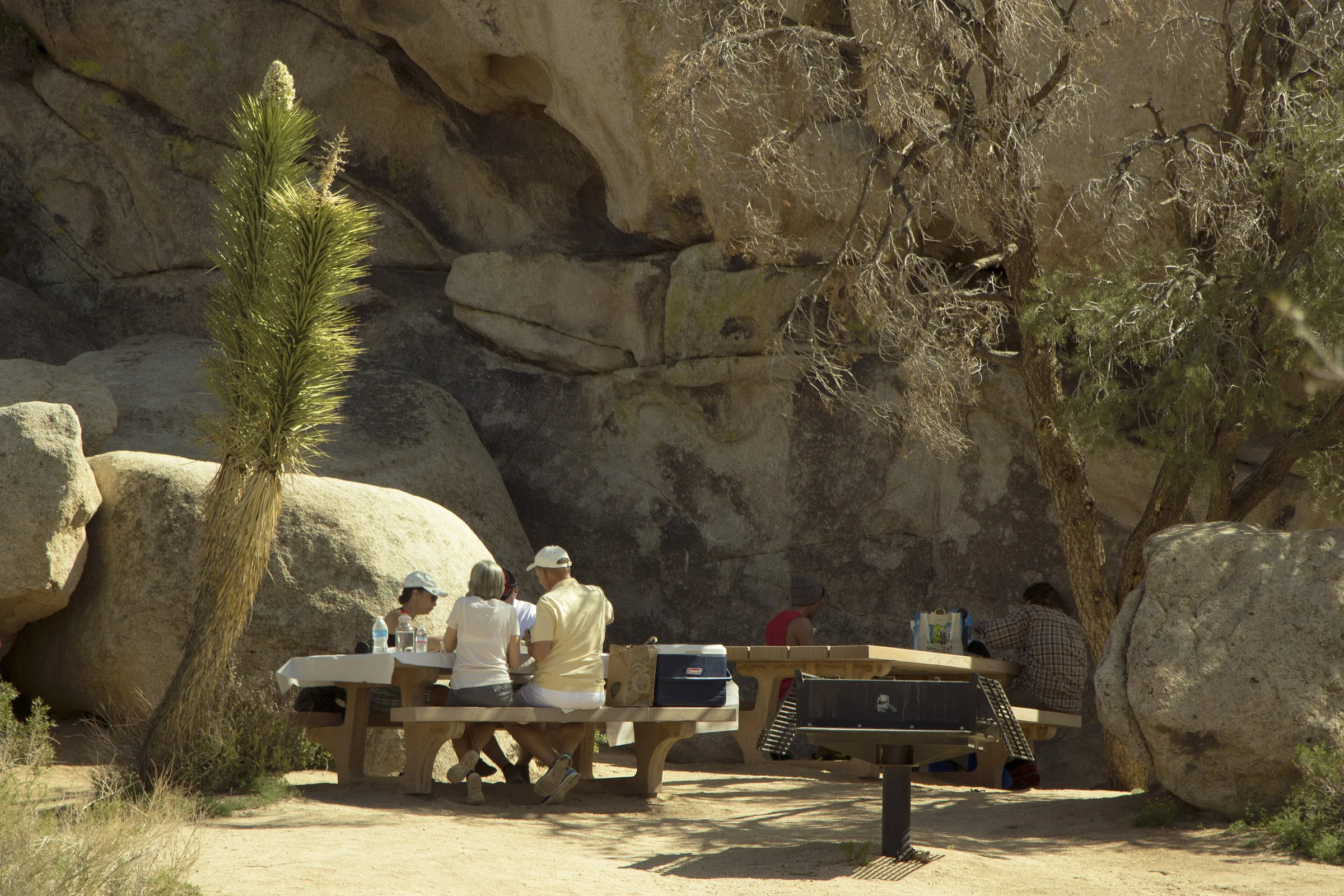
The rock piles are the reason many kids remember Joshua Tree. The stone is monzogranite, a light, coarse granite that cooled underground from magma more than 100 million years ago; groundwater then rounded the buried blocks the way water rounds the corners of an ice cube, and when the climate dried, flash floods washed the soft material away and left the smooth boulders stacked on top of one another. That is a good thing to explain at the base of a pile, because it is why the rock feels grippy and rounded rather than sharp.
Joshua Tree is a world-famous climbing area, with more than 8,000 roped routes and over 2,000 boulder problems, but you do not need any of that to give a child a good scramble. The safe approach is to stay low and stay on rock you can climb back down. A useful rule for families: if you cannot see how you would get down, do not go up. Boulders that look easy from below often have a much harder descent, and it is easy to get stuck partway once you are up there. Spot young kids from below with your hands ready, keep to the lower blocks, and let the height stay small.
A few spots suit this well. The ground around Skull Rock and Jumbo Rocks has low, rounded boulders right by the road. Cap Rock and Hidden Valley are ringed with beginner-friendly stone. Hall of Horrors, a roadside cluster of formations between the Ryan and Sheep Pass campgrounds, is a popular scramble with slots and short walls; it is informal ground with no marked trail, so keep the group together and pick the easy lines. Two cautions matter more here than anywhere. The rock gets hot in summer and can burn hands and knees by late morning, so scramble early. And snakes and other animals shelter in shaded cracks, so teach kids never to reach or step into a crevice they cannot see into. If your family wants to go further with a guide or a class, the guide to rock climbing in Joshua Tree covers the outfitters and the beginner areas.
The Junior Ranger program
The Junior Ranger program is the single best structure for a day with kids, and it is free. Pick up an activity booklet at any visitor center or entrance station, have the children work through the activities — drawing, writing, watching for wildlife, and attending a ranger program — and turn it in to a ranger, who reviews it and awards a badge. It is open to kids of all ages, and the tasks scale, so a four-year-old and a ten-year-old can both finish their own version. If you run out of time in the park, there is a virtual version that earns a badge by mail.
The closest place to start is Black Rock Nature Center, at the Black Rock Campground on the Yucca Valley edge of the park, a short drive from the house, so you can grab the booklet on the way in. The other contact stations are the Joshua Tree Visitor Center in downtown Joshua Tree, near the busy west entrance; the Joshua Tree National Park Visitor Center in downtown Twentynine Palms, by the north entrance; and the Cottonwood Visitor Center at the south end. All four have restrooms and staff who can point you to a program that fits your day. Only Black Rock and Cottonwood, among the campgrounds, have running water, and there is none in the park interior, so the visitor centers double as your water stops. There is no timed-entry reservation to drive in, and entry runs around $30 per vehicle for a seven-day pass; fees change, so check the current figure with the park before you come.
The booklet does something useful beyond the badge: it slows kids down and gives them a reason to look closely. A child hunting for a lizard to sketch or a plant to name pays attention to the desert in a way a straight walk rarely produces. It also builds in a ranger program, which is worth planning around, since the talks and the night-sky sessions are real highlights and cost nothing. Many kids treat the badge as the goal of the whole trip, which gives a too-hot or too-windy afternoon at a visitor center a clear point. Check the current schedule when you pick up the booklet, because the programs are seasonal.
Cholla, spines, and desert safety
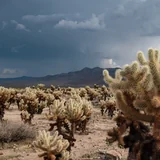
The desert is safe for children who are taught a few rules, and the rules are short. The first is the cholla. The teddybear cholla that forms the Cholla Cactus Garden in the Pinto Basin, about 12 miles south of the north entrance, looks soft and fuzzy in the light, which is exactly the problem. Its stem segments detach at the lightest touch and ride away on barbed spines, the reason it is nicknamed the jumping cholla, and the park service puts it plainly: do not attempt to pet this teddybear. Keep kids on the loop path, keep hands in, and watch where small feet go, because dropped joints lie on the ground and will lodge in a shoe or a shin. If a segment does catch someone, do not grab it with bare fingers; that is why we pack a fine-tooth comb and tweezers, covered in the packing list below. Our guide to the cholla garden and the south of the park has the full walk.
Snakes are the second rule. Joshua Tree has 45 reptile species, including 26 kinds of snake, and the sidewinder rattlesnake is common in the sandy washes, most active from dusk into the night in warm months. Snakes shelter from the midday heat in shade and crevices, so the lesson for kids matches the one from scrambling: never reach or step into a crack, a bush, or a shadow you cannot see into, and give any snake a wide berth. The park is also home to the desert tortoise, a threatened species that is illegal to touch or move; if your family is lucky enough to see one crossing a road, keep back and let it pass on its own.
Two desert creatures sound frightening and mostly are not. Tarantulas are the largest spiders in North America, two to three inches across, and the park service calls them timid; they will not bite unless seriously provoked. In fall you may see a male wandering in the open looking for a mate, and left alone it is harmless. The desert hairy scorpion, the largest scorpion in North America, is nocturnal, and its sting is mild to people; it also glows blue-green under ultraviolet light, which makes a UV flashlight one of the better after-dark activities you can hand a kid on the patio at the house. For the wider set of desert manners, from water to staying on trails to leaving rocks and plants where they are, the post on desert safety and leave no trace is worth a read before you come.
Above all, plan for water and heat. There is no water anywhere in the park interior, and the park service recommends carrying at least a gallon per person per day. Cell service inside the park is poor and should not be relied on, so download offline maps before you arrive and tell kids what to do if they get separated. Keep everyone in hats and sunscreen, and turn back earlier than you think you need to.
Staying cool in the heat
Heat is the thing most likely to spoil a family day here, and it is manageable if you respect it. Summer highs regularly top 100°F, with July averaging a high near 96°F, and even the shoulder seasons warm up fast by midday; those are typical figures, and any given day can run hotter, so check the forecast. The desert wildlife has the right idea. Coyotes, foxes, and jackrabbits go quiet in the heat and move at dawn and dusk, and the round-tailed ground squirrel even sleeps through the hottest stretch of summer. Copy them. Do your hiking and scrambling in the first cool hours after sunrise, be back near shade or water by late morning, and save the afternoon for the pool.
Yucca Valley helps a little on its own. The town sits at about 3,300 feet, high enough to run cooler than the low desert around Palm Springs, roughly 50 minutes down the hill. Shade is still scarce on the trails, so bring your own plan: more water than you think, salty snacks, hats, and light long sleeves that block sun better than bare arms. Watch young kids for the early signs of too much heat, like flushed faces, crankiness, a headache, or going quiet, and treat those as a signal to stop, drink, and cool off rather than push on.
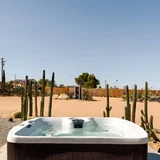
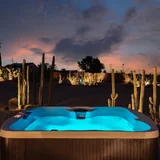
The house is built for the afternoon retreat. The stock-tank pool is the center of it, cool enough to reset everyone after a morning out, and there is a private hot tub open all year for the cooler evenings. Air conditioning inside means naptime and quiet time work. One house rule matters most with kids around water: no glass near the pool or the hot tub, so pour drinks into something unbreakable before anyone gets in. You can read more about the water in the guide to the pool and hot tub. A good summer day here often runs a sunrise hike, a diner breakfast, a swim, a long shaded lunch, and a second short outing once the sun drops.
Ideas for a rainy or windy day
Rain is rare in the high desert, but when it comes it matters. Brief thunderstorms are possible in mid-to-late summer, roughly July through September, and they can bring flash flooding, so the one firm rule is to stay out of washes, narrow canyons, and low ground when a storm is around or upstream; water moves through the desert fast and from farther off than you would guess. Wind is the more common disruption. The basin can blow hard, and blowing sand plus small children is not a good hiking combination.
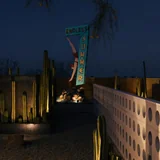
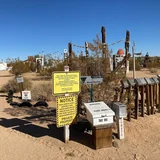
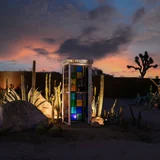
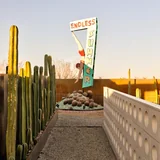
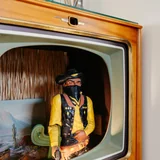
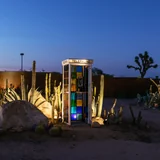
Either way, there is plenty to do. The visitor centers make a good indoor stop, with exhibits, restrooms, and the Junior Ranger booklet to work on at a table. Downtown Joshua Tree, Yucca Valley, and Pioneertown have cafes and shops for a slow morning, and a diner breakfast can eat a whole windy hour happily. The Noah Purifoy Outdoor Desert Art Museum, a free ten-acre field of more than 100 large sculptures made from found materials, is an outdoor stop but a low-key one that kids can roam without the exposure of a trail, and it holds up on an overcast day. If the weather has closed in for the day, the hours are often best spent at the house: bake or cook something in the full kitchen, let kids hunt for the star shapes cut into the steel screen by the pool or crowd into the stained-glass telephone booth for photos, and slow the whole day down. A summer monsoon storm can sometimes trigger a short second bloom of desert plants afterward, though whether and when it happens depends on the rain, so a wet spell is not all bad news. For a longer list of bad-weather options, we keep one going in the post on a rainy day in the high desert.
Down time back at the house
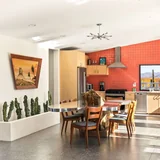
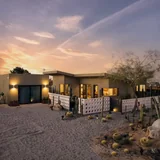
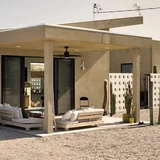
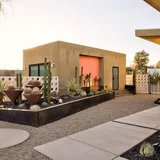
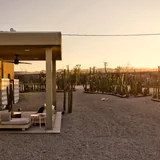
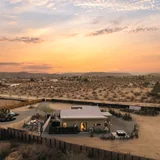
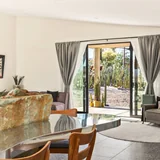
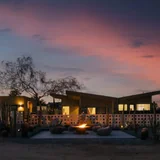
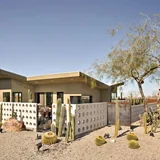
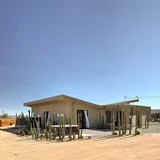
Most of a good Joshua Tree trip with kids happens away from the park, in the slow hours between outings, and the house is set up for exactly that. It sleeps four, with two king bedrooms and one bathroom, so it fits a family of four; two kids can share a king, and you have the whole place and a fully fenced lot to yourselves. The fence matters with young children and with a dog, though the lot is planted with thousands of cacti, agave, and Joshua trees, so it still wants an adult's eye. The spines are real, and the same look-don't-touch rule from the trail applies in the yard.
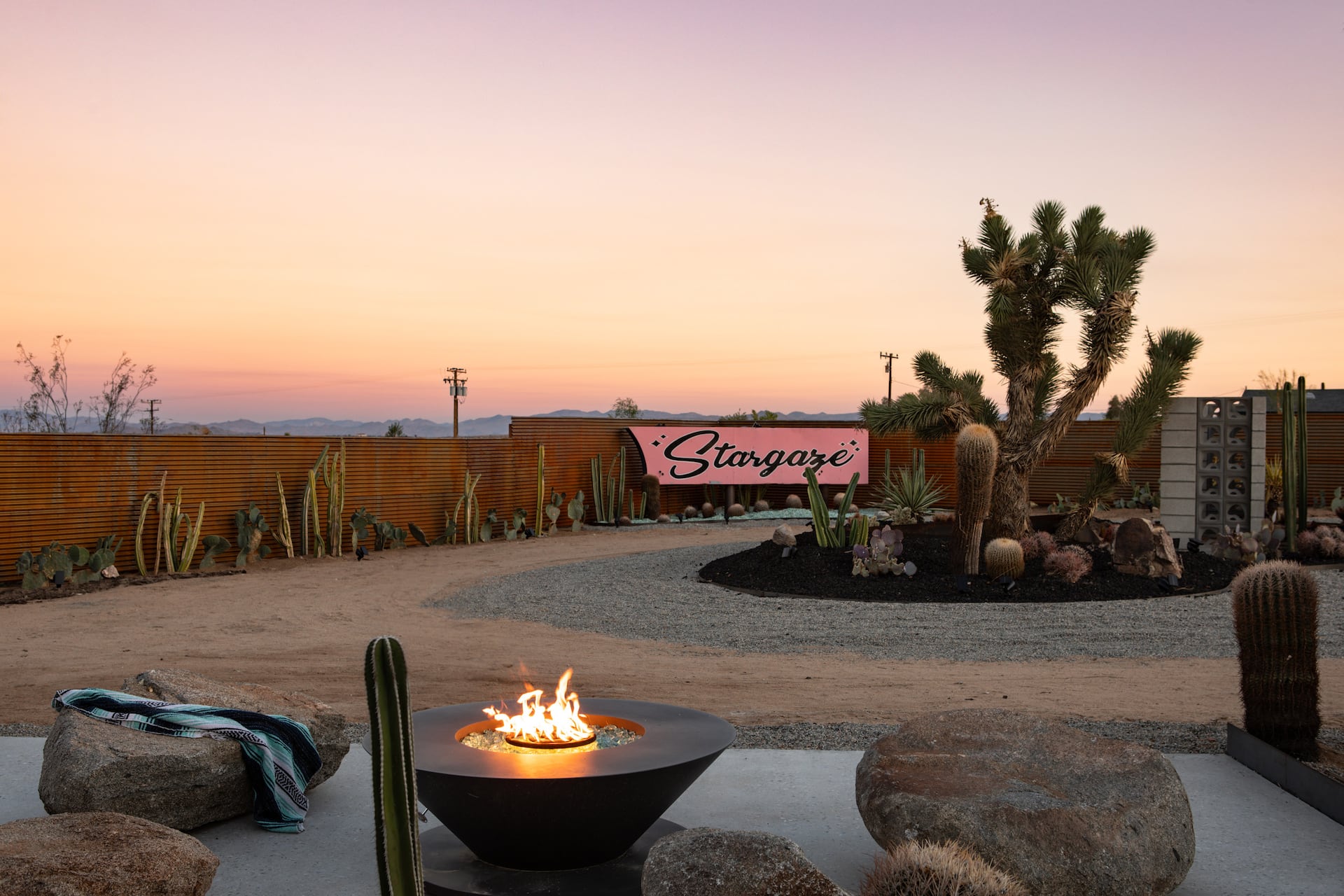
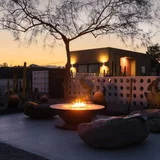
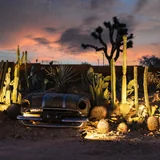
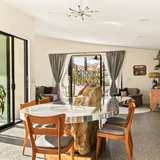
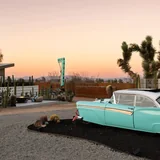
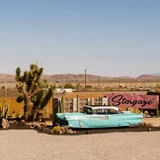
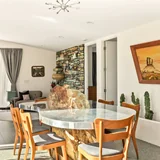
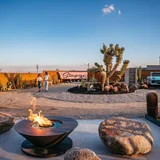
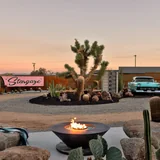
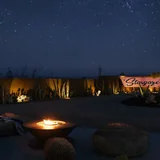
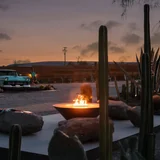
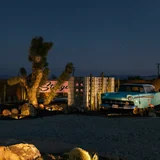
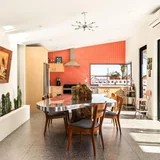
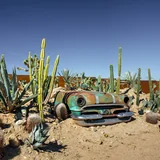
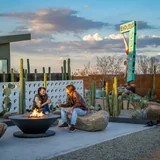
The features kids gravitate to are easy to list. The stock-tank pool and the hot tub are the obvious ones. The car bed, a restored 1950s car turned into an open-air bed, parked on the gravel with a custom stargazing roof that can be pulled back, is a favorite for lying out under the stars once it is dark, and the dark sky here is the same one you drove out for. There is a gas fire pit ringed by natural boulders to gather around after dinner, a dining table built around a boulder, and that stained-glass phone booth and star-cut steel screen that become a scavenger hunt for a bored seven-year-old. The metalwork around the property, including the car-bed conversion and the fire pit, was fabricated by Emerick's Ironworks.
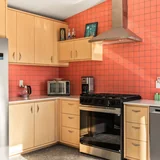
The full kitchen is the quiet workhorse of a family stay. Cooking a couple of meals at the house saves the drive back to town with hungry, tired kids, and there is an outdoor BBQ grill for the evenings. The house is dog-friendly, so the family dog can come, though cats cannot, because of a household allergy; quiet hours start at 10pm and there are no parties, which suits an early-to-bed household anyway. The place is rated 5.0 across 54 reviews and is a Guest Favourite.
One review sums it up as having "photo-worthy spots everywhere."
The tour of the house has the full layout if you want to see how four people fit before you settle on dates.
Family-friendly stops nearby
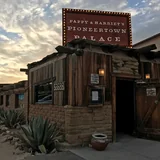
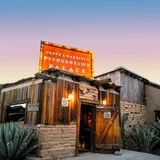
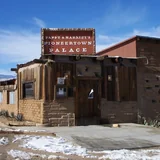
Beyond the park gates, the Morongo Basin has enough to fill the non-hiking parts of a trip. Pioneertown, in the hills above Yucca Valley, is the easy win with kids. It was built starting in 1946 as a live-in Old West movie set, with working buildings that doubled as film facades and as real homes and shops; founders and backers included the actor Dick Curtis and Roy Rogers with Dale Evans, and more than 50 films and TV shows were shot there. Kids can walk the length of Mane Street and feel like they have wandered onto a Western. Pappy & Harriet's, the Pioneertown barbecue and music spot, is family-friendly in the earlier part of the day. Our Pioneertown guide has the details and timing.
The Noah Purifoy museum, mentioned above, is a good hour of wandering for free. For a stroller-friendly walk, the Oasis of Mara at park headquarters in Twentynine Palms is a paved half-mile loop with benches and interpretive panels, one of the few flat, fully accessible paths in the area and gentle enough for the smallest walkers. Part of the trail has been closed after flood damage, so check the park's alerts before you go. If you are here on a Saturday morning, the Joshua Tree farmers' market runs downtown, roughly 8am to 1pm, with produce, baked goods, and prepared food; check that it is on the week you visit, since it is seasonal and weather-dependent.
For food with kids, the towns keep it simple. Frontier Cafe on the Yucca Valley edge does organic coffee, pastries, and breakfast with a dog-friendly patio; Crossroads Cafe in downtown Joshua Tree is a long-running diner near the west entrance; JT Country Kitchen has served breakfast and brunch in Joshua Tree since 1977; and La Casita Nueva in Yucca Valley is a sit-down Mexican spot with a Sunday brunch that families use. Hours in the high desert change often and some places close several days a week, so check before you drive over. Stater Bros. in Yucca Valley is the grocery anchor if you are stocking the kitchen for the stay.
What to pack for kids
Packing for the high desert with kids is mostly about water, sun, and swings in temperature. Get those right and the rest is comfort.
- Water, and more of it. There is none in the park interior, so bring at least a gallon per person per day in refillable bottles and fill up before you enter; Black Rock Nature Center on the Yucca Valley side is a handy last stop.
- Sun protection. Wide-brim hats, sunscreen, sunglasses, and light long sleeves for everyone, because shade is scarce on the trails.
- Closed-toe shoes. Sturdy sneakers or light boots for scrambling and for walking anywhere near cholla; skip the sandals in the park.
- Layers. The desert swings hot to cold in a single day. Winter nights can drop to freezing and summer nights stay warm, so pack a fleece and a light jacket even in summer.
- Offline maps. Download the park map before you arrive, since cell service inside is poor. A paper map from a visitor center is a good backup.
- A spine kit. A fine-tooth comb, tweezers, and a small first-aid kit handle the cactus joints and scrapes that come with kids and rocks.
- Snacks. There are no stores or restaurants inside the park, so carry more food than a normal outing.
- Night-sky extras. A dim red flashlight or headlamp keeps night vision intact, because eyes take 20 to 30 minutes to adjust to the dark and one glance at white light resets it; a UV flashlight turns up scorpions on the patio for a harmless thrill.
- Swim things. Suits and towels for the pool and hot tub, and remember the no-glass rule around the water.
If you are bringing the dog, pack its own water and a six-foot leash, and know before you go that dogs are not allowed on park trails, in the backcountry, or more than 100 feet from roads and campgrounds; the fenced yard and the surrounding public lands are where a dog does its walking here. For a deeper checklist that covers the adults too, the post on packing for the high desert goes further. When the bags are ready and the dates are set, book the house and plan for early starts; the sooner you are on the trail, the better the day goes with kids.