



Itinerary
Planning a Trip to Joshua Tree
A Joshua Tree trip rewards a little planning. The park has no gas, no food, and no water once you are inside it, cell service drops away at the boundary, and the towns along the highway keep short, changeable hours. This guide walks through when to come, how long to stay, how to get here, where to base yourself, the park rules that trip up first-timers, and what to book before you leave home. Everything below is built around a house in Yucca Valley that puts you about 25 minutes from the west entrance.
When to Visit
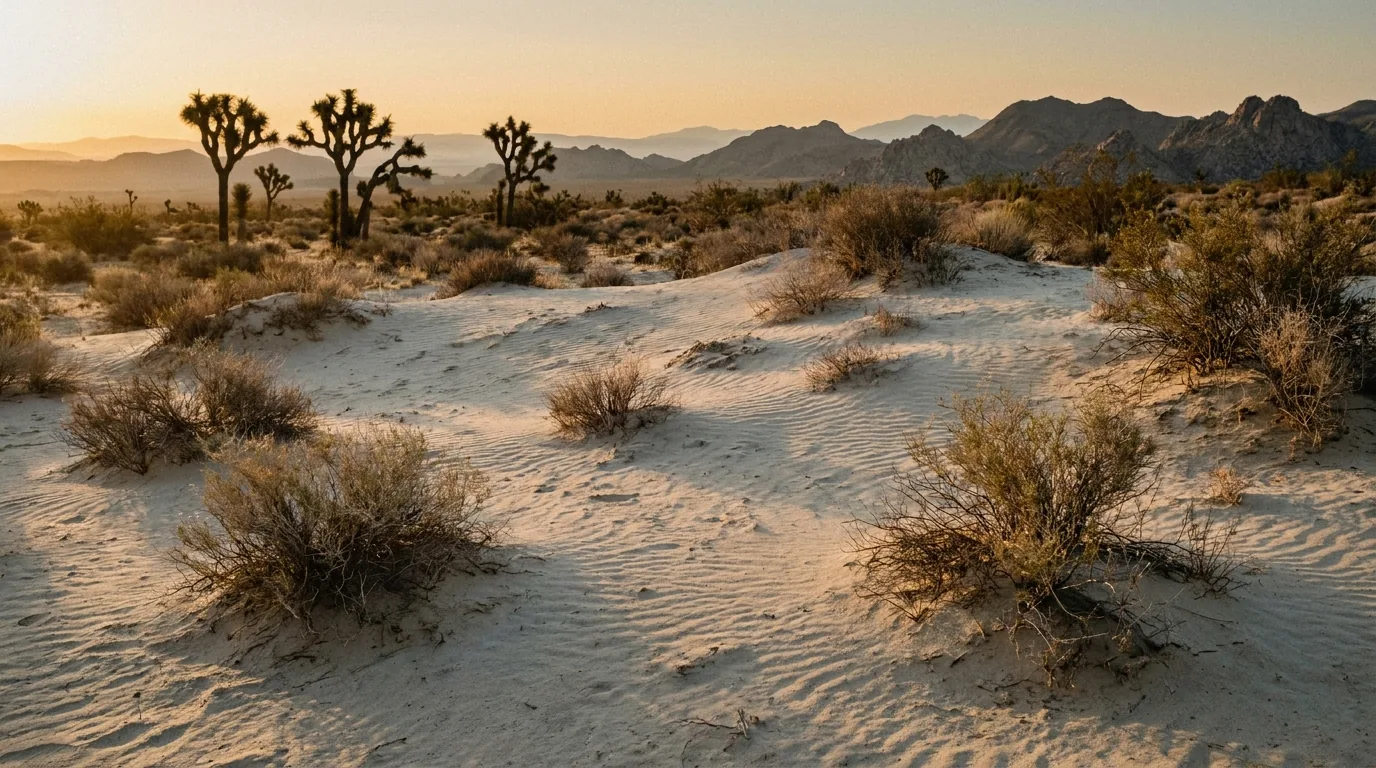
The comfortable window in Joshua Tree runs October through May, and the high season tracks the weather. Spring, roughly March through May, is the busiest and most crowded stretch, partly because it overlaps peak wildflower season and partly because the daytime temperatures are kind. Fall is the other popular window. Summer is the quietest time of year for a simple reason: daytime highs regularly climb past 100°F (38°C), and the park empties out. Winter sees fewer visitors too, though the nights drop to freezing.
Yucca Valley sits at roughly 3,300 feet in the high Mojave, which takes some of the edge off the heat compared with Palm Springs down in the low desert. Even so, the numbers swing hard by season. Summer highs (June through August) commonly reach the mid-90s and cross 100°F, with July averaging a high near 96°F; nights stay warm, often in the 60s and 70s. Winter days (December through February) tend to sit in the upper 50s to low 60s, and nights fall into the 30s and 40s, sometimes to freezing. Spring and fall are the mildest, with daytime temperatures around 65 to 80°F. These are averages; any given day can run hotter or colder, so check the forecast close to your dates.
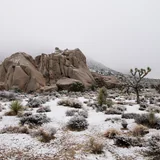
A couple of seasonal quirks are worth knowing. Brief monsoon thunderstorms are possible from about July through September, and they can trigger flash flooding in washes and sometimes a second, smaller round of desert blooms. Snow is genuinely rare in the high desert; an occasional light winter dusting can happen but usually does not last. And if you come in the cold months, the flip side of a chilly night is a clear, dark sky.
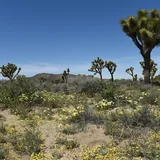
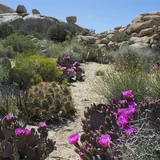
If wildflowers are the draw, know that they are never a sure thing. Blooms generally run February through June and peak around March and April, progressing upward by elevation as the season warms, but the display depends heavily on winter rain. Seeds need about a half inch of rain in a single storm plus evenly spaced follow-up rain, and a spectacular "super" bloom happens only about every five to ten years — 2019, which followed a very wet winter, was one. Plan the trip for the desert first and treat a big bloom as a bonus, and look at the park's current wildflower report before you build a day around it.
One more timing note worth checking: the park designates a handful of entrance-fee-free days each year, often clustered around holidays like Presidents Day, Memorial Day, and Veterans Day. The exact roster is reset every year, and for 2026 some of these days are designated for U.S. citizens and residents only, so confirm the current-year list rather than trusting last year's dates. For a fuller month-by-month breakdown of the high desert's weather and crowds, see our guide on the best time to visit the high desert.
How Long to Stay
Joshua Tree National Park covers more than 790,000 acres, so how long you stay shapes what you can realistically see. A two-night weekend is enough for a genuine first taste: one full day inside the park and an evening or two back at the house under the stars. It is a good fit if you are driving in from Los Angeles, Orange County, or San Diego and want a short reset.
Three or four nights is the sweet spot for most first trips. That length lets you split your time — a park day for the marquee stops and easy trails, a second day for the towns, the art sites, and Pioneertown, and unhurried mornings and evenings at the house in between. It also builds in slack for the desert's rhythm, where the middle of a summer day is best spent by the pool and the good light comes early and late. If you are flying in and renting a car, three nights makes the airport time worth it, since you lose the better part of two days to travel on a shorter trip.
Longer stays reward people who want to hike more of the park's trails, take a day trip up to Big Bear or out toward the Salton Sea, and settle into the slow pace rather than rush it. There is no wrong answer, but under-planning the number of nights is a common regret — the driving distances mean a single park day often flies by. A useful rule of thumb: budget one full day for the park, half a day for the towns, and a slow morning and evening at the house for every day you're here, then add nights until the plan stops feeling rushed. We wrote a whole post weighing this out if you want the detail: how many days you need in Joshua Tree.
Getting Here
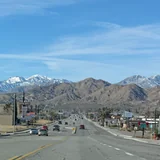
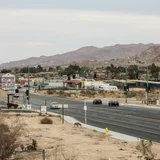
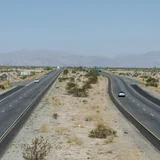
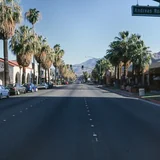
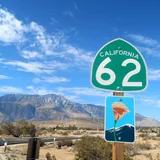
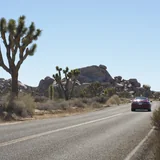
Most visitors drive, and the main artery is California State Route 62, the Twentynine Palms Highway. It runs east from Interstate 10 near Whitewater and Palm Springs, climbs into the Morongo Basin, and passes through Morongo Valley, Yucca Valley, the town of Joshua Tree, and Twentynine Palms along the park's north edge. Yucca Valley and the town of Joshua Tree are only about 7 miles apart, roughly a 12-minute drive on Highway 62.
Drive times are approximate and swing with Southern California traffic and the climb up Highway 62 from the I-10 junction, so treat these as rough figures and check a live map before you set out. From Los Angeles, plan on roughly 120 miles and about two to two and a half hours via I-10 East to Highway 62. San Diego is about 150 miles and roughly two and a half hours. Orange County runs about 110 to 130 miles and two to two and a half hours. Las Vegas is around 200 miles and about three and a half hours. Phoenix is farther, roughly 280 to 290 miles and about three and a half to four and a half hours. Weekend park traffic and the Hwy 62 climb can add half an hour or more, so give yourself a buffer.
If you are flying, Palm Springs International (PSP) is the closest airport, roughly a 45-minute to one-hour drive to the Yucca Valley and west-entrance area. Ontario International (ONT) sits about 80 to 85 miles west, roughly an hour and a quarter to an hour and three quarters, and offers more flight options while dodging most of the LA-basin traffic. Los Angeles International (LAX) is a farther option at around two and a half hours, and San Diego (SAN) and Harry Reid in Las Vegas (LAS) are more distant fly-in choices. From the house it is about 25 minutes to the park's west entrance and about 50 minutes down to Palm Springs. Whichever way you come in, fill the tank in a gateway town before your park day, because there is no fuel inside.
For the turn-by-turn from the highway to the door, see directions to the house, and for a closer look at the drive corridor itself there's our guide to Highway 62.
Where to Stay and Why a Private House
There are no hotels, restaurants, or gas stations inside Joshua Tree, so everyone bases in the gateway towns — Yucca Valley, the town of Joshua Tree, or Twentynine Palms — and drives in. That makes your basecamp part of the trip rather than an afterthought, and it is a big part of why a whole-house rental works so well out here. You come back to your own kitchen, your own pool, and a dark yard instead of a parking lot, and you can cook, swim, and stargaze on your own schedule.
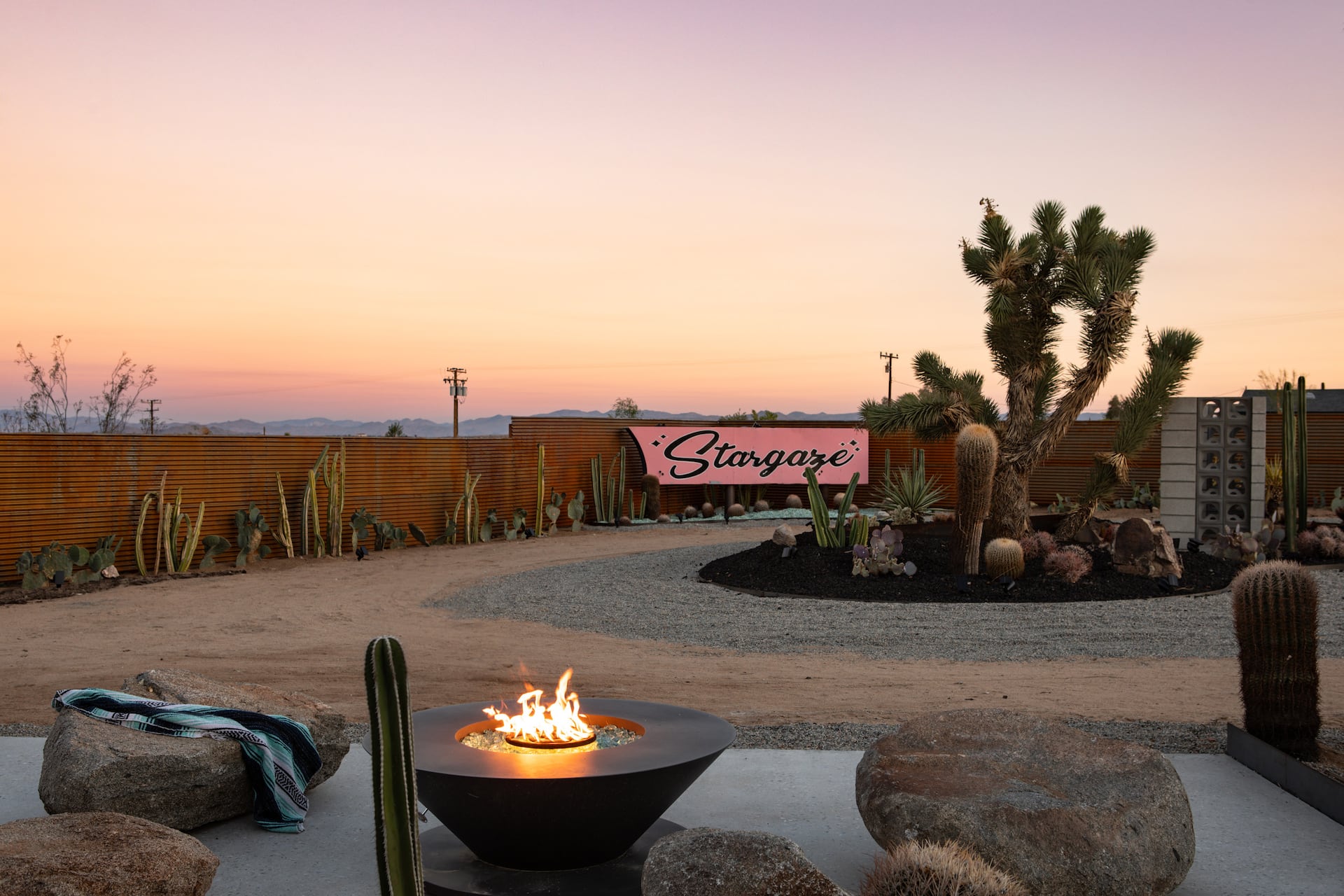
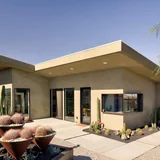
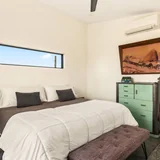
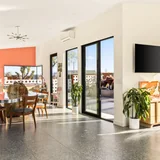
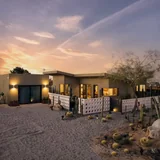
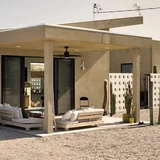
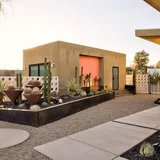
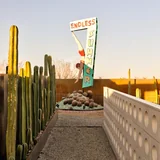
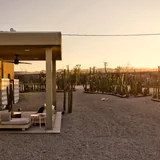
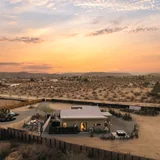
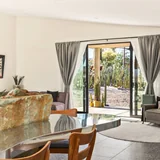
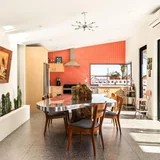
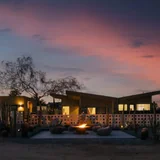
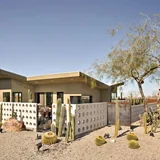
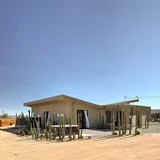
Stargaze Escape is an Airbnb Luxe whole-house rental in Yucca Valley, about 25 minutes from the west entrance and about 50 minutes from Palm Springs. It sleeps four in two king bedrooms with one bathroom, and you have the whole place to yourselves on a fully fenced desert lot planted with thousands of cacti, agave, and Joshua trees. It is rated 5.0 across 54 reviews and carries Guest Favourite status. The modern stucco house has white breeze-block walls out on the desert lot.
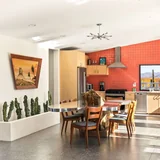
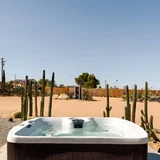
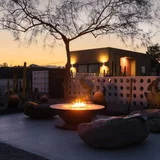
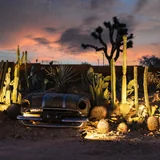
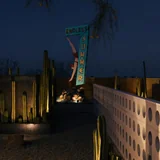
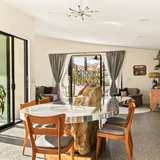
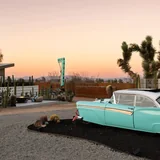
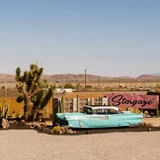
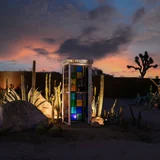
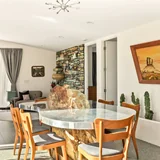
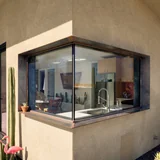
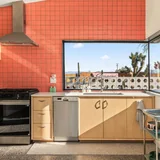
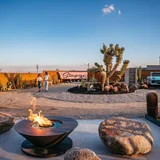
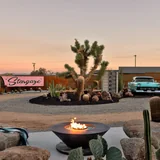
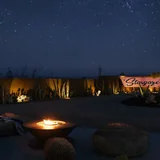
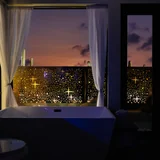
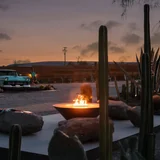
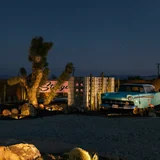
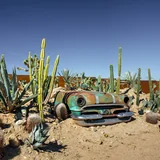
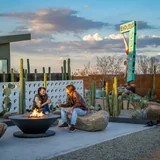
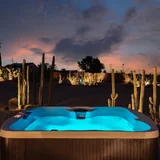
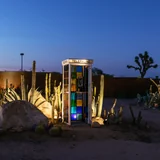
The features are the kind of thing that make a desert stay: a stock-tank pool set under a vintage painted "Endless Summer" metal sign, a private hot tub that stays open all year, and a gas fire pit ringed by natural boulders. A restored 1950s car has been turned into an open-air bed — the car bed — parked on the gravel with a custom stargazing roof that can be pulled back, so you can lie there and watch the sky. Inside there's a freestanding soaking tub by a wide window onto a private courtyard, a dining table built around a natural boulder, and a stained-glass telephone booth; out by the water, a star-perforated steel screen wraps the pool. Practical things are covered too: a full kitchen and an outdoor BBQ grill, air conditioning and heating, wifi, and free parking. The custom metalwork, including the car-to-bed conversion and the fire pit, was fabricated by Emerick's Ironworks.
One review called the house "curated to perfection," with "photo-worthy spots everywhere."
The house is dog-friendly, though cats can't stay because of a household allergy. Quiet hours start at 10pm, there are no parties, no glass near the pool or hot tub, and the cacti and rocks stay as you find them. If you want to compare the whole-house approach against hotels and campgrounds, we lay it out in where to stay near Joshua Tree, and you can see the water setup on the pool and hot tub page.
The Park Basics
A few park facts will save you a headache. Entry runs around $30 for a private vehicle on a seven-day pass, with a motorcycle at $25 and a person on foot or bike at $15; a Joshua Tree annual pass is $55. If you visit more than one federal site a year, the America the Beautiful interagency annual pass is $80 for U.S. residents, and note that for 2026 the Park Service introduced a separate non-resident annual pass at a higher price. Fees do get revised periodically, so confirm the current figure before you go rather than lock in a number.
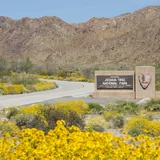
There are three entrances. The West Entrance is the busiest and sits at Joshua Tree Village, about five miles south of the Highway 62 and Park Boulevard junction — this is the one closest to the house. The North Entrance is in Twentynine Palms, three miles south of the Highway 62 and Utah Trail junction. The South Entrance, near Cottonwood Spring, comes off Interstate 10 and is the one you'd use from the Coachella Valley side. As of 2026 there is no timed-entry ticket or reservation system to drive into the park; you just pay at the gate. The park is open 24 hours a day, every day of the year, and when the entrance stations are unstaffed at night the gates stay open.
Two things catch people out. First, cell reception inside the park is very limited and should never be relied on — download an offline map, such as the NPS app map, before you arrive. Second, there is no water in the park interior. Bring all your own; a common guideline is at least one gallon (about four liters) per person per day, more when it's hot or you're hiking. You can fill bottles at a few developed spots near the edges, including the Joshua Tree National Park Visitor Center in downtown Twentynine Palms, the Cottonwood Visitor Center, and Black Rock. And because there are no gas stations, restaurants, or stores inside, fuel up and grab provisions in the gateway towns first.
A handful of rules keep the desert intact, and rangers do enforce them. Drones are prohibited without written approval from the superintendent. Collecting or removing anything natural — rocks, plants, cactus, wood, wildflowers, or artifacts — is not allowed; leave it all as you find it. Vehicles must stay on established roads, since off-road driving damages soil and plants that take decades to recover. Pets have their own limits, covered below, and if you plan a campfire, check the park's current fire rules and any seasonal restrictions with the National Park Service first. For the full pre-trip checklist, read what to know before you visit Joshua Tree.
The Desert and the Night Sky
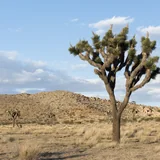
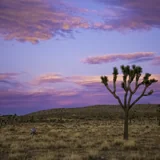
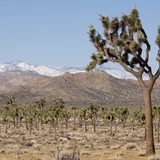
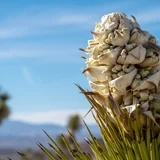
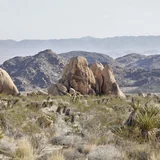
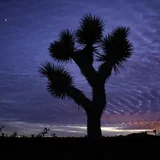
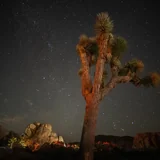
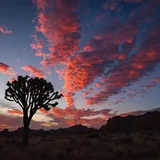
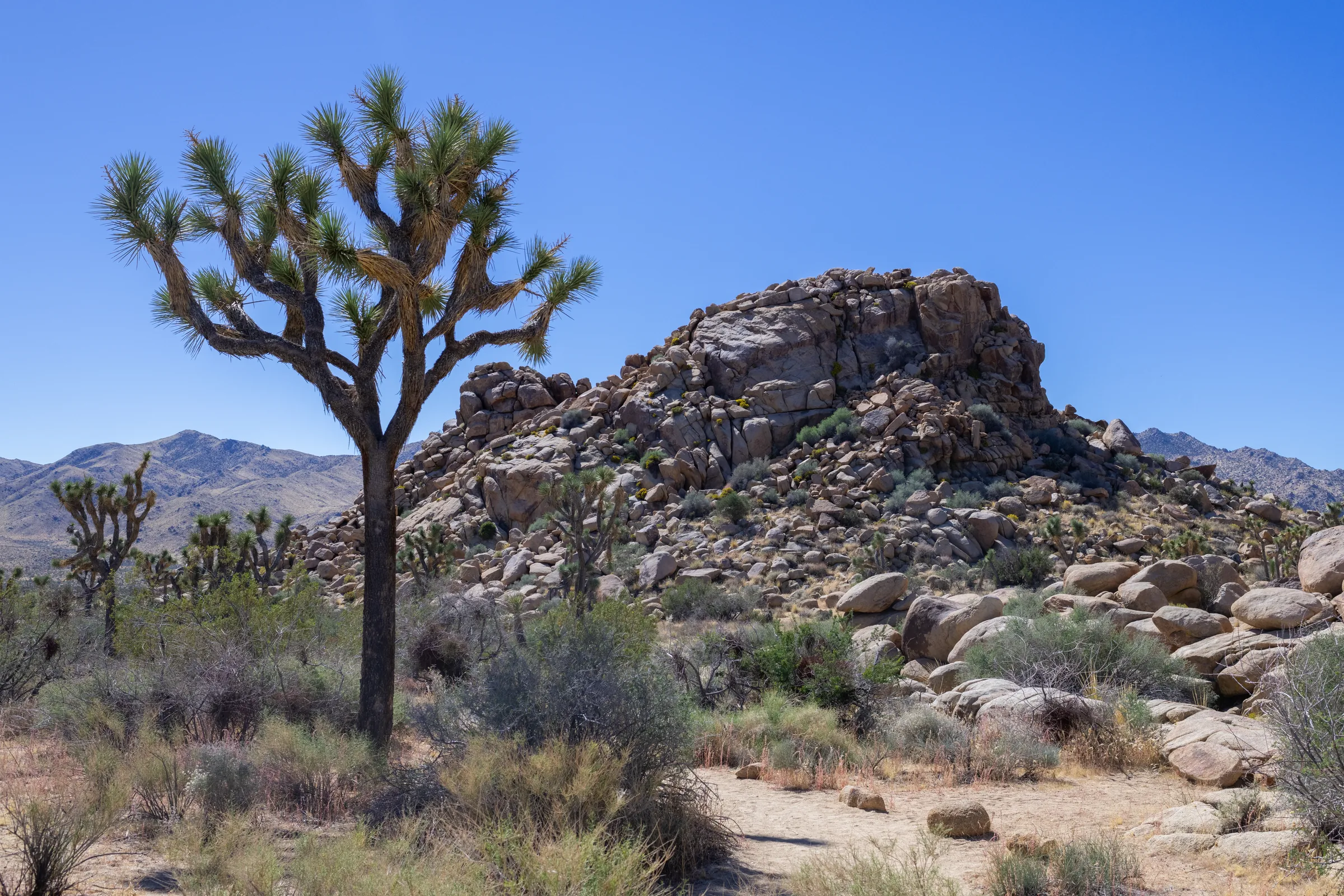
It helps to know what kind of country you're heading into. Two deserts overlap inside the park — the higher, cooler Mojave in the west and north, home to the Joshua trees and yuccas, and the lower, hotter Colorado Desert in the east and south, where ocotillo, cholla, and creosote take over. That overlap is why a single day can show you such different terrain, and it's worth routing your park drive to dip into both. The Joshua tree itself, Yucca brevifolia, isn't a true tree at all; it's a yucca, pollinated only by the yucca moth in a relationship where neither species can reproduce without the other. The trees grow slowly, roughly half an inch to three inches a year, and average around 150 years of life.
Wildlife here is mostly quiet and mostly nocturnal, so keep expectations realistic. Coyotes, bobcats, kit foxes, jackrabbits, and kangaroo rats are common but generally move at dawn, dusk, and after dark; desert bighorn sheep live in the mountains but are uncommon. The park records over 250 bird species, and the sparse vegetation makes them easier to spot than in most parks — watch for the greater roadrunner, the cactus wren, and Gambel's quail. In fall, a tarantula crossing the road is almost always a male out looking for a mate; the park service calls them timid and says they won't bite unless seriously provoked. The desert tortoise, a threatened species, spends most of its life underground and is illegal to handle. Give every animal room and leave it be.
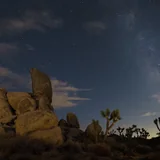
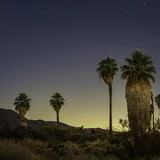
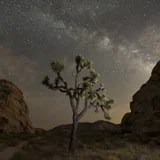
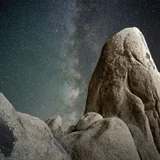
The night sky is one of the best reasons to come. Joshua Tree was designated an International Dark Sky Park in 2017 at the Silver Tier level, and its darker interior reaches roughly Bortle Class 2 to 3 — dark enough to show the structured band of the Milky Way to the naked eye, though areas near the boundaries and the western entrances are brighter. The bright galactic core of the Milky Way is a warm-season sight, visible roughly late spring through early autumn; deep winter trades it for Orion, bright Sirius, and the Pleiades cluster overhead. Rangers run free night-sky programs on a seasonal schedule, and back at the house the car bed and the dark, fenced yard make a fine spot to take it in without driving anywhere.
What to Book Ahead
Some parts of a Joshua Tree trip run on a first-come, first-served basis, and some don't. The house is the first thing to lock in — a Guest Favourite that sleeps four tends to fill up on weekends and holidays, so book your dates as early as you can. You do not need a park entrance reservation, which keeps the driving simple, but a handful of experiences and tables are worth reserving.
- Ranger and park programs. The Keys Ranch guided history tour is ranger-led and limited; free night-sky programs run on a seasonal schedule posted by the park. Check the park's calendar and reserve where required.
- The Night Sky Festival. Joshua Tree hosts an annual Night Sky Festival in the fall, typically over several nights in October, with telescopes from Southern California astronomy clubs. It is ticketed, the dates change every year, and it can sell out — check the current-year event page.
- Live music and standout meals. Pappy & Harriet's in Pioneertown books national acts, and its shows sell out; La Copine over in Flamingo Heights serves lunch, Thursday to Sunday, 11am to 4pm. Reserve ahead for the shows, and check hours before you go, since they change.
- Camping, if that's your plan. The park has nine campgrounds — six take reservations (Black Rock, Cottonwood, Indian Cove, Jumbo Rocks, Ryan, and Sheep Pass group) and three are first-come, first-served (Belle, Hidden Valley, White Tank). Only Black Rock and Cottonwood have potable water.
Many hi-desert restaurants and cafes keep short, seasonal, or day-limited hours and can close without much notice, so check a spot's own website or social page, or call ahead, before you build a meal around it. A little of this before you leave home means less scrambling once you're in a canyon with no signal.
A Sample First Trip
Here is one easy way to shape a three-night first visit, weighted toward the park but leaving room for the towns and the house.
Arrival day. Roll in on Highway 62, stop for groceries at one of the Stater Bros. markets in Yucca Valley, and fuel up. Settle into the house, get the hot tub going, and let the sky do its thing after dark — the car bed is built for exactly this, and the yard is quiet from 10pm. You've done the driving; keep it slow.
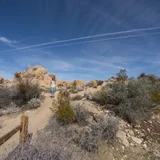
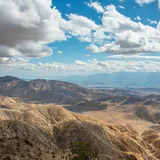
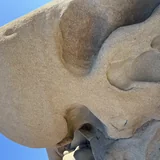
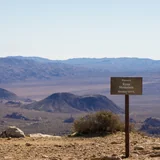
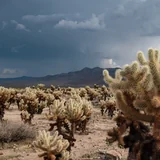
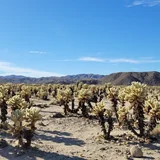
Park day. Get in early through the west entrance while it's cool. A first loop through the park's greatest hits is manageable in a day. Hidden Valley is an easy one-mile loop through a rock-enclosed basin. Barker Dam is an easy loop of about 1.1 miles past monzogranite boulders, a historic water tank, and a petroglyph site. The drive up to Keys View, an overlook at roughly 5,185 feet, opens onto the Coachella Valley and, on clear days, the San Andreas Fault and the Salton Sea. If you want to earn a bigger view and you're up for it, Ryan Mountain is a strenuous 3-mile round trip climbing about 1,050 feet to a summit near 5,457 feet — one of the park's finest panoramas. For something in between, Split Rock is a moderate loop of about 2.5 miles among boulder piles. Toward the park's south end, the Cholla Cactus Garden is a quarter-mile nature loop through a dense stand of teddybear cholla — look, don't touch, because the segments detach at the lightest brush. Skull Rock sits right beside Park Boulevard near Jumbo Rocks if you want one more easy stop. Carry far more water than you think you need, and turn back before you're tired, not after.
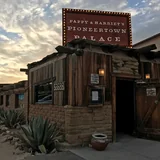
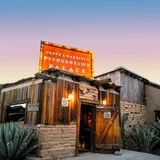
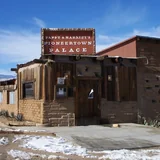
Town day. Slow the pace down. Start with coffee — Joshua Tree Coffee Company roasts in town, and Frontier Cafe in Yucca Valley pours a good cup on a dog-friendly patio — then wander the shops and art. Drive up to Pioneertown, the 1946 live-in Old West movie set in the hills above Yucca Valley where more than fifty films and TV shows were shot, and time it so you land at Pappy & Harriet's for food or a show. Back at the house, the fire pit and the soaking tub are a fitting way to close out. For more ways to fill the days, browse things to do around the house.
What to Pack
The desert asks for a specific kit, and most of it comes down to water, sun, and temperature swings. Pack far more water than feels reasonable — that one-gallon-per-person-per-day guideline is a floor, not a target — plus sun protection you'll actually use: a wide hat, sunscreen, and sunglasses. Bring layers, because a 78°F afternoon can turn into a 40°F night, especially in the cooler months. Sturdy closed shoes handle the sandy, rocky trails better than sandals, and a light windbreaker earns its place on an exposed overlook like Keys View.
A few desert-specific extras earn their place. Download offline maps before you leave signal, since reception vanishes inside the park. Pack a headlamp or flashlight for the walk to the car bed after dark, and if you care about stargazing, a dim red light preserves your night vision — human eyes need roughly 20 to 30 minutes in darkness to adapt, and one glance at white light resets it. Throw in a small daypack for the trails, a swimsuit for the stock-tank pool and hot tub, and, if you're bringing the dog, a leash of six feet or shorter and water bowls. Remember that park trails, the backcountry, and park buildings are closed to pets; leashed dogs are allowed only within 100 feet of roads, parking areas, and campgrounds, plus a couple of paved paths, so the house and the towns will be your dog's real playground. Our full list lives in packing for the high desert.
Budgeting the Trip
A Joshua Tree trip is easy to budget once you know where the money goes. Lodging is usually the largest line; nightly rates for the house vary by season and dates, so check the current pricing when you look at your calendar. Park entry is modest by comparison — around $30 per vehicle for a seven-day pass, or $55 for the Joshua Tree annual pass if you'll be in and out more than a couple of times or plan to return within the year.
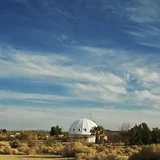
From there, plan for gas (the drive out plus daily runs into the towns), groceries for meals you cook at the house, and a few meals out. Cooking in the full kitchen and grilling on the BBQ is where a whole-house stay saves real money against eating every meal in town, and it's a nicer way to end a hot day anyway. Build in a small cushion for the extras — a Keys Ranch tour, a sound bath at the Integratron up in Landers, a show at Pappy & Harriet's, or a spa afternoon — and you'll have a realistic picture. Coffee, a couple of dinners out, and one experience is a reasonable middle-ground for a weekend, and the more you cook at the house the further the food budget stretches. Because fees, hours, and prices in the area all change, confirm the current figures with the park and each business before you rely on them.
Plan Your Stay
The short version: come October through May if you can, give yourself three or four nights, drive the Highway 62 corridor in, bring far too much water, and lock in your lodging early. Do those five things and the rest of the trip mostly plans itself. When your dates are set, check availability and reserve Stargaze Escape, then build your park day around an early start and a good map — and top up the water bottles the night before.