



















Month by month
Joshua Tree in January
January brings the coolest afternoons of the year in the high desert and some of its shortest days, and that keeps it quieter than spring. In exchange you get long, dark nights, cool air for midday hiking and far fewer visitors than in March. Here is what January usually looks like at the house in Yucca Valley and inside Joshua Tree National Park, with the numbers behind it.
January weather in Yucca Valley
The nearest long-term weather record to the house is NOAA's Yucca Valley station, at about 3,250 feet. Its 1991-2020 climate normals give January an average high of 58.0°F, the lowest of any month there, and an average low of 37.6°F. December nights run a little colder on average, at 34.1°F, so January stands out for its cool afternoons, while December has the colder nights. In a typical January the low reaches 32°F or below on about eight nights, and on roughly 23 nights it falls to 40°F or lower. Afternoons of 70°F or warmer are rare, at about two a month.
January is also the wettest month on that record. The station averages 1.41 inches of precipitation in January, out of roughly 6.25 inches for the whole year, spread over three or four days with measurable rain. Most January days stay dry, and the month's rain tends to arrive on that handful of stormy days.
The lower desert is milder. NOAA's Twentynine Palms station, at about 1,975 feet, averages a January high of 63.3°F and a low of 41.8°F, with only half an inch of precipitation. That is about five degrees warmer in the afternoon than Yucca Valley, which is worth knowing if you are choosing between the high and low parts of the park on a cold day. The same station shows how cold it can get: its January record low is 11°F, in records going back to 1935.
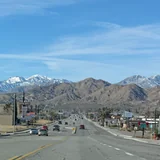
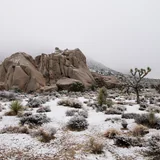
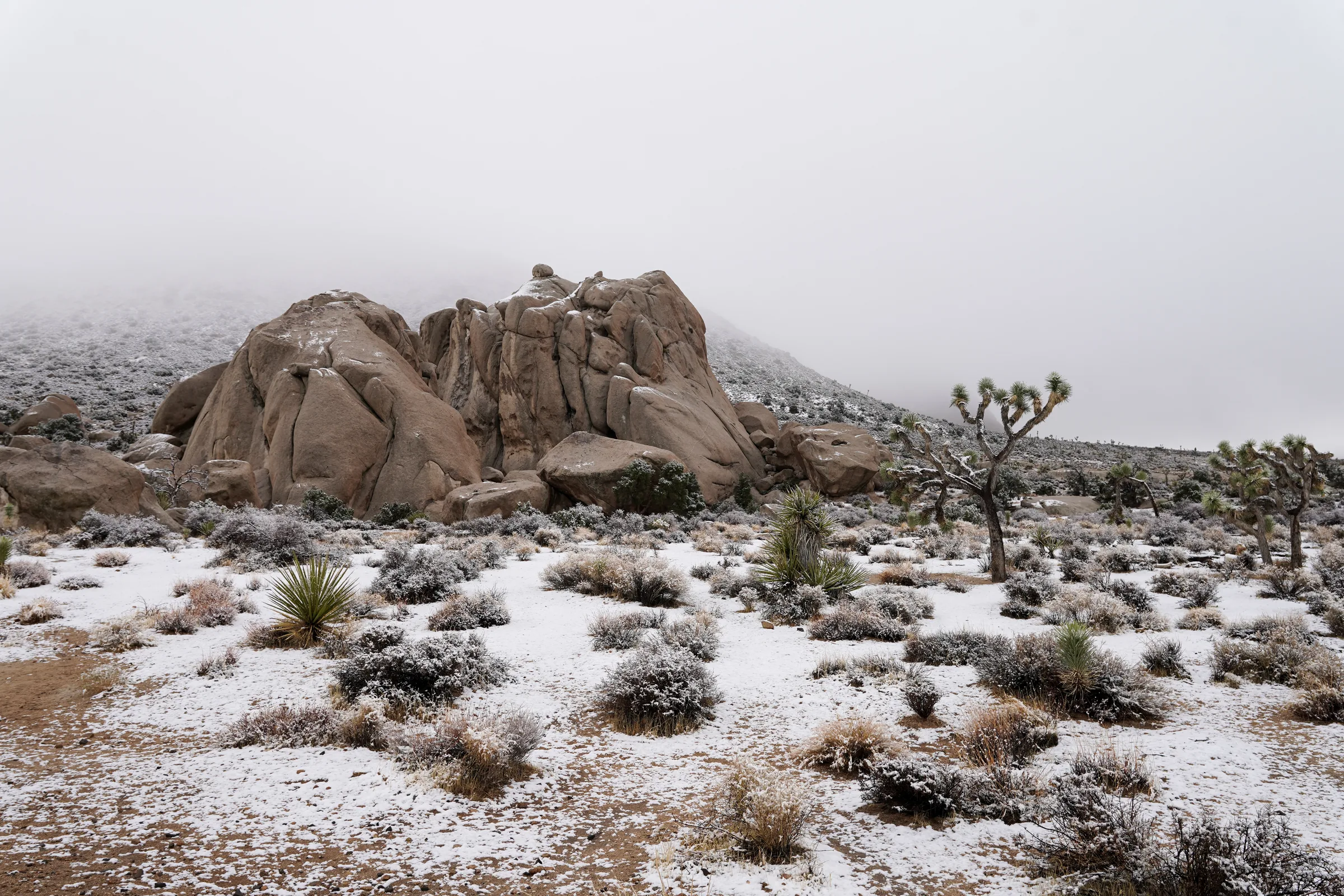
Snow is uncommon in town. The Yucca Valley normals show no measurable snow in an average January, and the station averages under two inches a year, most of it in December and February. The park's high ground is another story, as the next sections explain.
Short days and long nights
U.S. Naval Observatory tables for Yucca Valley put sunrise at 6:51 am and sunset at 4:47 pm on January 1, 2027, a day just under ten hours long. Sunrise hardly moves in the first half of the month (it is still 6:51 am on January 15), while sunset creeps later, to 4:59 pm by the 15th and 5:15 pm on January 31. By the end of the month you have about ten and a half hours of daylight, roughly 35 minutes more than on New Year's Day.
Plan hikes around that. A walk that starts at 2:30 pm in early January can easily finish in twilight, and desert temperatures drop quickly once the sun is down. Civil twilight, the last stretch with enough light to walk without a lamp, ends only about half an hour after sunset. Full darkness, the end of astronomical twilight, arrives around 6:17 pm early in the month and 6:41 pm by the end, and the sky stays dark until about 5:20 am. That is close to eleven hours of true night, which is good news for anyone who came for the stars.
Snow, ice and road closures
Joshua Tree National Park is open 24 hours a day all year, January included, but winter storms decide what you can reach. The park climbs from 536 feet to 5,814 feet, and the higher ground, around Keys View (about 5,185 feet) and Ryan Mountain, is where snow is most likely to close a road. Ahead of a December 2014 storm the park expected snow down to 1,500 feet and said Keys View Road would likely close. It asked visitors to be ready for winter driving with extra food, water and dry clothes, and to carry chains or traction devices if heavy snow fell.
Clearing up can take longer than the storm. After snow on December 26, 2019, a local news report a week later listed Big Horn, Odelle, Queen Valley, Lost Horse Mine and Geology Tour roads as still closed, because the dirt was soft with mud, and passed on the park's warning that snowmelt can freeze overnight into icy patches. If your day depends on one of the park's dirt roads, check the park's alerts and road status that morning.
Closures are not always about weather. The park posted a temporary construction closure at the West Entrance for several days in mid-January 2026. The West Entrance, in the town of Joshua Tree, is the busiest gate and the closest one to the house. When it is shut, the North Entrance in Twentynine Palms, about three miles south of Highway 62 on Utah Trail, is the other way in from the highway.
Campgrounds, tours and visitor centers
Winter doesn't empty the campgrounds. The park says its campgrounds are full nearly every weekend from September through May and are typically full by Friday afternoon, and sites open on Recreation.gov up to six months ahead. Of the three first-come, first-served campgrounds, Hidden Valley stays open all year. Only Black Rock and Cottonwood have drinking water and flush toilets.
January falls inside the season for ranger-led tours of Keys Ranch, the homestead Bill Keys built up over decades in what is now the park. Tickets are sold only on Recreation.gov, with no walk-ups; for the current season the site said tours were expected to start in mid-November, and ranger program reservations open up to 60 days ahead. Our Keys Ranch guide tells the story of the place. Visitor center hours shift with the seasons, so check them on the park website before you build a morning around one.
Crowds in January
The park describes its busy season as October through May, and January sits inside it, on the low side. National Park Service visitor-use statistics counted about 278,000 recreation visits in January 2025, against about 412,000 in March, the busiest month of that year. January 2024 drew about 252,000 and January 2023 about 286,000. Spread across the month, January 2025 averaged roughly 9,000 visits a day, while March averaged closer to 13,300.
Weekends and holidays are the park's busiest times in any season, so the New Year's weekend and the Martin Luther King Jr. Day weekend are likely to feel fuller than a Tuesday later in the month. If you can go midweek, do. Entry cost $30 per vehicle for seven days at 2026 rates, and the park's 2026 list of fee-free days had no January date. The 2027 list was not posted when we checked, so look it up before you go.
Hiking on a cold day
In January the best hiking hours are the warm ones, roughly late morning to mid-afternoon. A few walks fit a short day well:
- Hidden Valley. An easy 1-mile loop with about 100 feet of climbing, circling a valley enclosed by boulders.
- Barker Dam. An easy loop of about 1.1 miles with roughly 50 feet of gain, past a historic water tank and a rock art site.
- Ryan Mountain. The hard one: 3 miles round trip and about 1,050 feet of climbing to a summit near 5,457 feet, roughly 2,200 feet higher than Yucca Valley. Expect it to be colder on top than in town, and leave it for another day after fresh snow.
When the high country is cold or snowy, the low southern end of the park is the other choice. The park's bloom guide gives January to mid-April as the flowering window for its lowest areas, around the South Entrance, Cottonwood and the Pinto Basin, with Arizona lupine, desert gold, desert Canterbury bells and poppies in years with enough rain. There is no water in the park's interior, so carry your own. A common guideline is about a gallon per person per day, even in winter.
The January night sky
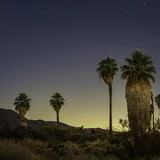
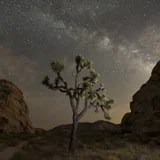
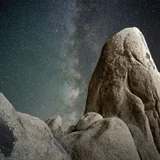
Joshua Tree has been an International Dark Sky Park since 2017, and January gives you more hours of darkness to use it than almost any month. Early evening belongs to the winter constellations: Orion with the Orion Nebula, Sirius in Canis Major (the brightest star in the night sky), Taurus with the Pleiades cluster, Gemini and Auriga. The winter Milky Way arches overhead, fainter than the summer band, and the bright galactic core is essentially absent from the night sky in deep winter.
For 2027, the U.S. Naval Observatory puts the new moon on January 7 and the full moon on January 22, so the darkest evenings fall in the week around the 7th. The month opens with the Quadrantid meteor shower. The American Meteor Society lists it as active from December 28, 2026 to January 12, 2027, with the peak on the night of January 3-4 and an average of about 25 meteors an hour under dark skies. Its 2027 prediction puts the peak near 3:30 UT on January 4, which is early evening on January 3 in California and favors Europe and western Asia, so rates here may run lower. The society also notes the shower often underperforms because its peak is brief. On the plus side, the moon will be a waning crescent only about 18 percent lit.
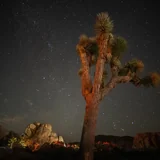
Inside the park, rangers point to the Quail Springs, Hidden Valley, Cap Rock and Ryan Mountain parking areas for stargazing, and say the stretch of Pinto Basin Road between the Cholla Cactus Garden and Cottonwood has the least traffic and the darkest skies. Give your eyes 20 to 30 minutes to adjust, use a red light, and bring more layers than seems sensible. Our guide to where to stargaze has more spots near the house.
Events in January
The big January draw is down the hill. The 38th Palm Springs International Film Festival runs January 7 to 18, 2027. It opens with its Film Awards at the Palm Springs Convention Center on the 7th, starts screenings on the 8th, holds its closing night on the 17th and ends with Best of Fest programming on Monday the 18th. Passes went on sale the previous August. Palm Springs is about 50 minutes from the house, and our Palm Springs day trip covers the rest of the town.
Golf follows right after. The American Express, the PGA Tour's stop in La Quinta, is scheduled for January 18 to 24, 2027, played across the Pete Dye Stadium Course and Nicklaus Tournament Course at PGA West and La Quinta Country Club. La Quinta lies past Palm Springs, farther down the Coachella Valley, so give the drive extra time.
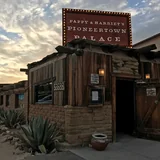
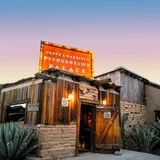
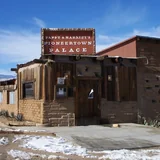
Closer to home, Pioneertown's Mane Street hosts free Old West gunfight shows on Saturday afternoons from October through May, which puts January squarely in season. Two re-enactment groups take turns: Gunfighters For Hire on the first and third Saturdays of the month, with shows at 1, 2 and 3 pm, and the Mane Street Stampede on the second and fourth Saturdays at 1 pm, weather permitting. The shows ask only for donations. Pioneertown is about 18 minutes from the house; see our Pioneertown guide for the rest of the street, and confirm the schedule before you go.
January at the house
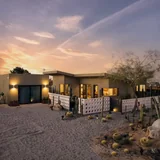
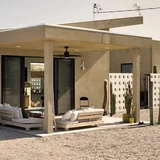
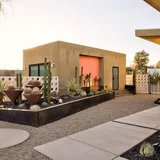
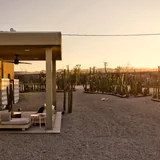
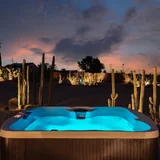
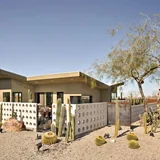
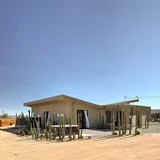
The house is set up for cold nights. It has heating as well as air conditioning, a full kitchen for the evenings when you would rather cook than drive back out, and wifi. The private hot tub is open all year, and with January lows in the high 30s it is the natural place to end a day in the park. With highs around 58°F, expect the hot tub to get far more use than the stock-tank pool this month.
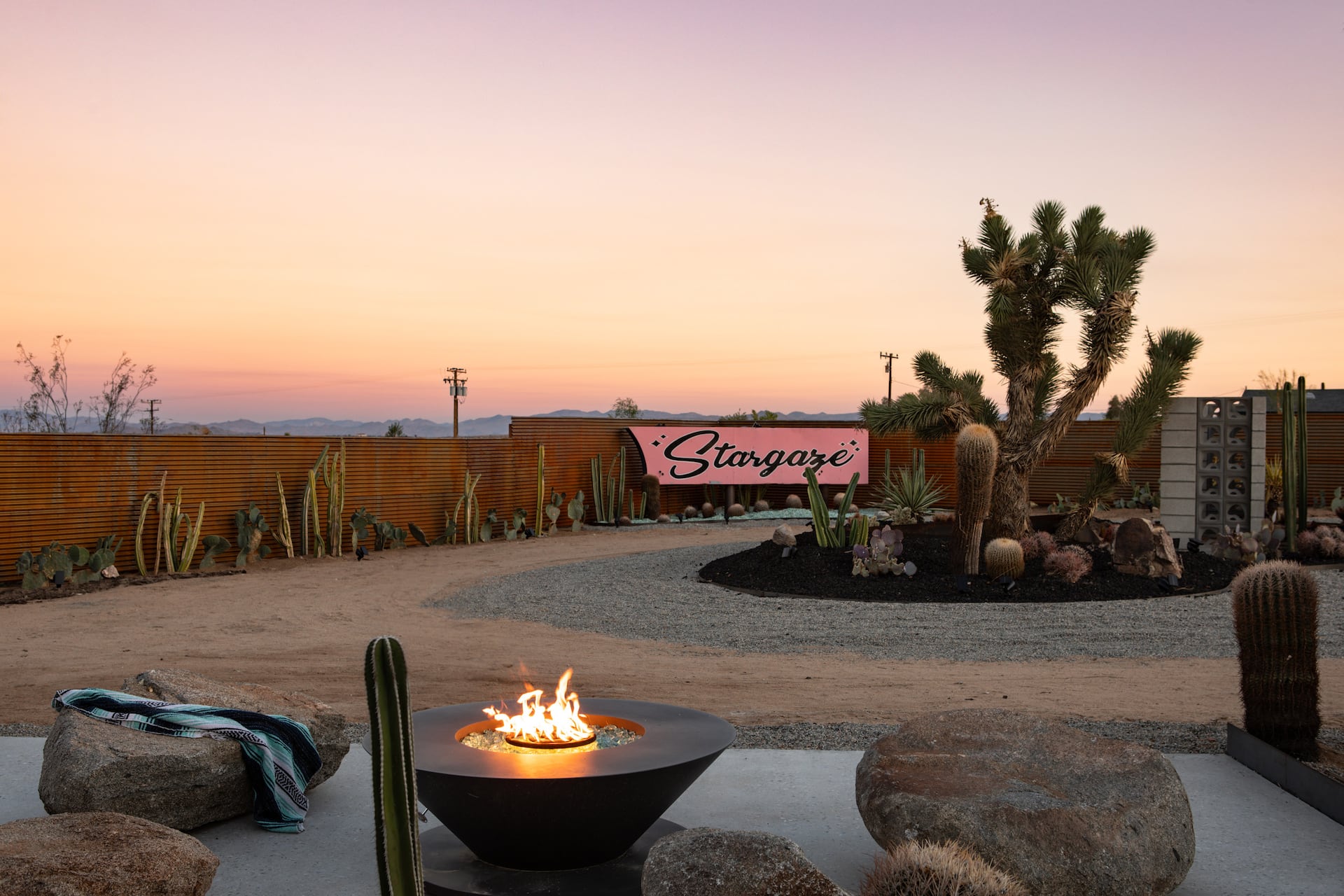
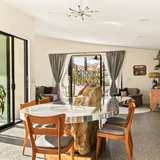
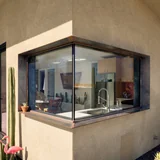
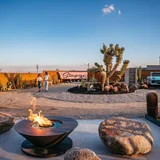
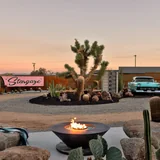
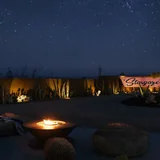
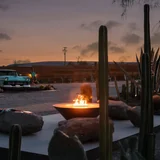
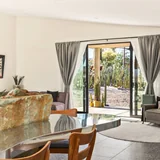
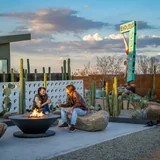
The fire pit, ringed by natural boulders, burns gas, so there is no firewood to buy and no ash to deal with the next morning. Indoors, the freestanding soaking tub sits by a wide window onto a private courtyard, a good spot to warm up after an afternoon on the trail.
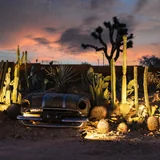
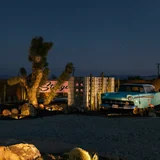
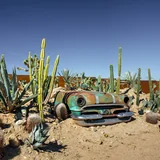
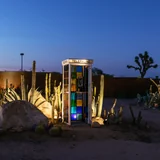
For the night sky, the house has its own spot: the car bed, a restored 1950s car parked on the gravel and fitted with a custom stargazing roof. Bring a warm layer out with you even on a mild evening. Quiet hours start at 10pm, which suits a slow night of looking up. See the fire pit and stargazing spots and the hot tub and pool for photos and details.
What to pack in January
- A real winter layer. A warm jacket, hat and gloves for evenings near or below freezing, and a fleece for time at the fire pit or out at the car bed.
- Swimwear. For the hot tub, plus something warm to throw on for the walk back inside.
- A red light. A headlamp with a red mode keeps your night vision while you stargaze.
- Water and food for the park. There is no water in the park's interior and no gas stations or shops inside it, so fill bottles and the gas tank in town.
- Offline maps. Cell reception in the park is very limited; download maps on the house wifi before you set out.
- Winter driving basics. If snow is in the forecast, the park asks drivers to carry chains or traction devices along with extra food, water and dry clothes.
- Sunglasses and lip balm. The desert air is dry in every season.
January suits people who will trade some cold for a quieter park and long nights. When you are ready, check dates at the house, or read on to Joshua Tree in February if you would rather wait for the first Joshua tree flowers.
Keep exploring
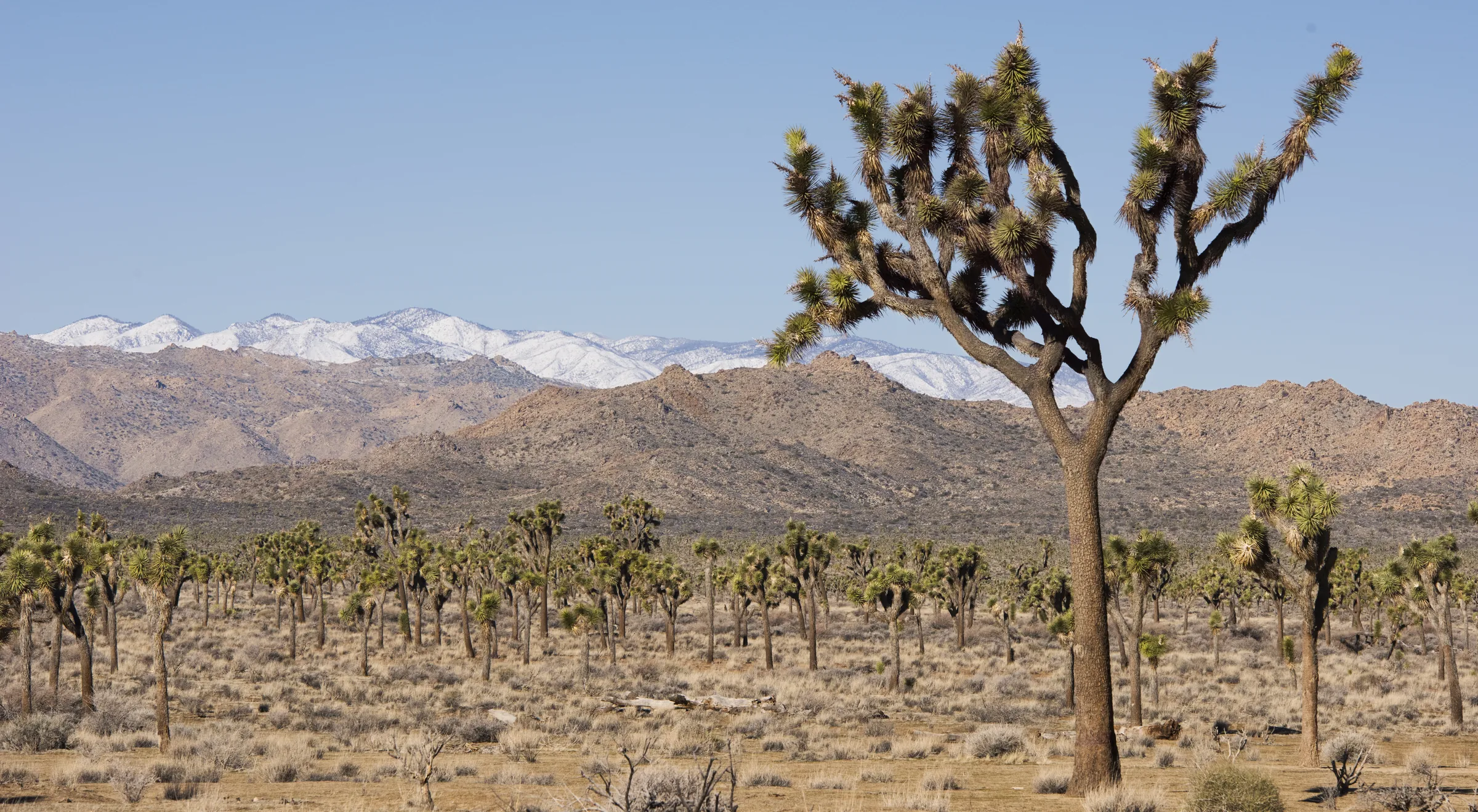
Joshua Tree in February
Joshua Tree in February: Yucca Valley weather normals, longer days, the start of spring crowds, Joshua tree blooms, Modernism Week and Mars and Jupiter in 2027.
Read →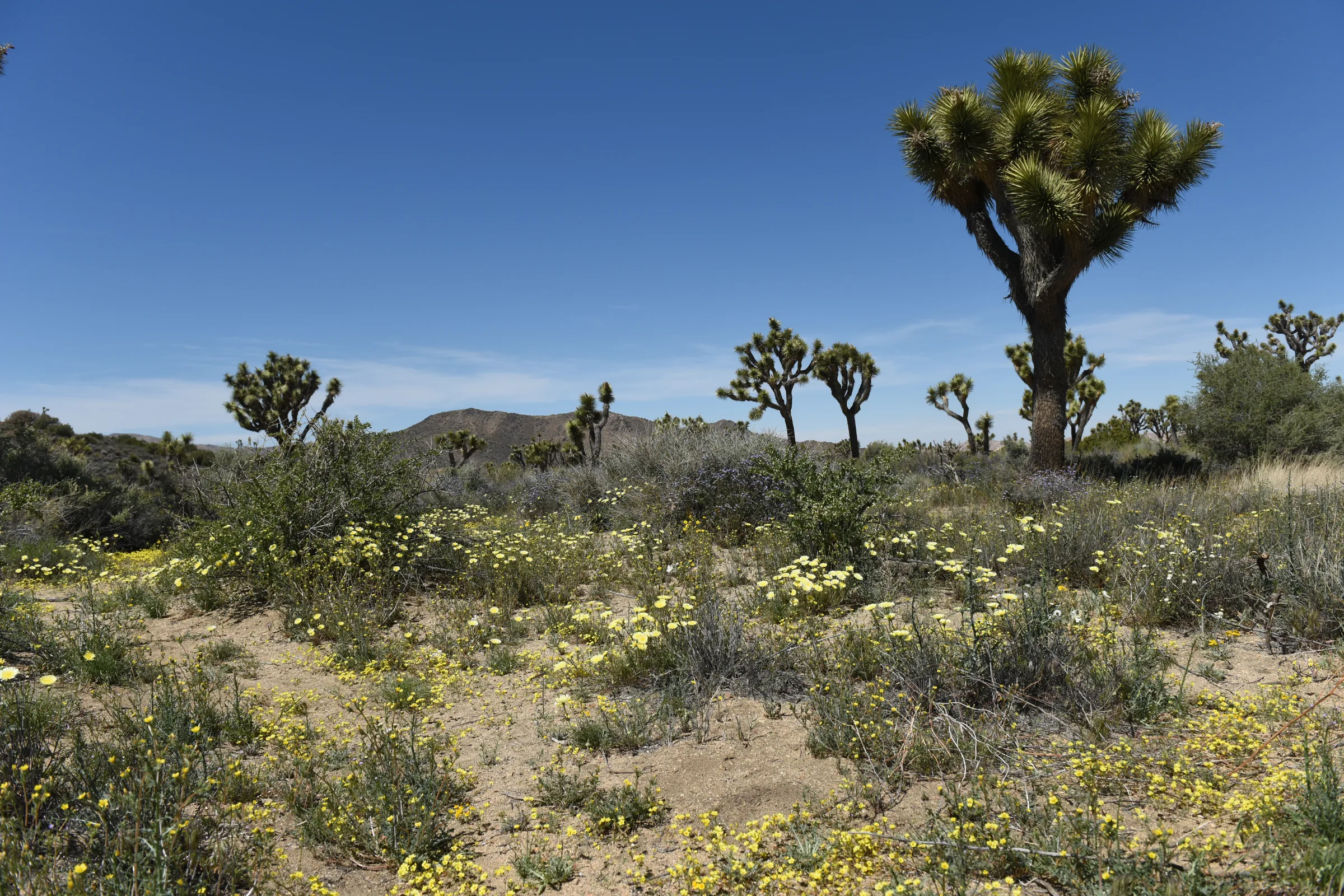
Joshua Tree in March
Joshua Tree in March: the park's busiest month, NOAA weather normals, the clock change, mid-elevation wildflowers, spring wind, the night sky and local events.
Read →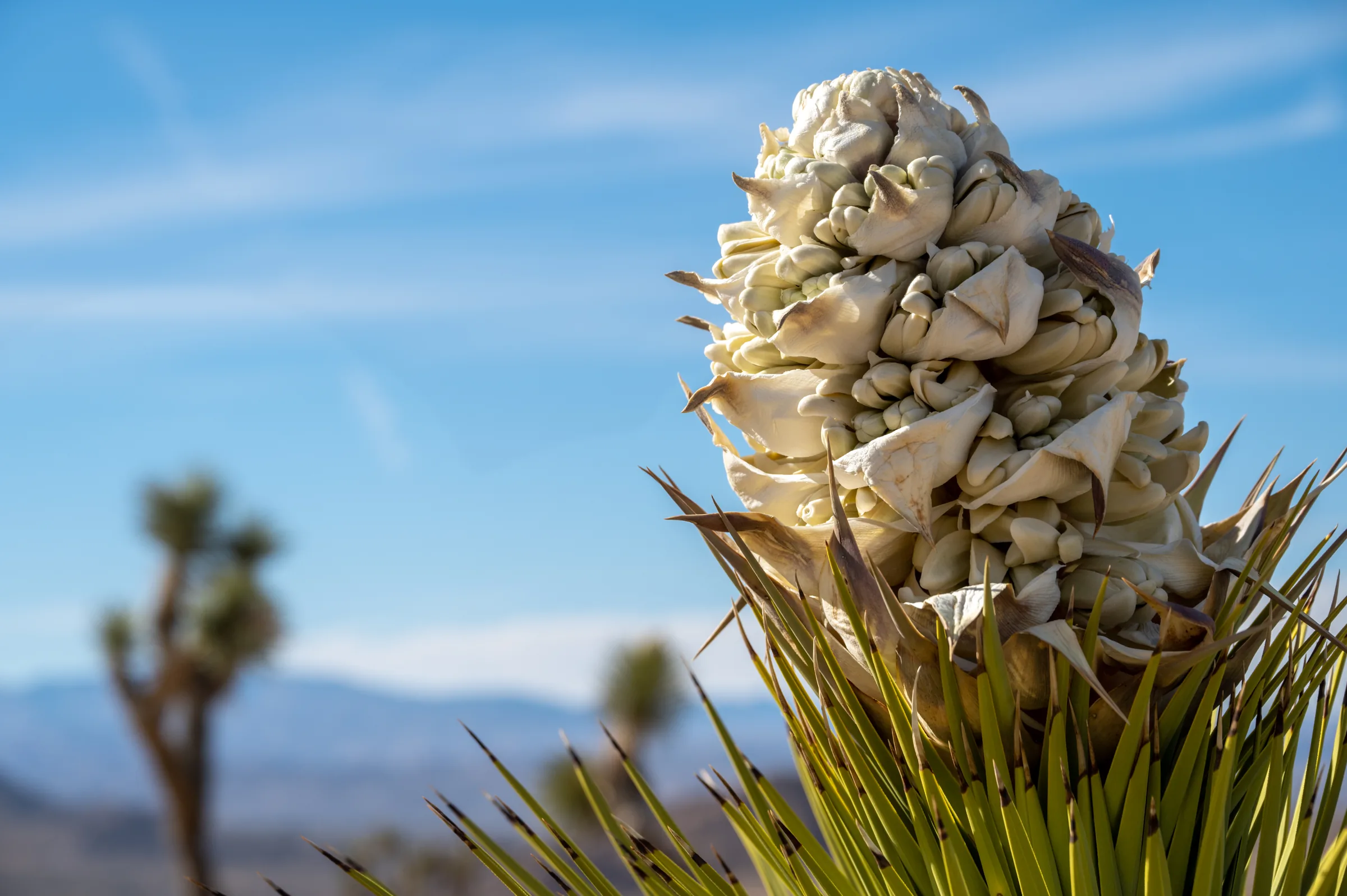
Joshua Tree in April
Joshua Tree in April: warming NOAA weather normals, blooms on the high ground, Coachella and Stagecoach weekends, waking wildlife, the Lyrids and what to pack.
Read →