

















Month by month
Joshua Tree in August
August keeps July's heat, brings the wettest weeks of the year to the park's lower ground, and ends with evenings that close in noticeably earlier. It is also Perseid month, when the year's best-known meteor shower peaks over a park that has been an International Dark Sky Park since 2017. Here is what to expect in August in and around Joshua Tree National Park.
August temperatures
NOAA's 1991 to 2020 normals for the Yucca Valley station, at about 3,250 feet, put August's average high at 96°F and its average low at 68°F. The highs ease only slowly through the month, from about 97°F on August 1 to 96°F at mid month and 93°F on August 31. The nights are the warmest of the year. August's normal low is the highest of any month, and the daily normal tops out at about 68°F around the middle of August.
August can still produce the hottest days. The Yucca Valley normals count about 8.5 days of 100°F or more in August, a little more than July's 7.8 and the most of any month, along with about 29 days at 90°F or above. In Twentynine Palms, roughly 1,300 feet lower beside the park's North Entrance, the normal high is 103°F and about 26 days in an average August reach 100°F.
The wettest weeks
At Twentynine Palms, August is the wettest month of the year in the normals, with 0.65 inch of rain on average and about one day with a tenth of an inch or more. Yucca Valley's August normal is only 0.17 inch, less than its July figure. Both come from monsoon thunderstorms, which the National Weather Service in Las Vegas says push into the Mojave Desert typically in July and August. Their rain falls in short, heavy bursts over small areas, so the averages hide how much a single storm can drop.
The park has seen it firsthand. After an August 4 storm in an earlier year, the park service estimated 3 to 5 inches of rain in storm-affected parts of the park's north-central area, while park headquarters measured 0.77 inch. Floodwater took out about 30 feet of the North Entrance road, which needed about 48 hours of temporary repairs, and the park closed the Indian Cove road, the Indian Cove campground and the Rattlesnake Canyon day use area, estimating about two weeks of repairs.
In August 2023 the whole park closed on August 19 ahead of Tropical Storm Hilary, under a flash flood watch. It reopened for day use on August 22, with paved roads and visitor centers open after crews cleared sand and debris, while dirt roads and campgrounds stayed closed for further checks. The practical rules follow from that. Check the park's alerts and the weather service forecast on the morning you go, stay out of washes and canyon bottoms when storms are building, and never drive into water running across a road. The park adds that flooding may be gone in a matter of hours, so waiting beats gambling on a crossing.
On the trail in August
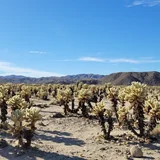
August hiking runs on the same clock as July. The park's summer guidance is to hike before 9 am or after 5 pm and to choose short trails, and in August a building thunderstorm is one more reason to keep outings short and close to the car. Two of the short walks the park suggests for summer, Keys View and the Cholla Cactus Garden, are also places where it says bees gather in summer, looking for water. For a ranger's advice in person, the Black Rock Nature Center is open only Thursday to Sunday in summer, and the Joshua Tree Visitor Center near the West Entrance has a bottle filling station. Check current hours before you drive over.
Wildlife in late summer
Many desert animals sit out the hottest weeks. Desert tortoises spend most of their lives in burrows and estivate through the hottest summer months, even though their mating activity peaks anywhere from March into early October. The round-tailed ground squirrel, one of the few small desert mammals that is active by day, goes dormant in extreme heat. Much of the rest of the park's wildlife works the night shift. Kit foxes generally hunt after dark and den underground through the day, and kangaroo rats spend hot days in their burrows and never need to drink, getting their water from the seeds they eat.
The desert hairy scorpion, the largest scorpion in North America at up to about 5.5 inches, is nocturnal too, and like other scorpions it glows blue-green under ultraviolet light, so a UV flashlight picks them out at night. Its venom is mild to people, but look before you sit on a rock in the dark, and keep the rule the park gives all summer visitors: hands and feet out of crevices you can't see into.
The Perseids
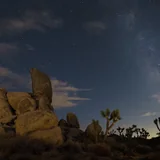
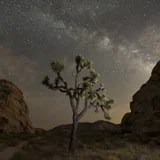
The Perseids are the meteor shower most people have heard of. The American Meteor Society lists them as active from about July 17 to August 24, peaking on the night of August 12 to 13. They take their name from their radiant near the constellation Perseus, and the society puts normal rates at 30 to 50 meteors an hour at maximum from rural locations.
The moon makes or breaks a given year. In 2026 the U.S. Naval Observatory listed a new moon on August 12, the day of the peak, which left the whole night dark. 2027 is harder. The moon will be a bright waxing gibbous at the peak, which the meteor society says will interfere. The Naval Observatory's tables for Yucca Valley show that moon setting around 2:40 am on the morning of August 13, 2027, which leaves roughly two hours of moonless dark before the sky starts to brighten at about 4:30 am. That is the window to aim for.
Watching takes no equipment. Lie back somewhere dark and let your eyes adjust for 20 to 30 minutes. Keep white lights off, because one glance at a bright screen resets your night vision. The sky over Yucca Valley isn't as dark as the park's interior, so you will see fewer faint meteors from town than from Pinto Basin Road, which the park calls its darkest and least traveled road. Our journal piece on the night sky over Joshua Tree explains the dark sky park and what to look for.
Shorter days and earlier dark
August is when the daylight loss becomes obvious. The Naval Observatory's 2026 figures for Yucca Valley give sunrise at about 5:57 am and sunset at about 7:47 pm on August 1, roughly 13 hours and 50 minutes of daylight. By August 31 sunrise has moved to about 6:19 am and sunset to about 7:13 pm, about 12 hours and 54 minutes, so the month gives up close to an hour. Full darkness starts around 9:22 pm at the beginning of August and about 8:40 pm by the end, which makes evening stargazing easier to fit in before bed.
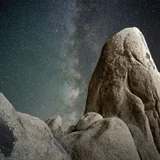
The Milky Way's core is an evening sight now, up in the south once darkness falls, and as summer turns to early autumn it shows earlier and sets earlier each night. Sky's the Limit, the observatory and nature center just north of the park's North Entrance in Twentynine Palms, hosts star parties on some Saturday nights; check its calendar and our Sky's the Limit guide.
Crowds, closures and fee-free days
August is nearly as quiet as July. The park counted 142,794 recreation visits in August 2025 and 143,049 in August 2024, about a third of the March totals in those years. In 2019, 2021 and 2022, August was the least visited month of the whole year.
August 25 is the National Park Service's birthday, and in 2026 the park listed it as an entrance-fee-free day; fee-free dates are reset every year, so check the current list. Summer rules stay in place all month. Fortynine Palms stays closed through September 30 and the park's fire restrictions run to October 1. On the park's current summer closures page, the partial campground closures last until late August, and five backcountry zones reopen on September 1. Confirm on the park's alerts page before you plan around any of them.
Getting out of the heat
Palm Springs hosts a pool-party music festival in August. Splash House, a dance music festival held around hotel pools, ran over two weekends in 2026, August 7 to 9 and August 14 to 16, at the Saguaro, Renaissance and Hilton hotels. Dates and venues change each year. Palm Springs is about 50 minutes from the house, and our Palm Springs day trip covers the rest of town.
To trade heat for altitude, the Palm Springs Aerial Tramway climbs to its Mountain Station at 8,516 feet, but check its schedule first. The tram closes every year for preventative maintenance in late summer or early fall: in 2023 the closure began in early August, and in 2026 it ran from September 8 to October 4. For a full day in the mountains, see our Big Bear day trip.
Packing for August
Pack for the heat and for storms. The park's usual summer advice on sun protection and water (four liters per person for a day out, with more for cooling off) applies in August too, and the month adds:
- A light rain jacket. Monsoon storms can build quickly.
- A flexible afternoon. When thunderstorms are forecast, put the hike first thing and keep the afternoon open.
- Something to lie on. A blanket or a reclining camp chair makes a long Perseid watch far more comfortable.
- A red light so you can move around without losing your night vision.
- Electrolyte drinks and a cooler. There is nowhere to buy food or water inside the park.
August at the house
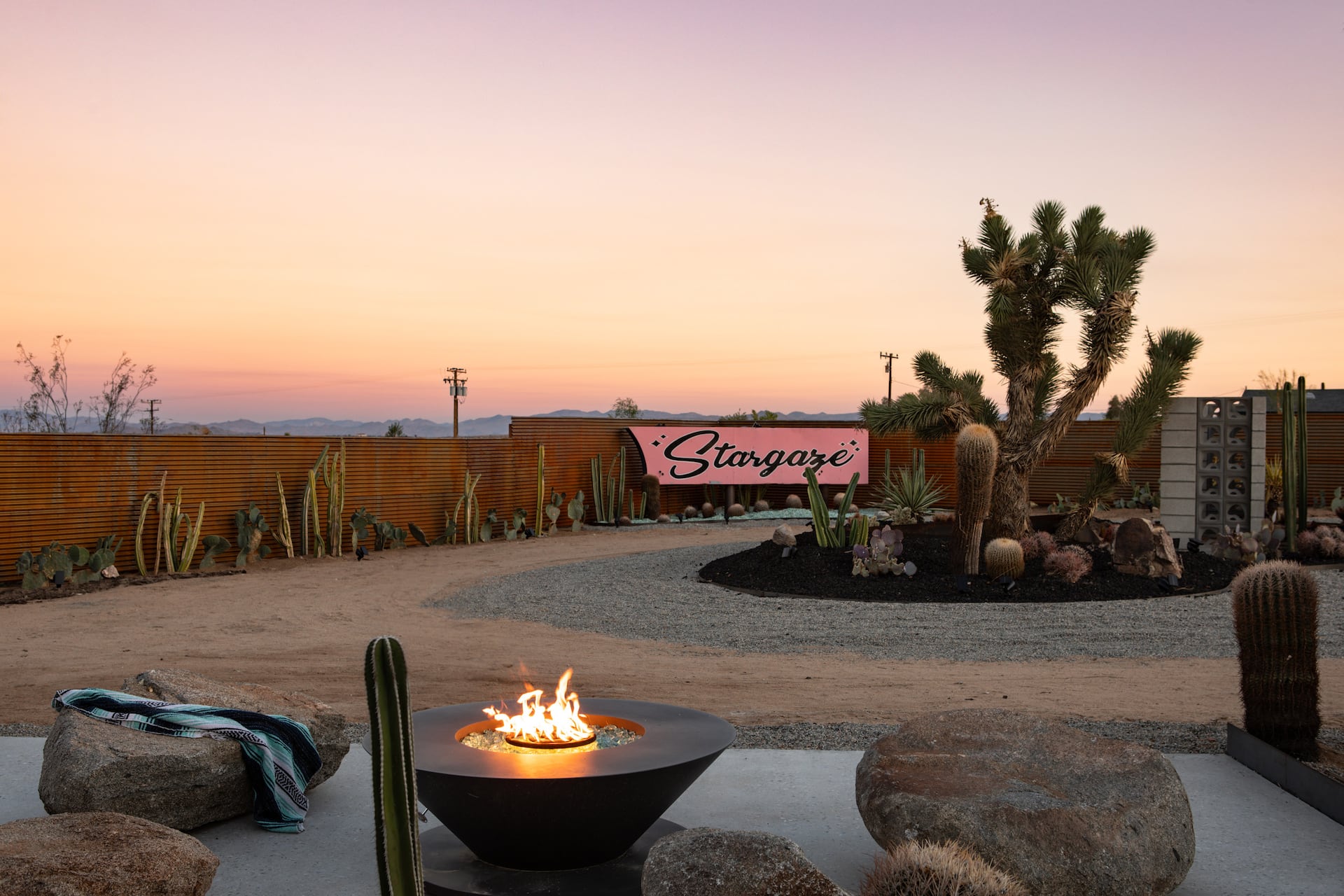
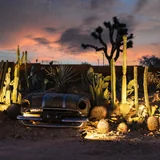
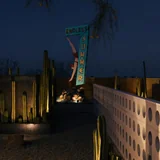
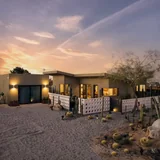
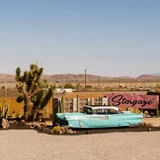
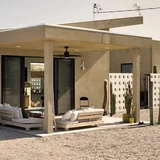
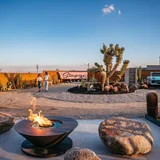
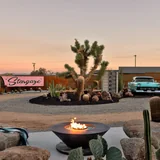
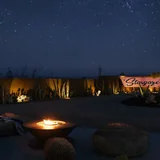
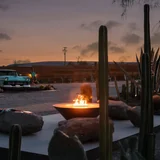
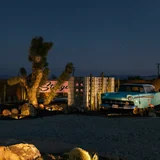
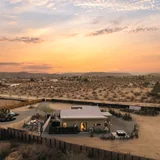
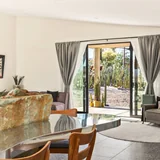
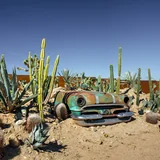
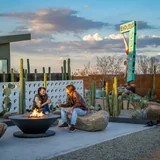
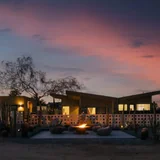
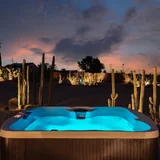
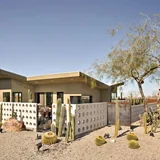
August days at the house follow the heat. The air conditioning handles the afternoons, and the stock-tank pool, inside its star-perforated steel privacy screen, is the obvious place to spend them. Nights stay warm, with normal lows near 68°F, which makes a late soak in the private hot tub easy. For the Perseids, the car bed (the restored 1950s car on the gravel) saves you a 3 am drive into the park, and the gas fire pit ringed by natural boulders is there for the first part of the evening. Quiet hours start at 10 pm, so keep voices low on a meteor night, and keep glass away from the pool and hot tub. Read more about the fire pit and stargazing at the house.
Before you go in August
- Weather. Yucca Valley normals: 96°F high, 68°F low. Expect some days over 100°F, and check for storms each morning.
- Flash floods. Late summer and early fall are the peak. Stay out of washes during storms, and don't drive through water.
- Roads. Storms can close roads and campgrounds at short notice; check the park's alerts before you drive in.
- Perseids. Peak night August 12 to 13. Check the moon phase for your year.
- Fees. Entry is around $30 per vehicle for seven days. August 25 was listed as fee-free in 2026; check the current list.
- Emergencies. Call 911. Expect little or no cell signal inside the park.
Planning a Perseid trip? Check dates for the house. Joshua Tree in July covers the hotter weeks just before, and Joshua Tree in September covers the turn toward cooler weather.
Keep exploring
Joshua Tree in January
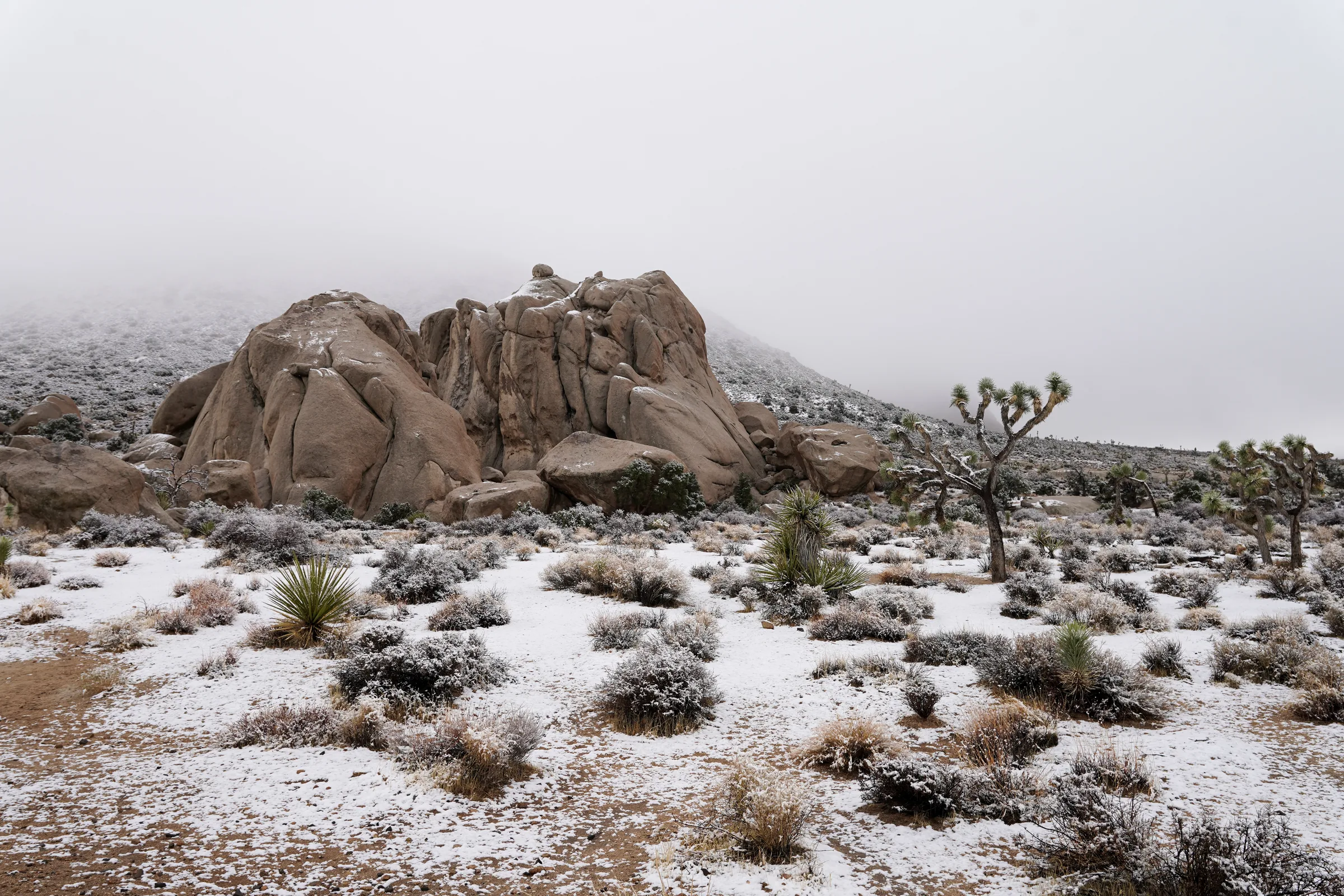
Joshua Tree in January: NOAA weather normals for Yucca Valley, short days, snow and road closures, crowd numbers, the Quadrantids and Palm Springs events.
Read →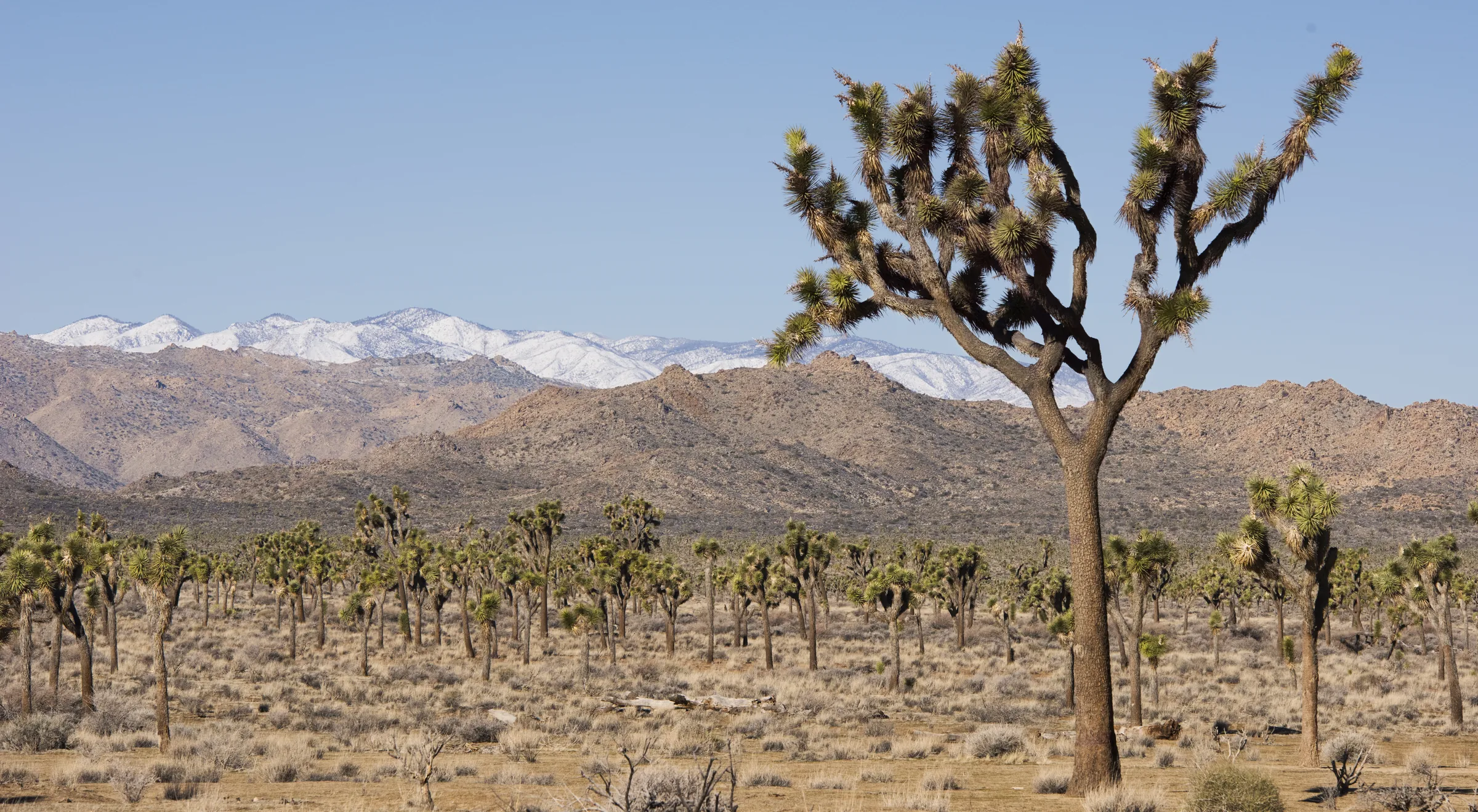
Joshua Tree in February
Joshua Tree in February: Yucca Valley weather normals, longer days, the start of spring crowds, Joshua tree blooms, Modernism Week and Mars and Jupiter in 2027.
Read →
Joshua Tree in March
Joshua Tree in March: the park's busiest month, NOAA weather normals, the clock change, mid-elevation wildflowers, spring wind, the night sky and local events.
Read →