



















Joshua Tree & nature
Skull Rock and Jumbo Rocks
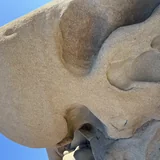
Skull Rock is a granite boulder beside Park Boulevard, the main road through Joshua Tree National Park, with two weathered hollows that look like eye sockets. It sits at the edge of Jumbo Rocks Campground, and a nature trail of about 1.7 miles loops between the two through boulder piles and sandy washes. From the house it's roughly an hour's drive, which makes it an easy stop on almost any day in the park.
Skull Rock
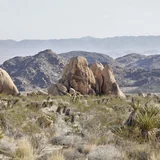
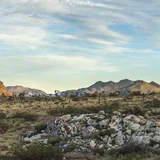
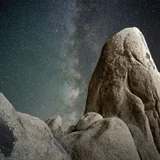
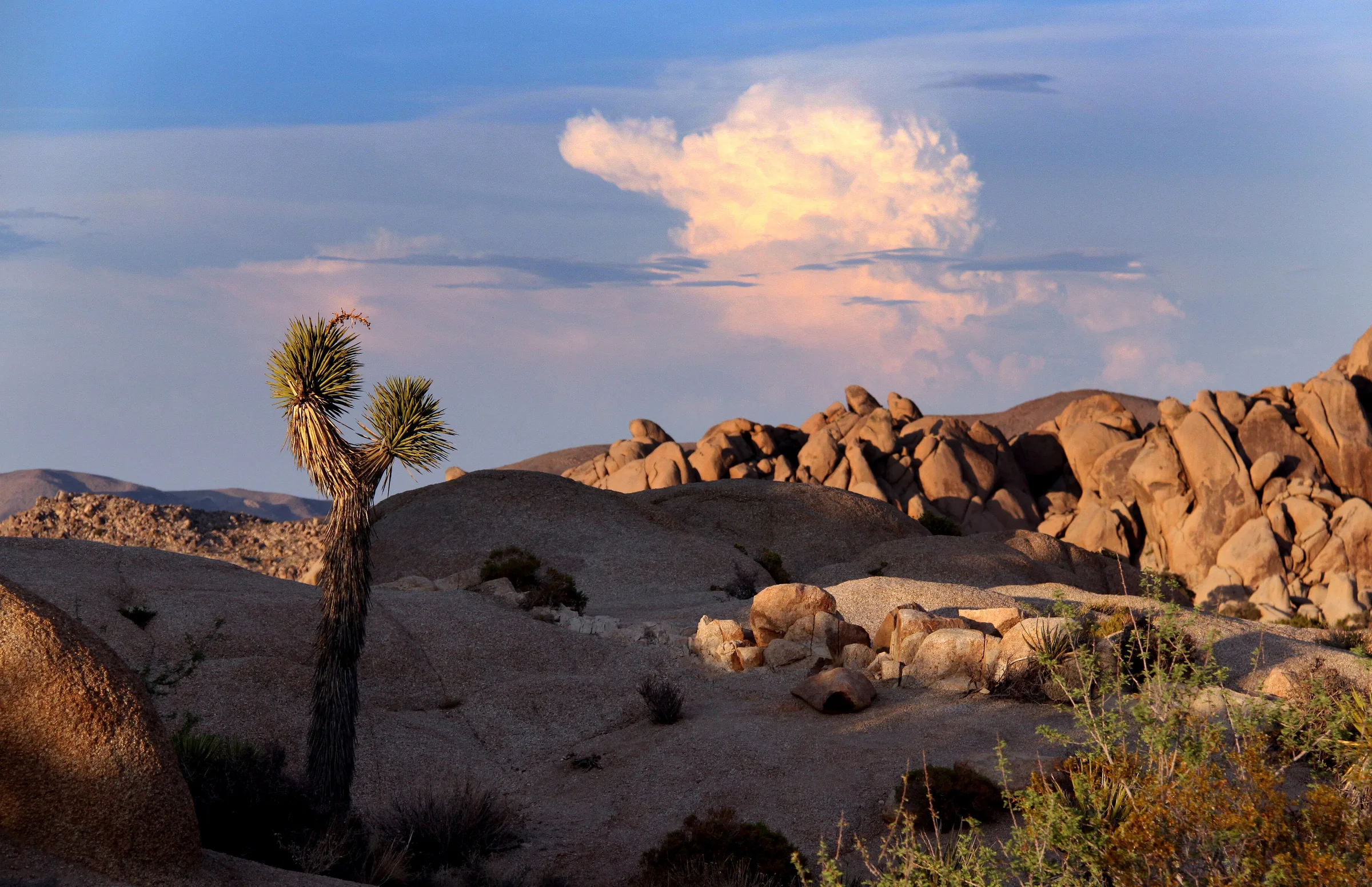
The rock is right on the road, so most people spot it through the windshield first. The park service explains how it got its face: rain collected in tiny dips in the granite and slowly wore the rock away, the hollows held more water as they grew, and over a very long time two eye sockets formed. The boulders all around Jumbo Rocks were shaped by the same slow weathering. The park's geology pages describe granite that cracked into rough blocks while it was still underground, groundwater that rounded those blocks off, and flash floods that later washed away the protective ground surface and left the boulders stacked in piles.
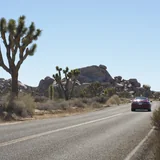
A small parking area sits just across Park Boulevard from the rock. If you walk the nature trail clockwise from that lot, Skull Rock is only about 70 feet from the road. The park warns that the lot fills during the busy season, on holidays, in spring and on weekends, so an early start helps. Cross the road with care, since it's the park's main through route.
The Skull Rock Nature Trail
The park's hiking table lists the loop at 1.7 miles with about 160 feet of elevation gain and rates it easy. Another park page gives 1.8 miles and 120 feet, so think of it as a little under two miles with gentle climbing. Allow one to two hours. You can start at the Skull Rock parking lot, across the road from the Jumbo Rocks Campground entrance, or from inside the campground across from the amphitheater.
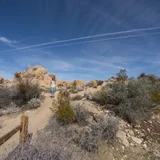
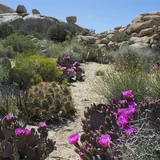
Going clockwise from the parking lot, the trail passes the southwest side of Skull Rock, winds through the campground, crosses Park Boulevard and then heads back east to the lot. Part of the loop follows the paved road through the campground. Interpretive signs along the way explain the plants and rocks. The park's plant notes for this trail mention cat's claw acacia and desert almond in the sandy stretches, oaks tucked among the boulders, and California buckwheat and Mojave yucca along the ridgelines.
Underfoot it's mostly sand with some bare rock, and the path narrows to about two feet in places. There are rocky steps and uneven ground, and the park says the trail is not accessible for wheelchairs. There is almost no shade and no cell service. Stay on the trail, because it's easy to lose your bearings among the boulders.
Discovery Trail and Split Rock
Two more trails start nearby if you want a longer walk. The Discovery Trail is a 0.7-mile loop with about 70 feet of gain that also begins at the Skull Rock parking area. The park lists it at 30 to 45 minutes, and it links up with other trails at Face Rock. The Split Rock Loop, about 2.5 miles with roughly 150 feet of gain, starts from the Split Rock picnic area. The park notes that joining the Skull Rock, Discovery and Split Rock trails makes a hike of about five to six miles, a good half day in cool weather.
Jumbo Rocks Campground
Jumbo Rocks is a big campground, with 124 sites at about 4,400 feet among the rock formations the park is known for. The park lists pit toilets and tables, and no water, so bring everything you need. Sites are reserved through recreation.gov, and the park's campground table showed a fee of about $30 a night when we checked. Some sites take an RV up to 35 feet long, including a towed vehicle. The park says its campgrounds are usually full on weekends from September through May, so book early if you want to camp here. Sleeping in your car at a roadside pullout is not allowed.
Even if you're not camping, the nature trail runs through the campground, so keep voices down and stay on the path where it passes campsites. Our guide to camping in Joshua Tree compares the park's campgrounds side by side.
When to go
The park recommends this trail in winter, spring and fall, and calls the park dangerously hot in summer. If you do come in the hot months, start before 10 am, carry plenty of water, and follow the park's wider advice to avoid hiking between 10 am and 5 pm in summer. Spring weekends and holidays are when the Skull Rock lot fills, so a weekday or an early start makes parking easier.
The short loop also fits into a late afternoon in the cooler months. Leave time to finish in daylight, since the drive back to the house is about an hour.
Getting there from the house
From the house it's about 25 minutes to the West Entrance in the town of Joshua Tree. Skull Rock is roughly 18 more miles east on Park Boulevard, so plan on about an hour door to door. Coming in through the North Entrance in Twentynine Palms takes about the same time. There's no gas, food or water for sale inside the park, so fill up in Yucca Valley before you go.
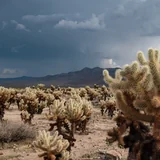
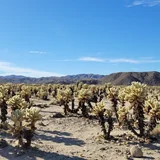
Skull Rock sits near the middle of the park, which makes it easy to combine with other stops. Arch Rock is about five miles away by road, east on Park Boulevard and then south on Pinto Basin Road, and the Cholla Cactus Garden is farther down the same road. For more on how these boulders formed, read the rock formations of Joshua Tree.
Know before you go
- Dogs. Dogs are not allowed on any trail in the park, including this loop, even if carried. They can be within 100 feet of roads, parking areas and campgrounds on a leash six feet or shorter. Our post on visiting Joshua Tree with a dog covers where they can go.
- Water. There is no water at Skull Rock or Jumbo Rocks. The park says to bring plenty of food and water, even on short hikes.
- Shade and signal. Almost no shade and no cell service on the trail. Download an offline map before you leave the house.
- Entrance fee. A private vehicle pass was $30 for seven days when we checked. Confirm the current fee with the park.
- Leave it as you find it. Rocks, plants and artifacts stay where they are.
- Conditions change. Check the park's alerts for closures and road work before you drive out.
After a morning in the boulders, the stock-tank pool and hot tub are about an hour away. When you're ready to plan the trip, check dates for the house.
Keep exploring
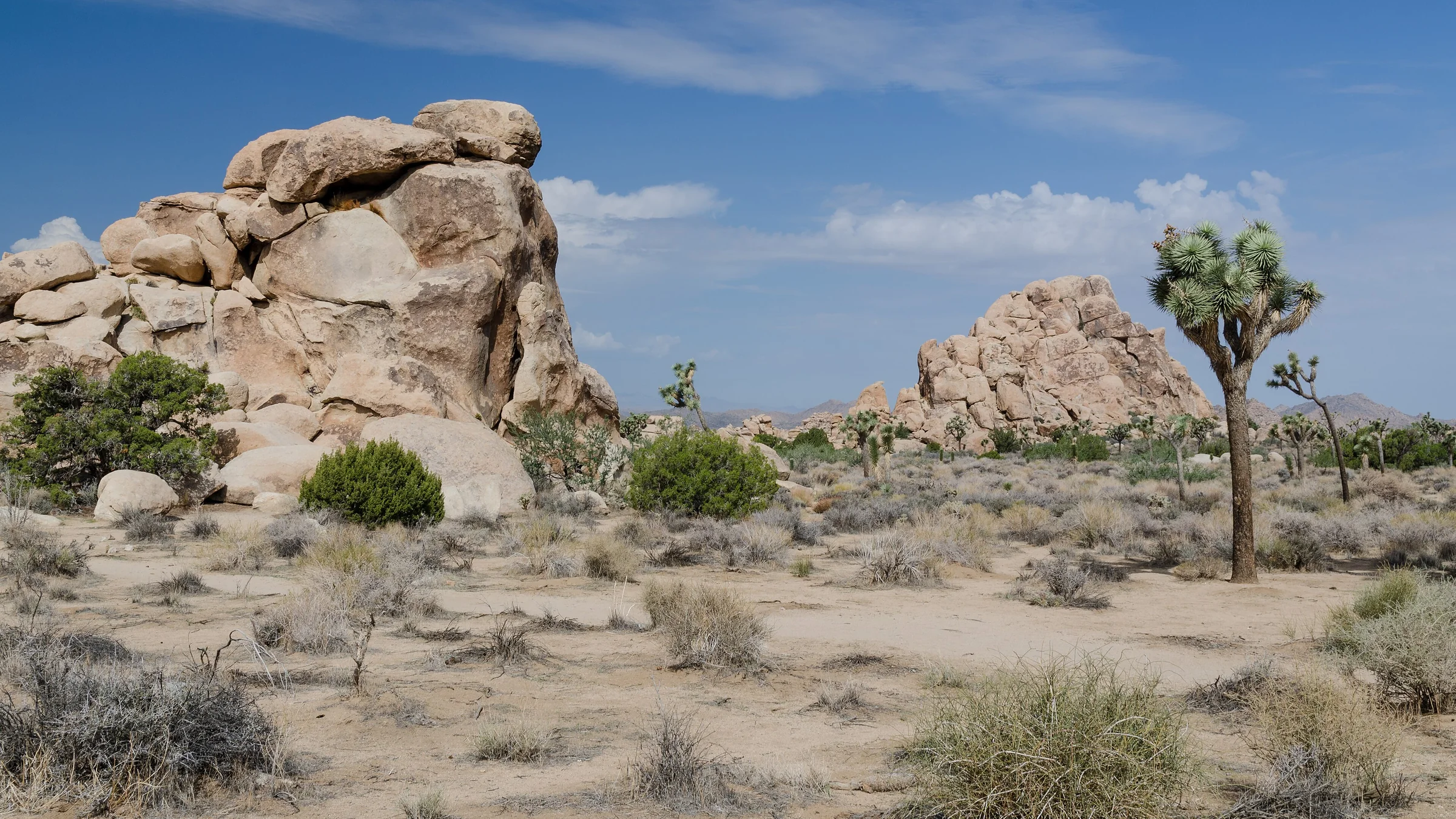
The Best Hikes in Joshua Tree National Park
The best hikes in Joshua Tree, shortest to longest — Hidden Valley, Barker Dam, Ryan Mountain, 49 Palms Oasis and Lost Horse Mine, about 25 minutes from the house.
Read →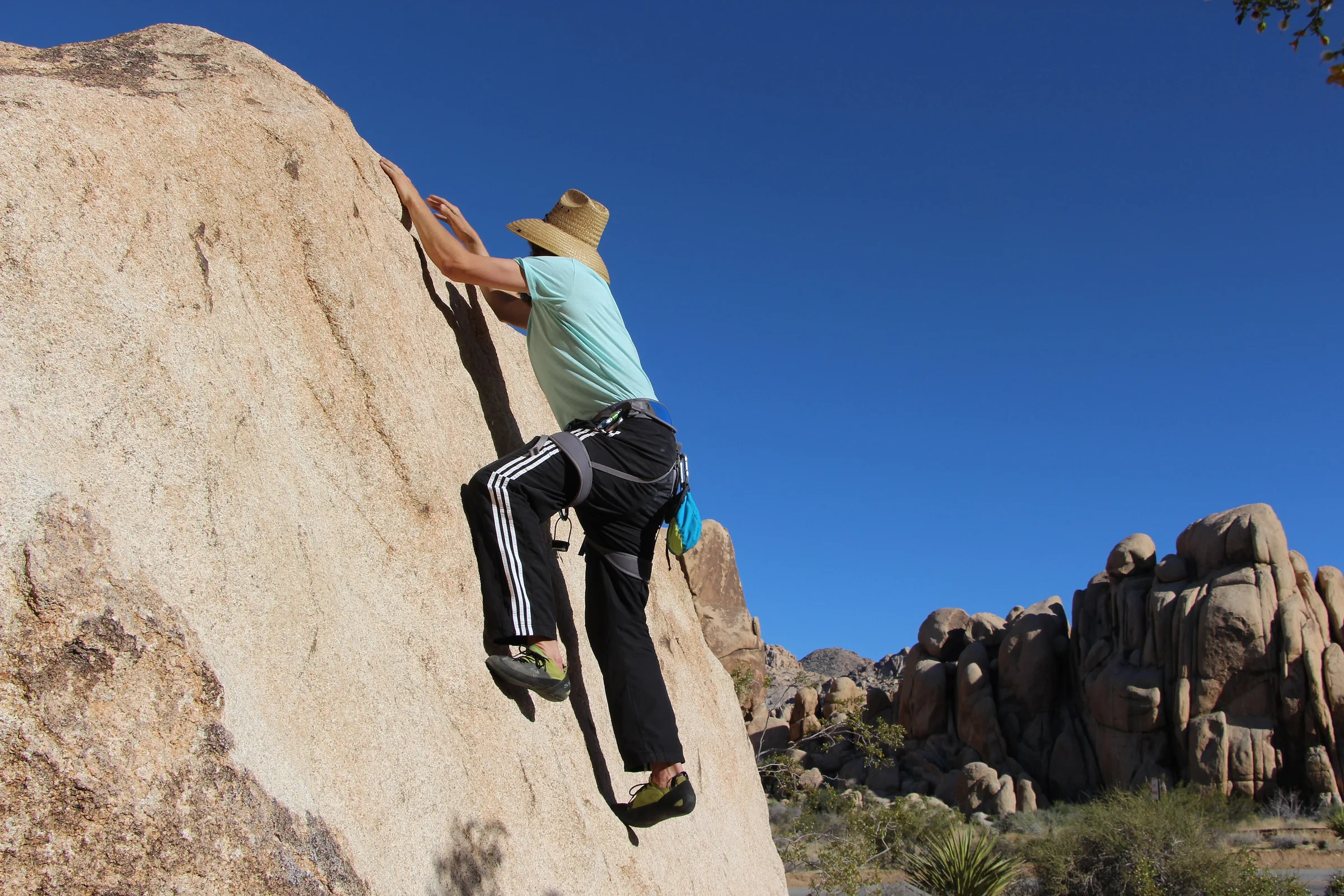
Rock Climbing & Bouldering in Joshua Tree
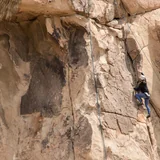
Joshua Tree is a world-class rock-climbing and bouldering destination. Where to start, when to go, how to climb it responsibly, and how to hire a guide if you're new.
Read →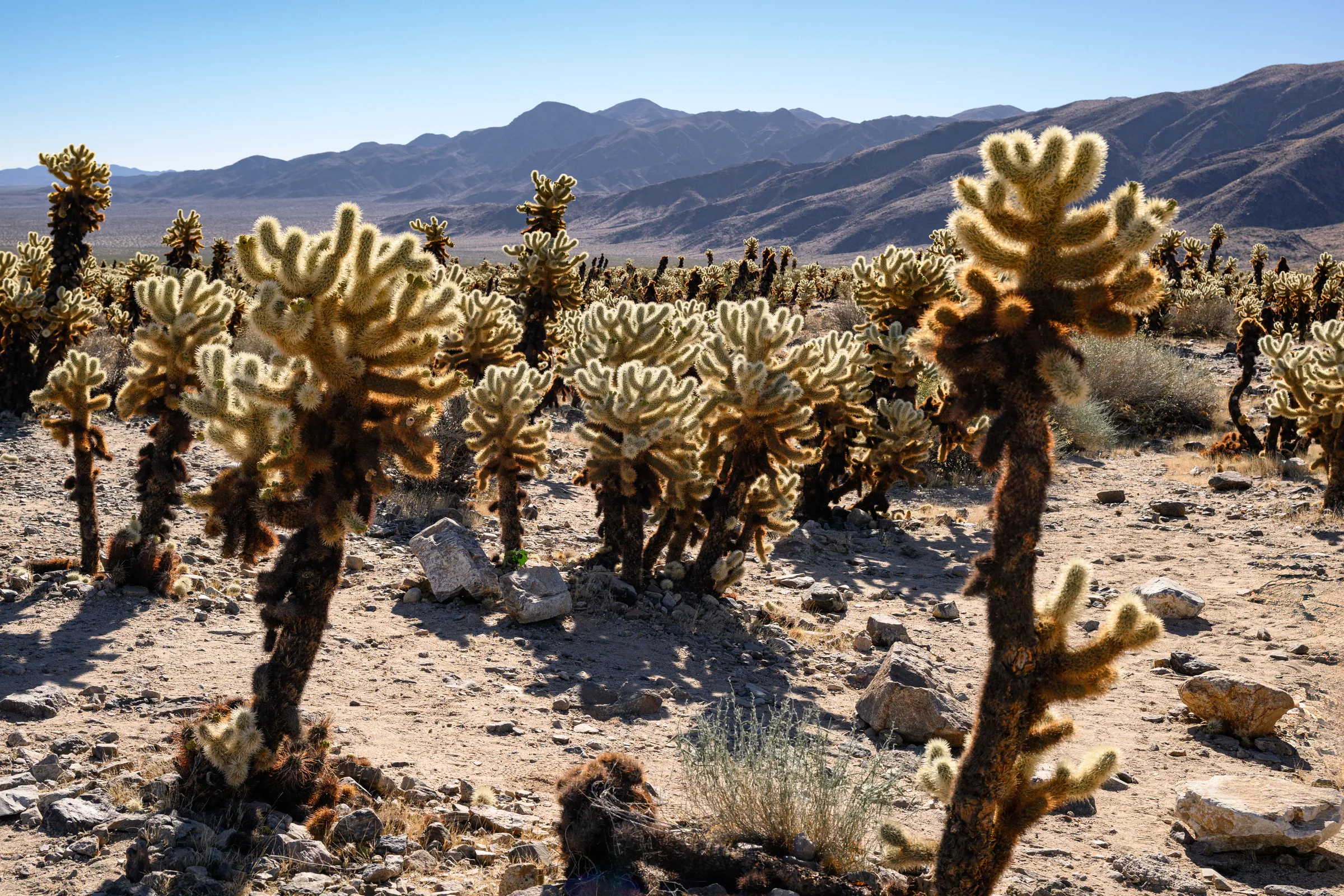
The Cholla Cactus Garden & the Park's Quiet South End
The Cholla Cactus Garden and Joshua Tree's quiet southern end — Cottonwood Spring, Lost Palms Oasis and the ocotillo patch, and how to do the drive from Yucca Valley.
Read →