



























Month by month
Joshua Tree in May
May is the month the high desert slides from spring into summer. Around Yucca Valley the average high climbs from the upper 70s to the upper 80s in four weeks, the last wildflowers hold on at the park's higher elevations, and visitor numbers fall well below their March peak. This guide covers what May is like in Joshua Tree National Park and at the house, with the numbers behind it.
May weather
The weather numbers for the house come from NOAA's Yucca Valley station, at about 3,250 feet. Its 1991 to 2020 climate normals give May an average high of 82°F, an average low of 52°F and just 0.06 inch of rain for the whole month. The warming is steady and quick. The normal high is about 78°F on May 1, 82°F by the middle of the month and nearly 87°F on May 31, while the normal low rises from the upper 40s to about 55°F. In an average May the station records about six days at 90°F or above, no days of 100°F, and about 13 nights at 50°F or below.
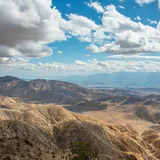
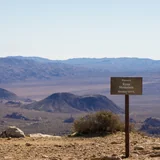
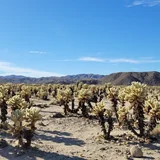
Elevation changes the picture a lot. NOAA's Twentynine Palms station, near the park's North Entrance, sits around 1,975 feet, roughly 1,300 feet below Yucca Valley. Its May normals are a high of 90°F and a low of 63°F, with about 19 days of 90°F or more and about four days of 100°F or more. Inside the park the same pattern holds. The western side around Hidden Valley and Keys View (the overlook is at about 5,185 feet) is high Mojave Desert, while the Pinto Basin and the Cholla Cactus Garden to the southeast sit where the park slopes toward the lower, hotter Colorado Desert. On a warm May day, visit the low country first thing and save the higher western roads for later.
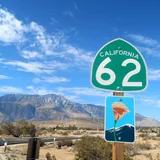
Rain hardly figures. The Yucca Valley normals count a day with a tenth of an inch of rain only about once every five Mays. Wind is the weather to watch instead. The National Weather Service office in Las Vegas, which forecasts for the Morongo Basin, issues wind advisories for the area in spring. One May advisory, reported by local radio, called for south to southwest winds of 30 to 40 mph with gusts to 50 mph, strongest in the late afternoon and early evening, with blowing dust near dry lake beds and strong crosswinds on Highway 62. On a day like that, hike in the morning and keep the afternoon sheltered.
Sunrise, sunset and twilight
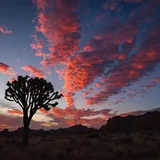
The U.S. Naval Observatory's tables for Yucca Valley in 2026 put sunrise on May 1 at about 5:56 am and sunset at about 7:30 pm, for roughly 13 hours and 34 minutes of daylight. By May 31 the sun rises around 5:36 am and sets around 7:52 pm, a day of about 14 hours and 16 minutes. That is about 42 minutes of daylight gained over the month. The times move by only a minute or two from one year to the next.
Evenings stay usable for a long time. Civil twilight, the stretch after sunset when you can still see well enough to walk without a light, ends around 7:57 pm at the start of the month and 8:20 pm at the end. Full astronomical darkness, which faint stars and the Milky Way need, begins about 9:03 pm on May 1 and about 9:34 pm on May 31, and it ends around 4:24 am and 3:53 am. In practice that means a hike at first light, a slow afternoon, and stargazing that starts after half past nine.
The last of the bloom
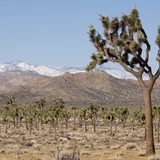
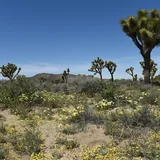
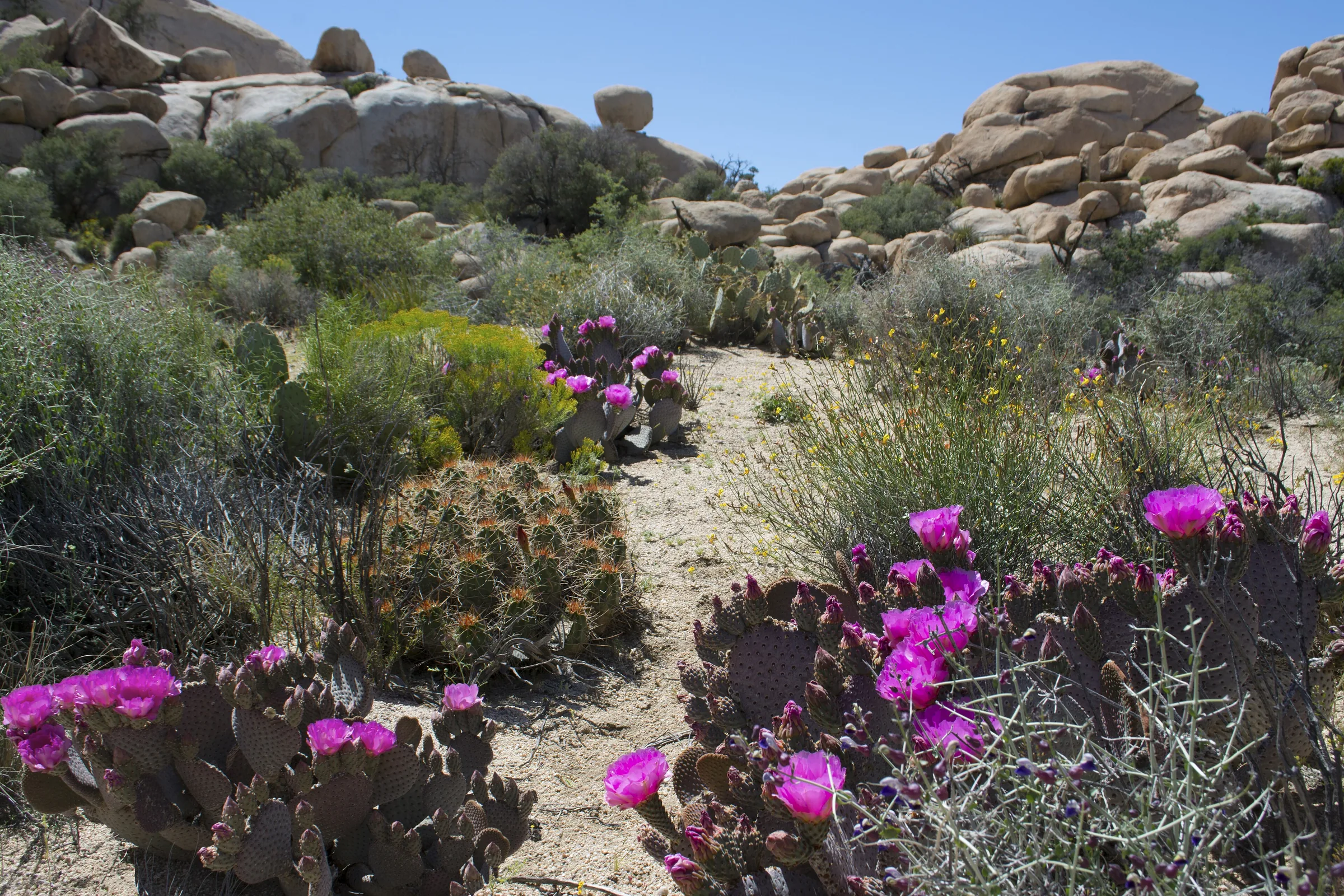
By May the wildflower show on the low desert floor is usually finished, but the season keeps moving uphill. The park usually sees its first wildflowers in January or February, and bloom keeps moving uphill from the lowest elevations. Above 5,000 feet, flowers are typically out from April into June. Whether a given May has much color depends on the winter before it. The seeds need about half an inch of rain in a single storm, then more storms spaced through the season, and the big bloom years come only every five to ten years or so.
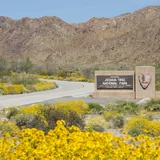
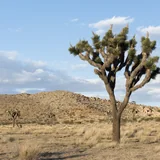
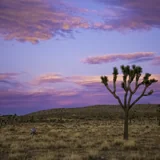
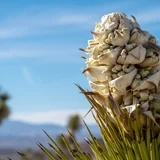
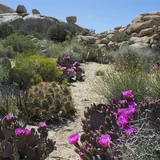
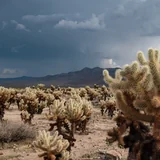
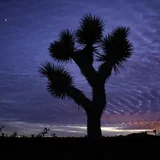
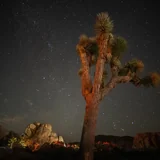
Cactus stretch the season. Teddybear cholla and ocotillo both bloom from about March to May, and ocotillo's red-orange flowers are most common in the lower southern part of the park around the Pinto Basin and Cottonwood. The California barrel cactus, which grows on rocky slopes and leans toward the sun, flowers yellow to reddish in late spring. Joshua trees bloom from mid-February into April in years with good rain and a winter freeze, so their bloom is usually over by May. Our wildflower guide covers what grows where; check the park's bloom updates before you plan a drive around a display.
Wildlife is out too. The park's reptiles are most active in spring and fall. Desert tortoises spend about 95 percent of their lives underground and come out to forage as spring warms. They are a threatened species and it is illegal to handle one, so if a tortoise is crossing the road, stop and let it go. Sidewinders and other rattlesnakes are mostly active at dusk and after dark in the warm months, so carry a light on evening walks and watch where you put your hands and feet.
Hiking before the heat
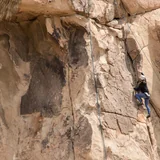
May is the last month when the park's longer hikes are comfortable for most people, as long as you start early. The park's hot-weather advice is to hike before 9 am or after 5 pm, and on a warm May day that rule already applies. With sunrise before 6 am there is time to climb Ryan Mountain, about 3 miles round trip with roughly 1,050 feet of climbing and very little shade, and be back at the car by mid-morning. The park lists Ryan Mountain among the trails over two miles it tells summer visitors to skip, so May is the end of its easy season.
It is also your last chance until October at Fortynine Palms Oasis. Under the park's current rules the trail is closed each summer, June 1 through September 30, because heat-related incidents are common on its challenging, shadeless route. If it is on your list, go in May and go at dawn; our Fortynine Palms Oasis guide has the route and the parking.
Closer to the house, Black Rock Canyon, on the Yucca Valley edge of the park, has a nature center with a water bottle filling station and one of only two campgrounds in the park with drinking water. Everywhere else, bring what you will drink. The park suggests about a gallon (four liters) of water per person per day, and there is none in the interior.
Crowds and Memorial Day
The park's visitor counts show how fast the spring rush fades. In 2025 Joshua Tree recorded 411,993 recreation visits in March, its busiest month, and 230,328 in May, a little over half as many. 2024 followed the same shape, with about 401,000 visits in March and 260,000 in May. Spread across the month, May 2025 averaged roughly 7,400 visits a day, against about 13,300 a day in March.
May still belongs to the busy season, which the park describes as October through May, and its campgrounds fill nearly every weekend from September to May. Reservations open up to six months ahead on recreation.gov. Memorial Day weekend is the holiday to plan around. In 2026 Memorial Day, May 25, was also one of the park's entrance-fee-free days; that list is reset every year, so check the current dates on the park's fees page. After the holiday the heat takes over, and in 2025 the June total fell to 155,366, about a third lower than May.
Festivals and the holiday weekend
Two long-running local events land in May. The Joshua Tree Music Festival holds a spring edition in May at Joshua Tree Lake RV & Campground (May 14 to 17 in 2026) and comes back for a fall edition in October. It is a family-friendly camping festival with music on three stages and a long list of workshops. Grubstake Days, Yucca Valley's own town celebration, is held around Memorial Day weekend. In 2026, its 75th year, the program began with a kick-off dinner and dance at the Yucca Valley Community Center on Thursday, May 21, and included a golf tournament, a carnival and a Saturday morning parade on May 23 along Yucca Trail.
The parade and most Grubstake events take place in Yucca Valley itself, so check the schedule if you plan to drive through town that Saturday morning. Dates are set fresh each year, and the schedule above is from 2026; confirm with the organizers before you plan around either event. Our high desert events guide follows the calendar through the rest of the year.
The night sky in May
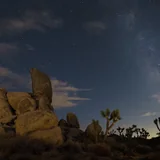
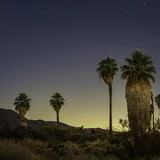
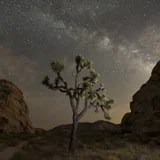
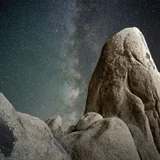
May evenings show the spring sky. Once it is dark, look for the constellation Leo, bright orange Arcturus in Boötes, and the Big Dipper riding high in the north. The bright core of the Milky Way is in the sky in May, but it is a late-night and pre-dawn sight, low in the southeast; it moves into the evening sky as summer goes on. A free planetarium app such as Stellarium will show where it sits on your dates.
May's meteor shower is the Eta Aquariids. The American Meteor Society lists them as active from about April 19 to May 28, with the peak on the night of May 5 to 6. They are a strong shower from the southern tropics; from our latitude the society expects medium rates of about 10 to 30 meteors an hour just before dawn. Set an alarm for the last hour or two before first light, which begins a little after 4 am in early May.
The moon decides how much you see. In 2026 the full moon fell on May 1, so that year's peak came with a bright moon in the morning sky, and May 2026 then had a second full moon on May 31. 2027 lines up far better: the new moon falls on May 6, 2027, the same morning as the peak, so moonlight stays out of the way. The following full moon is on May 20, 2027. The week either side of a new moon gives the darkest nights.
What to pack for May
Pack for both ends of a 30-degree day. The normal May range in Yucca Valley runs from the low 50s at night to the low 80s in the afternoon, so plan on shorts and a sun shirt by day and a warm layer for the evening. Once the weather turns hot, the park recommends sunglasses, long sleeves, loose clothing, a hat and sunscreen.
- Water. At least a gallon per person per day for the park, plus electrolyte drinks or salty snacks.
- A wind layer. A light jacket that blocks wind, and sunglasses to keep dust out of your eyes on gusty afternoons.
- Closed shoes. For trails, and for walking around outside after dark.
- A red light. Your eyes take 20 to 30 minutes to adjust to the dark, and one look at white light resets them. A headlamp with a red mode protects your night vision.
- Offline maps. Cell service in the park is very limited, so download maps before you leave the house.
- Swimwear. For the pool and the hot tub.
May at the house
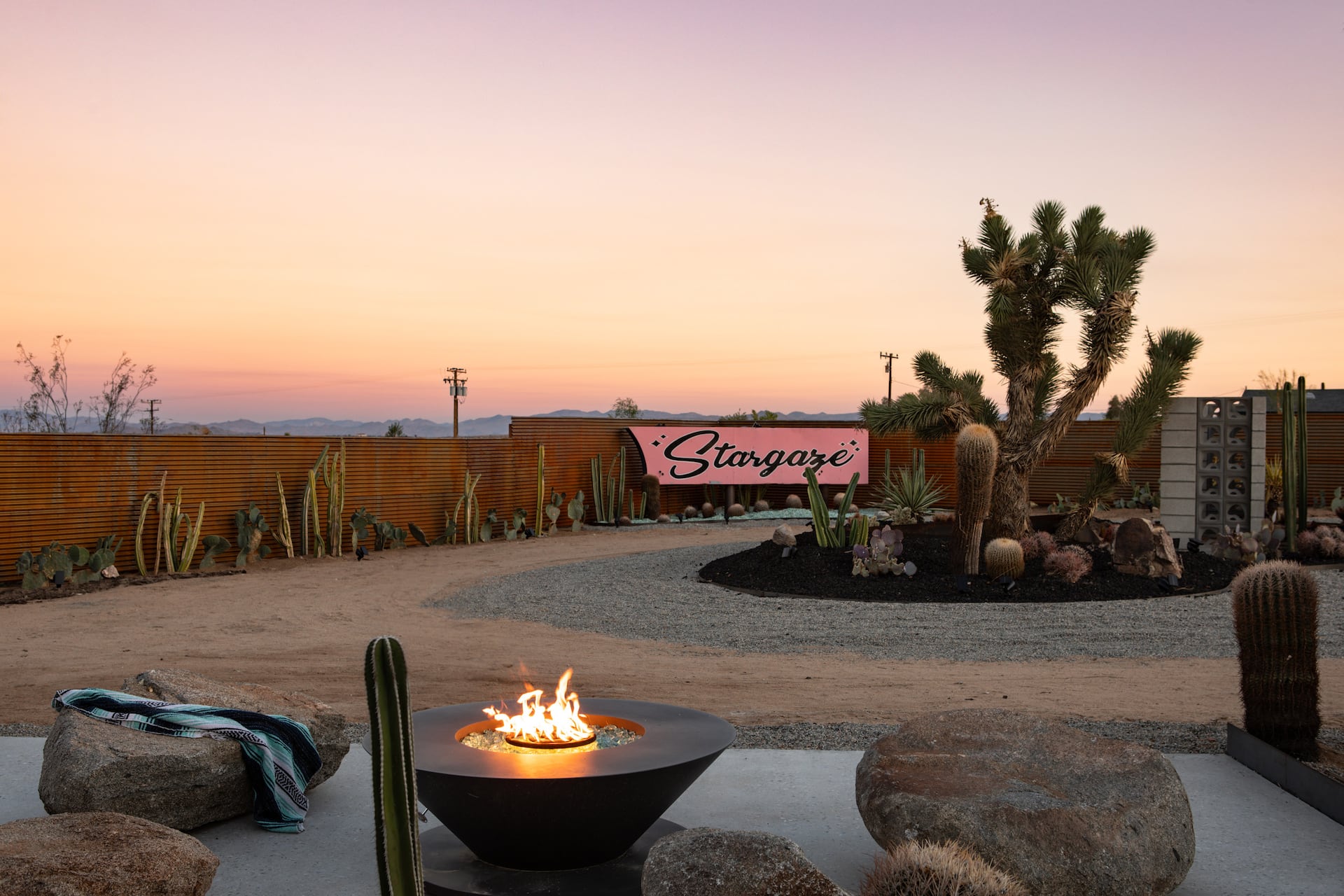
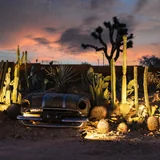
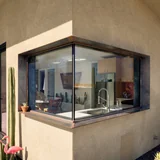
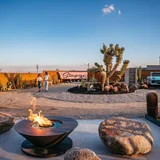
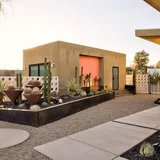
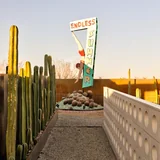
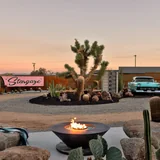
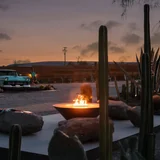
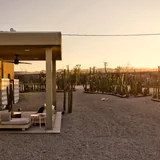
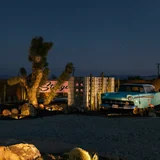
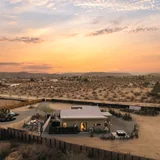
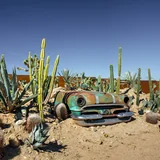
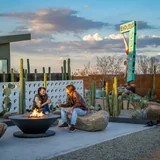
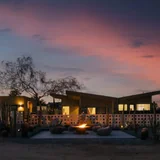
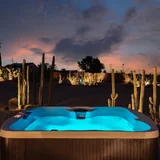
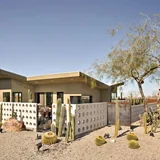
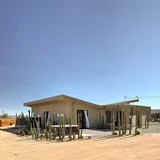
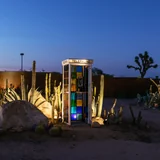
May lets you use almost everything at the house in a single day. After an early hike, the stock-tank pool, with its painted "Endless Summer" sign, is where to cool off on a warm afternoon, and the air conditioning keeps the two king bedrooms comfortable as the highs climb. Evenings that slip toward 50°F suit the private hot tub, which is open all year, and the gas fire pit ringed by natural boulders. When quiet hours begin at 10 pm, the car bed, a restored 1950s car parked on the gravel with a custom stargazing roof, is a good place to lie back and watch the spring sky. Glass isn't allowed near the pool or hot tub, so plan outdoor drinks around that. There is more on the stock-tank pool and hot tub page.
Before you book a May trip
- Weather. Yucca Valley normals: highs near 82°F and lows near 52°F, warmer by the end of the month. Twentynine Palms and the park's southeast run hotter. Check the forecast the week you go.
- Fortynine Palms. Open in May under current rules, closed June 1 to September 30. Confirm on the park's alerts page.
- Busy weekends. Campgrounds are usually full on weekends through May, and Memorial Day is a holiday weekend. Fee-free days change every year.
- Fees. The 7-day private vehicle pass is around $30; check the current price before you go.
- Events. Joshua Tree Music Festival and Grubstake Days dates change yearly; confirm with each organizer.
- Wind. Spring wind advisories can make Highway 62 hard going for larger vehicles. Check the National Weather Service forecast for the Morongo Basin.
- Emergencies. Call 911, and don't count on a cell signal inside the park.
If May fits your plans, check dates for the house. Coming earlier, when the bloom is usually at its best? Read Joshua Tree in April. Coming later, Joshua Tree in June covers the start of summer and the seasonal closures.
Keep exploring
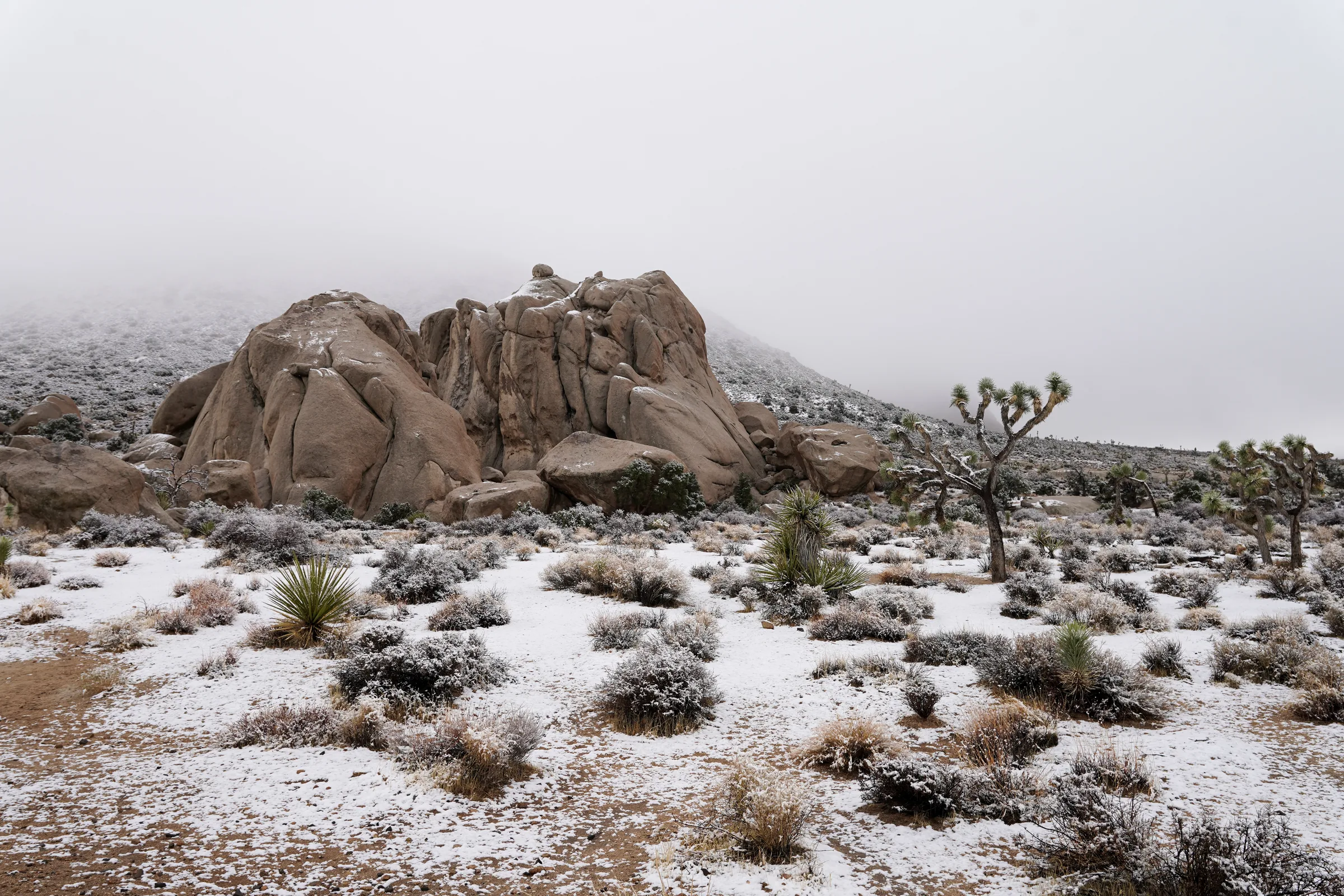
Joshua Tree in January
Joshua Tree in January: NOAA weather normals for Yucca Valley, short days, snow and road closures, crowd numbers, the Quadrantids and Palm Springs events.
Read →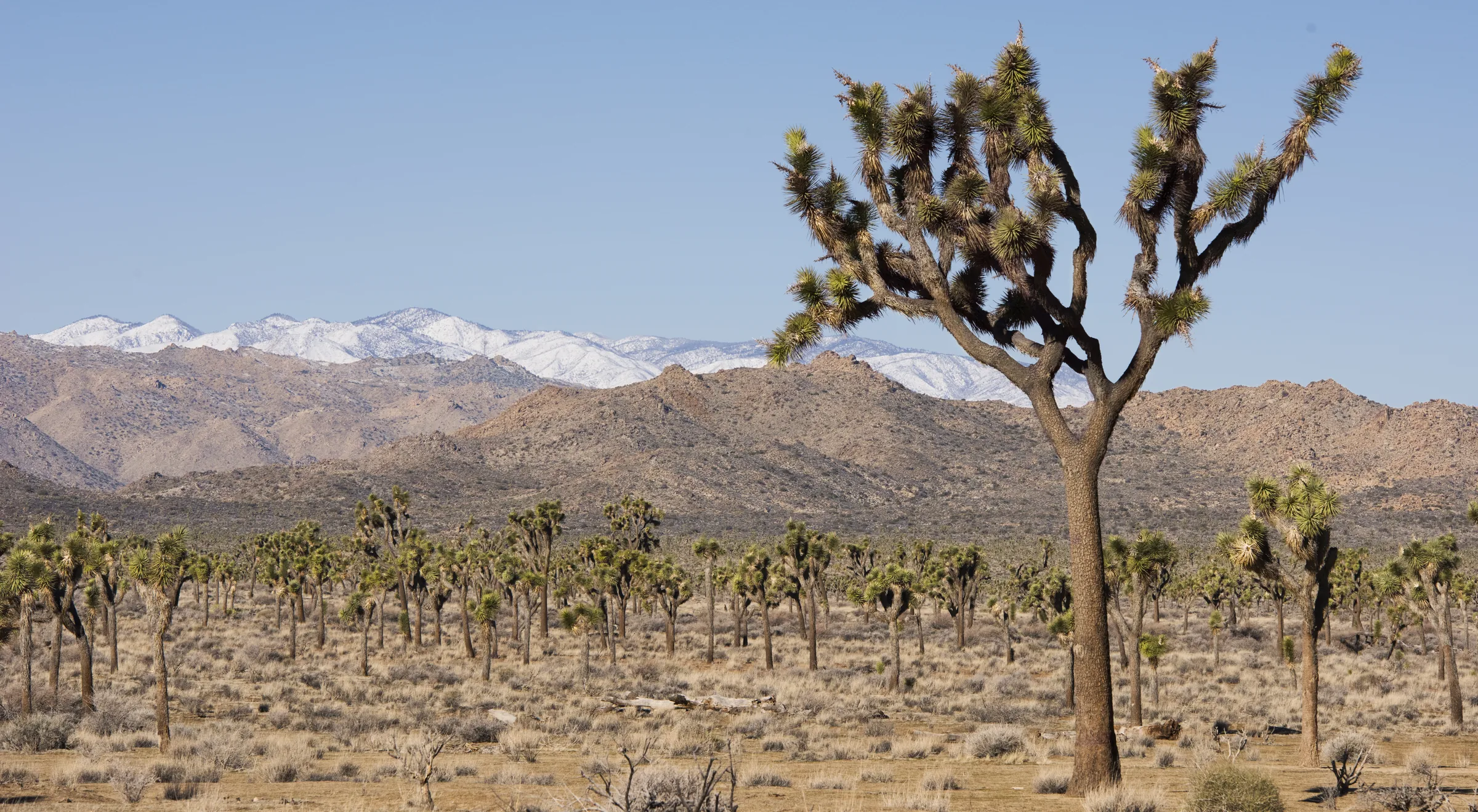
Joshua Tree in February
Joshua Tree in February: Yucca Valley weather normals, longer days, the start of spring crowds, Joshua tree blooms, Modernism Week and Mars and Jupiter in 2027.
Read →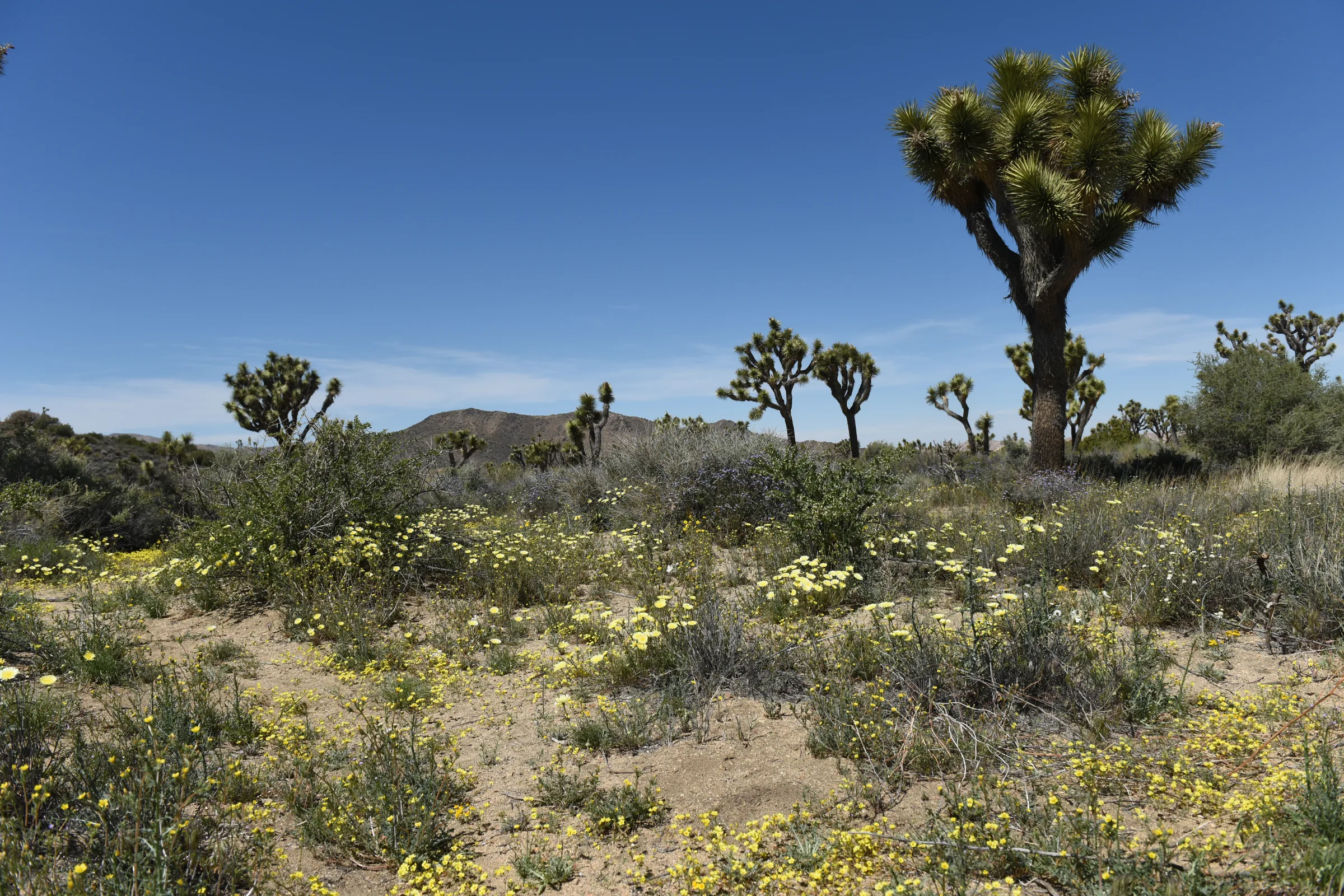
Joshua Tree in March
Joshua Tree in March: the park's busiest month, NOAA weather normals, the clock change, mid-elevation wildflowers, spring wind, the night sky and local events.
Read →