



Day trips
Salvation Mountain & the Salton Sea
Salvation Mountain is a painted hillside of adobe and straw outside Niland, built by one man over nearly three decades, and the Salton Sea nearby is California's largest lake, its surface more than 200 feet below sea level. Together they make a long, unusual day: about two and a half hours each way from Yucca Valley, best done between late fall and early spring with an early start.
Salvation Mountain
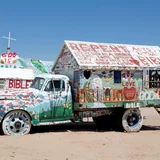
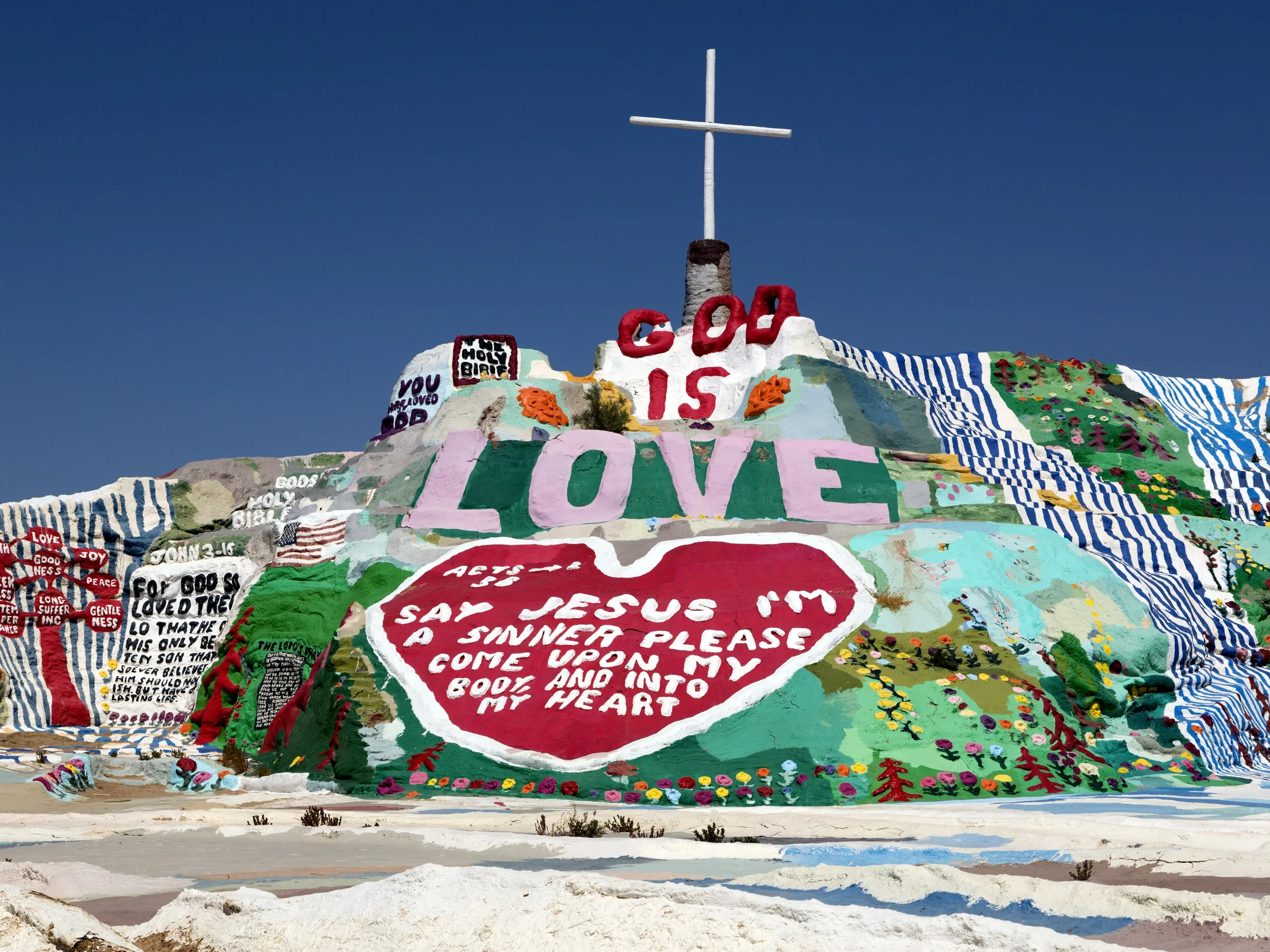
Leonard Knight, a Korean War veteran from Vermont, started building here in the mid-1980s to share one message, "God is Love." His first mountain collapsed in a rainstorm around 1989. He started again, building with adobe and straw, and kept working until his health failed in 2011. He died in 2014 at 82. The finished piece is about 50 feet tall and roughly 100 yards wide, covered in Bible verses and bright color. Estimates of the paint he used run from thousands of gallons to more than 100,000. He also worked old tires, windows and car parts into the site, including its two smaller structures, the Hogan and the Museum.
The Folk Art Society of America called it a folk art site worthy of preservation in 2000, and in January 2024 the Imperial County Board of Supervisors voted to designate it a historically significant property. A nonprofit, Salvation Mountain Inc., formed in 2011, looks after it with volunteers and visitors' donations. Desert heat has cracked parts of the work and the Museum's roof has collapsed, so follow any signs that close off parts of the site.
Visiting the mountain
It's open from sunrise to sunset every day, and it's free. The site asks that donations go only into the donation box or be sent electronically, never handed to anyone in cash. Drive 5 mph, park in the marked areas, keep pets leashed and clean up after them, and leave alcohol behind. Camping on the mountain isn't allowed. Groups can arrange a guided tour in advance through the nonprofit.
Slab City and East Jesus
Salvation Mountain marks the entrance to Slab City, an off-grid settlement about 4 miles from Niland. It takes its name from the concrete foundations left by Camp Dunlap, a World War II Marine Corps training base. The buildings were gone by 1956, the slabs stayed, and people have lived on them since. There's no city water or power. People live here, so stick to the roads and public spots, and ask before photographing anyone's camp.
Inside Slab City, East Jesus is an art garden built from found objects, started by artist Charlie Russell in 2007. It's free, open sunrise to sunset every day and runs on donations. If you plan to take photos, read the visitor guidelines on its website first. The Range, an outdoor stage with weekly talent shows, is here too. If found-object art is your thing, the Noah Purifoy Outdoor Desert Art Museum in Joshua Tree is a much shorter drive from the house.
The Salton Sea
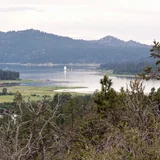
The sea began as an accident. In 1905 the flooding Colorado River broke through an irrigation intake and poured down the Alamo Canal into the dry Salton basin. Today it's the largest lake in California by surface area, about 35 miles long and 15 wide, and a 2023 report put it at roughly 318 square miles. Its surface sat about 236 feet below sea level in 2018, and the water is about twice as salty as the Pacific.
In the 1950s it was a resort destination, drawing more than 1.5 million visitors a year at its peak. Since then it has been shrinking. A 2003 water-transfer agreement reduced the farm runoff that feeds it, and from 2018 about 40 percent less water began flowing in. A 2019 report estimated more than 97 percent of its fish were gone, yet more than 400 bird species have been recorded around the sea, a major stop on the Pacific Flyway. At times the water gives off a strong rotten-egg smell from hydrogen sulfide; in 2012 the odor drifted as far as the Los Angeles area.
Stops along the shore
Salton Sea State Recreation Area
Established in 1955, the recreation area runs along the northeast shore on Highway 111, with a visitor center at the north end. California State Parks lists the visitor center as open daily from 9 a.m. to 4 p.m. and a day-use fee of about $7 per vehicle; check both before you go.
Bombay Beach
This small town on the east shore sits about 223 feet below sea level and is often described as the lowest community in the United States. Art installations stand along the beach and around town, and the Bombay Beach Biennale art festival has been held there since 2016.
Sonny Bono Salton Sea National Wildlife Refuge
At the south end near Calipatria, the refuge sits about 227 feet below sea level. The Rock Hill Trail there is a 2-mile out-and-back, and fall and winter migration is the season to bring binoculars.
Getting there
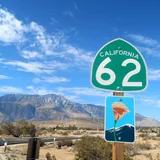
Take Highway 62 down to Interstate 10 and head east to Indio, then follow Highway 111 south through Coachella and Mecca and down the east shore, past the recreation area and Bombay Beach, to Niland. Salvation Mountain is a few miles east of Niland on Beal Road. It's about 108 miles each way. Plan on roughly two and a half hours, or about an hour and a half if you only go as far as the north shore. Fill the tank and pick up food and plenty of water in the Coachella Valley before you head down the shore.
When to go
Go between late fall and early spring. The sea sits below sea level in the low desert, much hotter in summer than Yucca Valley's high desert. See the mountain in the morning, keep the afternoon for the shore, and leave enough daylight to drive home rested. Read our desert safety notes before any long drive like this one.
Know before you go
- Hours. Salvation Mountain and East Jesus are open sunrise to sunset and free, with donations welcome.
- Fees. The state recreation area charges a day-use fee, about $7 per vehicle at last check.
- Water. Carry far more than you think you need, especially outside winter.
- Respect. Slab City is home to the people who live there.
- Smell. The sea's sulfur smell comes and goes with conditions.
- Driving. Around five hours behind the wheel round trip. Share the driving if you can.
For a different way home, return through the south end of Joshua Tree from the Cottonwood entrance off I-10, which adds time; our guide to the Cholla Cactus Garden and the park's south end covers the stops. More long drives are in classic desert road trips. Then check dates and end the day in the hot tub.
Keep exploring
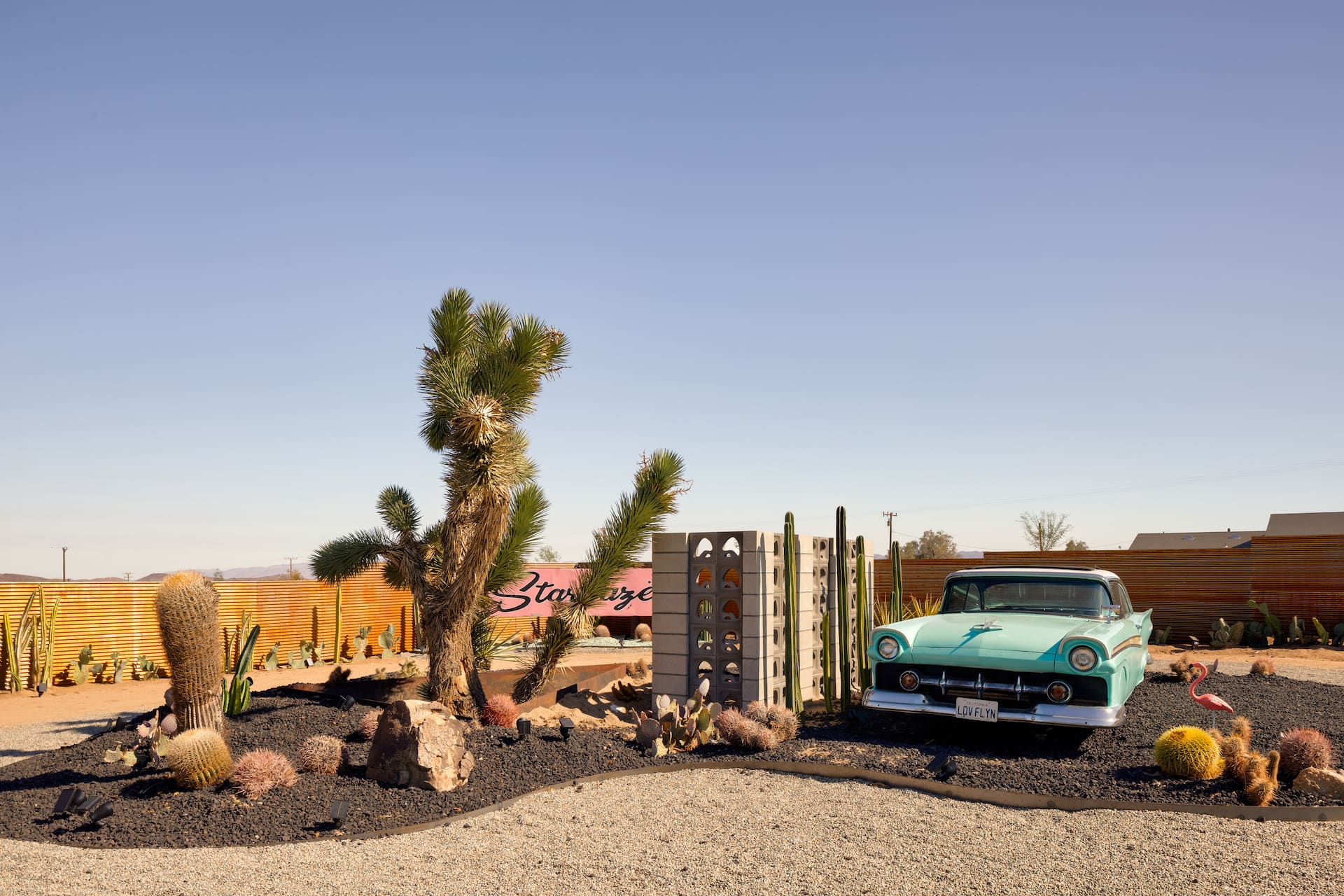
Coachella & Stagecoach: Basing Yourself in the High Desert
Staying up in the high desert for Coachella or Stagecoach — a calmer, often cheaper base about an hour from the Indio polo fields. The trade-offs, the traffic and how to plan.
Read →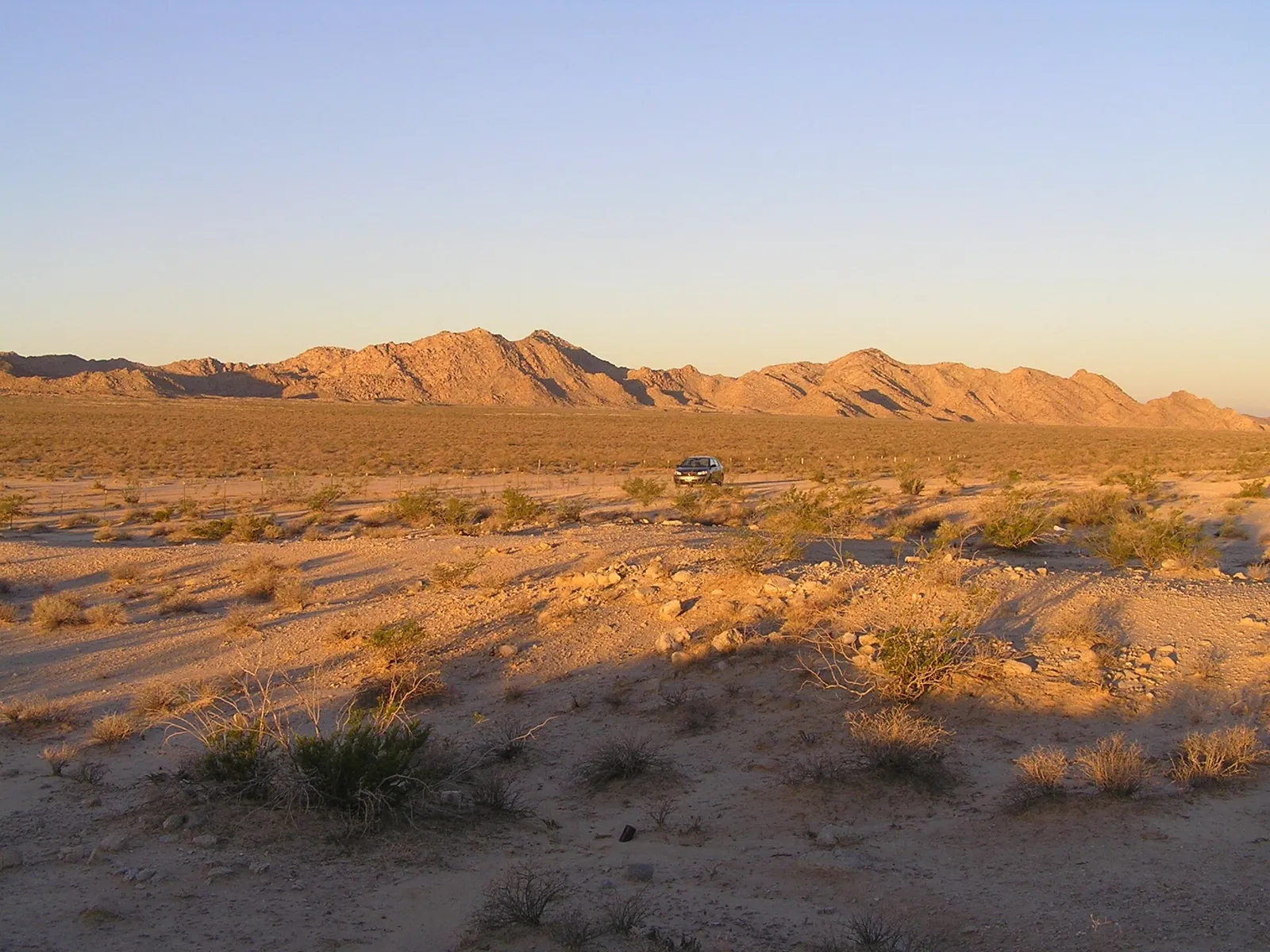
Three Classic Desert Road Trips
Three classic road trips from the high desert — Route 66 and Roy's Café at Amboy, the surreal Salton Sea and Salvation Mountain, and an easy Pioneertown loop. Distances and desert-driving tips.
Read →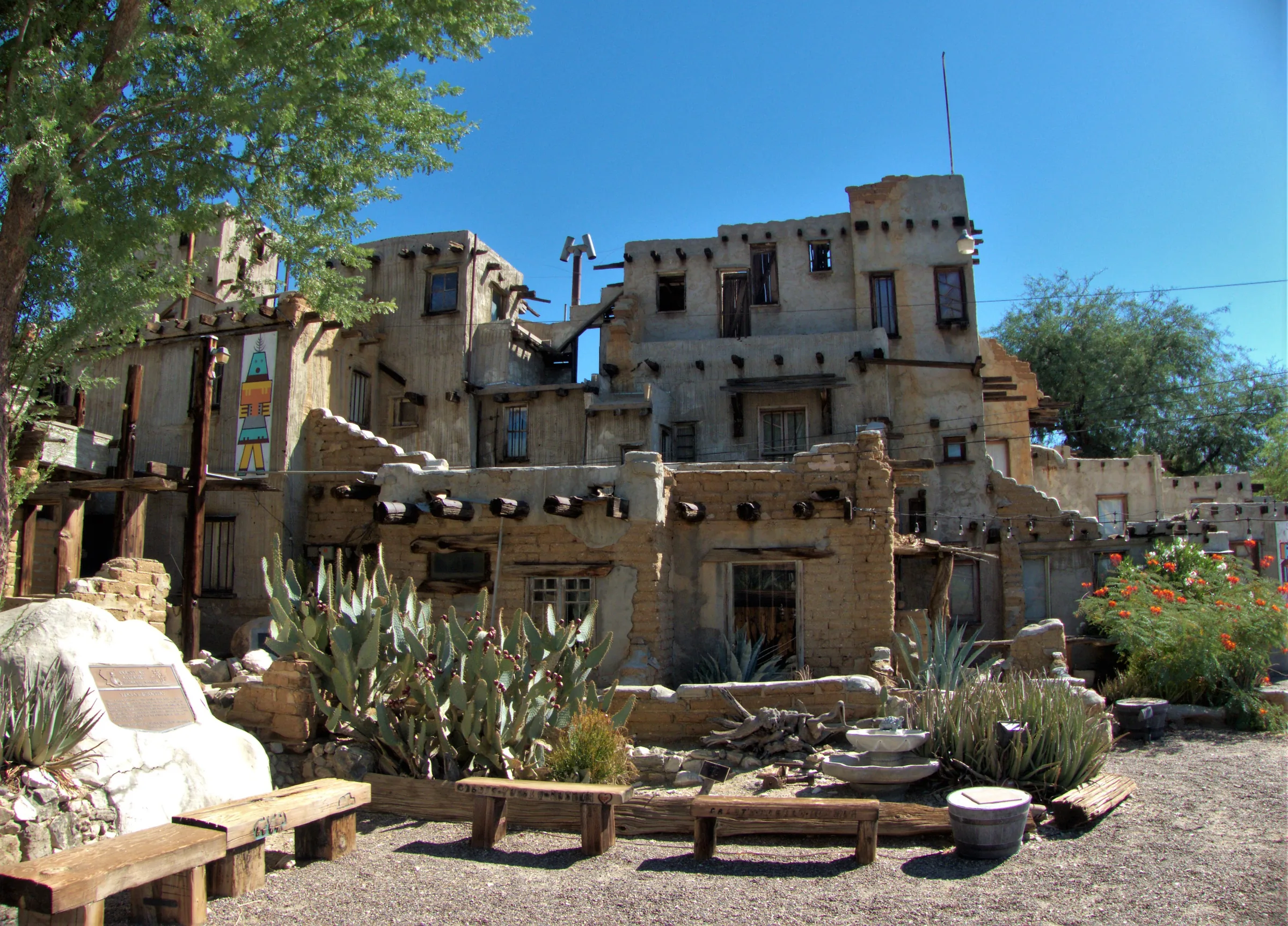
Cabot's Pueblo Museum, Desert Hot Springs
Cabot Yerxa's hand-built, Hopi-inspired pueblo in Desert Hot Springs: 35 rooms of reclaimed materials, guided tours, 2026 hours and prices, and nearby stops.
Read →