






Art & culture
Giant Rock and Landers
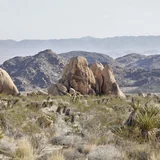
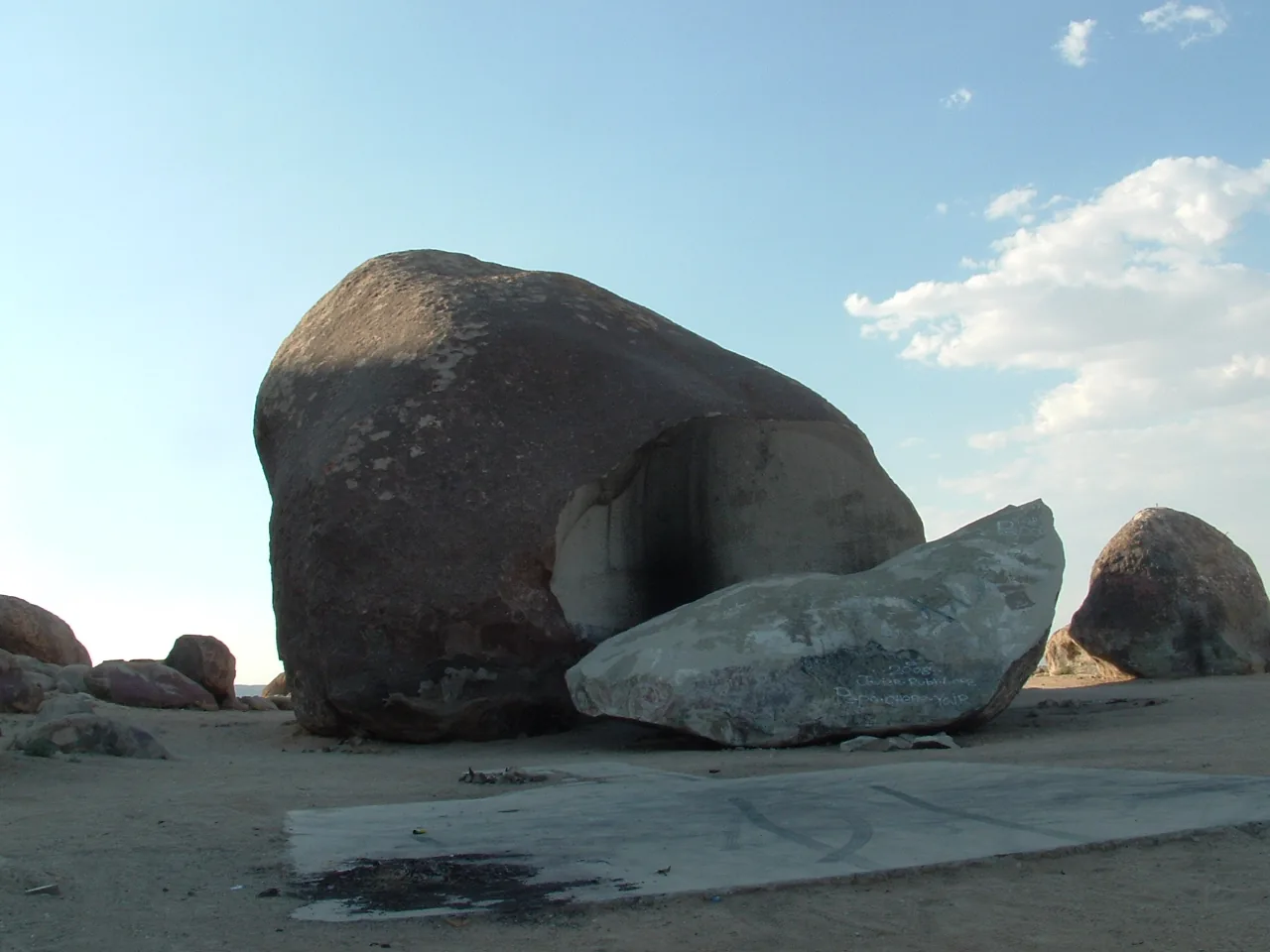
North of Landers, about half an hour from the house with the last stretch on dirt, Giant Rock sits alone on the open desert floor. It is roughly seven stories tall, covers about 5,800 square feet of ground, and is often called the largest freestanding boulder in North America. Its story runs from a 1930s prospector to the UFO conventions of the 1950s and the Integratron, about three miles to the south.
The rock
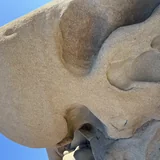
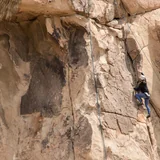
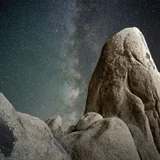
Size figures vary by source, but most put Giant Rock at about seven stories, or roughly 70 feet, with one estimate of 25,000 tons or more. Some go further and call it the largest freestanding boulder in the world, a claim that hasn't been confirmed. It is a granitic rock (one geology summary calls it quartz monzonite), and in February 2000 a large slab split away from one side, exposing white rock inside. Parts of the outer surface are covered in graffiti. Climbers know it for a set of hard bolted sport routes.
Frank Critzer
The first person to make a home here was Frank Critzer, a prospector who arrived in 1931. He dug rooms into the ground under the north side of the rock, reached by stone stairs, with a living room, kitchen area and bedroom (one account puts the space at about 400 square feet). He also cleared a dirt airstrip on the old lakebed nearby. During World War II, authorities suspected him of spying, partly because of a radio antenna at the rock, and in July 1942 he died in a dynamite explosion during a standoff with deputies. Accounts differ on how the dynamite went off.
George Van Tassel and the spacecraft conventions
George Van Tassel, an aircraft mechanic and flight inspector who had worked for Douglas, Hughes and Lockheed, had befriended Critzer. After Critzer's death he leased the property from the Bureau of Land Management, and in 1947 he moved his family into the rooms under the rock. Over the following years he added a café, a store, a gas station and a small guest ranch, and he ran Giant Rock Airport until 1975.
In the early 1950s Van Tassel began saying he received telepathic messages from beings from Venus, and in 1953 he hosted the first Giant Rock Interplanetary Spacecraft Convention. The gatherings continued every year into the early 1970s. Attendance figures vary a lot by year and by source; the biggest crowds, around 1959, are usually put at about 10,000 people. In the 1980s and 1990s the rock drew a different crowd, with desert raves of up to 3,000 people.
The Integratron
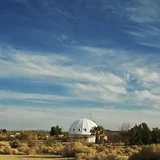
About three miles south of the rock, Van Tassel began building the Integratron in the mid-1950s: an all-wood dome about 38 feet high and 55 feet across, which he described as a machine for rejuvenation and time travel. He worked on it for the rest of his life and died in February 1978 with it unfinished. Today it is privately owned and known for the sound baths held inside the dome.
You need a reservation to go inside. Without one you can visit the grounds and gift shop, and the Integratron asks visitors to call before coming out. It opens Wednesday through Saturday and closes for part of the summer (in 2026, July 5 to September 9). It is at 2477 Belfield Boulevard, about 15 minutes from the house, and the route is paved all the way: north on Highway 247 (Old Woman Springs Road) to Reche Road, right on Reche for about two miles to Belfield Boulevard, then left to the gate. Read our Integratron sound bath post before you book.
Landers
Landers is a small unincorporated community in the Homestead Valley, about 14 miles north of Yucca Valley on Highway 247, at roughly 3,100 feet. Its population was estimated at just under 3,000 in 2017. Settlement began when Charles Reche arrived in 1914 to mine gold. Later, the Small Tract Act of 1938 let people lease, and then gain title to, five-acre parcels of desert if they built a small cabin on them, and those "jackrabbit homesteads" spread across the Morongo Basin in the 1950s and 1960s; our Wonder Valley homesteads guide tells that story farther east.
The town's name is also attached to the Landers earthquake. Early on June 28, 1992, a magnitude 7.3 quake centered near Landers ruptured five separate faults along a line about 53 miles long, with the ground shifting between 6 and 18 feet. Landers, Yucca Valley and Joshua Tree had considerable damage to buildings, roads, and water and power lines, and the shaking broke heads and hands off the statues at Desert Christ Park. For the wider picture, see a short history of the high desert.
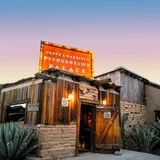
Back on Highway 247, the Giant Rock Meeting Room takes its name from the rock. It opened as a coffee house in 2018 and now runs as an evening pizza bar with live music; hours are limited, so check before you go.
Getting to Giant Rock
Belfield Boulevard ends just past the Integratron. From there, follow graded dirt roads for a couple of miles until Giant Rock comes into view. Graded dirt can turn to washboard or soft sand, and storms can damage it. A higher-clearance vehicle is the safer choice, and if the road looks worse than your car can handle, turn around. Skip it after rain; the park service notes that summer monsoon storms bring heavy rain and flooding to this desert.
The rock sits on public land with no entry fee and no services. Download an offline map before you leave the pavement, since you can't count on a phone signal, and tell someone your plan. The park service's advice for the national park applies out here too: carry at least a gallon of water per person per day, and in hot weather go before 10am or after 4pm. Stay on existing roads and take your trash home; our desert safety and leave no trace post covers the rest.
Know before you go
- Road. The last couple of miles are graded dirt, and conditions change after storms.
- Supplies. No water, food or fuel at the rock. Fill up in Yucca Valley first.
- Signal. Don't rely on cell service; load maps in advance.
- Integratron. Reservations are required to go inside; it opens Wednesday to Saturday and closes for part of the summer. Confirm on its website.
- Leave it as you found it. Add no new marks and pack out everything you bring.
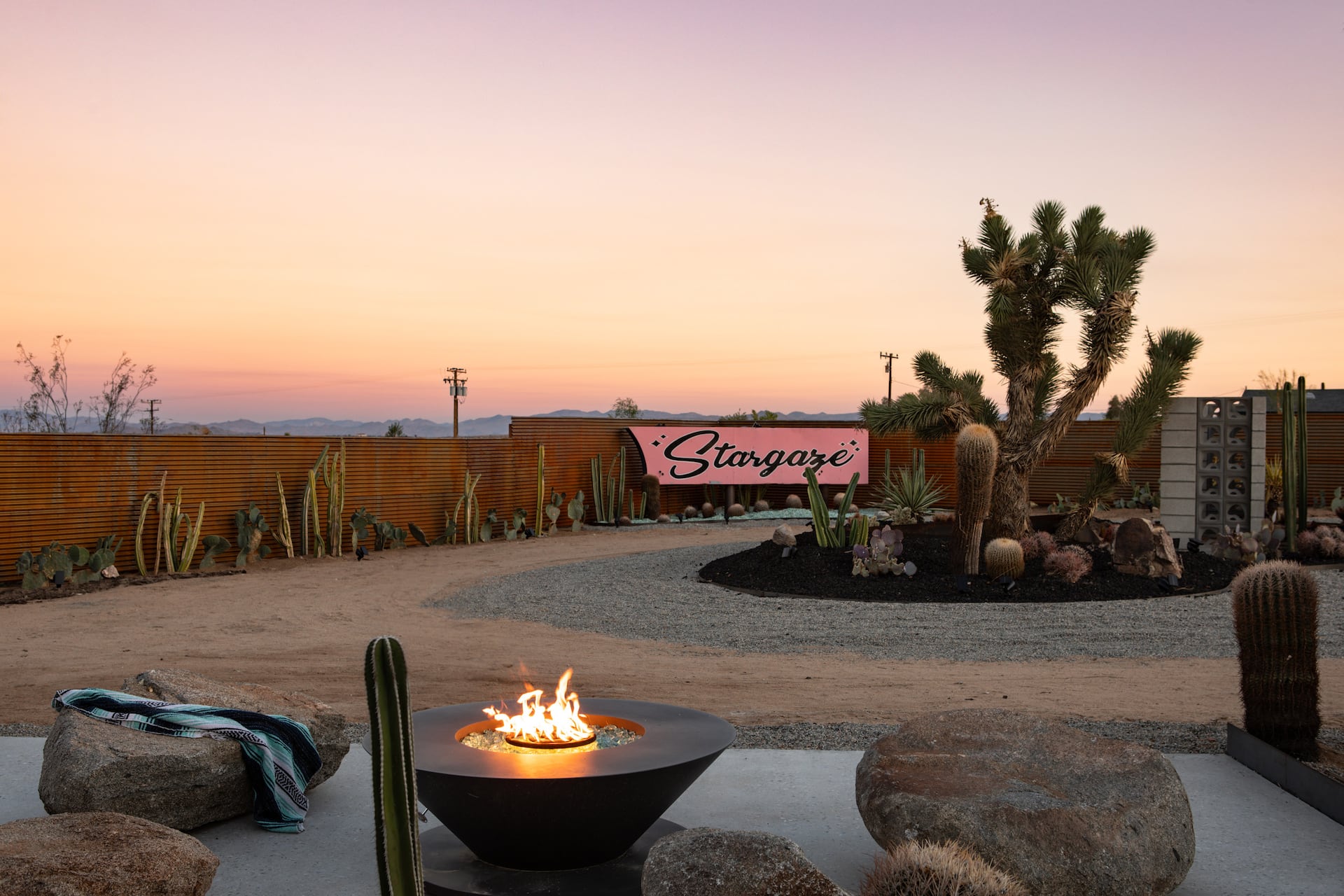
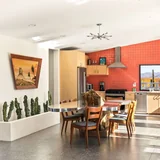
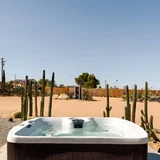
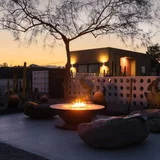
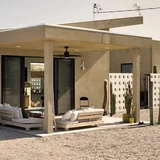
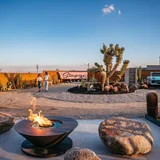
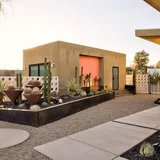
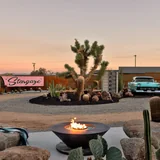
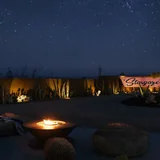
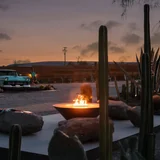
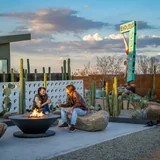
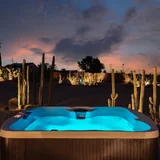
After a day in Landers, the hot tub and gas fire pit at the house are about half an hour away. Check dates for your stay.
Keep exploring
The Noah Purifoy Outdoor Desert Art Museum
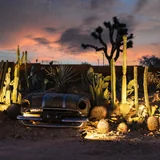
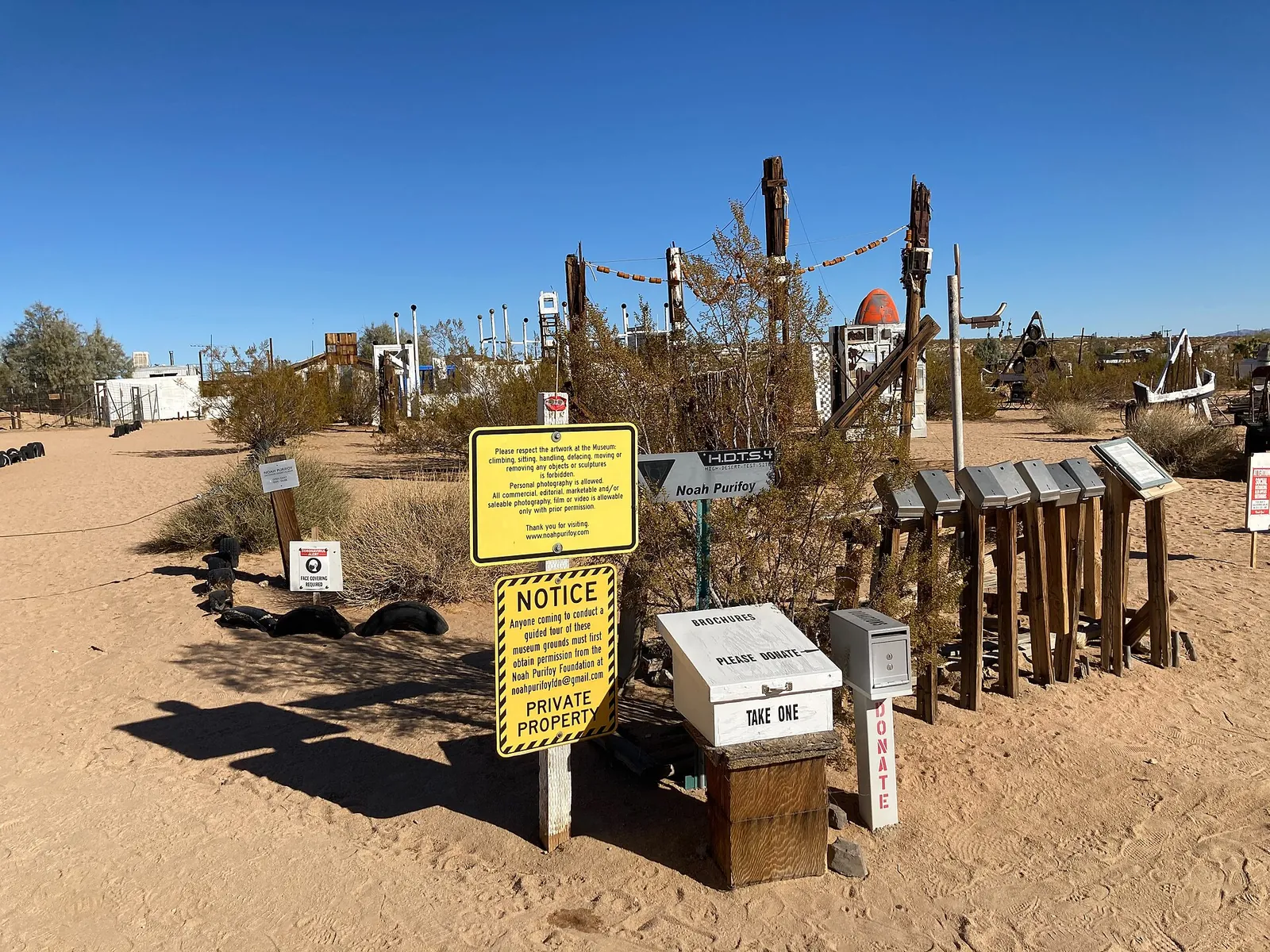
The Noah Purifoy Outdoor Desert Art Museum near Joshua Tree — ten acres of assemblage sculpture, free and open daily. Who he was and how to visit respectfully.
Read →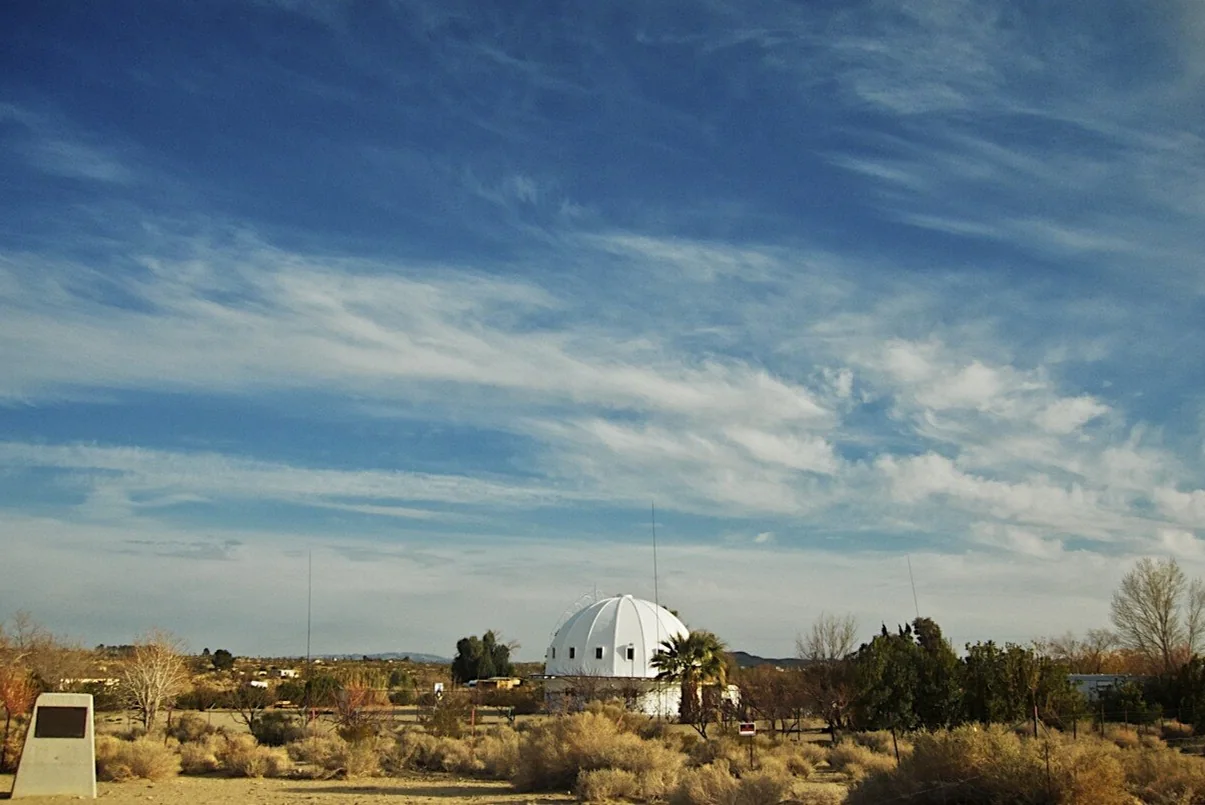
The High-Desert Art Trail: Galleries, Studios & Highway 62
The high desert's art scene — galleries in Joshua Tree and Twentynine Palms, outdoor desert art, and the Highway 62 Open Studio Art Tours each October. How to plan a day.
Read →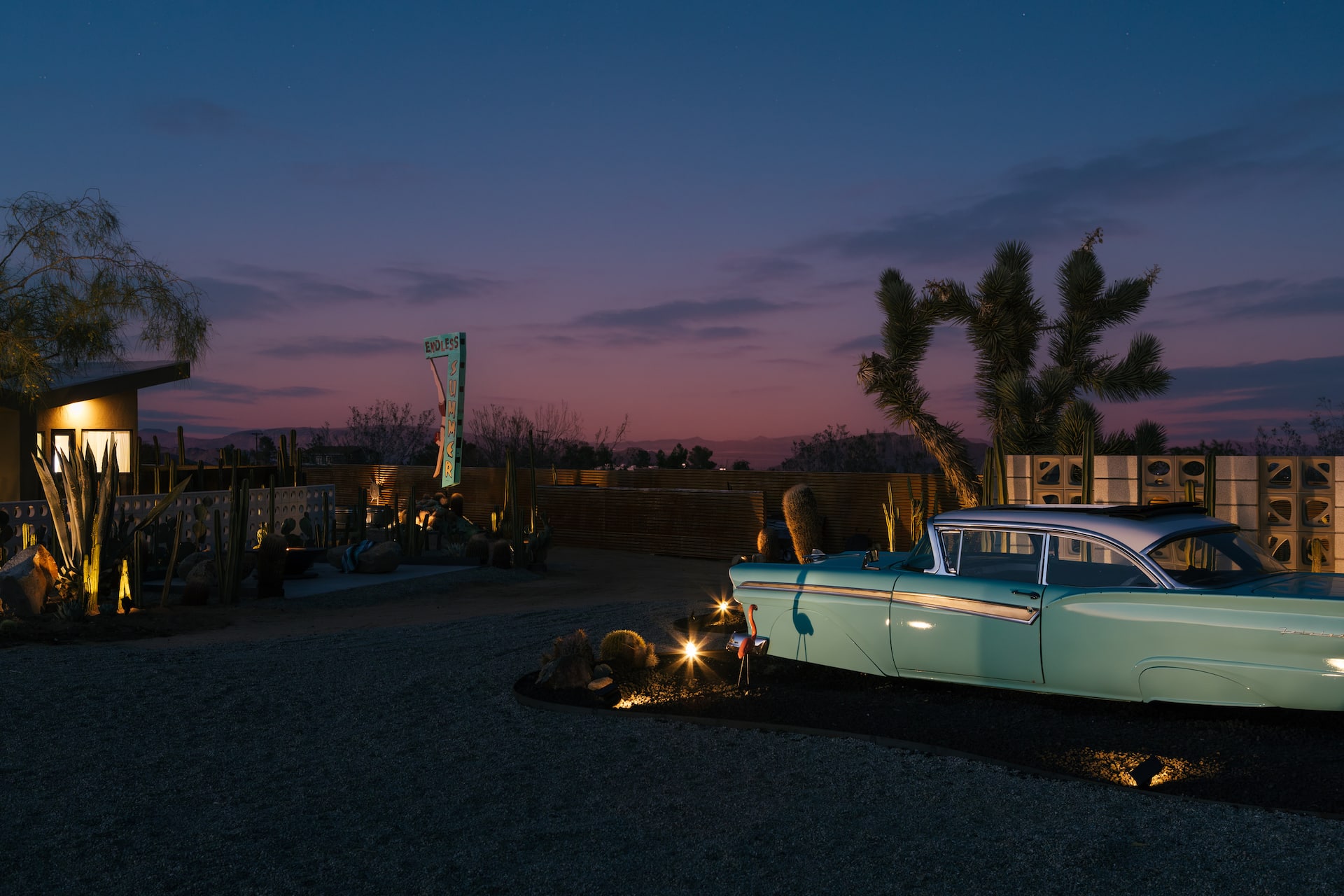
Vintage & Thrift Shopping in the High Desert
Where to hunt for vintage, mid-century and desert-weird treasure around Yucca Valley and Joshua Tree — boutiques, thrift stores and roadside oddities, plus what's still open.
Read →