










Joshua Tree & nature
Sky's the Limit Observatory & Nature Center
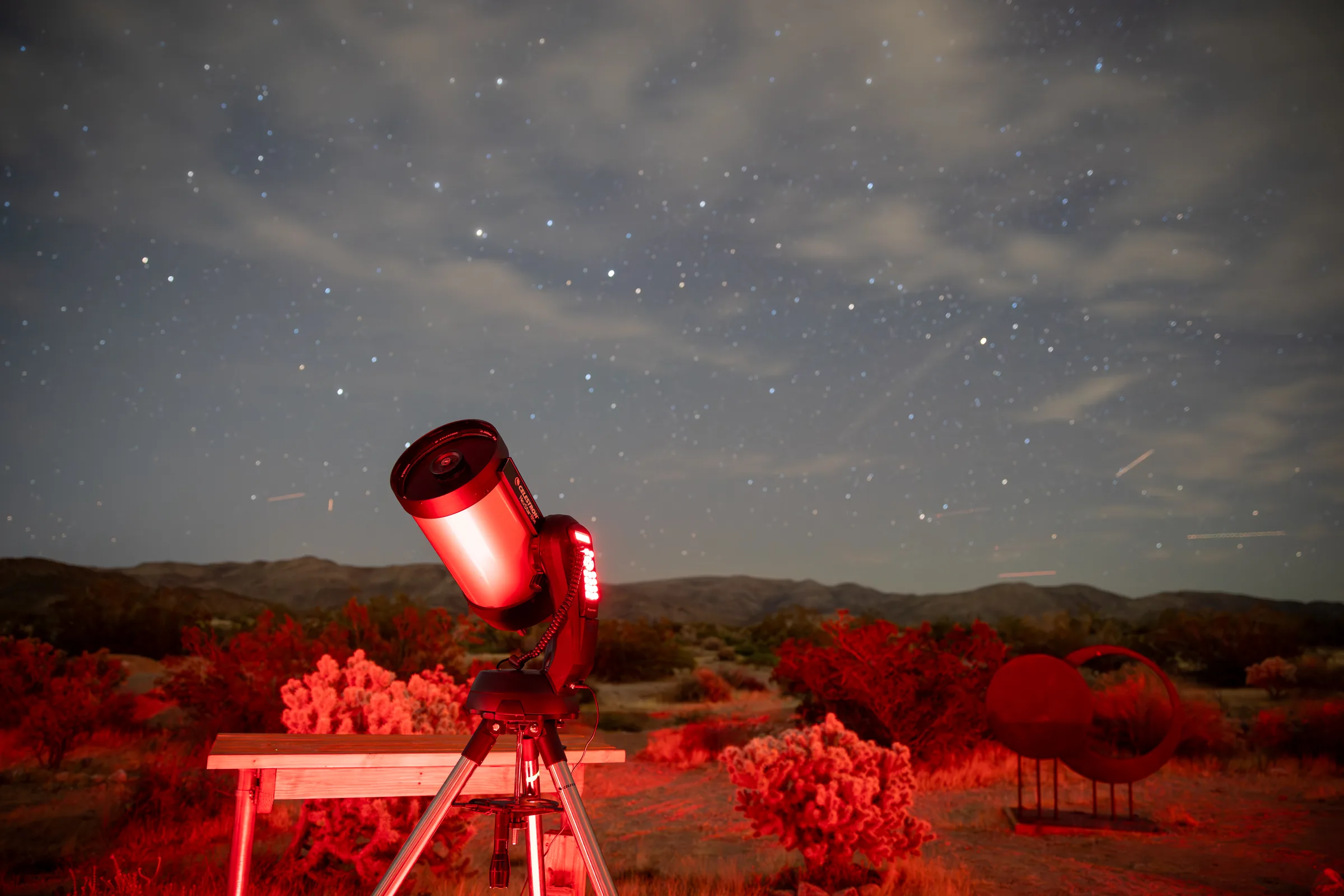
If dark skies are part of why you came, Sky's the Limit is worth the drive. It's a volunteer-run observatory and nature center on Utah Trail in Twentynine Palms, between town and the national park's north entrance, roughly 40 minutes from the house. The grounds are open to the public during the day and on most nights, and its night sky programs put telescopes in front of the public.
What it is
Sky's the Limit is a nonprofit, all-volunteer organization and one of Joshua Tree National Park's nonprofit partners, set up to give people hands-on ways to learn about the desert, earth and sky. Its campus covers about 15 acres of desert, bought in stages (the last five acres in 2009). The organization notes that its nearest neighbor to the south is the national park, which it says means nothing will be built to block the view toward the darkest part of the sky. Since 2023 it has also served as a satellite campus for Copper Mountain College's astronomy program.
On the grounds
- The orrery. A walk-through model of the solar system, built true to scale and true to position at 20 billion to 1. Walking from the sun out past the planets gives you a feel for the distances.
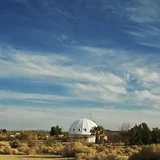
- The observatory. A domed observatory that opens for programs. The rest of the time the dome is closed.
- Nature trail. A trail through native desert plants, good for the last hour of daylight before an evening program.
- Meditation garden. A quiet garden on the campus.
- Sculptures. Ten astronomy-themed sculptures by artist Simi Dahab are placed around the grounds.
The dome and restrooms are open only during programs and when volunteers are on campus (usually Saturday mornings), and there's no running water.
Star parties and programs
The organization posts a calendar of night sky programs on its website. Its public star parties have traditionally been held on Saturday evenings, starting after dark and running about two hours, and in past years they were free. Some programs now carry a fee: in 2026, a series of evening talks by NASA scientists was priced at $25 per car. Volunteers have also set up a solar telescope on some Saturday mornings for a safe look at the sun, along with tours of the orrery. Schedules follow the moon, the season and the volunteers, so check the calendar before you plan a night around a program. The group also runs Discovery Days field trips for schools, home-school groups and other large groups by request.
What you might see
What's up depends on the season, the moon and the volunteers' telescopes, but the broad pattern over the Mojave is steady:
- Winter. Orion and the Orion Nebula, Sirius, and the Pleiades cluster in Taurus.
- Spring. Leo, bright Arcturus in Boötes, and the galaxy-rich Virgo region.
- Summer. The bright core of the Milky Way in the south through Scorpius and Sagittarius, with the Summer Triangle of Vega, Deneb and Altair overhead.
- Autumn. The Andromeda Galaxy, the Great Square of Pegasus and the W of Cassiopeia.
Planets come and go month to month, so check a sky guide for your dates rather than counting on a particular one.
The Night Sky Festival
Each fall, usually in October, the Night Sky Festival is held mainly at the campus, run with the Joshua Tree National Park Association in partnership with the park. It's a ticketed event with limited capacity, and tickets usually go on sale in early summer. The 2026 festival, the eleventh, is set for October 9 and 10 and lists a telescope clinic, astronomy talks, a family space camp and an evening star party; the talks are free, while the Saturday-night star party is priced at $75 for adults and $35 for children. Proceeds support the observatory and youth programs. Our high desert events calendar covers what else happens that month.
Campus rules
- Bring a red flashlight. No white light at night programs, including flashlights, phone screens and flash photography.
- Park in the designated areas and walk in, and don't let your headlights shine toward the dome.
- No pets.
- No smoking, vaping or open flames, and no alcohol or drugs, including marijuana.
- No camping or overnight stays anywhere on the property.
- Leave the wildlife alone. Don't tease, feed or try to catch snakes, lizards, jackrabbits, coyotes or bobcats.
Getting there and what to pair it with
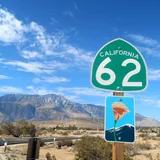
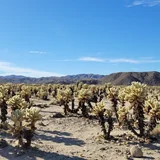
From the house, take Highway 62 east through Joshua Tree to Twentynine Palms, about 22 miles from Yucca Valley, then turn south on Utah Trail toward the park's north entrance. Allow roughly 40 minutes. The Joshua Tree National Park Visitor Center in downtown Twentynine Palms and the Oasis of Mara, near the park headquarters, are both a short drive away, which makes an easy late afternoon before an evening program. The Oasis of Mara trail has been closed past the oasis after flood damage, so check the park's alerts first; see our Twentynine Palms and Oasis of Mara guide. If you're coming from a day in the park, the Cholla Cactus Garden is about 12 miles south of the north entrance.
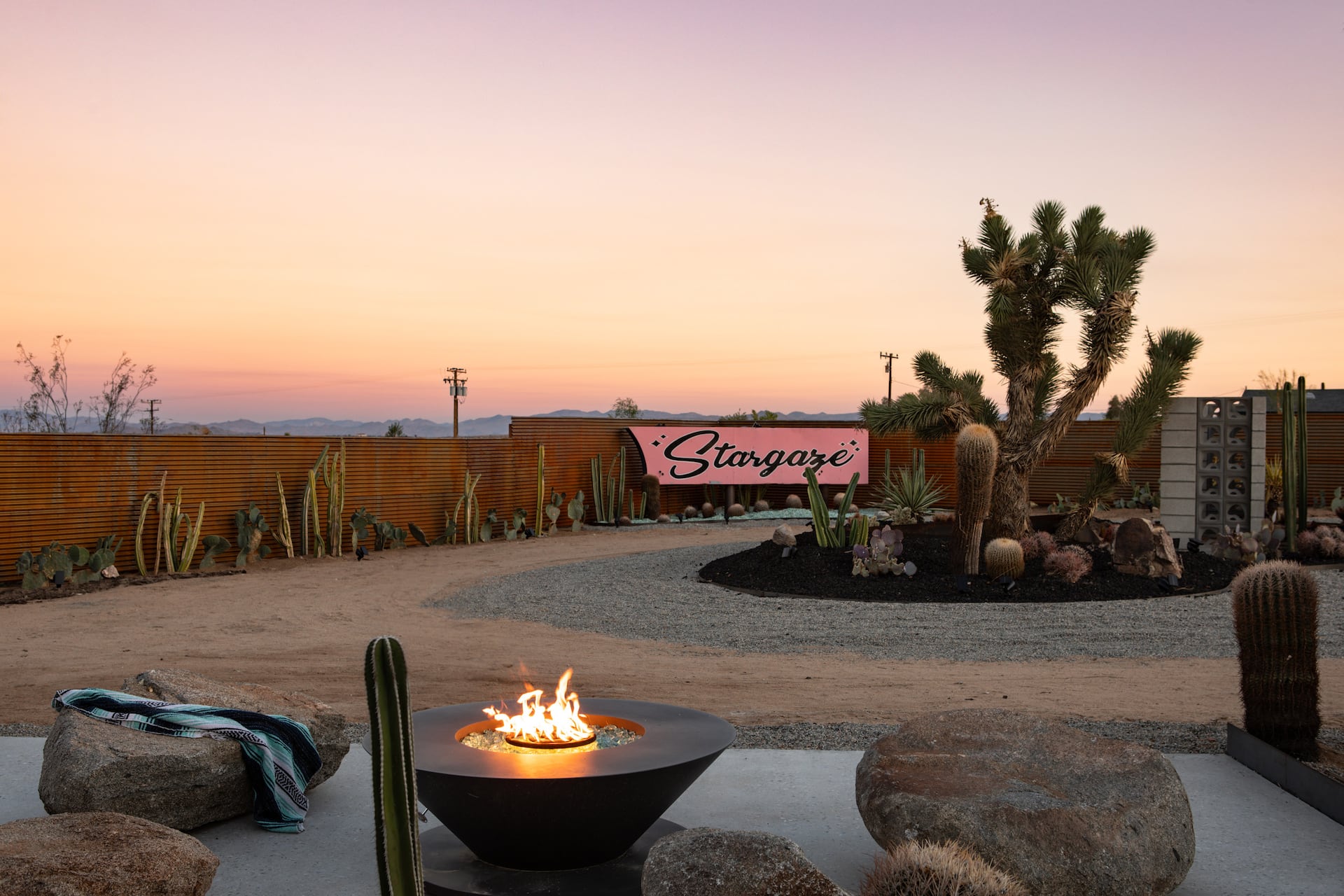
Or keep the night simple. The car bed and fire pit back at the house give you a night sky of your own; see stargazing at the house and our guide to where to stargaze.
Know before you go
- Check the program calendar first. The dome and restrooms open only during programs and when volunteers are on campus, and some programs charge per car.
- The campus is outside the national park, so you don't need a park pass to visit it.
- There's no running water, so bring your own, and pack a warm layer; desert nights cool off quickly, even after a warm day.
- Your eyes need roughly 20 to 30 minutes in the dark to adapt fully, and one look at a white screen resets them.
- The organization is all-volunteer, and donations keep it running.
Planning a trip around the stars? Check dates near a new moon for the darkest nights.
Keep exploring
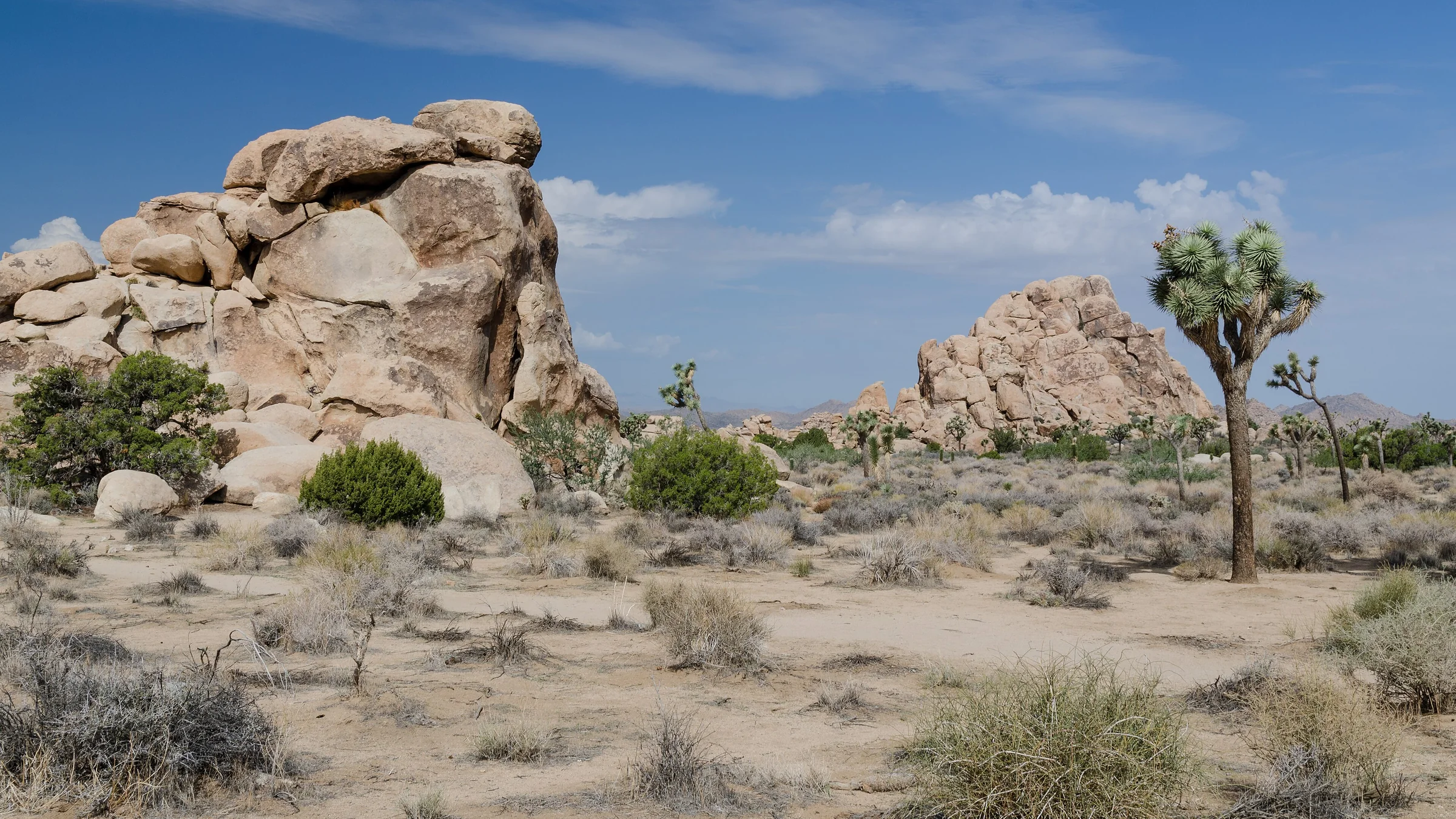
The Best Hikes in Joshua Tree National Park
The best hikes in Joshua Tree, shortest to longest — Hidden Valley, Barker Dam, Ryan Mountain, 49 Palms Oasis and Lost Horse Mine, about 25 minutes from the house.
Read →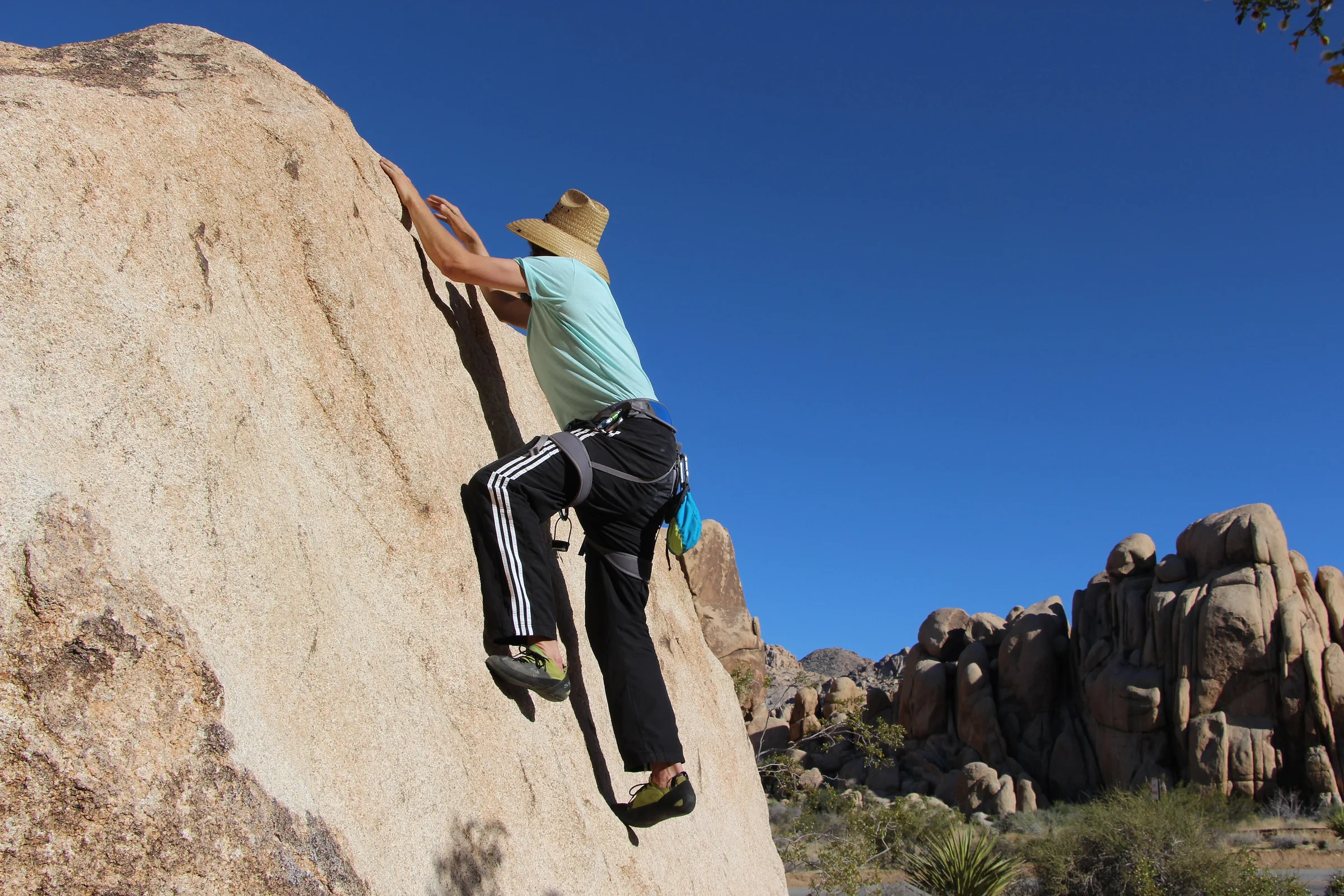
Rock Climbing & Bouldering in Joshua Tree
Joshua Tree is a world-class rock-climbing and bouldering destination. Where to start, when to go, how to climb it responsibly, and how to hire a guide if you're new.
Read →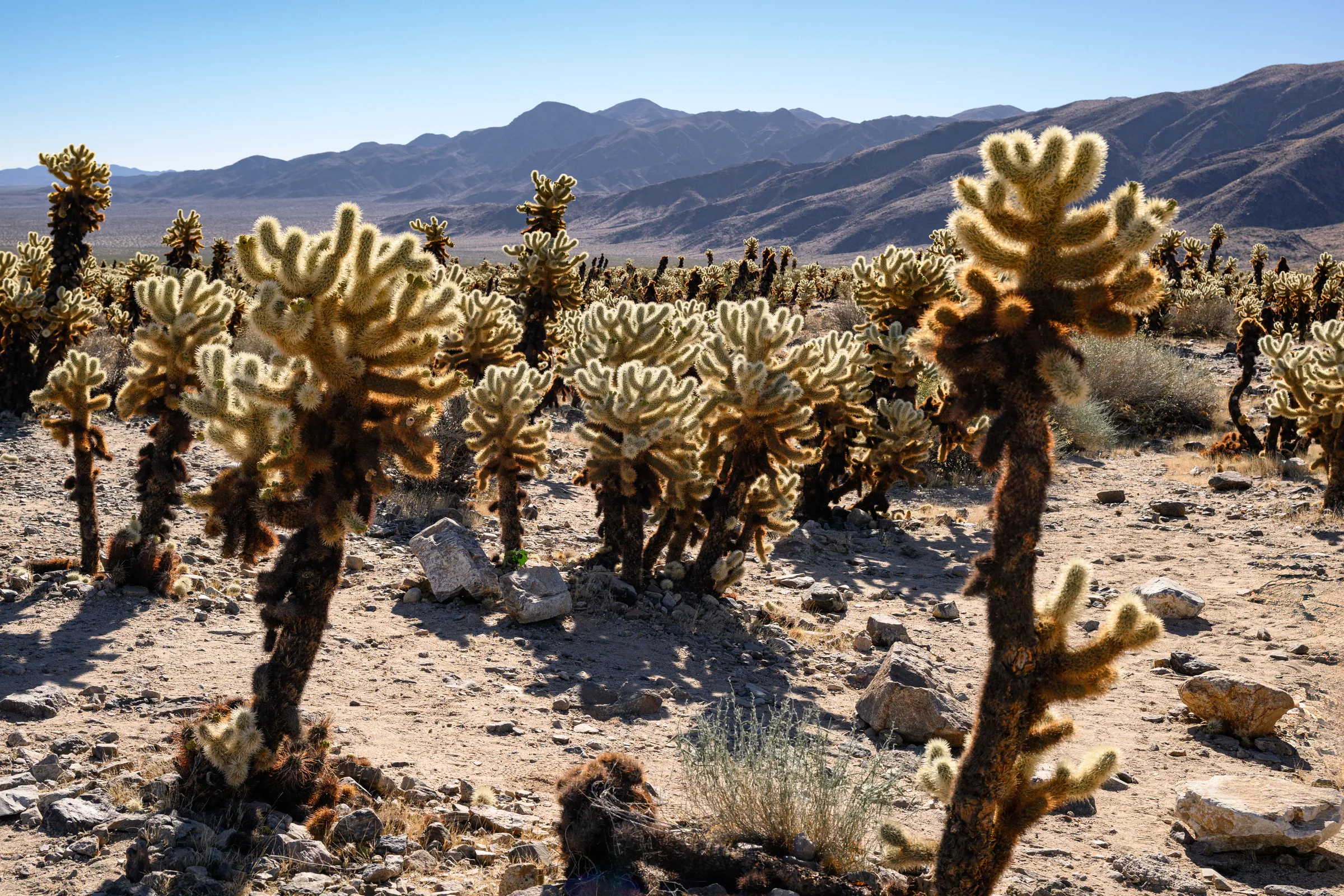
The Cholla Cactus Garden & the Park's Quiet South End
The Cholla Cactus Garden and Joshua Tree's quiet southern end — Cottonwood Spring, Lost Palms Oasis and the ocotillo patch, and how to do the drive from Yucca Valley.
Read →