












Joshua Tree & nature
Big Morongo Canyon Preserve
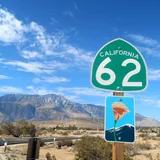
Down Highway 62 in Morongo Valley, about 25 minutes from the house, Big Morongo Canyon Preserve holds something rare in the desert: running water. Cottonwoods and willows line a creek and marsh, a boardwalk winds through them, and the preserve is one of the region's well-known birding sites. Entry is free.
Why there's water here
The Morongo fault runs through the canyon and forces water draining off the surrounding mountains to the surface, feeding Big Morongo Creek and the marsh. The result is a cottonwood and willow oasis in the Little San Bernardino Mountains, in a transition zone between the Mojave and Sonoran deserts. The wider preserve covers about 31,000 acres, and since 2016 it has been part of Sand to Snow National Monument, which protects about 150,000 acres between Joshua Tree National Park and Mount San Gorgonio.
The trails
The preserve has six developed trails, all for walkers only. Distances and times vary a little by source, so treat these as approximate:
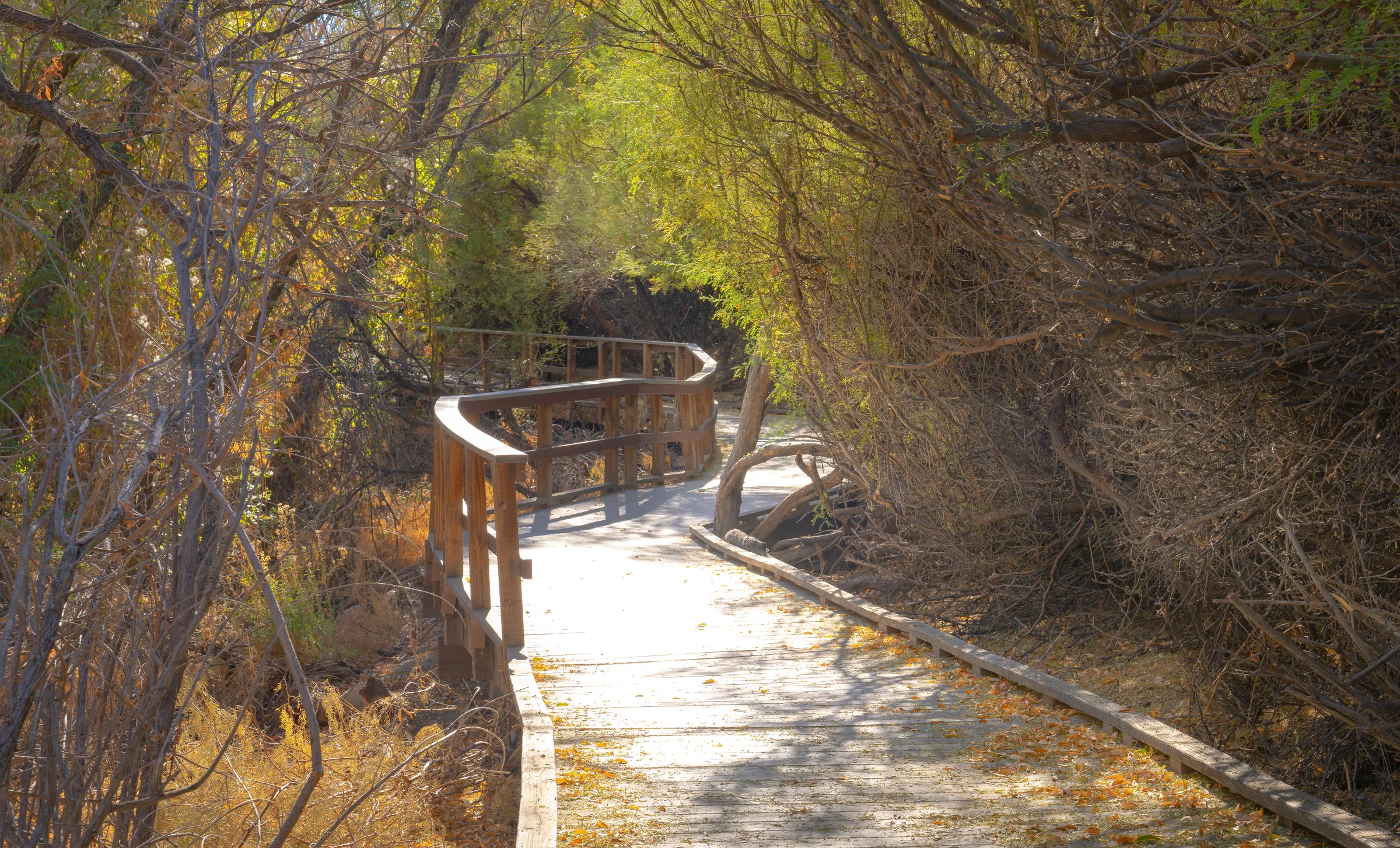
- Marsh Trail. The boardwalk, roughly half a mile, flat and accessible for wheelchairs, walkers and strollers. It winds over the marsh and stream under Fremont cottonwoods, red willows and the occasional white alder.
- Mesquite Trail. An easy streamside walk of about 15 minutes that links to the canyon trails.
- Desert Willow and Yucca Ridge trails. Moderate walks of about 25 minutes each, with less shade and views over the woodland and wetland.
- West Canyon Trail. Short, under a mile, with some steep sections and views over the canyon.
- Canyon Trail. The long one, following the willow-lined stream down the canyon. Sources put the round trip at roughly 8 miles or more, depending how far down the canyon you go. In warm weather, start early and carry plenty of water.
Birding
Birding is what the preserve is best known for. It counts 263 species recorded here (older published counts are a little lower), and it is a popular eBird hotspot. Several rare or unusual species nest in the canyon, and many more pass through during spring and fall migration. One birder's May 2023 report lists summer and western tanagers, black-headed grosbeaks, warbling vireos, hooded orioles hanging their nests from palm fronds, and a ladder-backed woodpecker nesting in a snag overlooking the boardwalk. There are hummingbird and seed feeders at the preserve's Nature Center, along with a picnic table and covered seating near a water feature.
The preserve has run guided bird walks on Wednesday mornings for more than 20 years, roughly 8 to 10:30am, and adds family-friendly walks on the second Saturday morning of the month. Beginners are welcome and the walks are free. Bring binoculars, move slowly and give it time.
Other wildlife and families
Birds aren't the only residents. Mammals recorded in the preserve include mule deer, desert bighorn sheep, bobcats, coyotes, gray foxes, raccoons and mountain lions, and the Sand to Snow monument was set up partly to keep wildlife corridors open between the desert and the mountains. On a smaller scale, one hiker's account of the Mesquite Trail mentions tree frogs calling along the stream.
The flat, stroller-friendly boardwalk makes the preserve an easy outing with small children, and the preserve runs Science Sunday programs on some Sunday mornings. Our Joshua Tree with kids post has more ideas for younger travelers.
A short history
Native peoples used the canyon as an oasis for food and water for thousands of years, and the Morongo, a Serrano clan, were living here when settlers arrived. Homesteading and ranching followed in the mid-1800s. In 1968 The Nature Conservancy bought 80 acres from J. L. Covington to protect the habitat, San Bernardino County soon added 160 acres in the next canyon, and the combined 240 acres were dedicated as a wildlife preserve in 1974. In 1982 the Bureau of Land Management named almost 3,700 acres of ridge and canyon an Area of Critical Environmental Concern. Today the preserve is managed by the nonprofit Friends of Big Morongo Canyon Preserve, and several people tied to the preserve have received the Minerva Hoyt Conservation Award, named for the Pasadena conservationist whose campaign led to Joshua Tree National Monument in 1936. The preserve is also listed as a National Watchable Wildlife Site.
When to go
The preserve is open every day of the year from 7:30am to sunset. Fall, winter and spring are the most comfortable seasons, and the spring and fall migrations bring the widest variety of birds. In summer, come right at opening and keep to the shade of the boardwalk.
Getting there
From the house, follow Highway 62 west toward Palm Springs. Morongo Valley is about 11 miles past Yucca Valley, and the preserve sits just off the highway; allow about 25 minutes. It pairs well with the rest of the drive down: Whitewater Preserve, Cabot's Pueblo Museum in Desert Hot Springs, or a full Palm Springs day.
Know before you go
- No dogs. Pets aren't permitted anywhere in the preserve, leashed or not, so plan this one without your dog. Our pet-friendly page covers dogs at the house.
- Free, with donations welcomed. Hours are 7:30am to sunset; confirm before you go.
- Stay on designated trails. Walkers only, no bikes or horses.
- Take only pictures. Collecting plants or animals is prohibited, and so are smoking and open flames.
- No camping or overnight parking.
- Rattlesnakes live in the preserve. Watch where you step and where you put your hands.
- Carry water, especially on the longer canyon trails.
Then head back up the hill for an afternoon by the stock-tank pool, or check dates for your trip.
Keep exploring
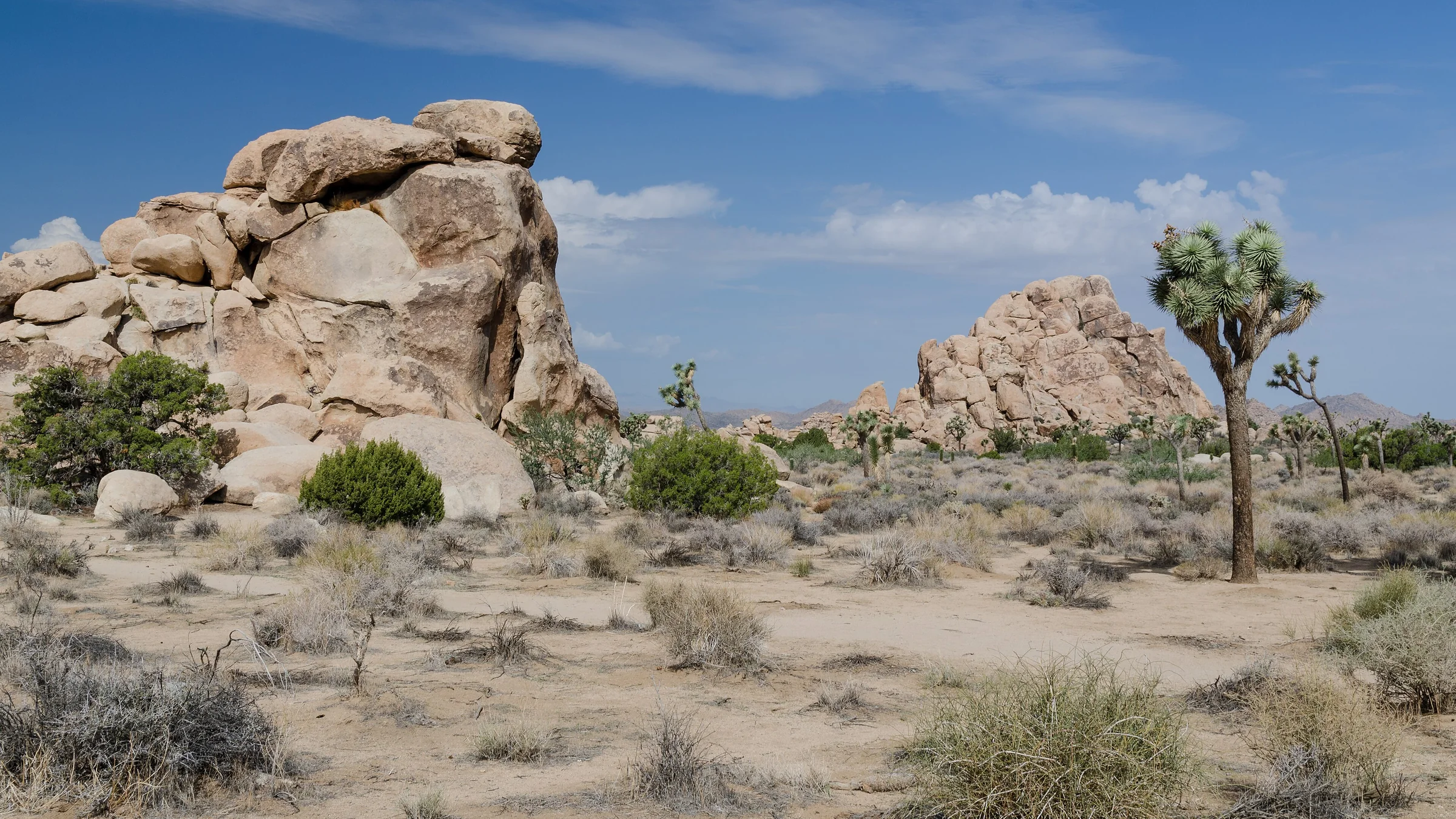
The Best Hikes in Joshua Tree National Park
The best hikes in Joshua Tree, shortest to longest — Hidden Valley, Barker Dam, Ryan Mountain, 49 Palms Oasis and Lost Horse Mine, about 25 minutes from the house.
Read →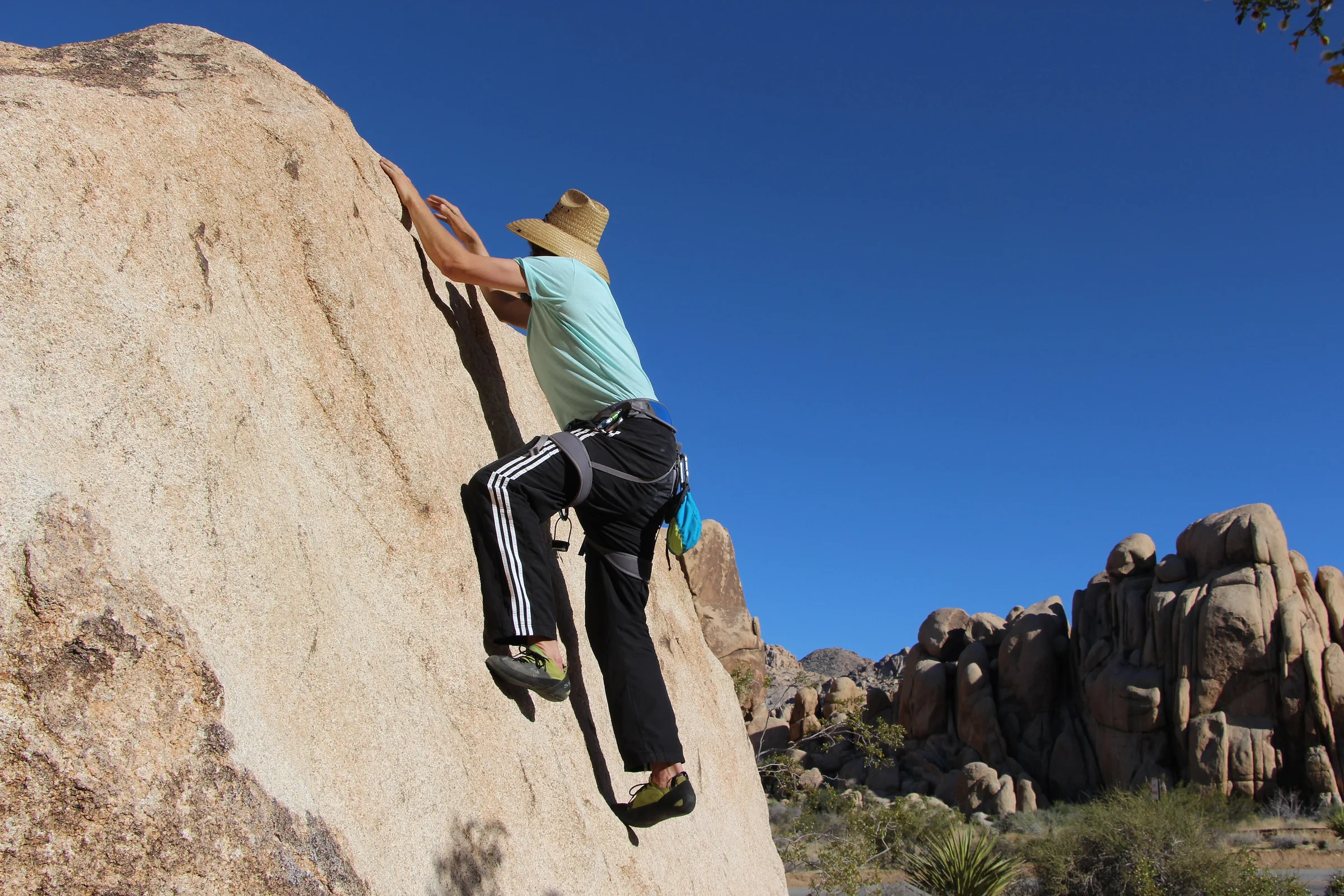
Rock Climbing & Bouldering in Joshua Tree
Joshua Tree is a world-class rock-climbing and bouldering destination. Where to start, when to go, how to climb it responsibly, and how to hire a guide if you're new.
Read →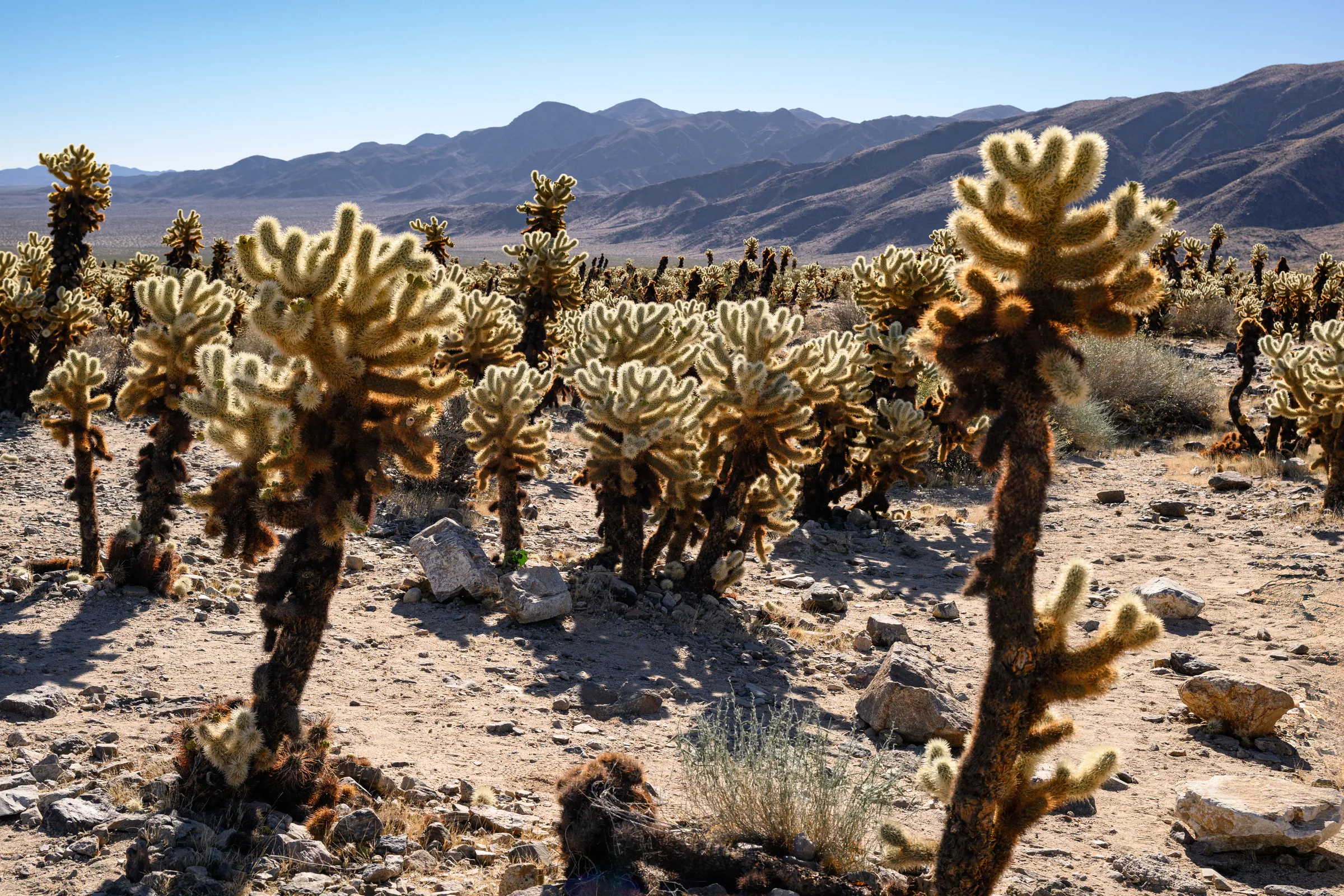
The Cholla Cactus Garden & the Park's Quiet South End
The Cholla Cactus Garden and Joshua Tree's quiet southern end — Cottonwood Spring, Lost Palms Oasis and the ocotillo patch, and how to do the drive from Yucca Valley.
Read →