

Practical
Where to Stay Near Joshua Tree
Six small towns spread along one desert highway, and each one gives a Joshua Tree trip a different shape. Yucca Valley, the town of Joshua Tree, Twentynine Palms, Pioneertown, Landers and Wonder Valley all sit in the Morongo Basin within a short drive of the national park, and choosing between them comes down to what you want your days to feel like. This post walks through each town, how far each sits from a park entrance, and why a whole house tends to beat a motel room out here.
The towns of the Morongo Basin at a glance
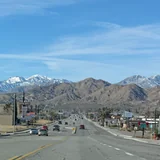
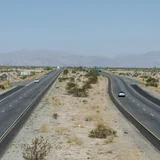
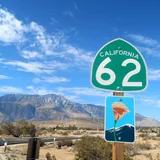
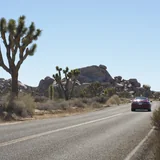
The high desert north of the park is called the Morongo Basin, and one road stitches it together: California State Route 62, the Twentynine Palms Highway. It leaves Interstate 10 near Whitewater on the Palm Springs side, climbs up through Morongo Valley, and runs east through Yucca Valley, the town of Joshua Tree, and Twentynine Palms, tracing the park's northern boundary the whole way. Almost everything a visitor needs — groceries, gas, coffee, a bed — sits on that highway or a short turn off it. Yucca Valley, the largest of the towns, sits at roughly 3,300 feet, high enough that its summers run a touch cooler than the low desert around Palm Springs. That elevation matters for timing a trip: July highs sit near the mid-90s and can top 100 degrees, winter days run in the upper 50s to low 60s with nights that can drop to freezing, and spring and fall — roughly 65 to 80 degrees by day — are the mildest stretches. Those numbers are much the same across the basin, so choose a town for its character rather than its weather, and expect any of them to be hot in July and cold on a January night.
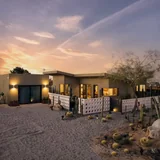
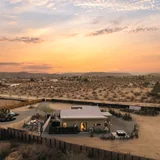
The towns are close together. Yucca Valley and the town of Joshua Tree are about seven miles apart, roughly a twelve-minute drive on Highway 62, and Twentynine Palms is a further stretch east of that. Two smaller communities sit off the main line — Pioneertown up in the hills above Yucca Valley, and Landers out to the north — while Wonder Valley trails east past Twentynine Palms into open desert. Stargaze Escape, the house this journal belongs to, sits on a fenced lot in Yucca Valley, about 25 minutes from the park's west entrance and around 50 minutes from Palm Springs.
Here is the shorthand before we take each one in turn:
- Yucca Valley. The biggest town, with groceries and gas, central to everything.
- Joshua Tree. The village at the busy west entrance, artsy and easy to walk.
- Twentynine Palms. The quieter north entrance, the park headquarters, and the Oasis of Mara.
- Pioneertown. An old movie-set town in the hills, known for food and live music.
- Landers and Flamingo Heights. Remote, dark-sky country, home to the Integratron and La Copine.
- Wonder Valley. Sparse homestead-cabin desert east of the park, for people who want quiet.
You can read a fuller picture of the surroundings on the area page, but the sections below break the choice down town by town.
Yucca Valley
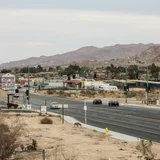
Yucca Valley is the practical heart of the basin. It is the largest town along Highway 62, and it carries the everyday supply that the rest of the high desert leans on. There are two Stater Bros. grocery stores here, both on the Twentynine Palms Highway, which makes it the natural place to stock a kitchen before you head anywhere else. Gas, a pharmacy, hardware, banks — the useful, unglamorous things — are all in Yucca Valley, and because the park has no groceries, restaurants, or fuel inside its boundaries, a stop here at the start of a trip saves you doubling back later.
For eating and drinking, Yucca Valley is steady rather than showy. Frontier Cafe on the western edge pours organic coffee made with Joshua Tree Coffee beans and keeps a dog-friendly patio, which suits an early start before the park. La Casita Nueva serves sit-down Mexican food and margaritas with a Sunday brunch, and The Tiny Pony Tavern — often lumped in with the Pioneertown crowd, though it sits in Yucca Valley — does scratch food and weekend brunch with a dog-friendly backyard. If you want spirits rather than beer, Joshua Tree Distilling Company runs a tasting room in town. Desert Christ Park is another nearby curiosity worth a quick look.
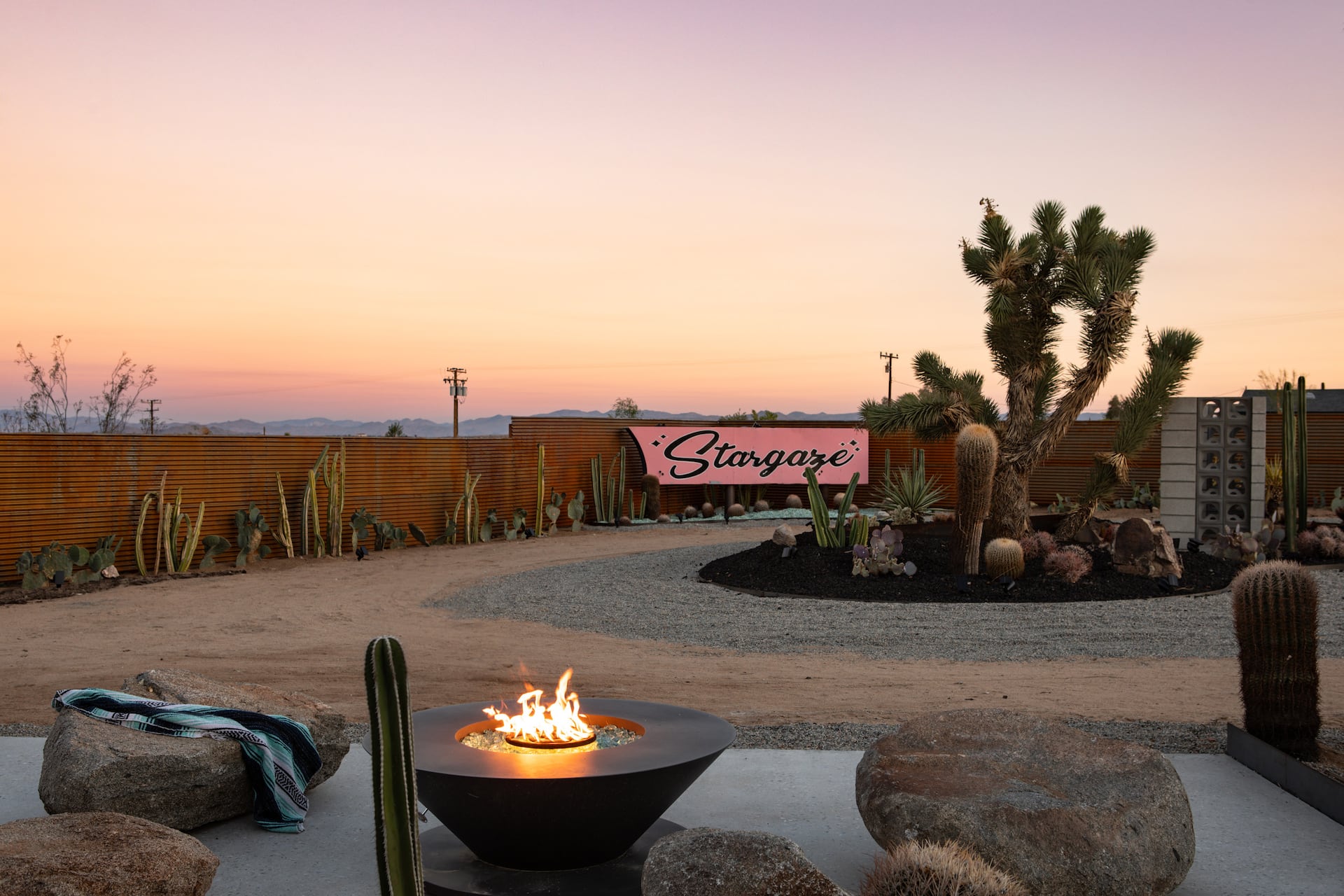
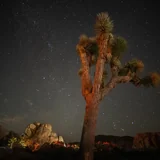
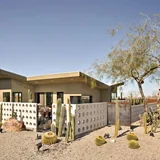
The town also holds the park's Black Rock Nature Center and Black Rock Campground on its southern edge, one of only two campgrounds in the park with potable water and flush toilets, and a trailhead into the quieter northwestern corner. For most visitors, though, Yucca Valley's appeal is location. It is close to the west entrance, central to the whole basin, and quiet on its residential streets once you turn off the highway. Stargaze Escape sits here, on a fenced desert lot planted with thousands of cacti, agave and Joshua trees. If you want a sense of how a couple of days in town can flow, the journal entry on 48 hours in Yucca Valley lays out an easy itinerary.
Joshua Tree
The town of Joshua Tree is the village most people picture when they think of a base near the park, and for good reason: it sits right at the west entrance, the busiest way in. The entrance station is five miles south of the junction of Highway 62 and Park Boulevard, so from downtown you can be inside the park in a few minutes. The Joshua Tree Visitor Center sits in the middle of the village, a good place to ask a ranger about conditions, fill a water bottle, and pick up a map before your cell signal disappears — reception inside the park is very limited and should not be relied on. Because the west entrance is the busiest, an early start or a late-afternoon arrival helps you avoid the longest waits at the gate, and there is no timed-entry reservation to drive in, so from a nearby base you can come and go as the light suits you.
Downtown Joshua Tree is small and walkable, with a cluster of cafes, shops and galleries along the highway. Crossroads Cafe is a long-running American diner near the entrance, and JT Country Kitchen is a tiny home-cooking breakfast spot billed as the village's longest continuously operating restaurant, going back to 1977. Joshua Tree Coffee Company roasts organic beans on a Loring roaster at its downtown counter, Sam's serves Indian food and pizza, and the Joshua Tree Saloon does burgers, karaoke and weekend live music. One note so you plan around it: the Natural Sisters Cafe, a vegetarian mainstay for years, closed for good in late 2023, so do not count on it.
On Saturday mornings the Joshua Tree Certified Farmers' Market sets up downtown, roughly 8am to 1pm, with local produce and baked goods — it is seasonal and weather-dependent, so check that it is running before you build a morning around it. The town also carries a thread of music history: the country-rock musician Gram Parsons died at the Joshua Tree Inn in 1973, and nearby Cap Rock, just inside the park, is still an informal pilgrimage spot for fans. For a first-time visitor who wants to be as close to the park gate as possible, Joshua Tree is the obvious pick.
Twentynine Palms
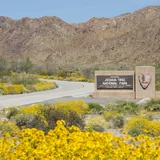
Twentynine Palms is the town at the park's north entrance, three miles south of the junction of Highway 62 and Utah Trail. The park's main headquarters sits here, on National Park Drive, and the Joshua Tree National Park Visitor Center is downtown on Freedom Way. Its signature stop is the Oasis of Mara, a real palm oasis with a paved half-mile loop — the single most accessible feature in the whole park, with benches, interpretive panels, and level ground suited to all wheelchairs. Part of the trail has been closed after flood damage, so check the park's alerts before you go. The oasis was settled by the Serrano and later the Chemehuevi, and the federally recognized Twenty-Nine Palms Band of Mission Indians descends from the people of this area. It is worth a slow walk; the Oasis of Mara guide covers the history and what you will see.
The town leans quieter and more spread out than Joshua Tree, which many visitors like. It has its own Stater Bros. for provisions and a small but interesting food scene. Kitchen in the Desert, from chef Everton Gordon, cooks Caribbean and New American plates and is known for its jerk chicken. Campbell Hill Bakery is a tiny husband-and-wife operation turning out bread, bagels and thick pan-style pizza on very limited days. The Restaurant at the 29 Palms Inn, part of a historic 1928 inn set at the Oasis of Mara, serves poolside dinners and often has live music, with some produce grown at its own Faultline Farm. Hours in the high desert swing around, so call ahead for the smaller spots.
Twentynine Palms suits a trip weighted toward the northern and eastern reaches of the park. The strenuous Fortynine Palms Oasis Trail — about three miles round trip, with a listed 300 feet of gain that climbs over a ridge, so the real effort is greater — starts near town. The park closes the trail every year from June 1 through September 30. If you plan to spend your mornings at that end of the park, or you want a base with more elbow room and a strong sense of the area's history, Twentynine Palms earns its place. On a crowded spring weekend, the north entrance can be a calmer way in than the west gate. It does sit farther from the busy west-entrance sights, so factor the extra drive time into a day plan.
Pioneertown
Pioneertown is a place to spend an afternoon and evening, and few people sleep up here, but it shapes a lot of trips, so it belongs on the map. It sits up in the hills above Yucca Valley, a few miles northwest along Pioneertown Road. It began in 1946 as a live-in Old West movie set: the buildings were designed to work as film facades and as real homes and shops at the same time. It was put together by a group of Hollywood backers — accounts often cite around seventeen investors putting in roughly $500 each, though the exact roster varies by telling — with the actor Dick Curtis a central figure and Roy Rogers and Dale Evans among the names attached. The musical group the Sons of the Pioneers gave the town its name, and more than fifty films and TV shows were shot here, including "The Cisco Kid" and "The Gene Autry Show."
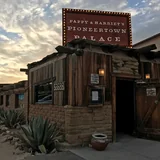
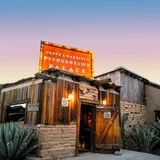
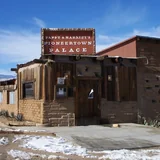
Today the draw is Mane Street and its two anchors. Pappy & Harriet's Pioneertown Palace is a western BBQ and Tex-Mex restaurant and a nationally known live-music venue, with a bar, a patio and a stage that pulls in touring acts. Down the street, the Red Dog Saloon — an Old West bar that first opened in 1946 and was restored and reopened in 2020 — pours a large spirits selection alongside Tex-Mex plates. On a busy night the little town fills up, so a table at Pappy's is worth booking ahead.
Around Pioneertown the hills open into rugged canyon country and BLM-managed public land, which is where many visitors take dogs to hike, since the park's own trails are closed to pets. There is little in the way of lodging up here, so most people base in Yucca Valley or Joshua Tree and drive up for dinner and a show. The Pioneertown guide goes deeper into the history and what a night out there looks like.
Landers and Flamingo Heights
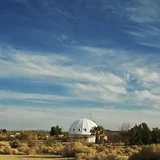
North of Yucca Valley, the desert thins out into Landers and Flamingo Heights — spread-out, residential, and dark at night. Landers is best known for the Integratron, a 38-foot-high, 55-foot-diameter all-wood dome built by the aeronautical engineer turned UFO contactee George Van Tassel. He worked on it over roughly eighteen years from the late 1950s, using wood dowels and a concrete keystone ring instead of nails, and it remained unfinished when he died in 1978. It is privately owned now and runs acoustic "sound bath" sessions inside the dome. Nearby is Giant Rock, a huge freestanding boulder wrapped in mid-century UFO-convention lore, and the Giant Rock Meeting Room in Landers, which runs as a live-music pizza bar on limited evening hours.
Flamingo Heights, just south, is a name worth knowing mostly for one restaurant. La Copine, a New American spot on Old Woman Springs Road, has become a destination in its own right, open for lunch Thursday to Sunday, 11am to 4pm, with a seasonally changing menu. It draws people out from across the basin, so it is worth checking its current hours, which change, and reserving by text up to four weeks out, though walk-ups are welcome. If you want the desert's stranger side, the Giant Rock and Landers guide is the place to start.
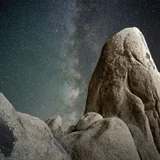
As a base, Landers is for a particular kind of traveler: someone who wants space, silence, and a very dark sky, and does not mind a longer drive to a park entrance or a grocery store. It is roughly 20 miles from the park at its nearest, and the towns up here are quiet and residential rather than walkable. The whole park was named an International Dark Sky Park in 2017, and its darker interior reaches roughly Bortle 2 to 3 on the nine-point darkness scale; the sky brightens toward the western entrances and towns, so the far northern edges of the basin, Landers among them, get some of the blackest nights. For most visitors it works better as a day trip from a more central base than as the place you sleep every night.
Wonder Valley
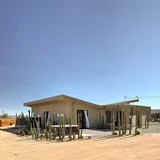
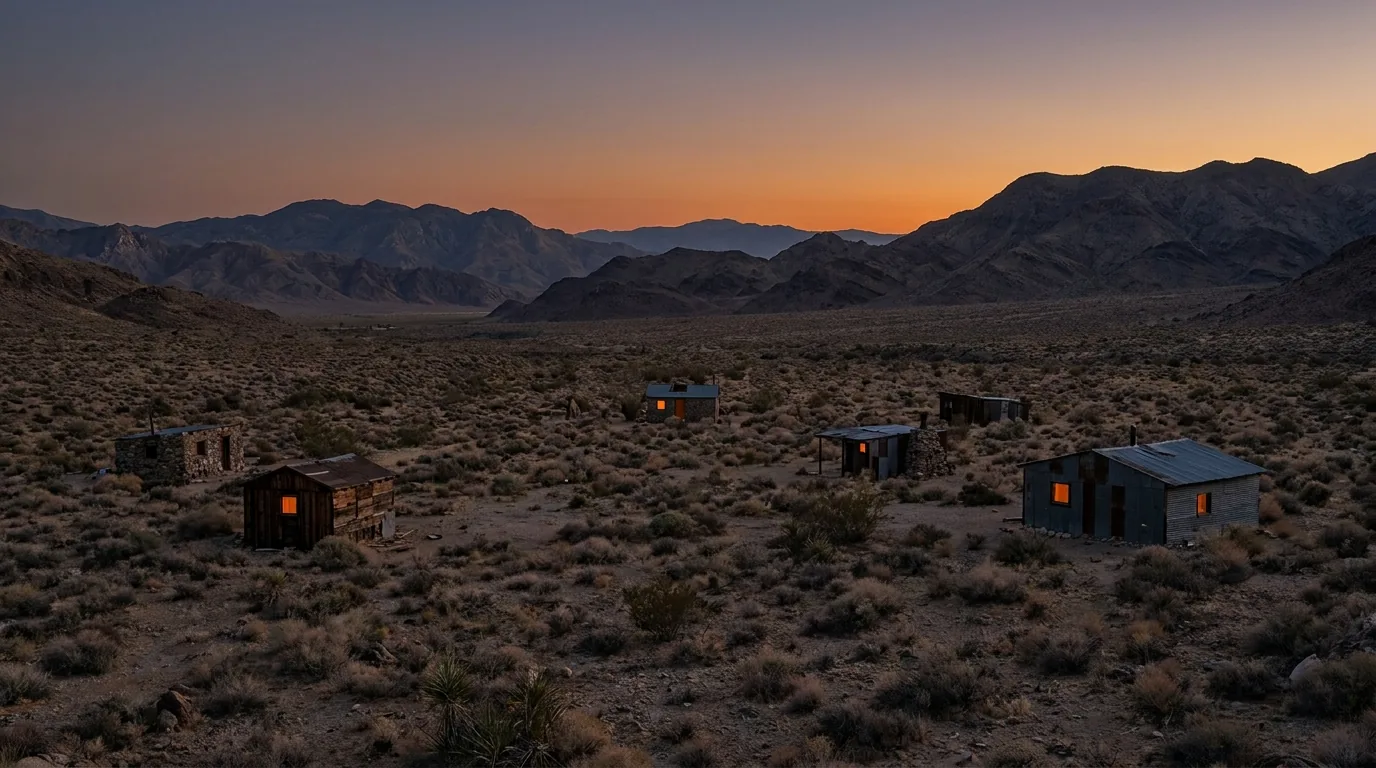
Wonder Valley is the empty country east of Twentynine Palms, and its whole character comes from a piece of history. Under the Small Tract Act of 1938, the federal government leased and sold small parcels — usually five acres — of open public desert to citizens, who had to "improve" the land with a small cabin, often at least 400 square feet, within about three years to gain title. The tiny cabins became known as jackrabbit homesteads. The biggest boom came in the 1950s and 60s and filled Wonder Valley with them; the program ran until it was repealed in 1976. Many of those cabins still stand today, weathered or abandoned, scattered across the flats, and they give the area a quiet, lived-in-then-left-behind feeling that artists and photographers have long been drawn to.
There is not much in the way of services out here — no grocery run, no cluster of cafes — and that is the point. Wonder Valley is about solitude, wide horizons, and some of the darkest, quietest nights in the basin. A handful of the old homesteads have been turned into rentals, and the area has a low-key art scene, but you will be driving back west through Twentynine Palms for most supplies and for the main park sights. The old cabins mostly sit on private land, so admire them from the road unless a place is a signed rental or open to visitors. The nearest full grocery, gas and the park's north entrance are all back in town, so plan one supply run rather than repeated trips.
For a trip built around stillness, writing, or photography, Wonder Valley delivers something the busier towns cannot. For a first Joshua Tree visit centered on the park's headline trails and viewpoints, it puts you farther from the action than most people want. If the homestead history pulls at you, the Wonder Valley homesteads guide explains how the cabins came to be and how to see them respectfully.
Hotel, motel or a whole house
Whichever town you choose, the next question is what kind of roof. It helps to be clear about one thing first: there are no hotels, motels, restaurants, or gas stations inside the park itself. Everywhere you might sleep is in the gateway towns, so being "close to the park" is mostly about which town you pick and how far it sits from an entrance.
Broadly you have three options. You can camp — the park has nine campgrounds, six of which take reservations (three others, Belle, Hidden Valley and White Tank, are first-come, first-served), but only Black Rock and Cottonwood have potable water and flush toilets; the rest have pit toilets and no water, so you carry your own, and in the cool high season the sites fill fast. You can take a motel or small inn room in one of the towns, which is simple and cheap but gives you no kitchen and no outdoor space of your own. Or you can rent a whole house, which for a couple or a group of four often makes the most sense in the desert, where you want a kitchen, shade, and a private place to cool off after a hot day of hiking.
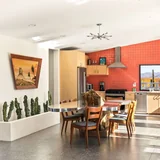
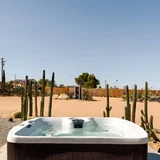
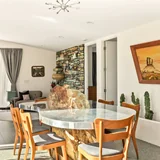
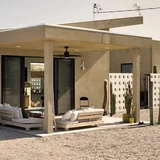
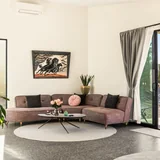
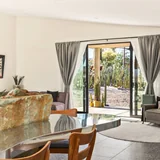
That last option is what Stargaze Escape is built for. It is an Airbnb Luxe whole-house rental in Yucca Valley, rated 5.0 across 54 reviews and marked a Guest Favourite, and it sleeps four:
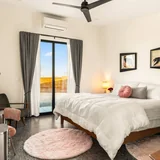
- The layout. Two king bedrooms and one bathroom, with the whole house to yourselves.
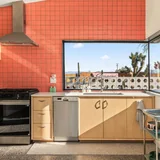
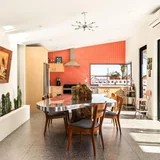
- The kitchen. A full kitchen — useful, since there are no groceries in the park — plus an outdoor BBQ grill.
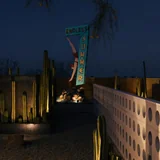
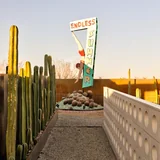
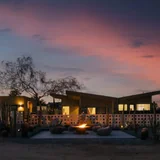
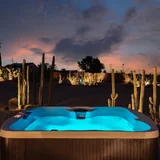
- The water. A stock-tank pool under a vintage painted "Endless Summer" metal sign, and a private hot tub open all year.
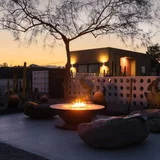
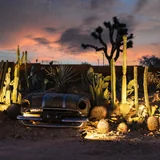
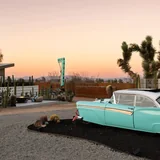
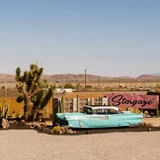
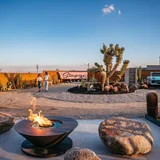
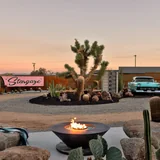
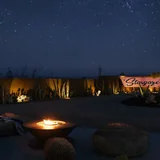
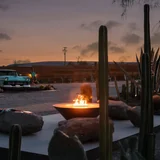
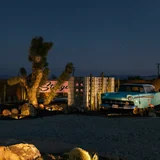
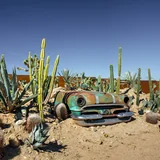
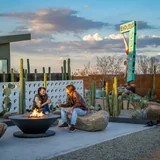
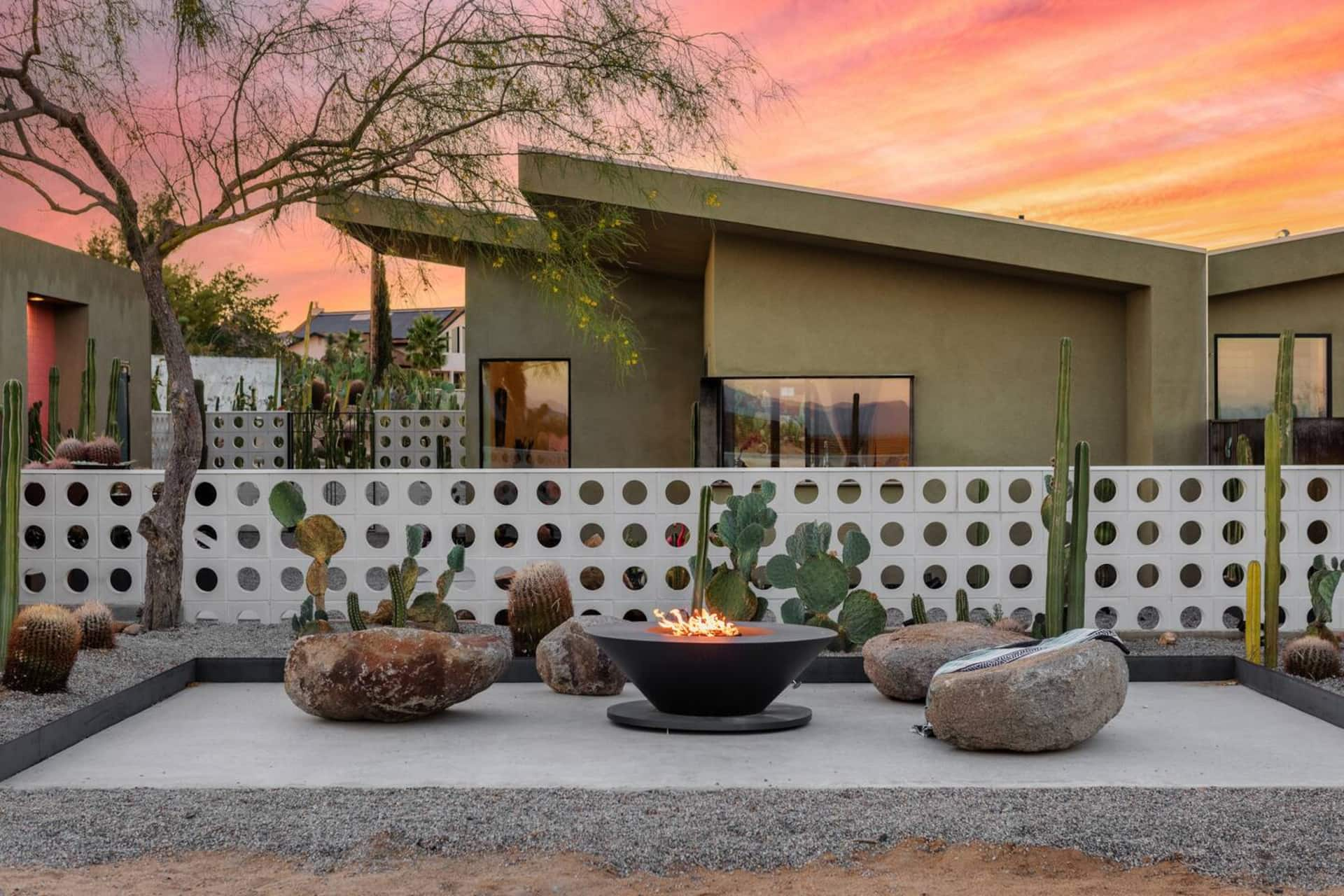
- The yard. A gas fire pit ringed by natural boulders, and a restored 1950s car reworked into an open-air bed, parked on the gravel for stargazing.
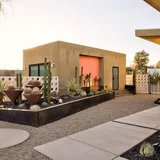
- The basics. Air conditioning and heating, wifi, free parking, and a fully fenced lot planted with thousands of cacti, agave and Joshua trees.
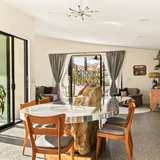
The custom metalwork — the car-to-bed conversion, the fire pit — was fabricated by Emerick's Ironworks. There is also an indoor freestanding soaking tub by a window onto a private courtyard, and a star-perforated steel screen around the pool. One review sums the place up:
"photo-worthy spots everywhere"
A house like this changes the rhythm of a trip. You come back from the park to your own pool instead of a parking lot, cook dinner instead of hunting for a table, and watch the stars from the yard. You can read more about the water and the yard on the pool and hot tub page, or check dates on the booking page.
How far is each from the park
Distance to a park entrance is the number that matters most when you are choosing a town, so here it is plainly. The park has three entrances:
- West Entrance. At the town of Joshua Tree, five miles south of the Highway 62 and Park Boulevard junction. It is the busiest way in and the closest to the popular boulder country and Hidden Valley.
- North Entrance. In Twentynine Palms, three miles south of the Highway 62 and Utah Trail junction, near the park headquarters.
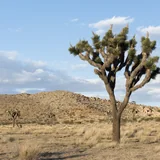
- South Entrance. Near Cottonwood Spring, off Interstate 10 about 25 miles east of Indio — the entrance closest to the Palm Springs and Coachella Valley side, and the one you would use coming up from the low desert. This end sits in the lower, hotter Colorado Desert, where ocotillo and cholla take over from the Joshua trees of the higher Mojave country to the north.
From a Yucca Valley base, the west entrance is about a 25-minute drive; the town of Joshua Tree is about seven miles east, roughly twelve minutes, and then five more miles to the gate. Twentynine Palms and its north entrance are farther east again. Pioneertown and Landers add time going up into the hills or north, and Wonder Valley, out past Twentynine Palms, is the farthest of the lot from the main west-side sights. Palm Springs is about 50 minutes from Yucca Valley, which makes a low-desert day trip easy from any of the northern towns.
If you are driving in from a city, the region is reachable but not around the corner. From Los Angeles it is roughly 120 miles and about two to two and a half hours via I-10 and Highway 62; from San Diego, about 150 miles and roughly two and a half hours; from Las Vegas, around 200 miles and about three and a half hours. Palm Springs International is the nearest airport, roughly 45 minutes to an hour from the Yucca Valley area, while Ontario International, about 80 to 85 miles west, tends to offer more flights and skirts most of the Los Angeles traffic. Treat all of these as soft estimates — Southern California traffic and the climb out of the I-10 junction can add half an hour or more, so check a live map for your day. Two practical reminders once you arrive: fill your gas tank in a gateway town, because there is none inside the park, and bring plenty of water, since the park's interior has none either.
Matching the base to your trip
Put it all together and the choice gets simple. Most first-time visitors do best in Yucca Valley or the town of Joshua Tree: both are central, both have groceries and gas, and both put you within easy reach of the west entrance and the park's best-known trails. Twentynine Palms rewards anyone drawn to the oasis history or planning to spend mornings at the northern end of the park. Pioneertown is where you go for an evening out; base yourself in Yucca Valley or Joshua Tree and drive up for dinner and a show. Landers and Wonder Valley are for travelers who want distance and dark, and do not mind driving for it. One more thing to weigh is timing: the mildest months, roughly March through May and October through November, are also the park's busiest, so book a base earlier for a spring trip, while the 100-degree stretch of high summer is the quietest and the freezing winter nights thin the crowds too.
Here is the quick match:
- A first trip, kept simple. Yucca Valley or the town of Joshua Tree.
- Couples and quiet nights. A private house with a pool and a dark yard.
- A live-music evening. Dinner and a show in Pioneertown.
- Oasis history and the north park. Twentynine Palms.
- Solitude and homestead desert. Wonder Valley or Landers.
- Traveling with a dog. A dog-friendly whole house.
That last point is worth a line of its own. The park's own trails are closed to pets, so dog owners hike the surrounding BLM land and want a base where the dog is welcome to begin with. Stargaze Escape takes dogs (cats are not allowed, because of a household allergy), and its fully fenced lot means a dog can be off-leash in the yard while you use the pool. The pet-friendly page covers the details.
Wherever you land, a whole house with a kitchen and a pool will carry a desert trip further than a room will. If you are ready to lock in a base near the west entrance, check your dates on the booking page. If you are still mapping out the shape of the trip, read planning a trip to Joshua Tree next and work back from there.