












Month by month
Joshua Tree in September
By the thermometer, September is still summer in Joshua Tree. Afternoons on the park's lower north side usually reach the mid 90s, the summer trail closure at Fortynine Palms holds until the last day of the month, and the busy season hasn't started yet. It suits travelers who like early starts, slow afternoons and long, warm evenings outside.
September weather
NOAA keeps a climate station in Yucca Valley at about 3,250 feet, close to the house's elevation. Its 1991-2020 normals give September an average high of about 89°F and an average low of about 60°F. The month cools as it goes: the normal high there is about 93°F on September 1 and about 85°F by September 30, while the normal low slides from about 66°F to about 55°F. The station's daily readings for 2011 to 2020, the years NOAA has online for it, average about 19 days a September at 90°F or more and one or two at 100°F or more.
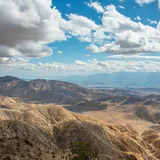
Lower ground runs hotter. NOAA's Twentynine Palms station, near the park's North Entrance at roughly 1,975 feet, averages a September high of about 96°F and a low of about 69°F over the same 30 years. Its daily readings for 1991 to 2020 average around 27 days a September at 90°F or more and about 12 at 100°F or more. The hottest afternoon of a typical September there reaches about 105°F, and the station's September record is 114°F. High points such as Keys View, at about 5,185 feet, are usually milder, while the park's southern and eastern reaches drop into the lower, hotter Colorado Desert.
Rain is scarce, about 0.15 inch in an average September at Yucca Valley and 0.34 inch at Twentynine Palms, but how it arrives matters more than the total. The park describes monsoon season as running from mid-July to early September, and says its flash floods are most common from July to October. Floodwater can fill canyons, washes and roads that were dry minutes before, and the park warns it can happen under a sunny sky. If you meet water on a road, turn around. The park notes that flooding often drops within a few hours, so waiting is usually the whole fix.
Daylight and the equinox
Yucca Valley gives up about an hour of daylight over the course of September. On the 1st the sun rises around 6:18 am and sets around 7:13 pm, nearly 12 hours 55 minutes of light. By the 30th sunrise is around 6:39 am, sunset around 6:33 pm, and the day is down to about 11 hours 54 minutes. The September equinox fell on the 22nd in 2026, at 5:05 pm Pacific time by the US Naval Observatory's tables, and day and night run close to even that week.
Both changes help. Sunrise slides about 20 minutes later, which makes a first-light start easier to manage. And the stars arrive sooner: full darkness, when astronomical twilight ends, comes around 8:40 pm at the start of the month and around 7:55 pm by its end.
Hiking in the heat
The park's heat advice is written for summer, and with September highs where they are, it still applies. Its hiking page asks visitors to avoid hiking between 10 am and 5 pm in summer. Its summer page is stricter: hike before 9 am or after 5 pm, and carry four liters of water per person, plus extra for cooling off. It also steers people away from the longer hikes in hot weather, naming the Boy Scout Trail, Fortynine Palms, Lost Palms Oasis, Ryan Mountain, the Panorama Loop and Warren Peak.
One of those is closed anyway. Under the superintendent's compendium, the trail to Fortynine Palms Oasis is closed to all entry every year from June 1 through September 30. The park's reasons are the heat on an exposed trail and the bighorn sheep that depend on the oasis spring in dry months, and its trailhead page says reopening can wait until monsoon rain refills the water. Plan it for later in the fall.
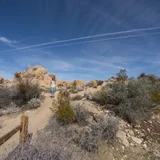
Short walks early in the day are the way to see the park this month. The closest corner to the house is Black Rock Canyon in Yucca Valley, where the nature center has drinking water and is back on its regular schedule after the summer. Through the West Entrance, the Hidden Valley loop is about a mile with around 100 feet of climbing, and the Barker Dam loop is about 1.1 miles with roughly 50 feet. Aim to be back at the car before the late-morning heat. The park also says not to force fluids: drink when you're thirsty, and bring some drinks with electrolytes as well as plain water. Our notes on desert safety and Leave No Trace cover the rest of the basics.
A September day that works
Be at the trailhead around sunrise, finish by 9 or 10, and spend the hot middle of the day at the house. Head out again for the last light, then eat late. With full dark arriving around 8 pm, a September night of stargazing doesn't have to run past bedtime.
Crowds, campgrounds and fees
September is one of the park's quietest months. In each of 2023, 2024 and 2025, only July and August drew fewer recreation visits in the park service's monthly counts. September 2025 logged 148,905 visits, roughly 5,000 a day; March of that year had 411,993, more than 13,000 a day. The park's busy season doesn't start until October.
Campsites are a different story. The park says its campgrounds are full nearly every weekend from September through May, and that its first-come weekend sites are usually taken by Friday afternoon. Six of the nine campgrounds take reservations through Recreation.gov, as far as six months out. In 2026 the park's summer closure of Belle and White Tank campgrounds was scheduled to run from June 1 to August 28, so both were due to reopen before September. The park-wide ban on campfires and grilling, which starts June 15, stays in place until October 1; self-contained gas stoves are allowed.
Labor Day weekend (September 5 to 7 in 2026) is the month's one holiday, and the park counts holidays among its busiest times. Constitution Day, September 17, was an entrance-fee-free day for U.S. citizens and residents in 2026. Fee-free days are reset every year, so check the current list. Otherwise a private vehicle pass costs around $30 and covers seven days.
Wildlife on the move
Early fall brings out some animals you rarely see. The park notes that a tarantula wandering in the open in autumn is most likely a male looking for a mate. Males take roughly eight to ten years to mature, leave their burrows to search for females, and don't survive the journey. The park describes them as timid and says they won't bite unless seriously provoked, so let them cross the road in peace.
Desert tortoises spend about 95 percent of their time underground, but their mating season runs from March into early October, so some are still moving now. The Mojave desert tortoise is listed as threatened, and it is illegal to handle or remove one. If one is on the road, stop and wait.
Reptiles in general are most active in spring and fall. The park's sidewinder rattlesnakes move mostly at dusk and after dark in the warm months, so carry a flashlight on evening walks and watch where you put your hands and feet. A small UV light is worth packing too: the desert hairy scorpion, the largest scorpion in North America, glows blue-green under ultraviolet light. Its venom is mild to humans, but look without touching.
The September night sky
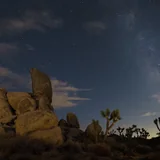
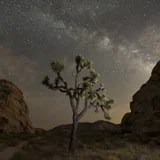
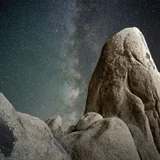
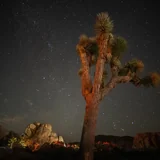
September is the last month with the Milky Way's bright core in a comfortable evening slot. In summer it sits high in the south late in the evening; in early autumn it shows in the evening sky and sets earlier each week, so look soon after dark. The Summer Triangle of Vega, Deneb and Altair is still well placed after sunset, and the autumn constellations are climbing in the east: the Great Square of Pegasus, the W of Cassiopeia, and the Andromeda Galaxy, the most distant object you can easily see with the naked eye.
The American Meteor Society's calendar lists no major shower with a September peak. Its 2026 calendar starts the Southern Taurids on September 20, a long-running shower that lasts into November and is known for producing unusually bright meteors.
The moon matters more than any shower this month. By the US Naval Observatory's tables, the 2026 new moon fell on the evening of September 10 and the full moon on September 26, the full moon closest to the equinox. In 2027 the order flips: full moon on September 15, new moon on the evening of September 29. The week around a new moon gives the darkest nights. The park's dark interior reaches roughly Bortle class 2 to 3, dark enough to see structure in the Milky Way, though the western edge near Yucca Valley is brighter. Our stargazing page covers watching from the house.
Around the region
If you were counting on the Palm Springs Aerial Tramway for a cooler afternoon at 8,500 feet, check its dates first. The tram shuts every year for preventative maintenance, and in 2026 its last rides before the closure were on September 7, with the reopening scheduled for October 5 at 10 am.
The Joshua Tree Gem and Mineral Show sets up at Joshua Tree Lake Campground on Sunfair Road, roughly half an hour from the house, and its fall show was scheduled for September 30 to October 4 in 2026 (check the campground's events page for the current year). October's calendar is close behind: the Hwy 62 Open Studio Art Tours take over the first three weekends of the month, and the park's Night Sky Festival is usually held in October, with tickets on sale from early summer. If your trip straddles the two months, look at both before you settle on dates.
What to pack for September
- Water and electrolytes. Four liters per person for a hike, as the park advises in hot weather, plus a gallon jug in the car. The park has no gas stations, restaurants or stores, and no water in its interior.
- Sun cover. A wide-brimmed hat, a light long-sleeved shirt and sunscreen. Shade is scarce on trails like Ryan Mountain and Fortynine Palms.
- A light rain shell. The park lists a poncho or rain jacket as useful in monsoon season, which runs into early September.
- A headlamp and a UV light. One for dawn starts, one for spotting scorpions on an evening walk.
- One warm layer. Yucca Valley's nights average around 60°F, which feels cool after a 90-degree afternoon.
- Swimsuit and sandals. For the hot part of the day at the house.
At the house in September
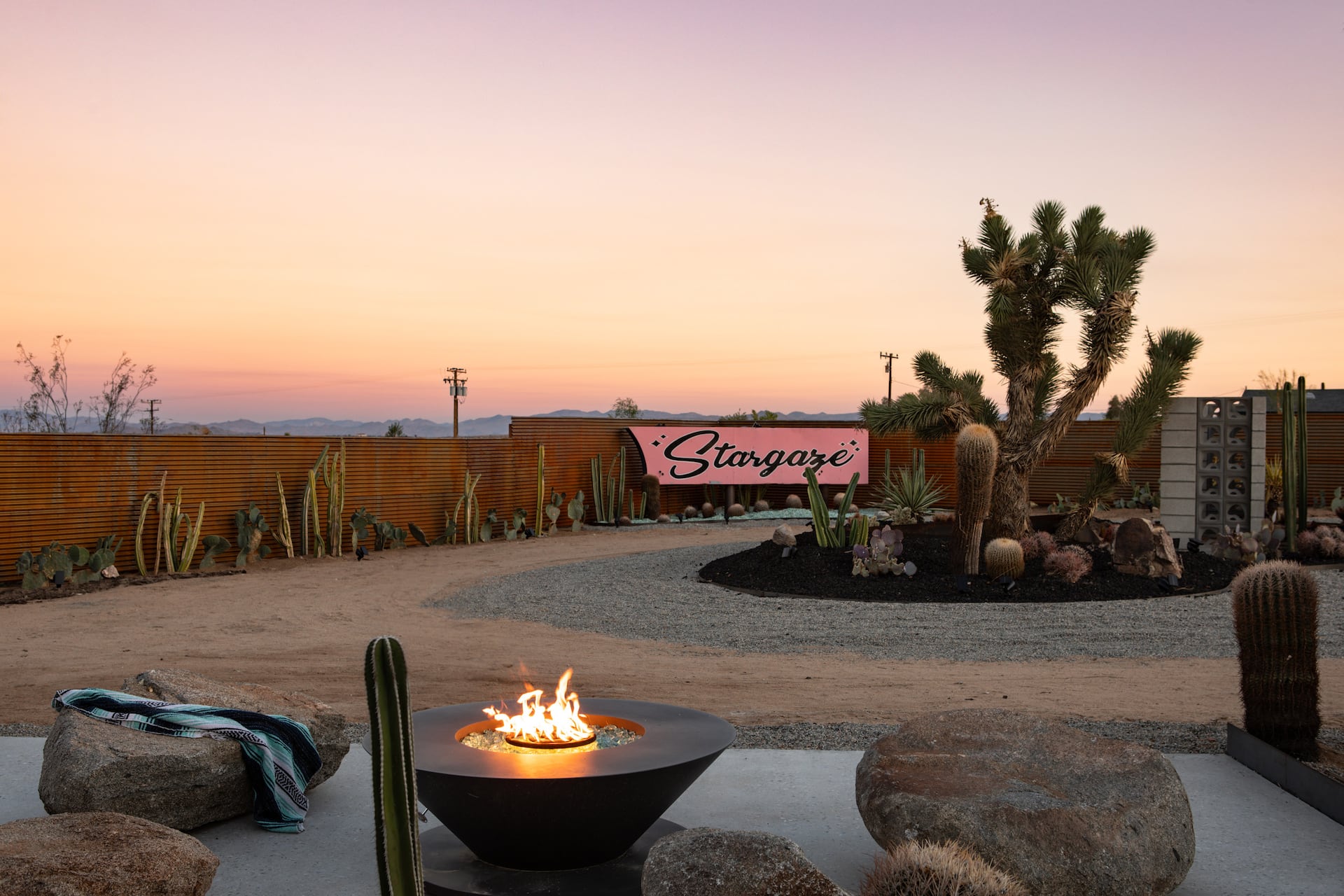
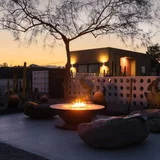
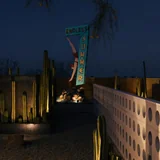
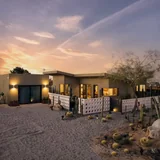
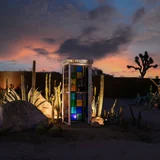
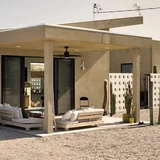
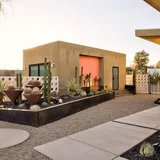
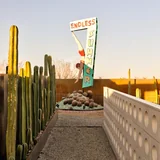
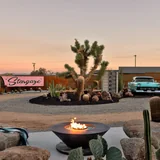
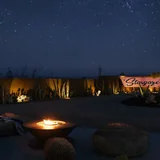
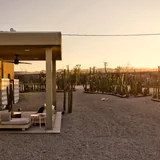
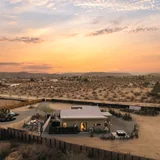
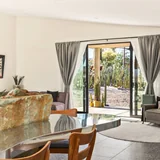
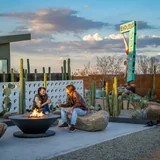
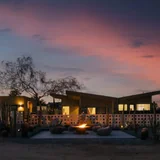
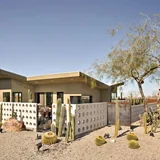
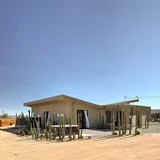
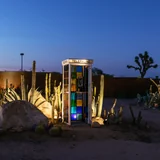
The house suits a hot-month rhythm. Air conditioning keeps the middle of the day comfortable, and the stock-tank pool, under a vintage painted "Endless Summer" metal sign and behind a star-perforated steel privacy screen, is there for the afternoons when the park is too hot to enjoy. The full kitchen and the outdoor BBQ grill make it easy to eat late, after the sun goes down.
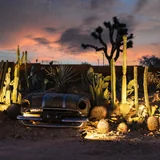
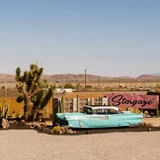
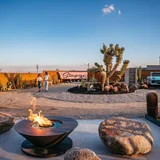
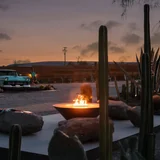
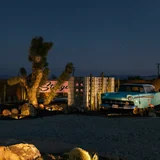
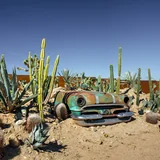
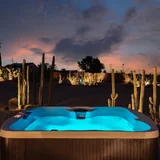
After dark, the private hot tub runs year-round, and the car bed, a restored 1950s car turned into a bed with a custom stargazing roof, is parked out on the gravel for watching the last of the summer Milky Way. Dogs are welcome (cats aren't, because of a household allergy), and since dogs aren't allowed on the park's trails, a fully fenced lot to come back to is handy. Please keep glass away from the pool and hot tub, and keep voices down after 10 pm.
Before you go in September
- Fortynine Palms is closed through September 30 under the park's rules, and the reopening can slip in a dry year.
- No campfires or grilling in park campgrounds and picnic areas until October 1.
- Check the forecast for thunderstorms, stay out of washes when rain threatens, and never drive into moving water.
- Cell service in the park is very limited. Download offline maps or the NPS app before you set out.
- Buying your vehicle pass on Recreation.gov in advance shortens the wait at the entrance.
- Black Rock Nature Center runs roughly 8 am to 4 pm with a midday break outside summer. Hours change, so confirm before you go.
If a quiet, warm week sounds right, check September dates. If you'd rather trade some heat for a fuller calendar, read Joshua Tree in October.
Keep exploring
Joshua Tree in January
Joshua Tree in January: NOAA weather normals for Yucca Valley, short days, snow and road closures, crowd numbers, the Quadrantids and Palm Springs events.
Read →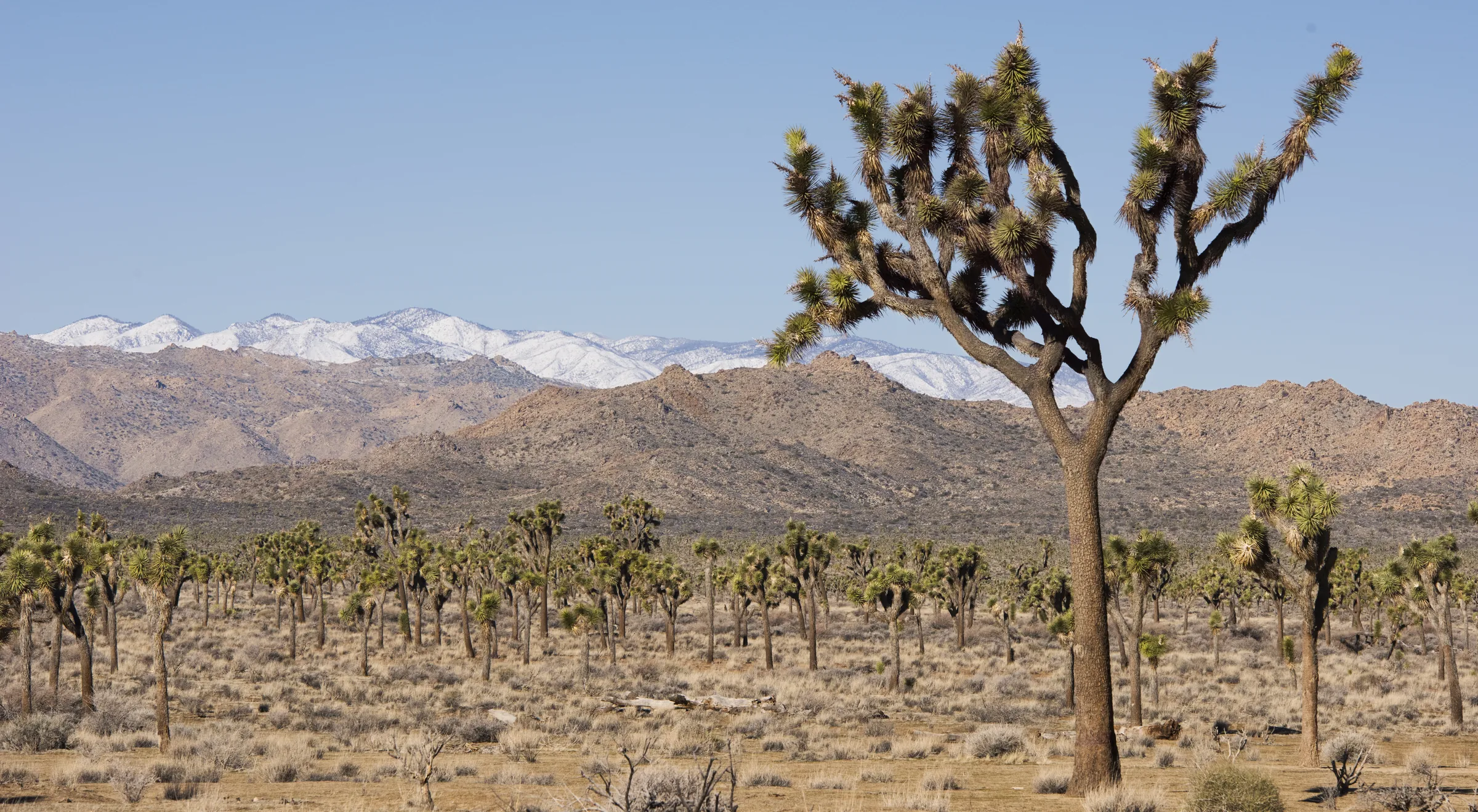
Joshua Tree in February
Joshua Tree in February: Yucca Valley weather normals, longer days, the start of spring crowds, Joshua tree blooms, Modernism Week and Mars and Jupiter in 2027.
Read →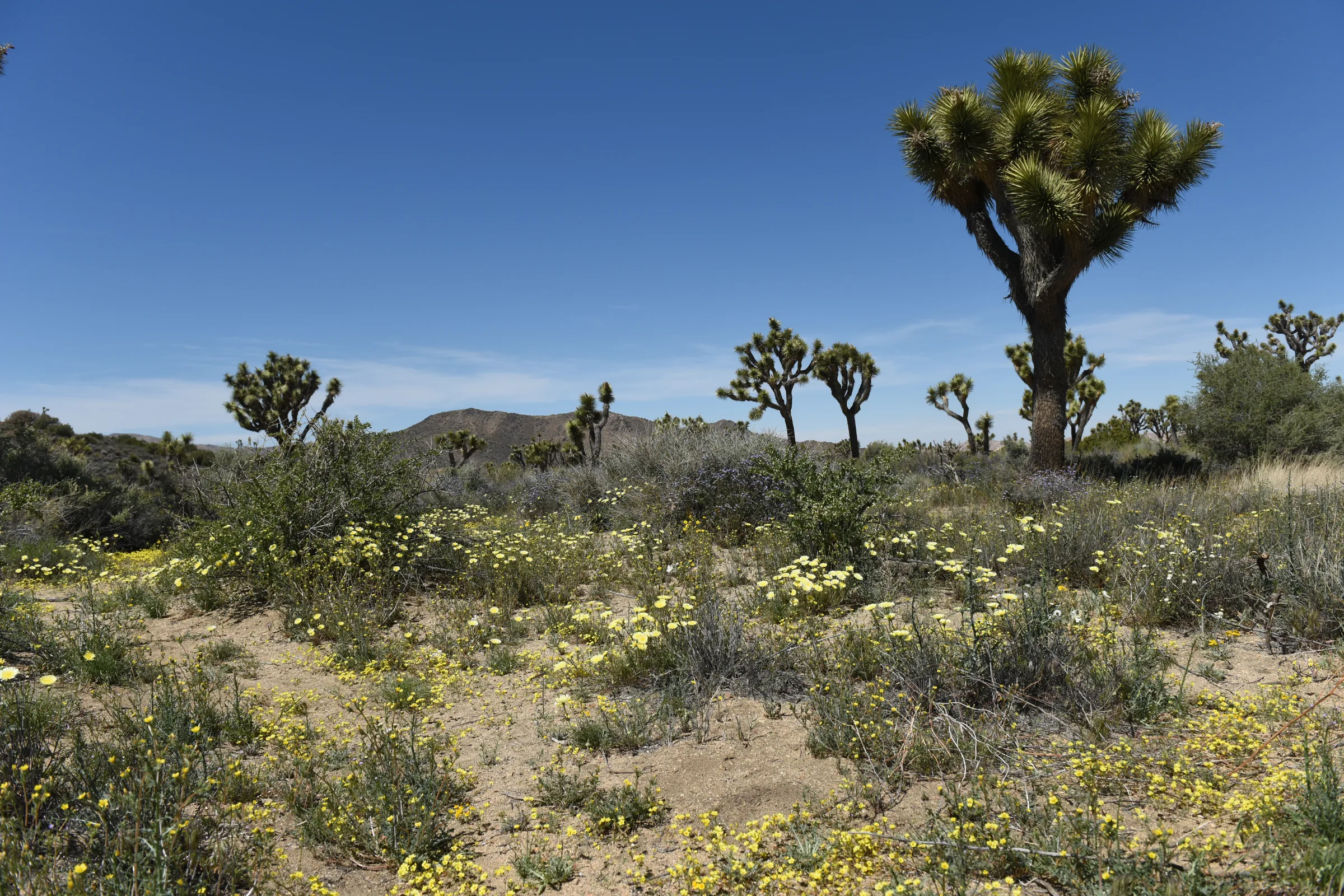
Joshua Tree in March
Joshua Tree in March: the park's busiest month, NOAA weather normals, the clock change, mid-elevation wildflowers, spring wind, the night sky and local events.
Read →