


































Month by month
Joshua Tree in February
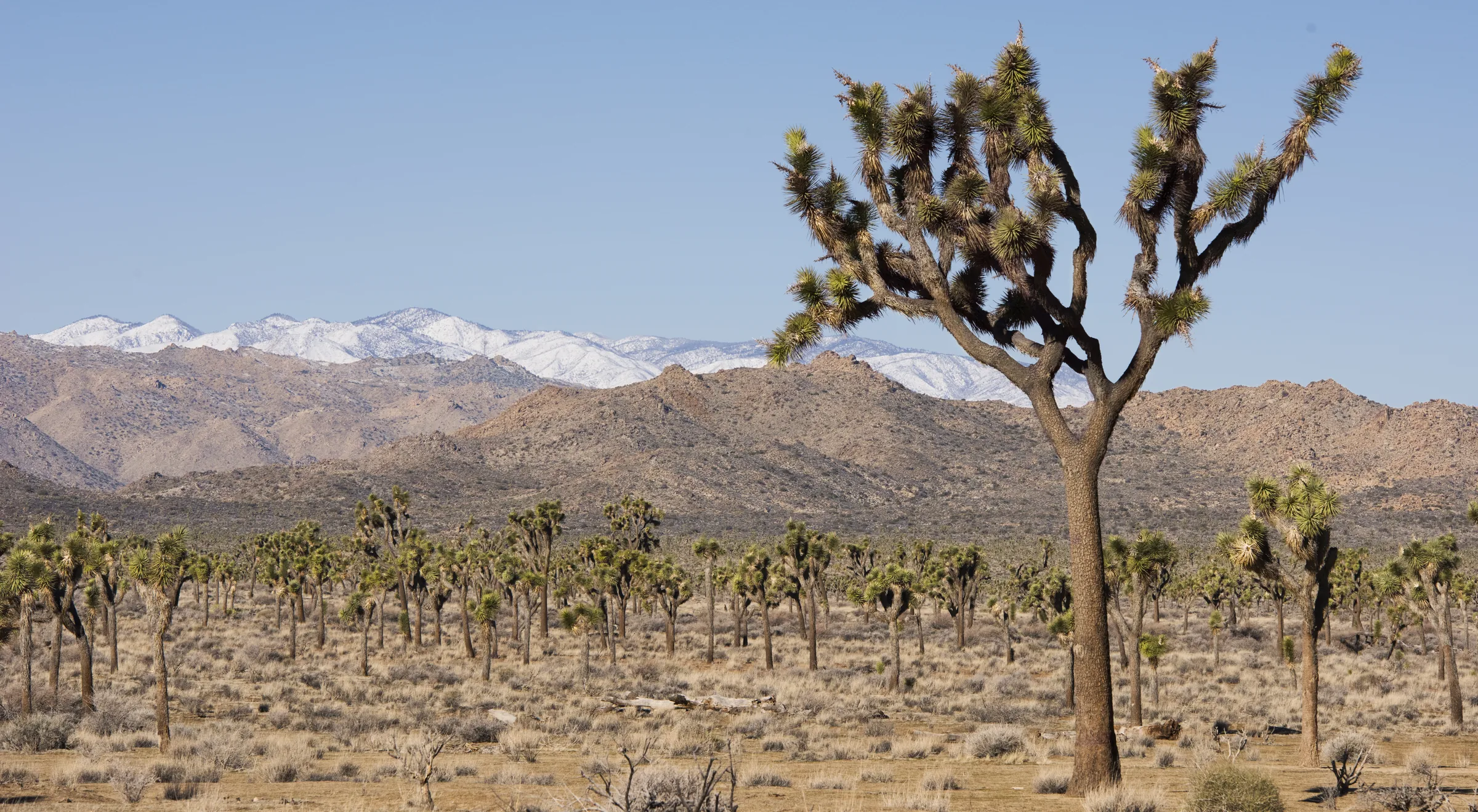
February is the month the high desert starts to turn toward spring. Days grow by almost an hour from the 1st to the 28th, the Joshua trees around Black Rock Canyon can begin to flower in a good year, and the park's spring rush gets going around the middle of the month. It is still cool and one of the wetter months up at the house, so here is what to expect and how to plan for it.
Temperatures and rain
February at NOAA's Yucca Valley station, about 3,250 feet up and the closest long-term record to the house, averages a high of 60.8°F and a low of 38.5°F under the 1991-2020 normals. That is less than three degrees warmer than January in the afternoon and barely a degree warmer at night. The low reaches freezing or below on about seven nights in an average February, and around eight days reach 70°F.
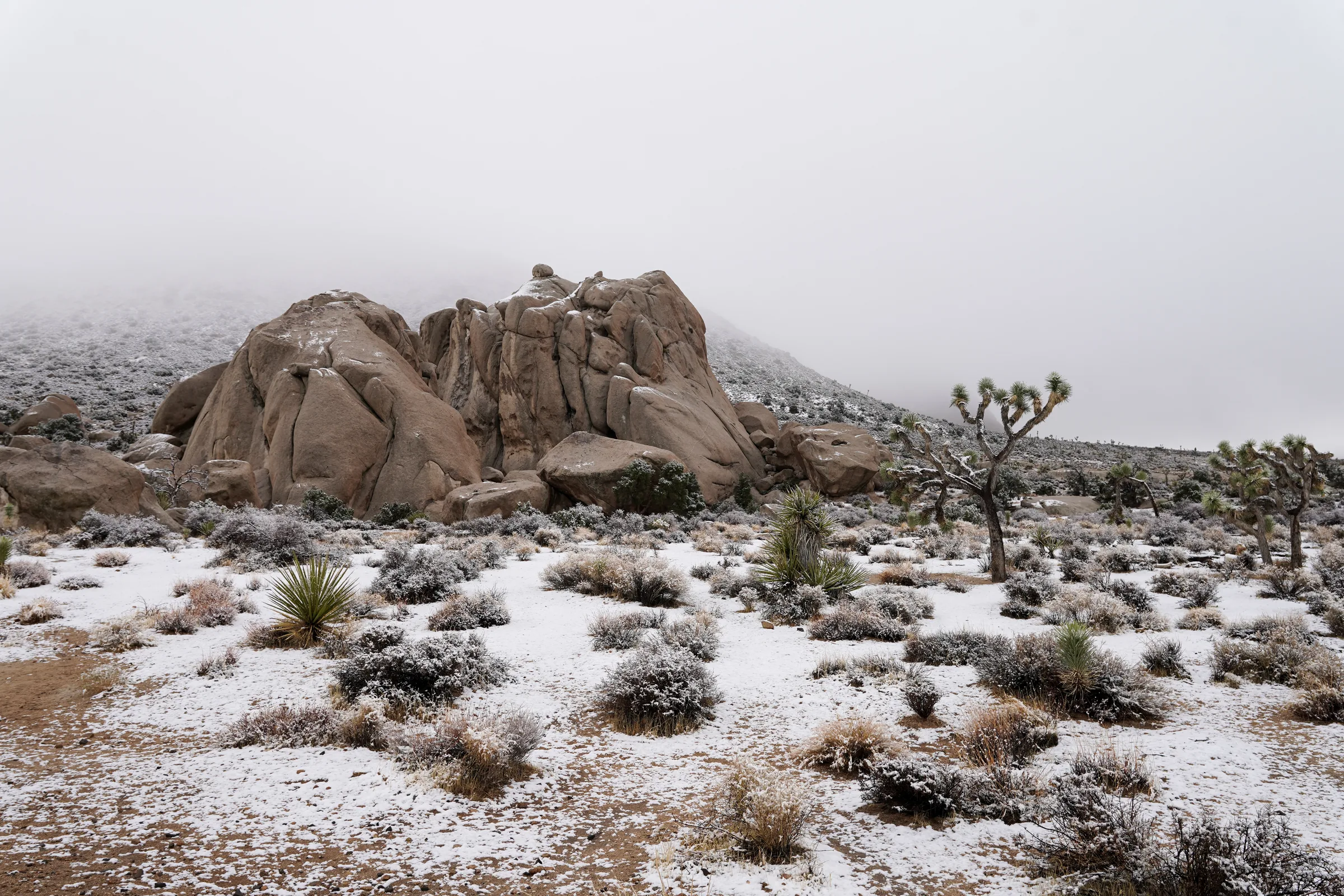
It is the second-wettest month on that record, with 1.22 inches spread over about three rainy days. It is also the only month from January through April with any average snowfall at the station, 0.7 inch, a small figure that fits the general pattern: snow in town is rare, and a light dusting usually doesn't last. For comparison, NOAA's Twentynine Palms station, about 1,300 feet lower, averages 67.2°F by day and 44.1°F at night in February, with a little over half an inch of precipitation. The Joshua Tree station sits between them at roughly 2,560 feet and splits the difference, with a 63.4°F high and a 39.1°F low.
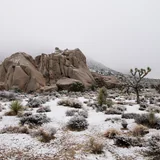
Higher in the park, a big storm can still shut roads. In one 2015 storm, up to 12 inches of snow fell across much of the park's west-central area. Park Boulevard and Keys View Road closed until crews cleared them, and unpaved roads including Bighorn Pass, Odelle and La Contenta stayed closed until they dried out. The park's general warning holds all year: its weather can include gale-force winds, heavy rain and snow, so look at the forecast and the park's alerts before you head in.
Longer days
The light comes back quickly. U.S. Naval Observatory tables for Yucca Valley give a sunrise of 6:43 am and sunset of 5:16 pm on February 1, 2027, about ten and a half hours of daylight. By Valentine's Day it is 6:32 am to 5:29 pm, and on February 28 the sun is up at 6:16 am and down at 5:41 pm, a day of roughly eleven hours and 25 minutes. That is close to an extra hour of daylight across the month.
Sunset after 5:30 pm from mid-month gives you room for a hike after lunch with time to get back before dark. Full darkness still comes early, around 6:42 pm at the start of February and about 7:04 pm at the end, so an evening of stargazing can begin right after dinner.
The start of the busy season
February is when the park's spring crowds begin. The park describes its campgrounds as full on most weeknights during its busy spring season, which it dates from mid-February to mid-May, on top of the weekends, which fill from September through May. If you want to camp, reserve on Recreation.gov, where sites open up to six months ahead. Our camping guide compares the nine campgrounds.
The visitor numbers show the climb. National Park Service statistics counted about 299,000 recreation visits in February 2025, after about 278,000 in January, and because February is short the jump is bigger per day: roughly 10,700 visits a day against about 9,000. February 2025 ranked fourth of the year's twelve months, behind March, April and December. February 2023 drew about 304,000 and February 2024 about 284,000.
Presidents Day weekend is the month's big holiday, and the park lists holidays among its busiest times. In 2026, Presidents Day (February 16) was one of the park's fee-free days. The 2027 list had not been posted when we checked, and these dates change every year, so check the National Park Service list before you count on free entry. Otherwise the 2026 rate was $30 per vehicle for seven days, and buying the pass ahead on Recreation.gov shortens the wait at the entrance.
Joshua trees and the first flowers
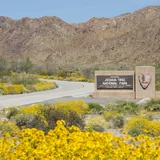
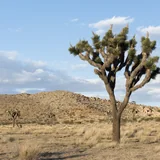
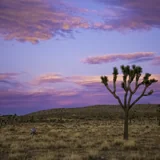
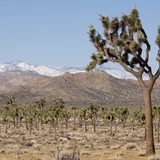
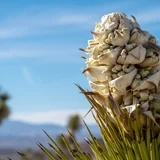
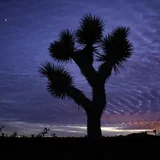
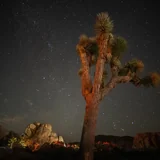
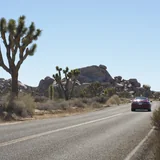
The first big sign of spring is often the Joshua trees themselves. At Black Rock Canyon, the park's corner in Yucca Valley with a campground at about 4,000 feet, the park says spring blooms usually begin with the Joshua trees in late February, followed by shrubs and annual flowers through May. Black Rock is roughly 20 to 25 minutes from the house; our Black Rock Canyon guide covers its trails.
Not every year brings flowers. Joshua trees bloom in creamy clusters between mid-February and April, but only after well-timed rain and a crisp winter freeze, so some years see little or none. A tree also has to be old enough: it usually doesn't flower until it is somewhere around 50 to 70 years old. Its seeds depend on the yucca moth, the tree's only pollinator, which packs pollen onto the flower and lays its eggs inside it. You can read more in the story of the Joshua tree.
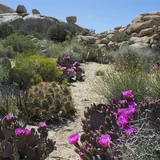
Wildflowers follow the same rules. The park says seeds need a half inch of rain or more in a single storm to start, that spectacular blooms come roughly once every five to ten years after well-above-average winter rain, and that spring windstorms without more rain can end or prevent a bloom. The southern lowlands are the first to show color, starting as early as January. Look closely, stay on the trail, and leave every flower where it grows.
Short walks for a changeable month
February brings the second-highest rain total of the year in Yucca Valley, so it helps to have a few short walks you can fit around the weather. Three easy ones in the main part of the park:
- Cap Rock Nature Trail. A loop of about 0.4 mile with roughly 20 feet of elevation change, named for the flat boulder perched on top of the formation. The path is hard-packed sand, about 36 inches wide.
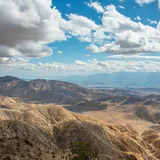
- Keys View. A drive-up overlook at about 5,185 feet with a short paved loop of roughly a quarter mile. On clear days the view takes in the Coachella Valley, the San Andreas Fault, the Salton Sea and the San Jacinto and San Gorgonio peaks. Its road has closed during past snowstorms, so check the park's alerts after a storm.
- Discovery Trail. An easy walk of about 0.7 mile round trip with roughly 70 feet of gain, good for a dry hour between showers.
The Oasis of Mara in Twentynine Palms is normally the park's most accessible walk, a paved half-mile loop with benches and interpretive panels. The park closed the trail after monsoon damage in September 2025 and said it would stay closed until repairs are complete, so check the park's alerts before you plan around it. Keys View, above, has the park's other short paved walk.
Down the hill in February
February is a busy month in the Coachella Valley.
- Modernism Week. Palm Springs' festival of midcentury architecture and design runs February 11 to 21, 2027, with bus, home and walking tours, films and presentations, and evening social events. Tickets go on sale November 1, 2026 at noon Pacific, after a schedule preview on October 25. Book early if a particular house or tour matters to you. Palm Springs is about 50 minutes from the house.
- Riverside County Fair and National Date Festival. Held at the fairgrounds in Indio. In 2026 it ran February 12 to March 1, open Thursday through Sunday plus Presidents Day, with a Presidents Day parade, a date pageant and date shakes among the draws. Check the 2027 dates on the fair's site. Indio is roughly an hour from the house.
- Tour de Palm Springs. A charity bike ride usually held on a Saturday in early February (the 29th ride is listed for February 6, 2027), with routes from 7 to 102 miles plus 5K and shorter walks, raising money for nearly 100 local nonprofits. It brings road closures to downtown Palm Springs, so plan around it if you drive down that day.
- BNP Paribas Open. The big pro tennis tournament at the Indian Wells Tennis Garden starts February 28, 2027 and runs through March 14.
The February sky
February 2027 has a pair of planet events. Jupiter reaches opposition on February 11 by Universal Time, which is late on February 10 in California, and Mars follows on February 19, both in the constellation Leo. At opposition a planet sits opposite the sun, so it rises around sunset, stays up most of the night and shines near its brightest for the year. Both are bright enough to find without a telescope, and a pair of steady binoculars can pick out Jupiter's four large moons as points of light beside it.
The U.S. Naval Observatory has the new moon on February 6, 2027 and the full moon on February 20, so the first week or so of the month gives the darkest evenings. The winter constellations are still well placed after dark: Orion, Sirius, Taurus and the Pleiades, Gemini and Auriga. The American Meteor Society's calendar lists no major meteor shower in February.
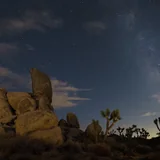
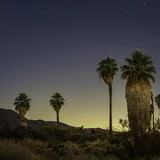
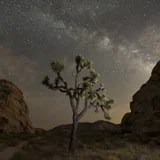
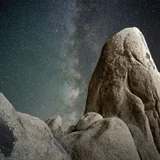
Late February also brings the start of zodiacal light season. On moonless evenings from late February through early May, a faint, hazy pyramid of light can rise from the western horizon after twilight ends and last up to an hour. It is sunlight reflecting off dust in the inner solar system, and it needs a dark western horizon to see. The final evenings of February 2027, when the waning moon rises late, are the first good chance. Our stargazing page covers what the house offers after dark.
February at the house
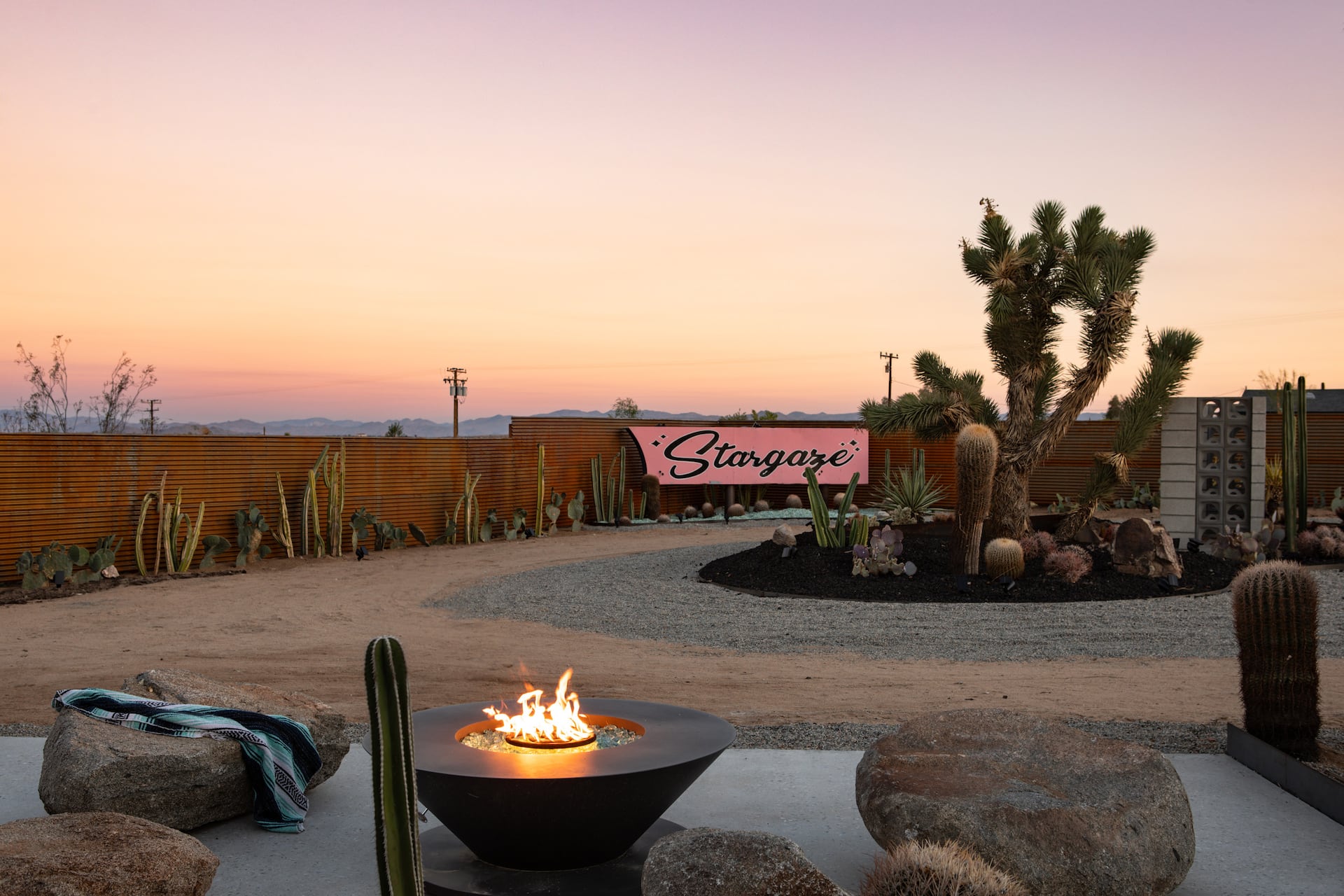
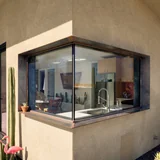
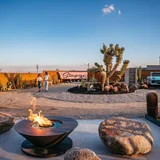
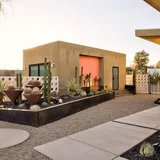
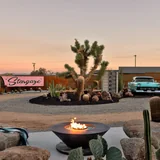
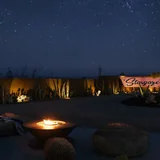
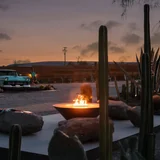
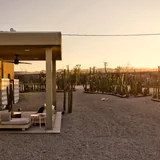
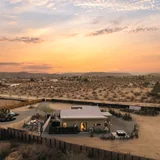
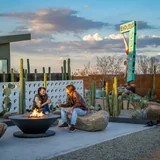
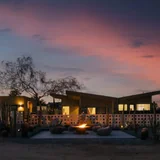
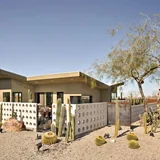
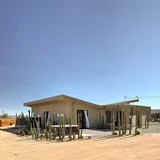
February is a good month for two. The house sleeps four in two king bedrooms, and a couple has the whole place and its fenced desert lot to themselves. The freestanding soaking tub by a wide window onto a private courtyard, the private hot tub and the boulder-ringed gas fire pit all suit cool nights, and our couples page has more on a Valentine's stay.
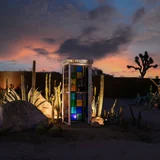
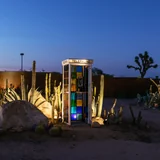
A rainy day is more likely in February than in most months, and the house gives you reasons to stay in. There is a full kitchen and a dining table built around a natural boulder, a stained-glass telephone booth, heating and wifi. One review mentions "photo-worthy spots everywhere." For more ideas when the weather turns, see our list of rainy, windy and hot day ideas.
Dogs are welcome at the house (cats are not, because of a household allergy). Keep in mind that the park doesn't allow pets on its trails, so a dog is better company on the lot than on a hike.
Packing for February
- A rain shell. February is the second-wettest month in Yucca Valley, and a waterproof layer also blocks the wind.
- Layers for a 22-degree swing. Mornings near 38°F and afternoons around 61°F call for a base layer, a fleece and a warm jacket you can peel off.
- Binoculars. Useful for Jupiter and its moons, for birds and for picking out flowers along a slope without leaving the trail.
- Tickets and timing. Modernism Week tours and festival passes sell ahead, so have them sorted before you drive up.
- A park pass. Buying it ahead on Recreation.gov means a shorter wait at the gate.
- Swimwear. For the hot tub after a cold day.
February gives you a little of everything: the last of the winter sky, the first Joshua tree flowers in a good year and a busy calendar in Palm Springs. Check dates at the house for your trip, then see what changes in Joshua Tree in March.
Keep exploring
Joshua Tree in January
Joshua Tree in January: NOAA weather normals for Yucca Valley, short days, snow and road closures, crowd numbers, the Quadrantids and Palm Springs events.
Read →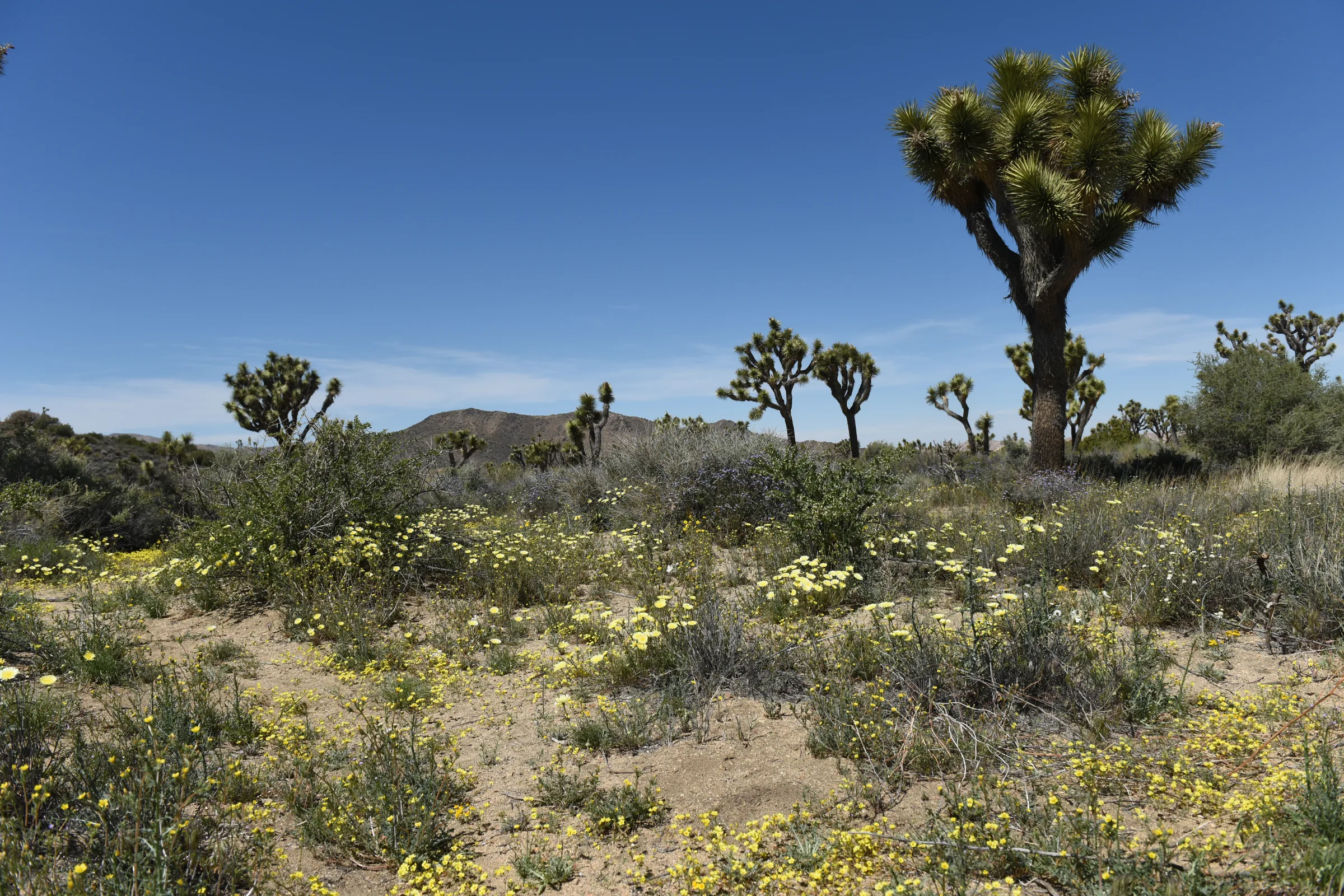
Joshua Tree in March
Joshua Tree in March: the park's busiest month, NOAA weather normals, the clock change, mid-elevation wildflowers, spring wind, the night sky and local events.
Read →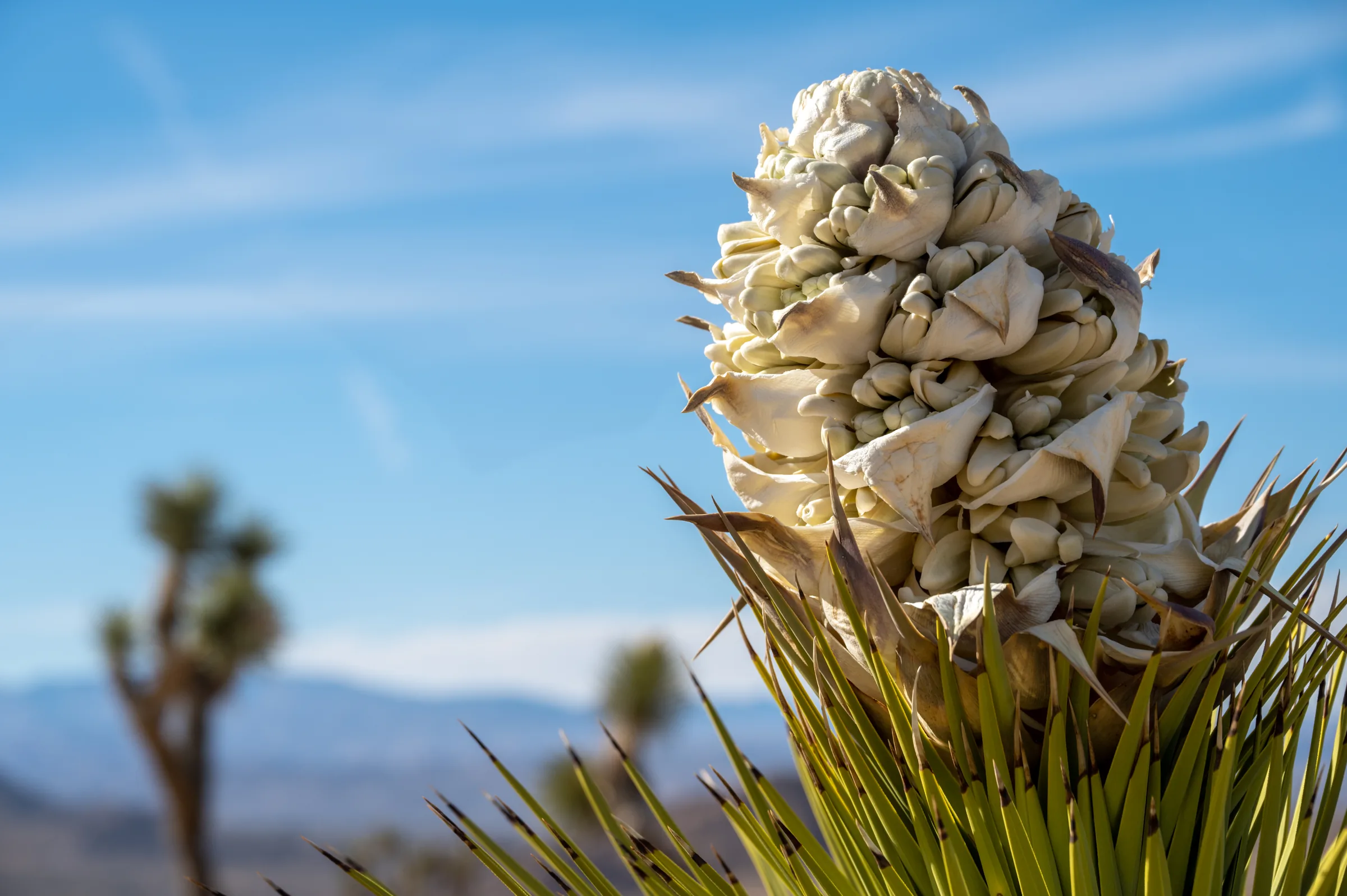
Joshua Tree in April
Joshua Tree in April: warming NOAA weather normals, blooms on the high ground, Coachella and Stagecoach weekends, waking wildlife, the Lyrids and what to pack.
Read →