




Art & culture
Hi-Desert Nature Museum
The Hi-Desert Nature Museum is a free museum run by the Town of Yucca Valley, and it's about the desert right outside: its animals, rocks, fossils and the people who have lived here. It has a living mini-zoo of native snakes and lizards and a play space built like a pioneer schoolhouse, which makes it an easy pick for kids and an indoor stop for a hot afternoon.
How it started
The museum was founded in 1964 by Evelyn and Percy Conklin, Camilla Hudson and Jerry Moore, then community services director for the local parks and recreation district. It began in an 800-square-foot park building, moved in 1973 to the Yucca Valley Community Center complex, and added gallery space for its wildlife dioramas in a 1989 expansion. Since 1991 it has been part of the Town's Community Services Department. The first collections came from local donations. Today the museum cares for nearly 4,000 items across zoology, geology, botany, paleontology, entomology, archaeology, art and history, with a focus on California, the Mojave, the Morongo Basin and the High Desert.
The natural history wing
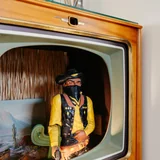
Habitat dioramas show native wildlife in recreated desert settings, using taxidermy specimens; the collection includes work by the taxidermist Sandor Bozsody. Around them are:
- Insects of the Mojave. Preserved specimens on insect anatomy, behavior and their part in desert ecosystems.
- Desert Traces. Skulls, scat, tracks and other signs that biologists use to study animals that are rarely seen.
- Paleontology. Fossils that show how the region's landscapes and life have changed over millions of years.
- Gems and minerals. Rocks, gemstones and minerals from California and around the world, with notes on how minerals form.
The cultural history wing
The Native American culture exhibit, developed with the Malki Museum, shows objects tied to the lifeways, traditions and art of the region's Indigenous peoples. Other exhibits cover early settlers and homesteaders, with artifacts from ranching families and pioneers, and mining in the high desert, with historic tools, equipment and specimens. An interactive touchscreen exhibit, Our Giant Rock, tells the story of the landmark boulder near Landers; our Giant Rock guide covers the place itself. The collections also hold pottery by the high-desert artist Howard Pierce and botanical serigraphs by Henry and Beverly Mockel. For the wider story, read a short history of the high desert.
The mini-zoo
The museum calls its Living Mini-Zoo one of its most popular attractions. The native animals include snakes such as gopher and king snakes, lizards including a desert iguana and a chuckwalla, a red-spotted toad and, newly added, honeypot ants. Two non-native insects, Madagascar hissing cockroaches and cave cockroaches, are there to teach about insect behavior and the role insects play. The museum says it doesn't collect healthy animals from the wild; its animals were bred in captivity or can't be released back into the wild. To learn what you might see on the trail, our field guide to Mojave wildlife picks up from here.
For kids
The Kids' Corner is an interactive space set up as a historic pioneer cabin and one-room schoolhouse, with a classroom blackboard to write on, books, and educational toys for imaginative play. The museum also hosts school field trips and family days; its calendar lists a Family STEAM Day in February 2027 and spring art and science days. More ideas for young travelers are in Joshua Tree with kids.
Exhibits and events
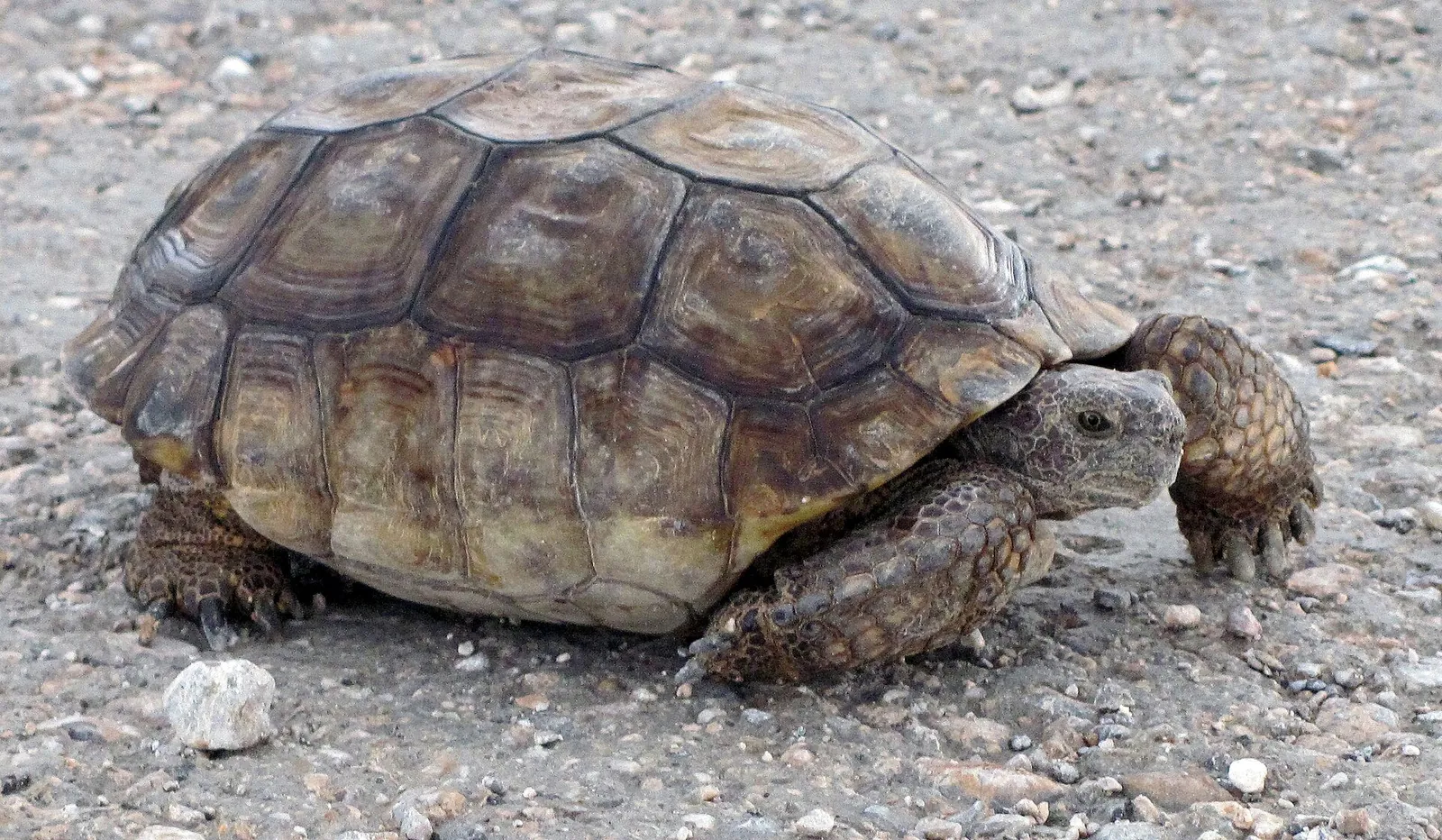
The museum runs rotating special exhibits. From October 17 to December 16, 2026, the show is The Journey is the Destination, marking 100 years of Route 66. The calendar also lists talks, such as one on bees of the Mojave in January 2027, and Saturday workshops in lettering, woodcraft and soap making. Past talks have included one in August 2026 by the president of The Desert Tortoise Conservancy on why visitors shouldn't pick up a tortoise, even one in the road. The Mojave desert tortoise is federally listed as threatened, and it's illegal to handle or remove one. Dates change, so check the museum's events page before planning around one.
Visiting
The museum is at 57090 Twentynine Palms Highway in the Yucca Valley Community Center complex. From Highway 62, turn at the traffic light onto Dumosa Avenue, between Sage Avenue and Highway 247 (Old Woman Springs Road). Admission and parking are free, and donations support education programs and care of the collections. At last check it's open Wednesday through Saturday, 9:30am to 5:30pm, and closed Sunday through Tuesday and on Town holidays. It also closes now and then for maintenance; this fall it is closed from September 16 through October 6, 2026 for plumbing work and reopens October 7.
It fits easily into a day in town. Desert Christ Park, a free hillside of white sculptures, is also in Yucca Valley, and Black Rock Canyon, the park's corner at the south end of town, is good for a short hike before the heat.
Know before you go
- Cost. Free, with donations welcome. Parking is free too.
- Hours. Wednesday to Saturday, 9:30am to 5:30pm, at last check. Call the museum or check its site before you go.
- Closures. Closed on Town holidays and occasionally for maintenance.
- Kids. The mini-zoo and the Kids' Corner are the draws for younger visitors.
- Events. Openings, talks and workshops are listed on the museum's calendar and change through the year.
For more around town, see things to do in Yucca Valley, then check dates at the house.
Keep exploring
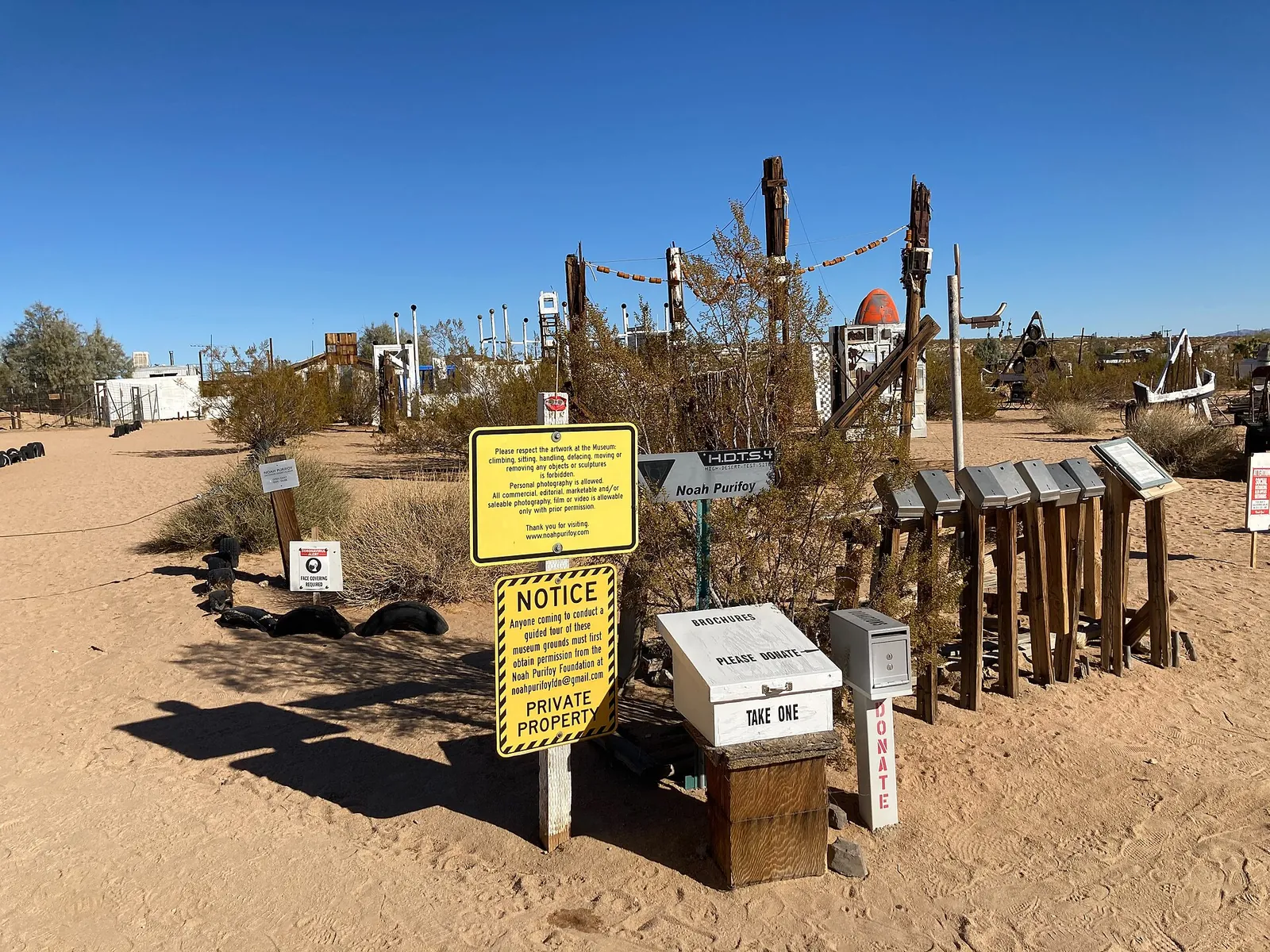
The Noah Purifoy Outdoor Desert Art Museum
The Noah Purifoy Outdoor Desert Art Museum near Joshua Tree — ten acres of assemblage sculpture, free and open daily. Who he was and how to visit respectfully.
Read →
The High-Desert Art Trail: Galleries, Studios & Highway 62
The high desert's art scene — galleries in Joshua Tree and Twentynine Palms, outdoor desert art, and the Highway 62 Open Studio Art Tours each October. How to plan a day.
Read →
Vintage & Thrift Shopping in the High Desert
Where to hunt for vintage, mid-century and desert-weird treasure around Yucca Valley and Joshua Tree — boutiques, thrift stores and roadside oddities, plus what's still open.
Read →