






















Month by month
Joshua Tree in December
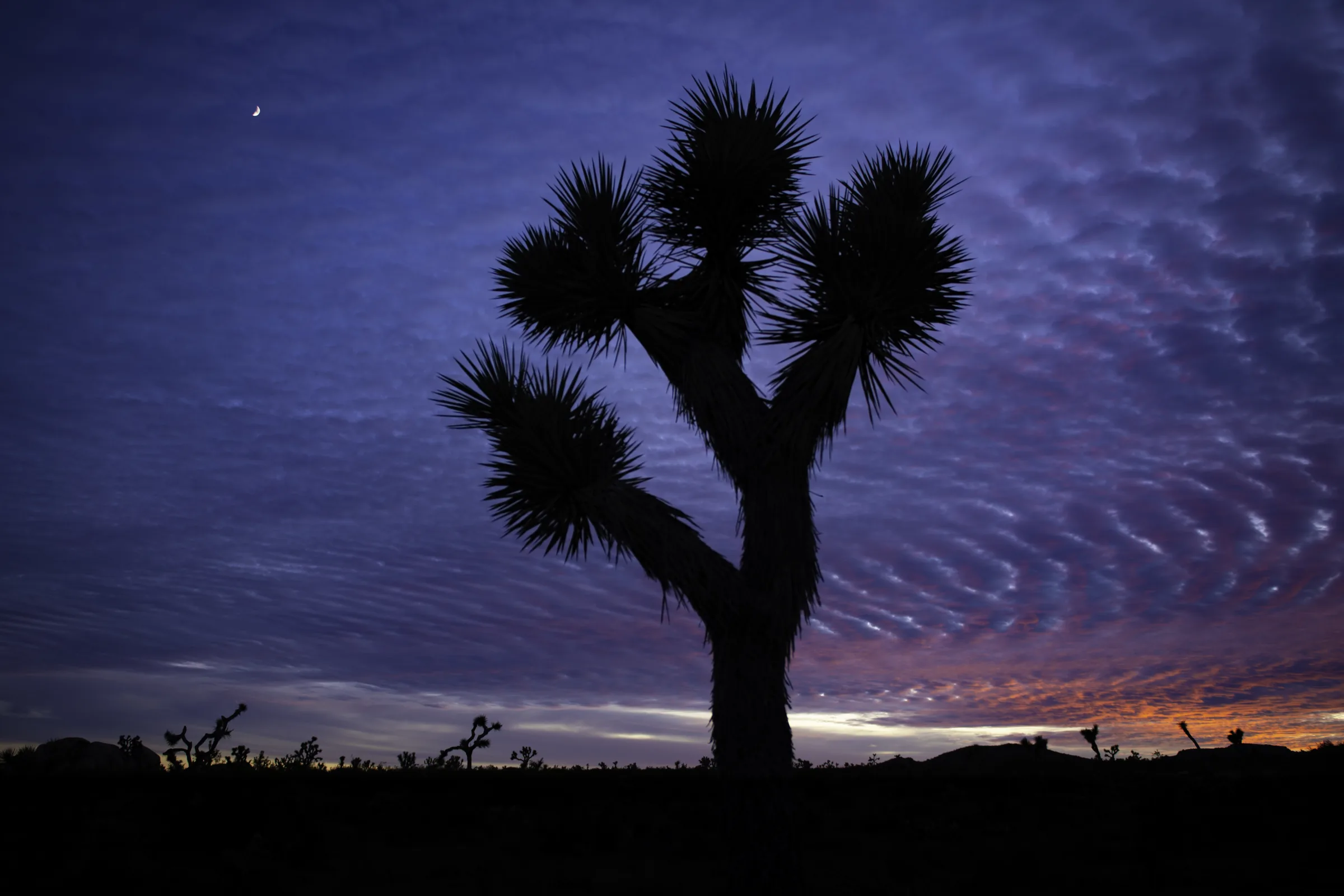
December brings the coldest weather of the late year to Joshua Tree, and some of the park's heaviest traffic. Yucca Valley averages highs near 58°F and lows near 34°F, the sun sets before 4:50 pm all month, and the weeks around Christmas and New Year's fill the park. In return you get the longest nights of the year, the Geminid meteor shower and the bright winter constellations.
Cold nights, some rain, rare snow
Yucca Valley's NOAA climate station (about 3,250 feet) gives December an average high of about 58°F and an average low of about 34°F in its 1991-2020 normals. The temperature drops to freezing or below on about 10 nights in a typical December there. It's also the wettest of the year's last four months at that station, with about 0.87 inch of precipitation on average and roughly two days with at least 0.10 inch, and the normals include an average of about 0.9 inch of snow. Highs barely move through the month, from about 60°F on December 1 to about 58°F on December 31.
At Twentynine Palms, nearly 1,300 feet lower, December averages about 62°F by day and 40°F at night. The coldest night of a typical December there falls to about 27°F, and the station's December record low is 10°F. The park rises well above both stations, to about 5,185 feet at Keys View, and the higher ground is colder. The park service warns that winter can be surprisingly cold and that its weather can bring gale-force winds, heavy rain and snow.
Snow and ice in the park
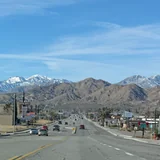
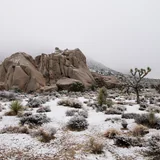
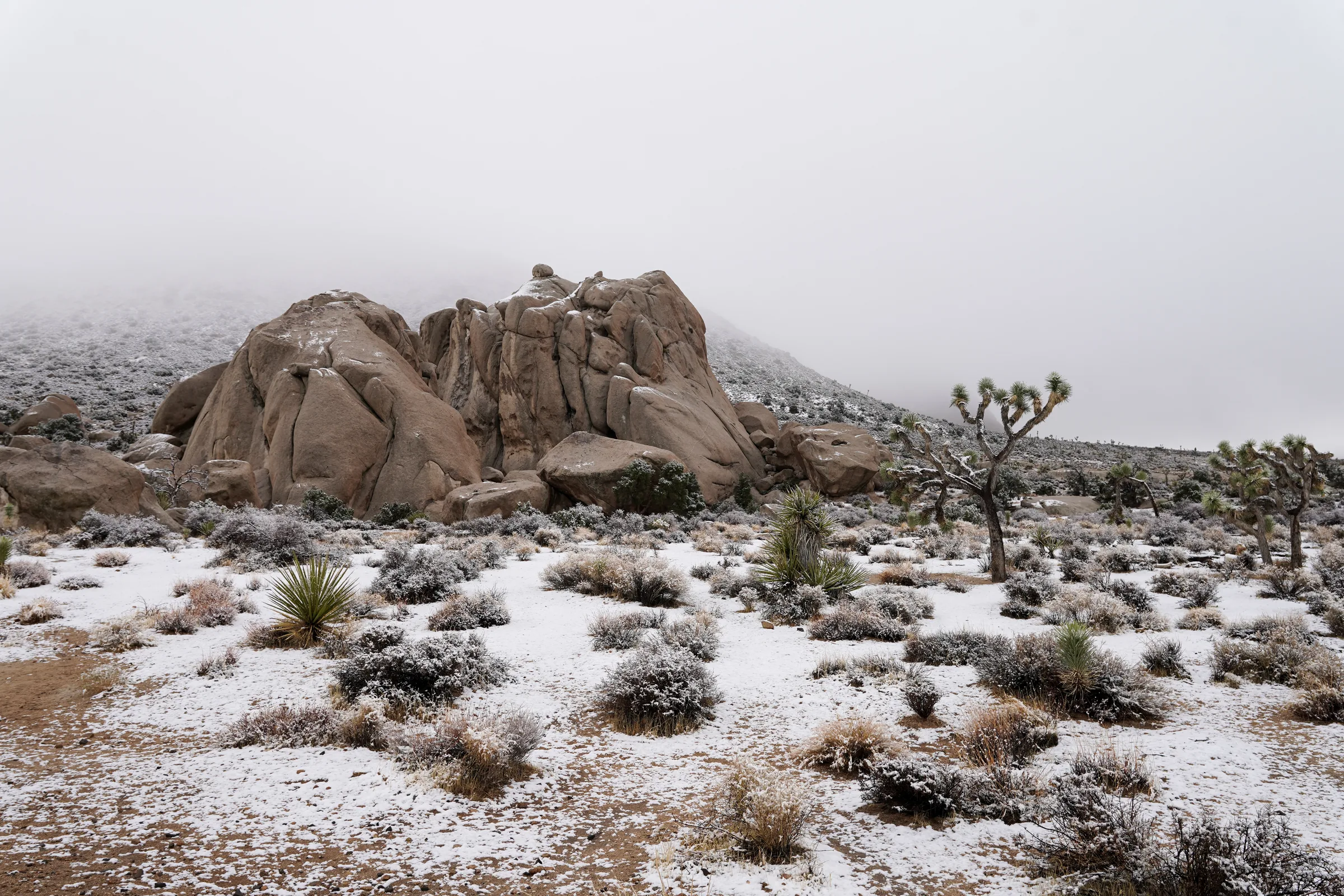
Snow is rare in the high desert, and a light dusting usually doesn't last. It can still shut roads. After a storm on December 26, 2019, the park closed its inbound lanes because of dangerous road conditions, let visitors already inside drive out, kept campgrounds open only to people already camping, canceled Keys Ranch tours and closed visitor centers early. Hidden Valley Campground was photographed under snow two days later, and on January 2, 2020, the Big Horn, Odelle, Queen Valley, Lost Horse Mine and Geology Tour roads were still closed. The park also warned that snowmelt can refreeze overnight into ice.
After any winter storm, check the park's alerts and road status before you drive up, carry food, water and warm clothes in the car, and allow extra time. Drive the paved roads slowly in the early morning, when refrozen meltwater is most likely. If the weather keeps you out of the park, our list of rainy, windy and hot day ideas has other plans.
The shortest days
The earliest sunsets of the year come in the first week or so of December, at about 4:37 pm in Yucca Valley. The winter solstice follows on December 21, at 12:50 pm Pacific time in 2026 by the US Naval Observatory, when the day bottoms out at about 9 hours 55 minutes, from a sunrise around 6:46 am to a sunset around 4:42 pm. Mornings keep getting later all month: on December 31 the sun doesn't rise until about 6:50 am, though by then it sets around 4:48 pm.
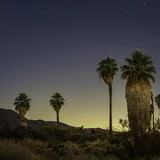
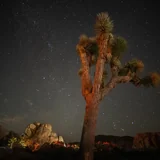
Full darkness arrives around 6:05 pm in the first half of the month and around 6:15 pm by New Year's Eve, with about 14 hours between sunset and sunrise at the solstice. That makes December the easiest month for stargazing without a late night, and the hardest for fitting in a long hike. Start park days once the morning has warmed up, and plan to be off the trail by mid-afternoon.
Holiday crowds
December is one of the park's three busiest months. The National Park Service counted 341,994 recreation visits in December 2023, 342,051 in December 2024 and 325,708 in December 2025; in both 2024 and 2025, only March and April drew more. December 2024 averaged roughly 11,000 visits a day, more than twice the daily rate of the September before it.
The heaviest days fall around the holidays. In its advisory for the last days of 2024, the park said to expect high traffic through the weekend after New Year's Day, all campgrounds full, and parking so tight that busy areas could become drive-through only. Its advice: buy a digital pass on Recreation.gov before you come, skip the 10 am to 2 pm window for driving in, don't plan to leave right at sunset, be flexible and pick hikes where there's parking, and if you want sunset inside the park, use the established parking along Park Boulevard. In a 2020 advisory the park named Christmas Day, New Year's Day and the days around them as its most crowded.
Christmas Day 2026 and New Year's Day 2027 both fall on a Friday, which makes two long weekends in a row. If your dates allow, go into the park on the weekdays before Christmas and save the holiday weekends for the house and the towns.
Days in the park
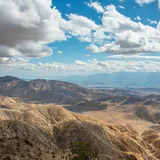
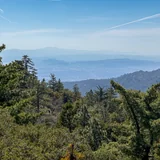
With highs in the upper 50s at Yucca Valley, December middays are comfortable for walking, and the hikes that are too hot in summer work well now, provided you finish with light in hand. Keys View is worth a clear day: from about 5,185 feet, its short paved path looks over the Coachella Valley, the San Andreas Fault, the Salton Sea and the San Jacinto and San Gorgonio peaks. It's also on the park's list of lots that can close when full, so go early or late on holiday weeks. Our Keys View guide has the details.
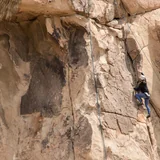
Winter also brings climbers. James Kaiser's Joshua Tree travel guide credits climbers for much of the park's growing winter popularity, saying they come when summer destinations like Yosemite are covered in snow. The park lists its Climber Coffee morning meetups for January through March, so they start just after this month; check the park calendar.
The December night sky
The Geminids are the main event. By the American Meteor Society's 2026 calendar they're active from December 4 to 17 and peak on the night of December 13 to 14, and the society calls them usually the strongest shower of the year. They're also the one major shower with good activity before midnight, because Gemini is well placed from about 10 pm, and their meteors are often bright and intensely colored. In 2026 the peak-night moon is only a 15 percent crescent, which the society rates as generally favorable. In 2027 the full moon falls on December 13, the same date, so expect a much brighter sky for that year's peak.
The Ursids follow, active December 17 to 26 and peaking on the night of December 21 to 22. They're a small shower, normally 5 to 10 meteors an hour at maximum, and in 2026 an 89 percent moon gets in the way. The Quadrantids begin on December 28, though their short peak comes in early January, on the night of January 3 to 4 in 2027.
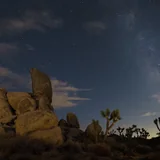
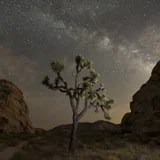
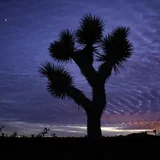
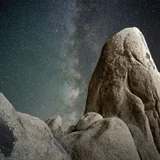
The rest of the December sky is the winter set: Orion with the Orion Nebula, Sirius in Canis Major, Taurus with the Pleiades, Gemini, Auriga and Canis Minor. The bright core of the Milky Way is out of the night sky until about February, and the fainter winter Milky Way arches overhead instead. Moon phases from the US Naval Observatory: new moon on December 8, 2026, and full moon on the evening of December 23, which leaves Christmas week 2026 moonlit; in 2027 the new moon falls on December 27. Give your eyes 20 to 30 minutes in the dark, and keep screens dim or red. Our guide to where to stargaze lists the darkest spots nearby.
Holiday lights and parades
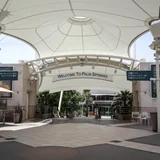
Palm Springs holds its Festival of Lights Parade on the first Saturday of December. In 2026 that's December 5, stepping off at 5:45 pm on Palm Canyon Drive and running about 1.5 miles north from Ramon Road to Tachevah Road. Parts of Palm Canyon Drive start closing to traffic in the afternoon, and the organizers suggest arriving early for parking and a spot along the route. From the house it's roughly 50 minutes to Palm Springs; our Palm Springs day trip guide covers the rest of town.
Closer to home, Yucca Valley lights its town tree in early December. In 2025 the Tree Lighting Festival was on December 3 at Founders Plaza, by Highway 62 and Elk Trail in Old Town, with the tree lit at 6 pm, warm drinks and photos with Santa. Confirm the current date with the town; see things to do in Yucca Valley for the rest of Old Town.
The biggest light show in the valley is WildLights at The Living Desert zoo and gardens in Palm Desert, roughly 44 miles from Yucca Valley. It is held on select evenings and covers most of December; the 2025 season's last night was December 30. The zoo posts each year's evenings and tickets on its own site. Planning further ahead, Modernism Week returns to Palm Springs on February 11 to 21, 2027.
Packing for cold nights
- An insulated jacket, a warm hat and gloves. About ten nights a December fall below freezing in Yucca Valley, and it's colder on the park's high ground.
- Layers for sitting still. A meteor watch means an hour or more without moving; bring a blanket or sleeping bag for time in the car bed.
- Shoes that handle wet and ice. December is the wettest month of the four, and the park warns that snowmelt can refreeze overnight.
- A headlamp with a red setting. It protects your night vision on the walk out.
- Lip balm and moisturizer. Desert winter air is dry.
- A swimsuit. The hot tub runs all year.
At the house in December
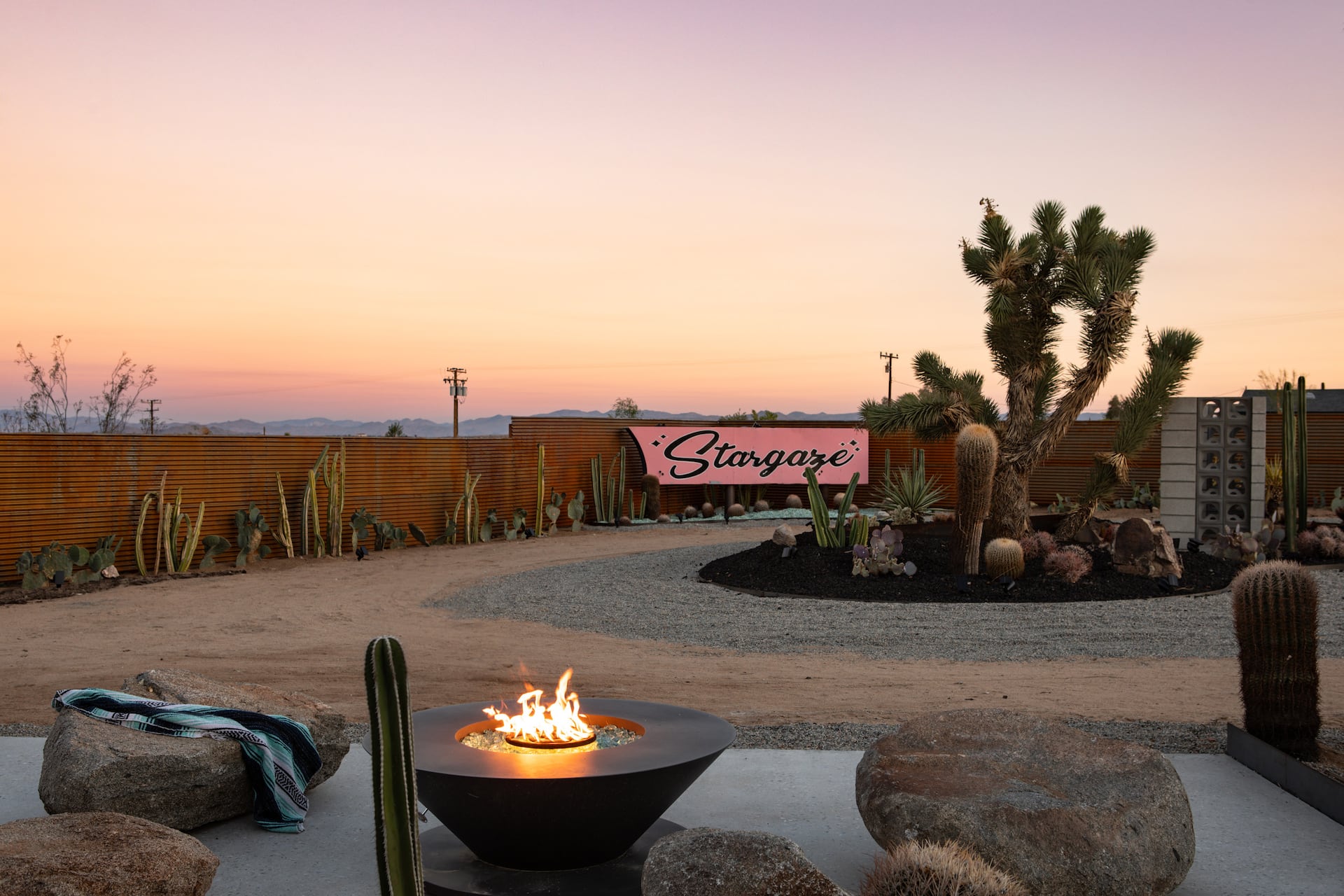
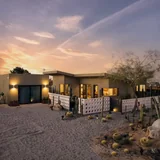
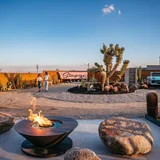
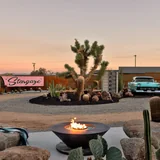
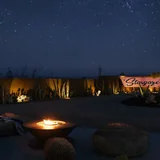
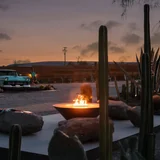
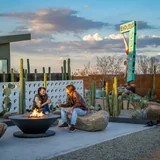
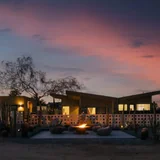
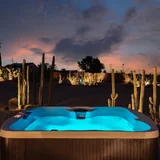
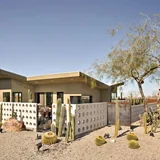
Winter is hot tub season, and the private one here never closes for the year. The gas fire pit takes the edge off a cold evening without anyone splitting logs, and the freestanding soaking tub inside, set by a wide opening onto the private courtyard, is a warm place to be when the light goes before five. The house has heating for the freezing nights.
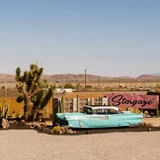
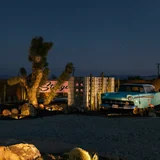
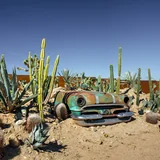
With nights this long, the restored 1950s car that now serves as a bed, with its custom stargazing roof, has plenty of dark hours to offer; bring your warmest layers. The full kitchen and outdoor BBQ grill cover holiday cooking, and the dining table is built around a natural boulder. One review mentions "photo-worthy spots everywhere," and the low winter sun is a good time to find them. For a December trip for two, see our couples page. Quiet hours start at 10 pm, there are no parties, and glass stays away from the pool and hot tub.
Before a December trip
- Expect every park campground to be full over Christmas and New Year's, and book any site the day the six-month window opens.
- After a storm, check road status. Snow and ice have closed park roads such as Queen Valley and Geology Tour before.
- On holiday days, go into the park early in the morning or after mid-afternoon, and have a backup hike in mind in case a lot is full.
- High desert restaurants often keep limited or seasonal hours, so check holiday opening times before you drive.
- Christmas Day 2026 and New Year's Day 2027 both fall on a Friday.
- Sunset is around 4:40 pm for most of the month. Carry a headlamp on any afternoon hike.
Check December dates for your trip, and to plan the start of the new year, read Joshua Tree in January.
Keep exploring
Joshua Tree in January
Joshua Tree in January: NOAA weather normals for Yucca Valley, short days, snow and road closures, crowd numbers, the Quadrantids and Palm Springs events.
Read →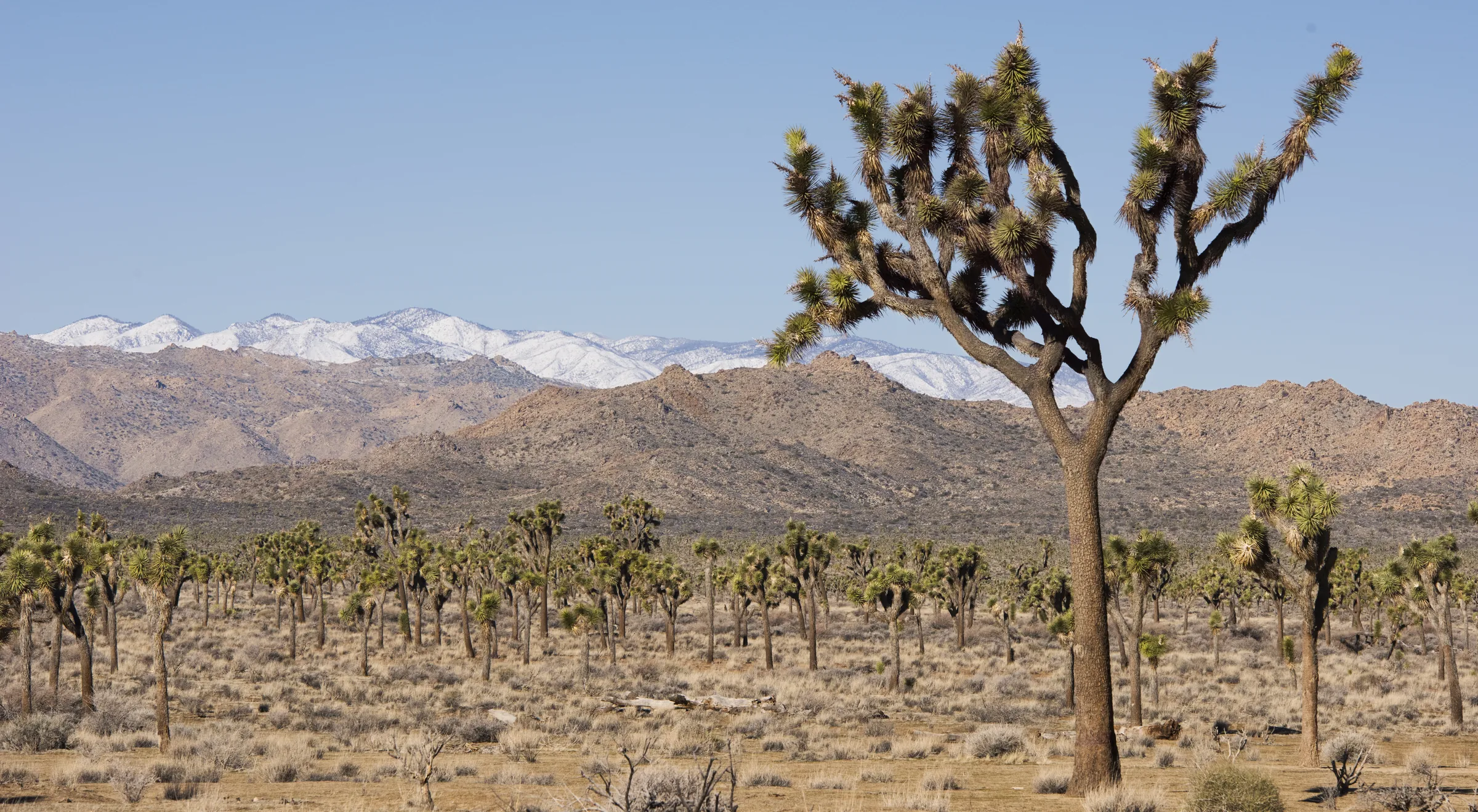
Joshua Tree in February
Joshua Tree in February: Yucca Valley weather normals, longer days, the start of spring crowds, Joshua tree blooms, Modernism Week and Mars and Jupiter in 2027.
Read →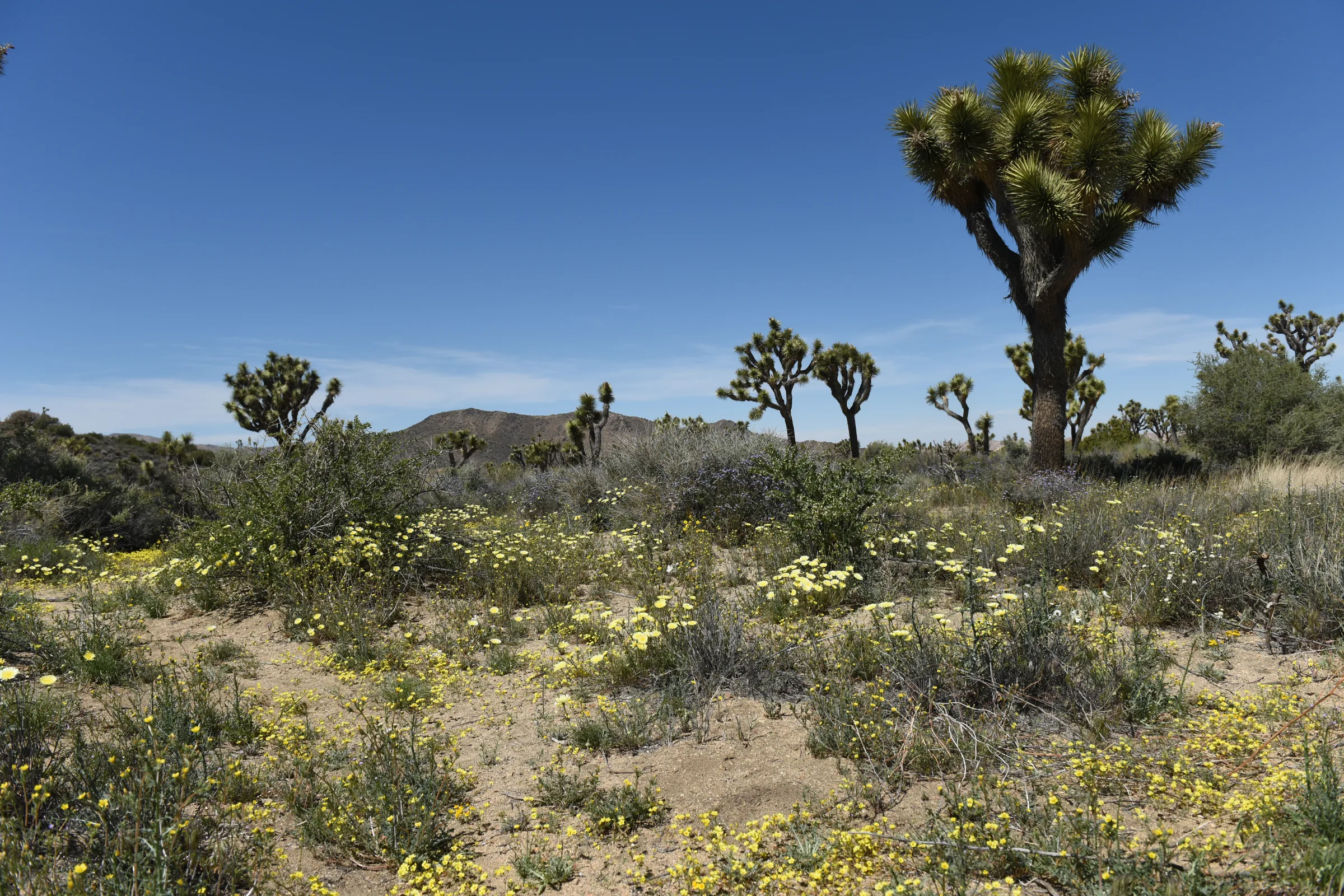
Joshua Tree in March
Joshua Tree in March: the park's busiest month, NOAA weather normals, the clock change, mid-elevation wildflowers, spring wind, the night sky and local events.
Read →