


























Month by month
Joshua Tree in November
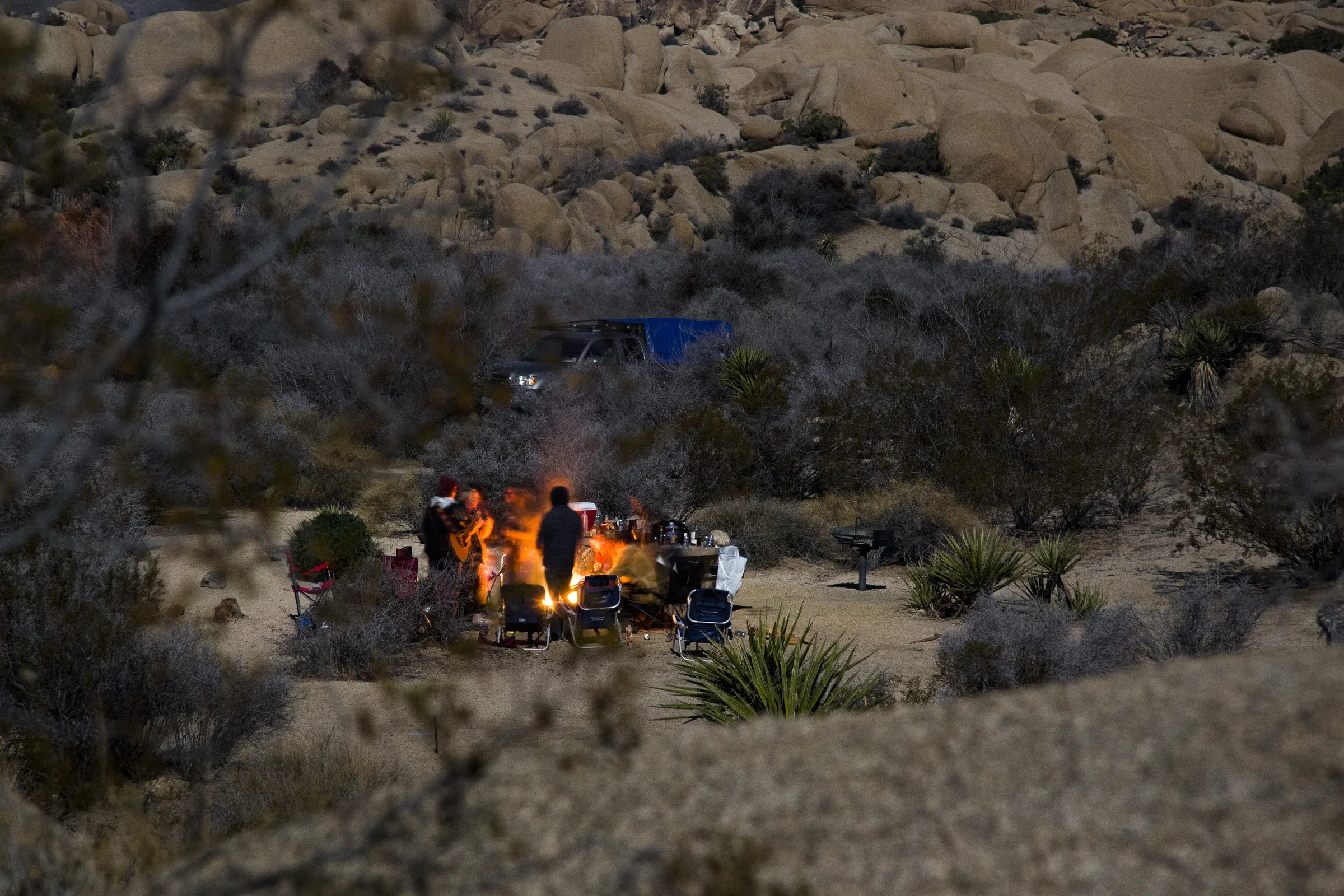
November is when the high desert cools off for good. Yucca Valley's afternoons average in the mid 60s, nights drop into the low 40s, and the clocks change on the first Sunday, so the sun is down before 5 pm for the rest of the month. It's also when park visits jump, with Thanksgiving in the last week.
Temperatures and rain in November
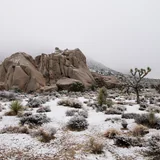
NOAA's 1991-2020 normals for its Yucca Valley station, at about 3,250 feet, put November's average high at about 66°F and its average low at about 41°F. The month cools quickly: the normal high is about 73°F on November 1 and about 61°F on November 30, and the normal low drops from about 46°F to about 36°F. The station averages close to three nights a November at or below freezing, and its normals even record a tenth of an inch of snow for the month, so an early flurry is possible, if rare.
Twentynine Palms, NOAA's lower station by the North Entrance, averages about 72°F by day and 47°F at night in November. Its coldest night of a typical November reaches about 32°F, and the station's November records run from 93°F down to 14°F. Precipitation stays low at both: about 0.27 inch for the month in Yucca Valley and 0.19 inch in Twentynine Palms.
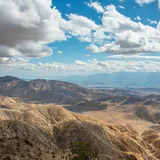
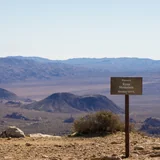
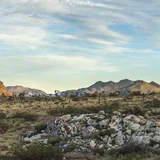
The park itself climbs well above the house. Keys View is at about 5,185 feet and the top of Ryan Mountain near 5,457 feet, both close to 2,000 feet higher than Yucca Valley, and the air up there is colder. The park service warns that its weather varies from place to place within the park, can include gale-force winds, heavy rain and snow, and can change quickly, so check the forecast for the part of the park you're heading to.
Clocks back and early sunsets
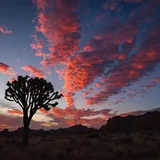
Daylight saving time ends at 2 am on the first Sunday of November, which is November 1 in 2026. The evening before, the sun sets in Yucca Valley around 5:55 pm; the next day it sets around 4:54 pm, and by November 30 it's gone at about 4:38 pm. Sunrise moves from about 6:04 am on the 1st to about 6:31 am at the end of the month, and the day shrinks from about 10 hours 50 minutes to about 10 hours 7 minutes.
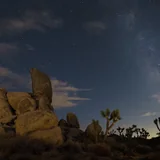
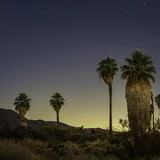
Those short afternoons shape a park day more than the cold does. A hike that starts at 2 pm has less than three hours of light, so put the longer walks in the morning. The upside comes after dark: full darkness arrives a little under an hour and a half after sunset, around 6:20 pm on November 1 and 6:05 pm on the 30th, so a long night of stars can start before dinner.
Park visits climb
November is where the busy season shows up in the numbers. The National Park Service counted 313,688 recreation visits in November 2023, 301,653 in November 2024 and 295,800 in November 2025, roughly 10,000 a day. November 2024 drew about 42 percent more visits than the October before it, and in 2024 only March, April and December were busier.
Veterans Day, November 11, is on the park's 2026 fee-free list, a Wednesday that year, and the park says the free days apply to U.S. citizens and residents. The park resets its free days annually, so confirm them on its fees page. On other days the seven-day vehicle pass is around $30, and the Joshua Tree annual pass is around $55, worth a look if you'll be back within the year.
Thanksgiving week
Thanksgiving falls on November 26 in 2026. Holidays are among the park's busiest times by its own account. For camping, it says reservations are highly recommended on a holiday and its first-come sites are highly competitive on holidays and most weekends. Most of its roughly 500 campsites are reservable on Recreation.gov up to six months ahead, so a Thanksgiving site is worth booking around late May. Our camping guide compares each campground.
For day visits, think in terms of which days and which corner. In at least one past holiday season the park suggested coming Monday through Thursday instead of on the weekend. Twentynine Palms and the Interstate 10 side both give quieter ways in than the West Entrance. The south end around Cottonwood Spring has its own visitor center with drinking water and two longer hikes, Mastodon Peak and Lost Palms Oasis, covered in our guide to Cottonwood Spring and Mastodon Peak. On the holiday itself, consider a slow morning at the house and a short afternoon drive instead of queuing for parking.
Longer hikes are back
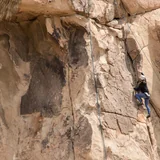
With afternoons in the 60s and low 70s, the hikes the park advises against in summer are reasonable again. The limit now is daylight. A few that fit a November day, with distances from the park's trail table:
- Ryan Mountain. About 3 miles round trip and roughly 1,050 feet of climbing to a summit near 5,457 feet, one of the park's widest viewpoints. It's steep and open, so start down with time to spare. See our Ryan Mountain guide.
- Lost Horse Mine. A 4-mile out-and-back to a well-preserved stamp mill with about 550 feet of climbing, or a 6.8-mile loop with about 900 feet. Its parking lot is one of those that can close when full on busy days.
- Mastodon Peak. A loop of about 3 miles from Cottonwood Spring with roughly 375 feet of gain, past the Mastodon Mine to a summit with views toward the Salton Sea.
- Lost Palms Oasis. About 7.5 miles round trip from Cottonwood Spring to the park's largest palm oasis, with roughly 500 feet of gain. On a November day it takes most of the light you have.
For something gentler, the Cap Rock Nature Trail is an easy loop of about 0.4 mile with roughly 20 feet of climbing.
The animals change with the weather too. Desert tortoises hibernate through the winter, and the park's reptiles generally shelter from the cold, so you'll see fewer lizards on the rocks than in September. Birds take up the slack. More than 250 species have been recorded in the park, and the sparse desert plants make them easier to spot than in most parks. Cactus wrens, Gambel's quail, red-tailed hawks and phainopepla are all listed as common year-round residents, and a roadrunner, listed as uncommon, is a good find.
The November sky
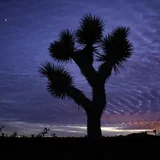
Three meteor showers peak in November, and in 2026 none of those peaks falls near a full moon. By the American Meteor Society's 2026 calendar:
- Southern Taurids. Active September 20 to November 20, with the fireball-rich component peaking on the night of November 4 to 5, under a 25 percent waning crescent moon.
- Northern Taurids. Active October 20 to December 10, peaking on the night of November 11 to 12 with only a 4 percent waxing crescent moon. The society notes that when the two Taurid branches run together in late October and early November, fireball activity sometimes rises.
- Leonids. Active November 6 to 30, peaking on the night of November 16 to 17 with a 39 percent crescent moon. The Leonids produced meteor storms in 1833, 1866, 1966, 1999, 2001 and 2002, but the society doesn't expect Earth to meet a dense cloud of their debris again until 2099. When the parent comet returns in 2031, the society says there may be no storm but several good displays above 100 meteors an hour.
The Northern Taurid and Leonid peaks come under waxing crescent moons that set in the evening, and the society's advice is to watch most showers in the hours after midnight, so watchers in 2026 get a dark sky for the hours that count. You don't need binoculars or a telescope; a reclining chair and a wide view of the sky work better.
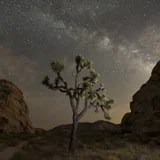
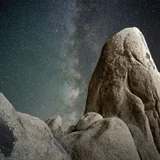
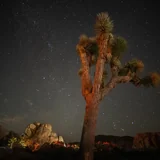
The US Naval Observatory puts the 2026 new moon late on November 8 and the full moon on the morning of November 24. In 2027 the full moon is on the evening of November 13 and the new moon on the evening of November 27, which puts the darkest stretch over Thanksgiving week that year. The Milky Way's bright core is essentially out of the night sky from about late November to early February, so November nights belong to the autumn constellations and the first of the winter ones. Our post on the night sky over Joshua Tree goes further.
Around the region
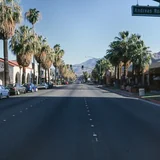
Palm Springs is about 50 minutes from the house, and November is a full month there. Greater Palm Springs Pride holds its 40th edition on November 6 to 8, 2026, with a festival across downtown and the Arenas District and a parade of more than 200 entries down Palm Canyon Drive at 10 am on the Sunday. In Palm Desert, about 44 miles from Yucca Valley, The Living Desert zoo and gardens starts its WildLights holiday evenings in late November; its 33rd season, in 2025, ran on select evenings from November 25 to December 30, so check the zoo's site for the current year's dates. If February's Modernism Week is on your list, tickets for the 2027 edition (February 11 to 21) were set to go on sale on November 1, 2026.
Packing for November
- A proper jacket. Lows average about 41°F in Yucca Valley and run colder at Keys View and the other high points.
- Hat and gloves for after dark. Watching a meteor shower means sitting still for an hour or more.
- Hiking shoes and a headlamp. With sunset before 5 pm, a long hike can easily finish in the dark.
- Sunglasses and sunscreen. The air is cool, but the desert sun is still bright.
- A swimsuit. For the hot tub.
- Thanksgiving supplies. Do the big shop in Yucca Valley before the holiday week; our guide to groceries and supplies in Yucca Valley lists where to go.
At the house in November
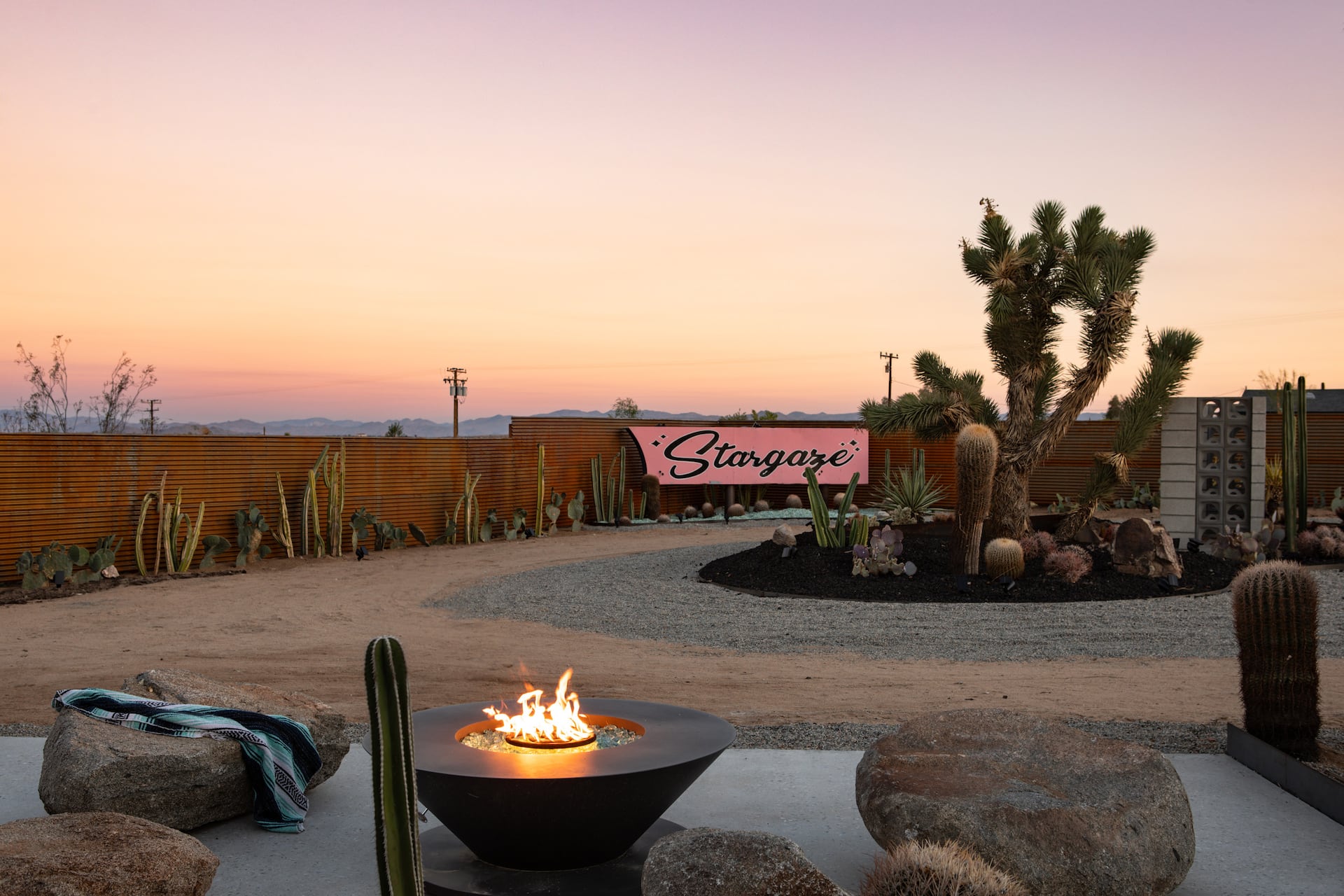
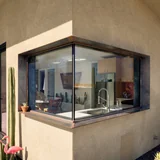
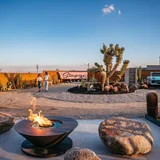
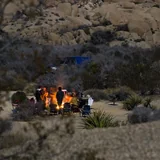
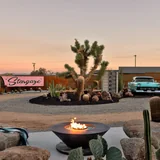
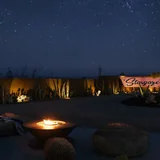
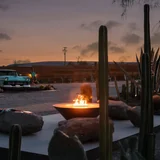
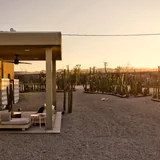
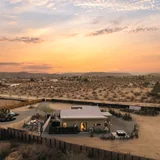
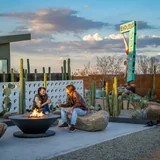
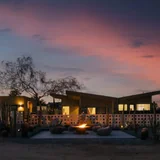
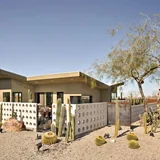
November evenings are long, and the house is set up for them. The private hot tub stays open through the cold months; the gas fire pit, ringed by natural boulders, lights without any firewood; and indoors, a freestanding soaking tub faces a private courtyard through a wide window. Air conditioning and heating handle the swing from a mild afternoon to a cold night.
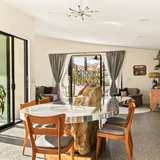
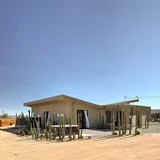
For Thanksgiving, cook your own meal in the full kitchen or on the outdoor BBQ grill, and eat it at the dining table built around a natural boulder. The house sleeps four, in two king bedrooms with one bathroom. Dogs are welcome (cats are not, because of a household allergy), and the fully fenced lot helps, since park trails are closed to dogs. In the park, leashed dogs can stay within 100 feet of roads, campgrounds and picnic areas, and walk the short paved path at Keys View.
Quick notes for November
- The clocks fall back at 2 am on November 1, 2026. Sunset jumps from about 5:55 pm to 4:54 pm overnight.
- Book holiday campsites as soon as the six-month window opens; first-come sites are hard to get on holiday weekends.
- Check the forecast for wind and cold at higher elevations before a long hike.
- Fill the tank and pack lunch in Yucca Valley, Joshua Tree or Twentynine Palms. The park has no gas stations, shops or restaurants.
- Veterans Day was on the 2026 fee-free list for U.S. citizens and residents; check the current year's list.
- Don't count on a phone signal inside the park. Save offline maps first.
When you've picked your weekend, check November dates. For the holiday month that follows, read Joshua Tree in December.
Keep exploring
Joshua Tree in January
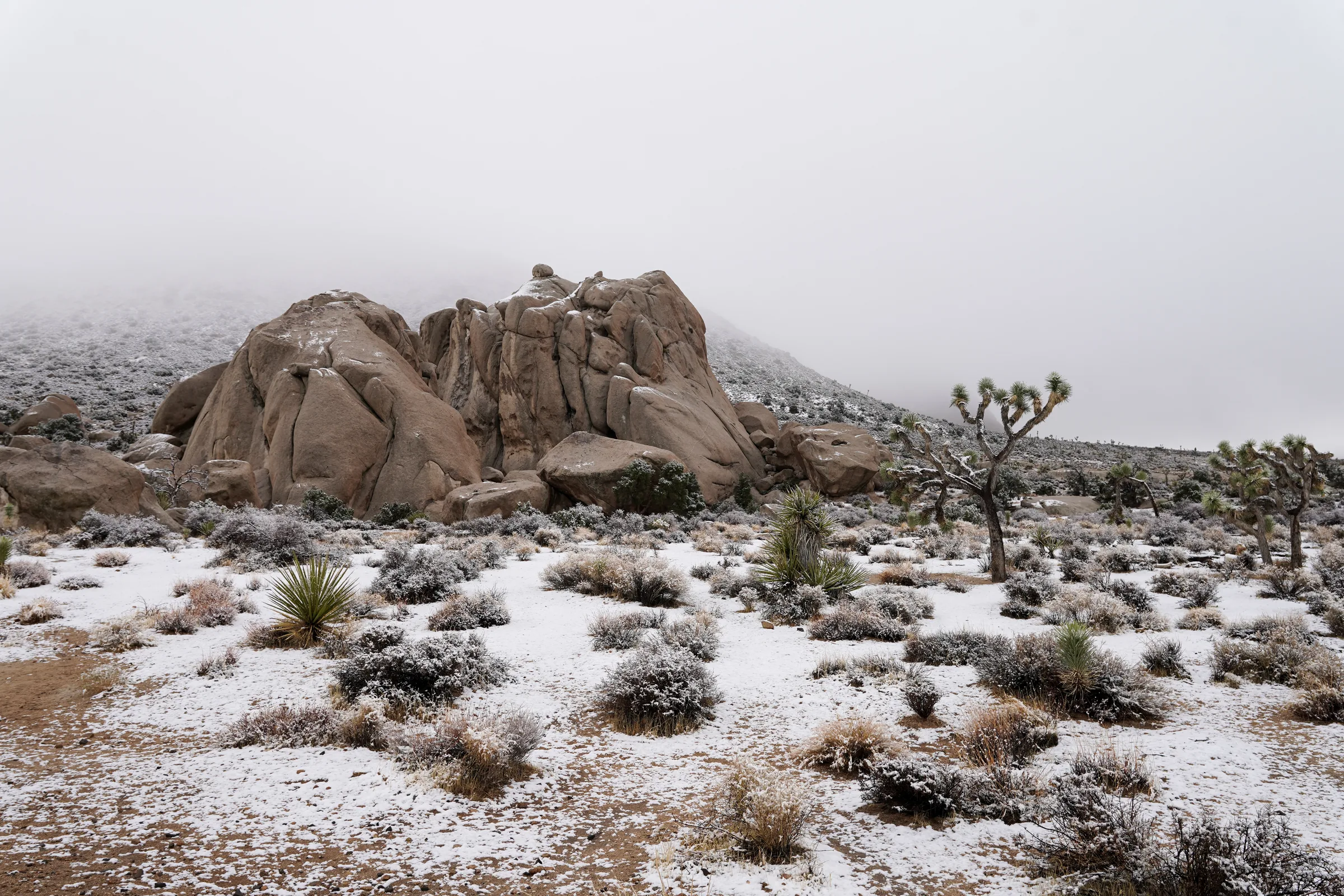
Joshua Tree in January: NOAA weather normals for Yucca Valley, short days, snow and road closures, crowd numbers, the Quadrantids and Palm Springs events.
Read →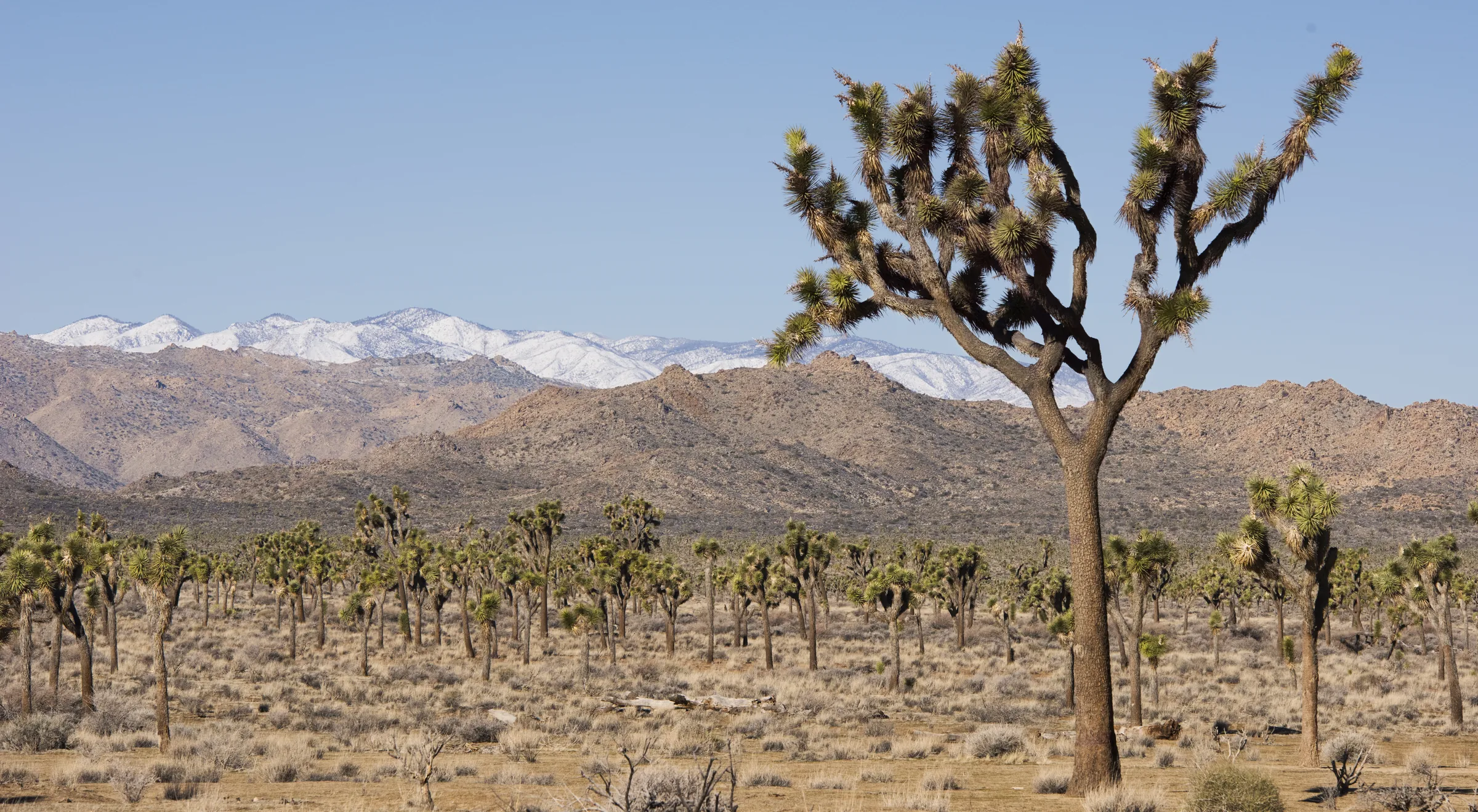
Joshua Tree in February
Joshua Tree in February: Yucca Valley weather normals, longer days, the start of spring crowds, Joshua tree blooms, Modernism Week and Mars and Jupiter in 2027.
Read →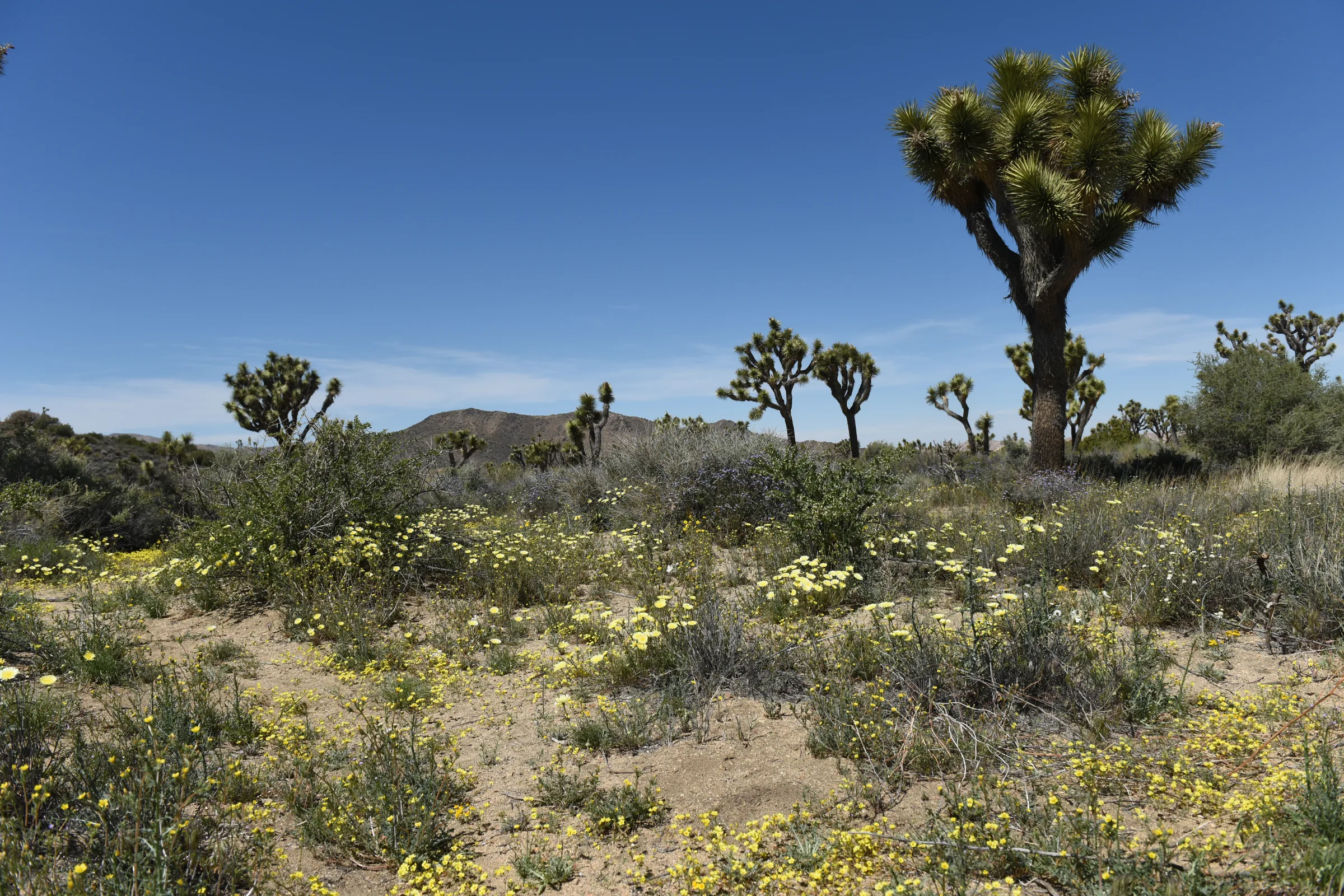
Joshua Tree in March
Joshua Tree in March: the park's busiest month, NOAA weather normals, the clock change, mid-elevation wildflowers, spring wind, the night sky and local events.
Read →