














Joshua Tree & nature
Arch Rock and White Tank
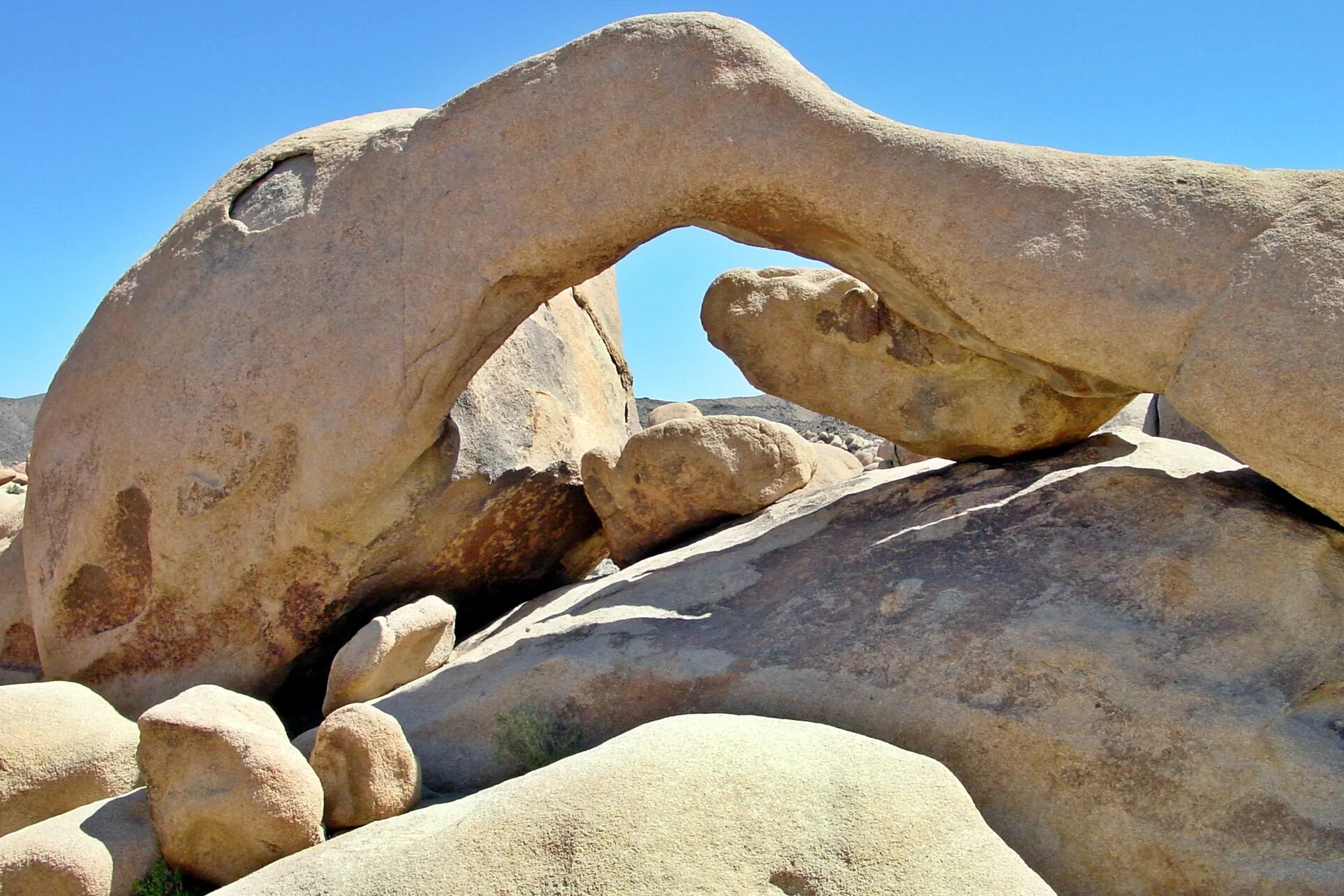
Arch Rock is a natural granite arch on one of the park's easy short walks, in the boulder country beside White Tank Campground off Pinto Basin Road. The trail is a lollipop loop of about 1.4 miles with roughly 100 feet of climbing, and the arch stands partway around the loop. From the house it's about an hour's drive, and it pairs well with Skull Rock and the Cholla Cactus Garden.
The arch
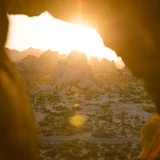
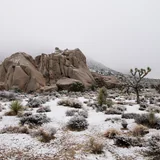
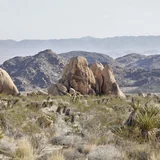
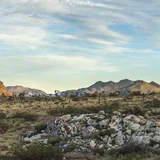
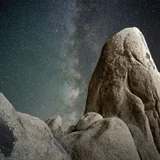
The arch is a span of pale granite set in a jumble of boulders, and the park calls it a popular photography spot. Wayside signs along the loop explain the geology. The park's geology guide describes how this granite formed: it cooled from molten rock miles underground, cracked along joints into roughly cube-shaped blocks, and was slowly rounded by water seeping through those cracks, "sort of like ice cubes melting," as the park's tour booklet puts it. Erosion later stripped the softer material away and left the boulders standing in the open.
Look, take your photos, and leave the rock as you found it. The park asks visitors to leave rocks, plants and artifacts where they are.
The trail
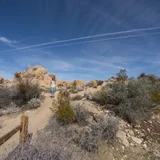
Day hikers start at the Twin Tanks parking area and backcountry board, on the west side of Pinto Basin Road about a mile south of Belle Campground. From the lot the trail runs east for about 0.6 miles, then becomes a short loop of about 0.2 miles, and the arch is roughly 0.1 miles into the loop. The park's hiking table lists the full walk at 1.4 miles with about 100 feet of elevation change and about an hour on your feet, and another park page allows 45 to 90 minutes. The park suggests walking the loop counterclockwise, which makes the arch easier to spot.
The ground is a mix of sand, including some deep sand, and rock. There is no shade and no cell service, and the park says the trail is not accessible for wheelchairs. The trailhead has parking, a restroom and a hiker register. On the way out, the trail passes White Tank Campground, and the park asks hikers to respect the campground's quiet hours, which run from 10 pm to 8 am.
The Twin Tanks lot is also a trailhead for the California Riding and Hiking Trail, which the park lists for longer hikes and wilderness backpacking. Backpacking in the park requires a permit.
Heart Rock
You may have seen photos of Heart Rock, a heart-shaped granite boulder near the arch. The park's trailhead page mentions a short detour to it. Trail guides from outside the park service put the detour at roughly 0.3 miles, for a total of about 1.7 miles from Twin Tanks. If you go looking for it, stay on established paths, because it's easy to get turned around among the boulders. If you can't find an obvious path, the arch loop on its own is a fine short outing.
White Tank Campground
White Tank is a small campground: 15 sites at about 3,800 feet, with pit toilets and tables and no water. The park's campground table lists it as first-come, first-served at about $25 a night when we checked, with RVs limited to 25 feet. The park also says White Tank closes temporarily during the summer, so check its campground page before counting on a site.
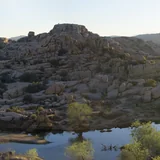
In recent years (trail guides date the change to late 2019) the arch trail for day visitors moved to Twin Tanks, and day-use parking at White Tank is no longer allowed. Campers can still walk to the arch from their sites. In this desert, a "tank" is a natural pool where rainwater collects after storms, and the park's geology tour notes that cattlemen dammed some of these pools in the early 1900s to water their herds. Our guide to camping in Joshua Tree covers how the park's campgrounds compare.
When to go
The park recommends this walk in winter, spring and fall. In summer, start before 10 am and carry plenty of water, since there is no shade at all. On busy days the park suggests arriving early at Twin Tanks to beat the crowds. Wear closed-toe shoes and watch for cactus.
Its short length and easy rating make it a reasonable choice for families. Our notes on Joshua Tree with kids cover water, sun and pacing for younger hikers.
Getting there and nearby stops
From the house, one good route is Highway 62 east to Twentynine Palms and in through the North Entrance. Twin Tanks is about 6.8 miles past the entrance, a couple of miles down Pinto Basin Road. Going in through the West Entrance in Joshua Tree takes about the same time. Either way, allow roughly an hour each way, and more on busy weekends. There's no gas or water for sale in the park, so fill up first.
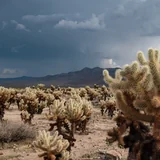
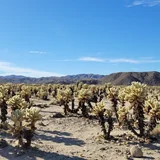
Arch Rock is about five miles by road from Skull Rock and Jumbo Rocks, so the two make an easy morning. Continue south on Pinto Basin Road and you reach the Cholla Cactus Garden, and much farther on, Cottonwood Spring near the south entrance.
Know before you go
- Dogs. Dogs are not allowed on the Arch Rock Trail or any other park trail, even if carried. They may be within 100 feet of roads, parking areas and campgrounds on a leash six feet or shorter. See visiting Joshua Tree with a dog for ideas.
- Parking. Day visitors park at Twin Tanks on Pinto Basin Road, not in White Tank Campground.
- Water. None at the trailhead or the campground. Bring plenty, even for this short walk.
- Shade and signal. No shade and no cell service. Load an offline map before you go.
- Entrance fee. A private vehicle pass was $30 for seven days when we checked. Confirm with the park.
- Campground status. White Tank's fee, booking system and summer closure can change. Check the park's campground page.
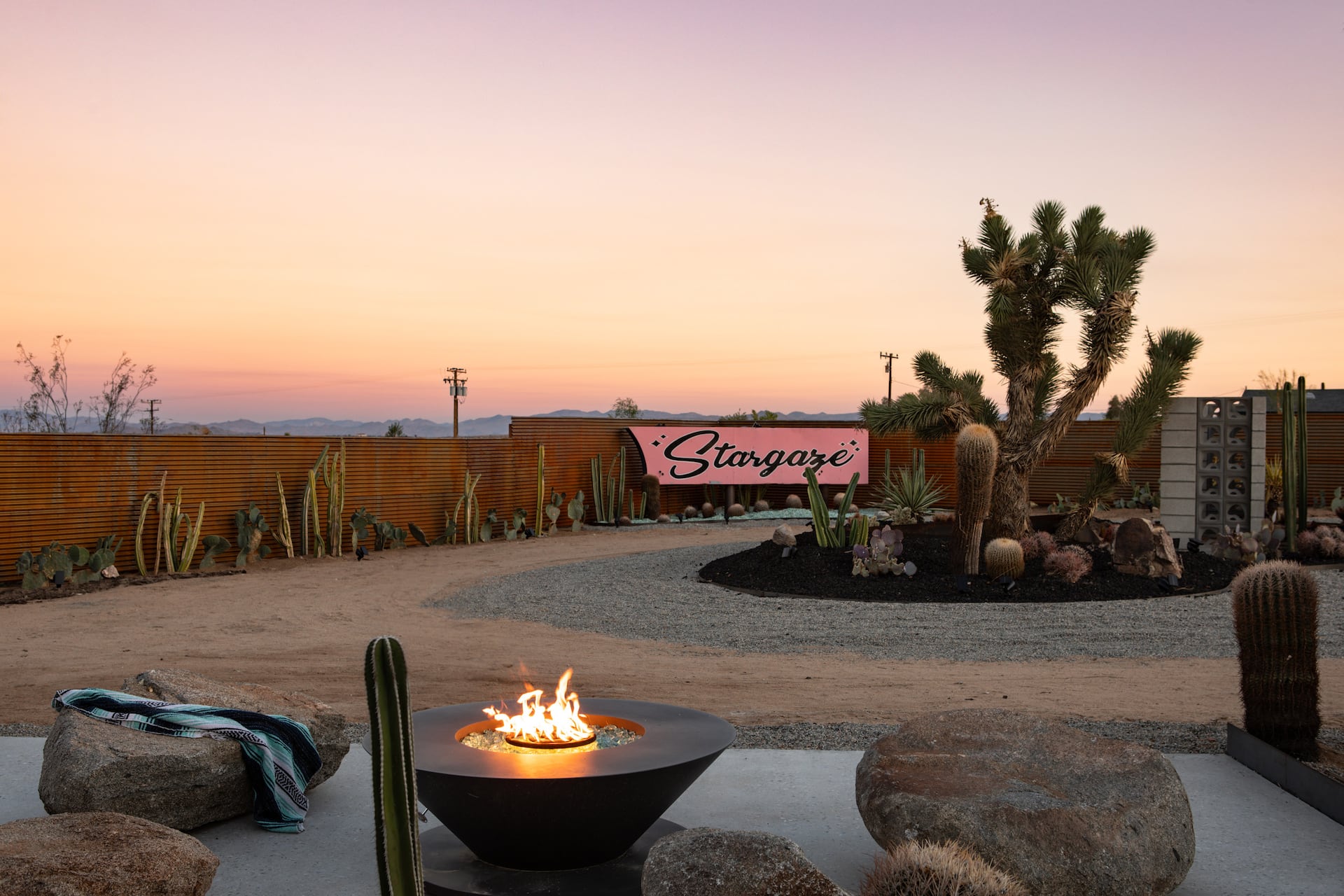
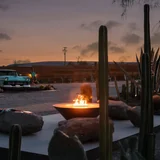
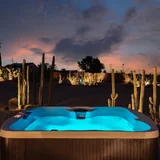
Back at the house, the hot tub is open all year and the gas fire pit is ready for the evening; read more about evenings by the fire and under the stars, then check dates.
Keep exploring
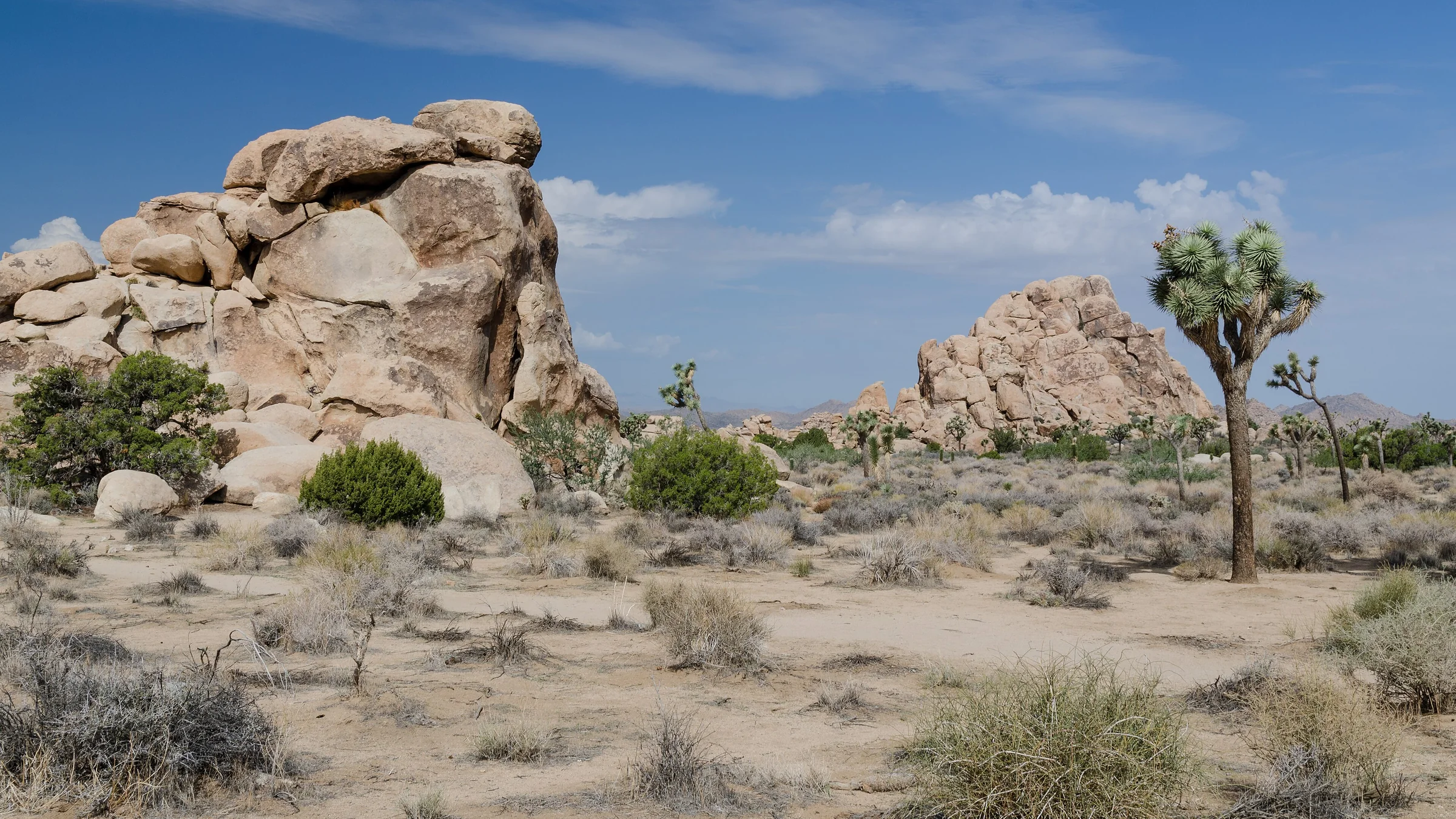
The Best Hikes in Joshua Tree National Park
The best hikes in Joshua Tree, shortest to longest — Hidden Valley, Barker Dam, Ryan Mountain, 49 Palms Oasis and Lost Horse Mine, about 25 minutes from the house.
Read →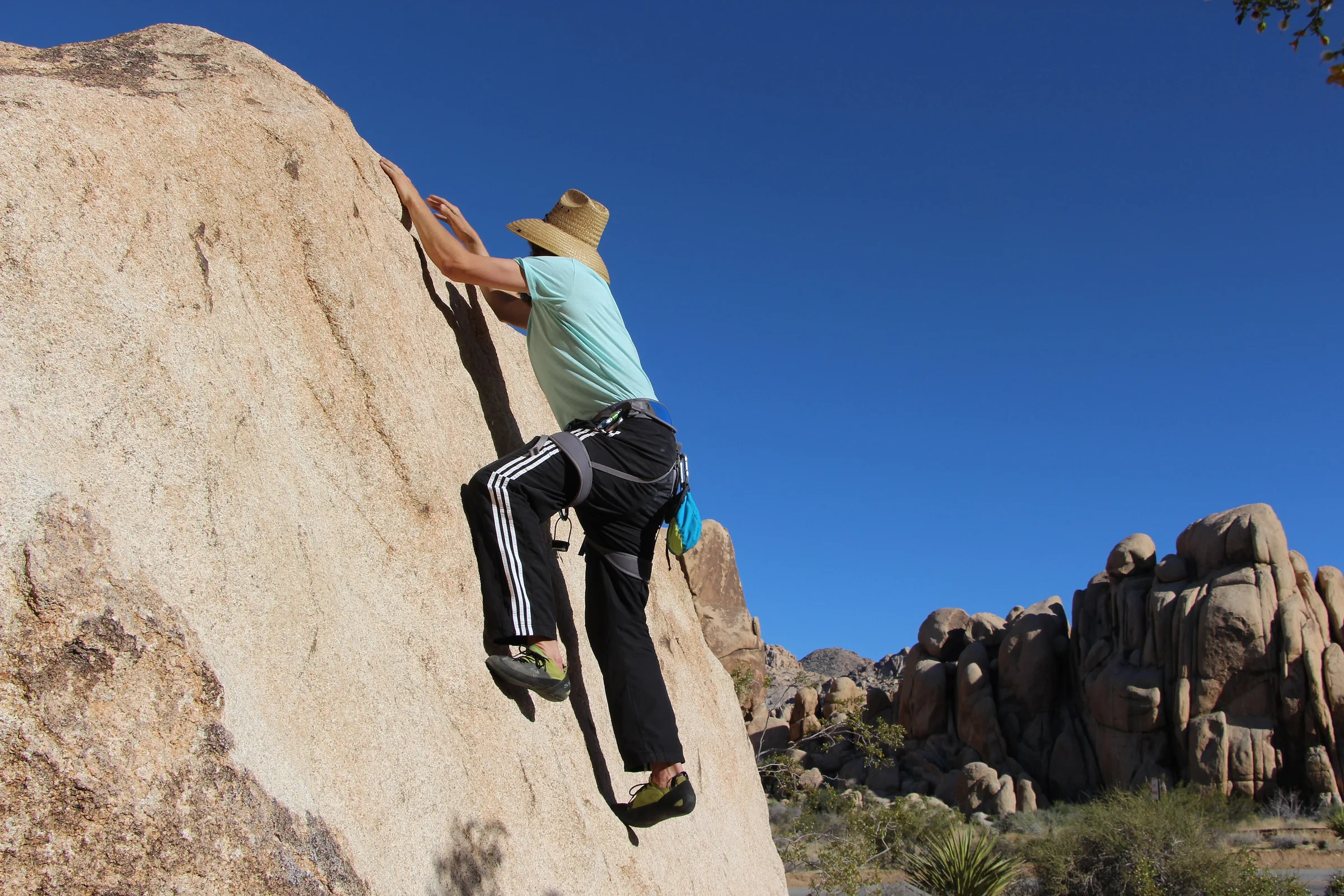
Rock Climbing & Bouldering in Joshua Tree
Joshua Tree is a world-class rock-climbing and bouldering destination. Where to start, when to go, how to climb it responsibly, and how to hire a guide if you're new.
Read →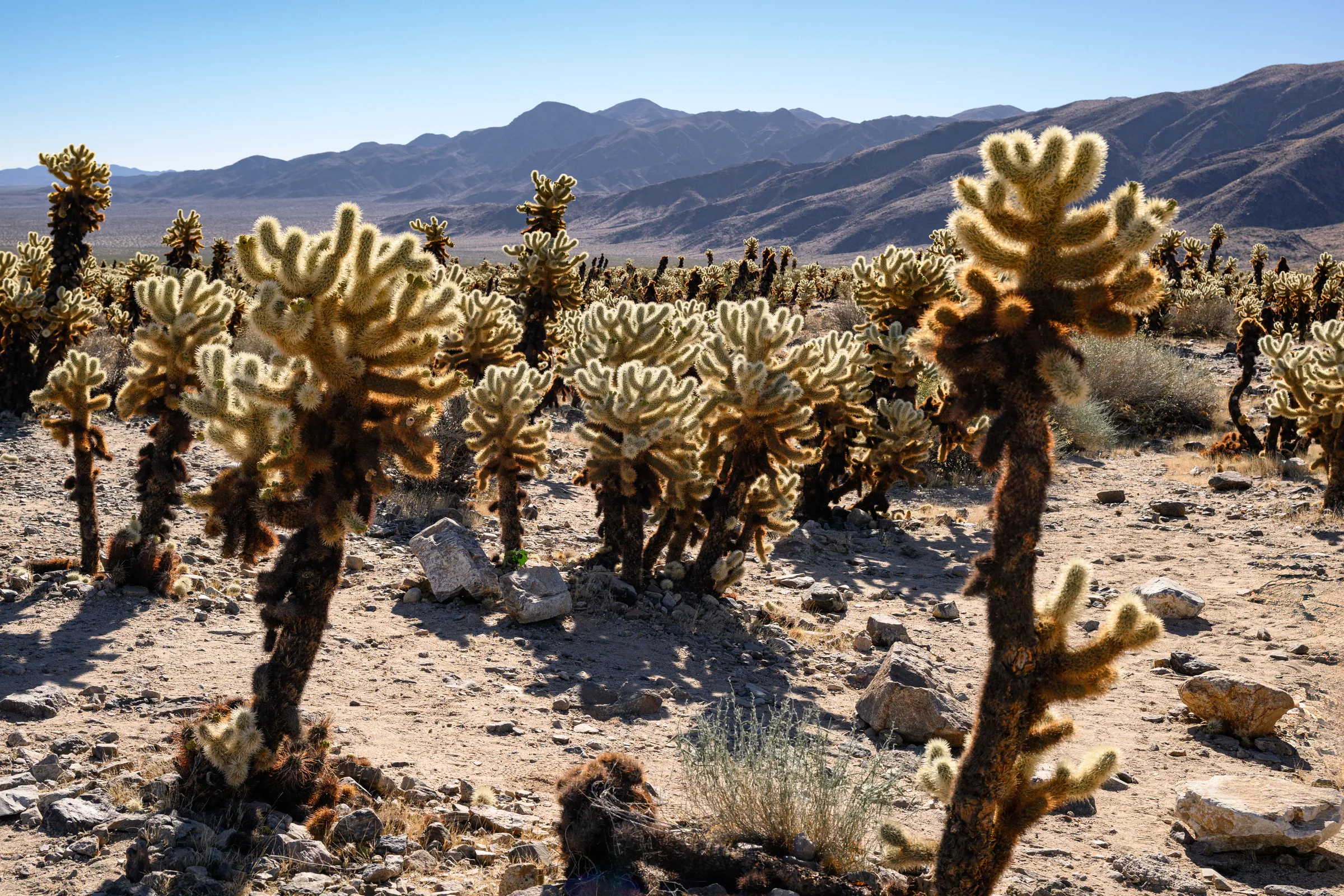
The Cholla Cactus Garden & the Park's Quiet South End
The Cholla Cactus Garden and Joshua Tree's quiet southern end — Cottonwood Spring, Lost Palms Oasis and the ocotillo patch, and how to do the drive from Yucca Valley.
Read →