Seasons
Summer in the High Desert
Summer is the season most people skip in Joshua Tree, which is a good part of the reason to come. The days are hot, and there's no pretending otherwise. But with an early start, the stock-tank pool and the hot tub, and daylight that runs until close to nine near midsummer, a high-desert summer stay has a shape all its own. Plan around the heat and it becomes something you can work with.
How Hot It Gets
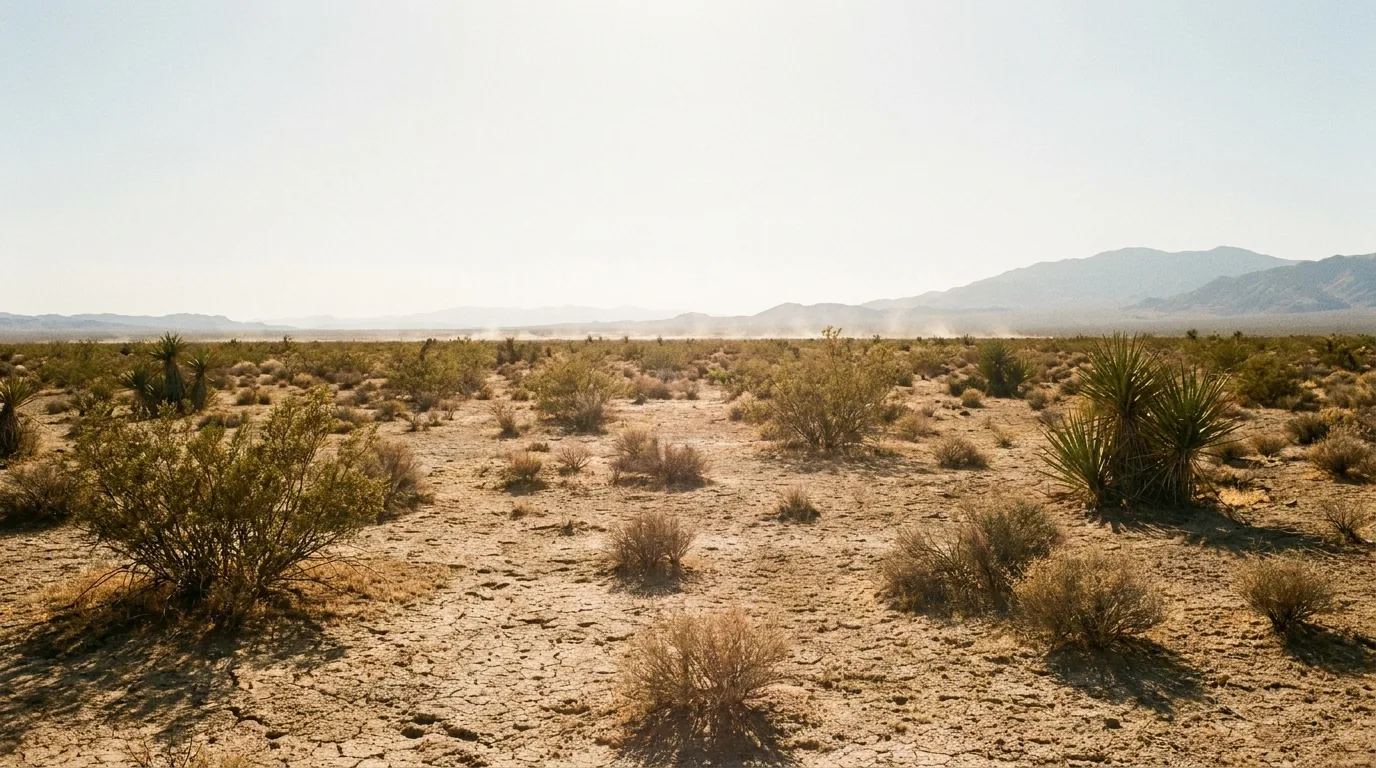
Yucca Valley sits at roughly 3,300 feet, high enough that it runs a little cooler than Palm Springs down in the low desert about fifty minutes away. That elevation takes the edge off, but summer is still summer. From June through August, daytime highs commonly reach the mid-90s and often push past 100°F; July usually averages a high near 96°F. Those are typical numbers, not a promise — a single day can run hotter, and the area rarely tops about 101°F, though it does get there. Pull up a current forecast for your exact dates rather than trusting an average, because desert weather moves.
The part first-timers forget is the nights. Summer evenings stay warm here, often in the 60s and 70s, and that warmth is what makes a late swim or a long sit outside comfortable. Winter nights drop to freezing; summer nights don't. It's the trade-off for the midday heat, and it's the reason so much of a good summer day here happens after dark.
Inside the park, expect it hotter than in town, and hotter still in the lower southern sections. Joshua Tree covers parts of two deserts: the higher, cooler Mojave across the west and north, and the lower, hotter Colorado in the east and south. Drive down toward the Cholla Cactus Garden and Cottonwood in the afternoon and you're on the hottest ground in the park. Aim higher, toward Keys View and the western Mojave country, and it eases by a few degrees. One upside of all this heat: summer is the least-crowded season of the year, because the temperatures keep the spring-break crowds away.
The Rhythm of a Summer Day
The desert keeps a daily schedule in summer, and the animals hold to it more faithfully than the visitors do. Most small desert mammals — the kit fox, the black-tailed jackrabbit, the desert cottontail — are active at dawn, at dusk, and through the night, and they wait out the hot middle of the day underground or in shade. Coyotes and bobcats work those same cool edges of the day. Reptiles, being cold-blooded, are at their most active in spring and fall and take cover from the worst midday heat. Even the round-tailed ground squirrel, which is out in the daytime, goes dormant when the heat spikes, a summer counterpart to hibernation. The kangaroo rat goes further still: it is built to live without ever drinking, pulling the moisture it needs straight from the seeds it eats, and it passes the hot hours down a burrow. The desert iguana is the exception, one of the most heat-tolerant lizards on the continent, out on the open sand at midday when nearly everything else has gone to cover. There's a free lesson in that: do what they do.
In practice, a summer day here has three acts. Move at first light, while the air is still in the 70s, and get your hiking or exploring done early. Come back to the house through the hot late-morning and afternoon hours to swim, eat, nap, and stay in the shade. Then head back out as the sun drops for the long, mild evening. The house is built for that rhythm — a fully fenced lot, the pool and hot tub, shaded spots to sit, air conditioning for the peak of the day. If you're weighing when to come, the seasonal picture in our guide to when to visit the high desert lays out the trade-offs.
Early Mornings in the Park
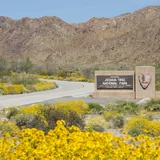
The west entrance is about a 25-minute drive from the house, and the park is open around the clock, every day of the year. In summer, that early arrival matters more than in any other season. Be at the gate not long after first light and you'll have cool air, low gold sun, and trails largely to yourself. The 7-day vehicle pass runs around $30 — check the current fee, since the park revises it from time to time — and, as of 2026, there's no timed-entry reservation needed to drive in. If you plan to come and go through the season, a Joshua Tree annual pass runs around $55; check the current prices before you buy, since the fee schedule changed for 2026. A handful of summer days are fee-free; the 2026 list included the Independence Day weekend in early July and the park service's birthday in late August, but that roster is reset every year, so look up the current one before counting on it.
Plenty of mornings are worth starting in town before the gate. Frontier Cafe on the western edge of Yucca Valley pours coffee made with local Joshua Tree Coffee Company beans, Crossroads Cafe in downtown Joshua Tree does a scratch breakfast near the west entrance, and JT Country Kitchen has served the village since 1977. Hours in the hi-desert shift with the season, so check before you count on a place being open.
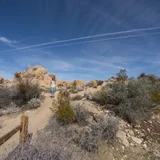
Keep the morning's walking short and easy so you're finished before the heat builds. A few that fit the bill:
- Hidden Valley. An easy one-mile loop with about 100 feet of climb, circling a rock-walled basin once rumored to have hidden cattle rustlers.
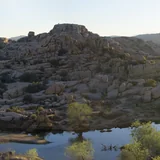
- Barker Dam. An easy loop of about 1.1 miles (some sources say closer to 1.3) with roughly 50 feet of gain, past a historic water tank and a petroglyph site.
- Cap Rock. A flat, easy nature loop of about 0.4 mile, named for the boulder perched on top of the formation.
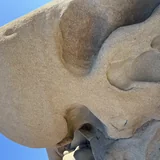
- Skull Rock. An easy loop of about 1.7 miles with roughly 160 feet of gain; the skull-shaped boulder itself sits right by the road near Jumbo Rocks, its two eye hollows worn into the granite by water pooling and weathering the rock over many thousands of years.
- Arch Rock. An easy lollipop of about 1.4 miles with roughly 100 feet of gain out to a natural granite arch; a much shorter spur reaches the arch from the White Tank campground if you want to trim it.
- Discovery Trail. A short, easy walk of about 0.7 mile with roughly 70 feet of gain, a good one for stiff legs or young kids.
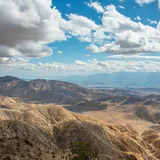
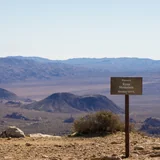
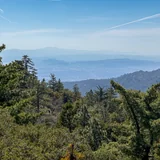
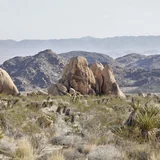
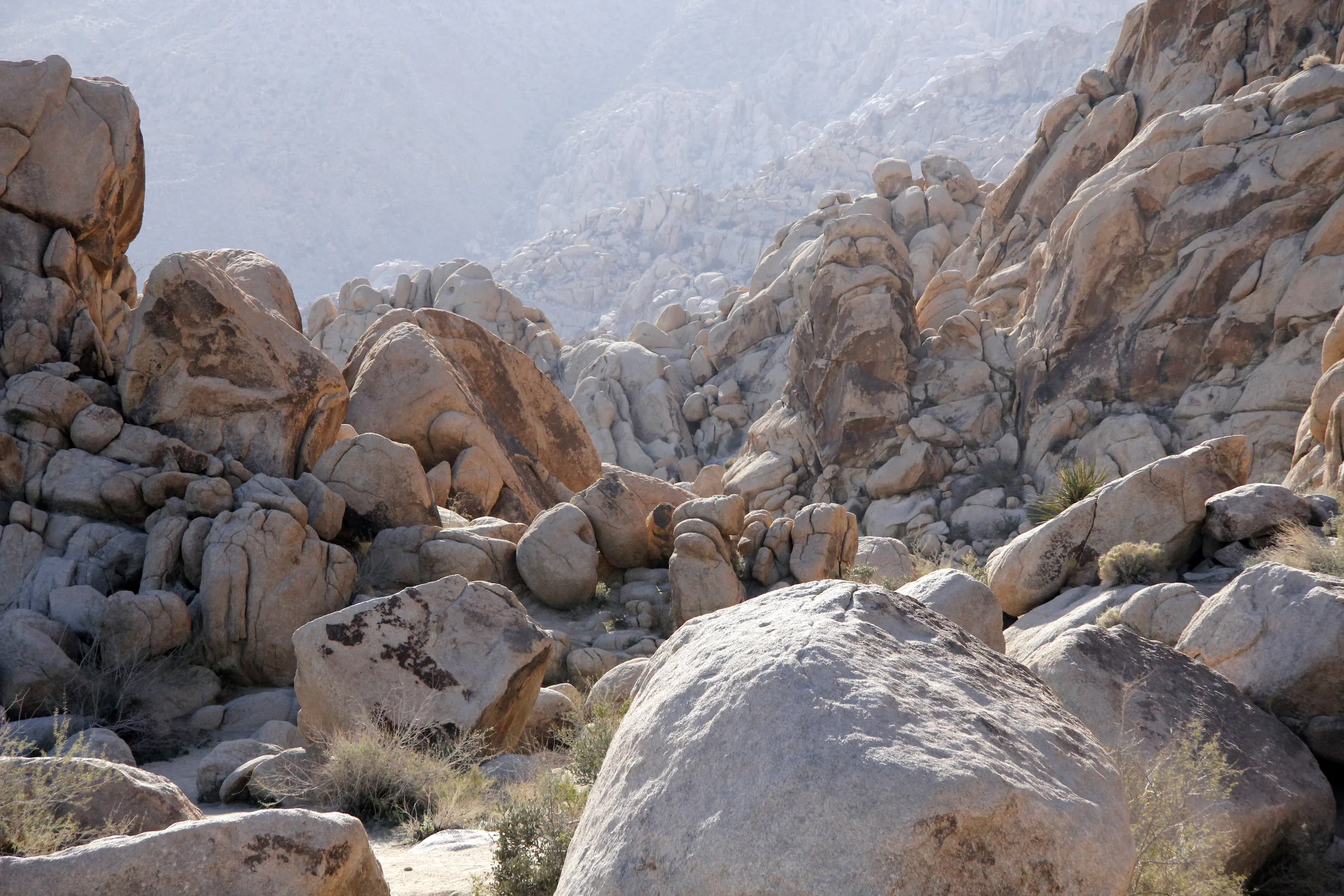
For a cooler option that skips the hiking altogether, drive up to Keys View, a paved overlook at about 5,185 feet with a short quarter-mile loop; on a clear morning it looks out over the Coachella Valley, the San Andreas Fault, the Salton Sea, and the San Jacinto and San Gorgonio peaks. The park's piled boulders are monzogranite, granite that cracked into blocks underground and had its corners rounded by groundwater before flash floods swept the softened rock away and left the stacks you see. Morning is also the best window for birds — the park has recorded over 250 species, and the sparse desert cover makes them easy to pick out. Watch for the cactus wren (the largest wren in North America, which nests down in the cholla), coveys of Gambel's quail, a red-tailed hawk riding the early thermals, and, with luck, a ground-running roadrunner. Whatever you do, carry water: plan on at least a gallon, about four liters, per person per day, because there's none to be had in the park's interior. And download your maps before you go; cell service inside the park is patchy and shouldn't be relied on. Our guide to the best hikes in Joshua Tree has more on matching a route to your fitness and the season.
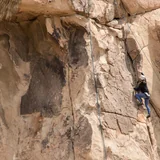
The cool of the morning is also the window for climbers. Joshua Tree is a well-known monzogranite climbing area, with more than 8,000 routes and over 2,000 boulder problems across its rock, run over cracks, slabs, and steep faces. If you'd rather scramble than rope up, the Hall of Horrors, a roadside cluster of formations between the Ryan and Sheep Pass campgrounds, is an easy place to get onto rock without committing to a rated route. Start early either way; the granite bakes fast once the sun is up. Our rock climbing guide covers where a first morning on the boulders makes sense.
Midday at the Pool
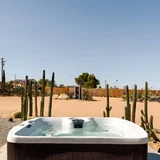
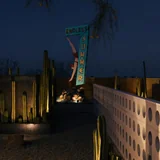
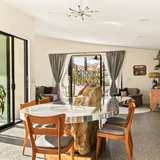
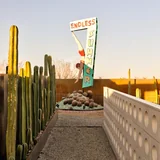
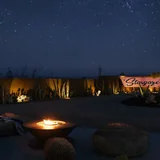
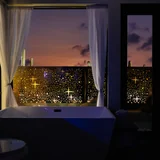
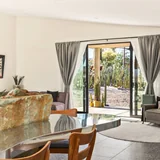
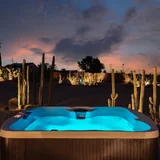
This is the hour the house earns its keep. The stock-tank pool sits under a vintage painted "Endless Summer" metal sign, which reads a little differently in the middle of July — but the water does the job. Cool off, climb out, dry in a few minutes in the desert air, get back in. A star-perforated steel privacy screen wraps the pool area, so the afternoon stays yours. When you want a change, there's a private hot tub, kept open all year; a warm soak sounds odd in summer heat, but it comes into its own after dark, and you can trade back and forth between the two. Indoors, a freestanding soaking tub sits by a wide window onto a private courtyard for the very hottest stretch of the afternoon, when even the pool wants shade.
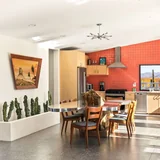
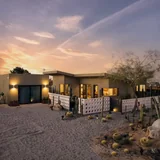
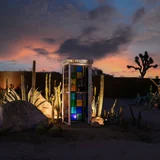
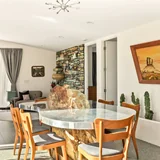
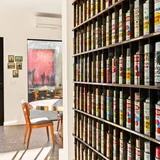
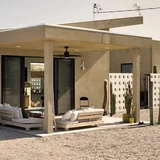
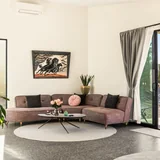
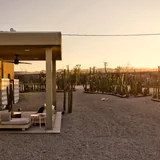
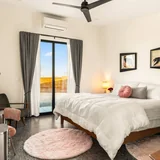
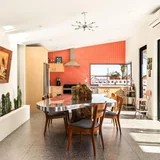
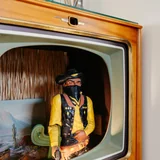
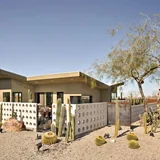
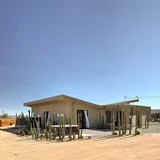
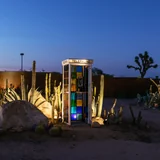
A couple of house rules matter most right here: no glass anywhere near the pool or hot tub, and quiet hours from 10 p.m. With a full kitchen and air conditioning, midday is also the time to make a cold lunch, wait out the peak, and let everyone slow down before the evening. The modern stucco house with its white breeze-block walls holds the cool well, and there's a stained-glass telephone booth and a dining table built around a natural boulder for the kids or the camera. One review called the place "photo-worthy spots everywhere," and the pool corner under that sign is one of them. You can see how it all fits together on the pool and hot tub page.
Summer Monsoon Storms
From mid-to-late summer, roughly July into September, the high desert can catch brief monsoon thunderstorms. They build quickly, sometimes drop hard rain over a small area, and can set off flash flooding — water races down dry washes that were bone-dry an hour before, with little warning. The rule is short and firm: never walk or park in a wash when storms are around, and stay on established roads, which the park requires in any case. These same storms can trigger a smaller, second bloom of desert plants a few weeks later, out of season with the spring show.
The reward is the sky. The hours before and after a monsoon cell can be dramatic — towering clouds, streaks of virga that never reach the ground, sometimes a rainbow over the Joshua trees. From the shade of the house you can watch a storm cross the basin from cover, which is the safest seat in the place. Because cell service is thin inside the park, check the forecast and radar before you drive in on an unsettled afternoon. For more on making a wet day work, see our take on a rainy day in the high desert.
The Long Summer Evenings
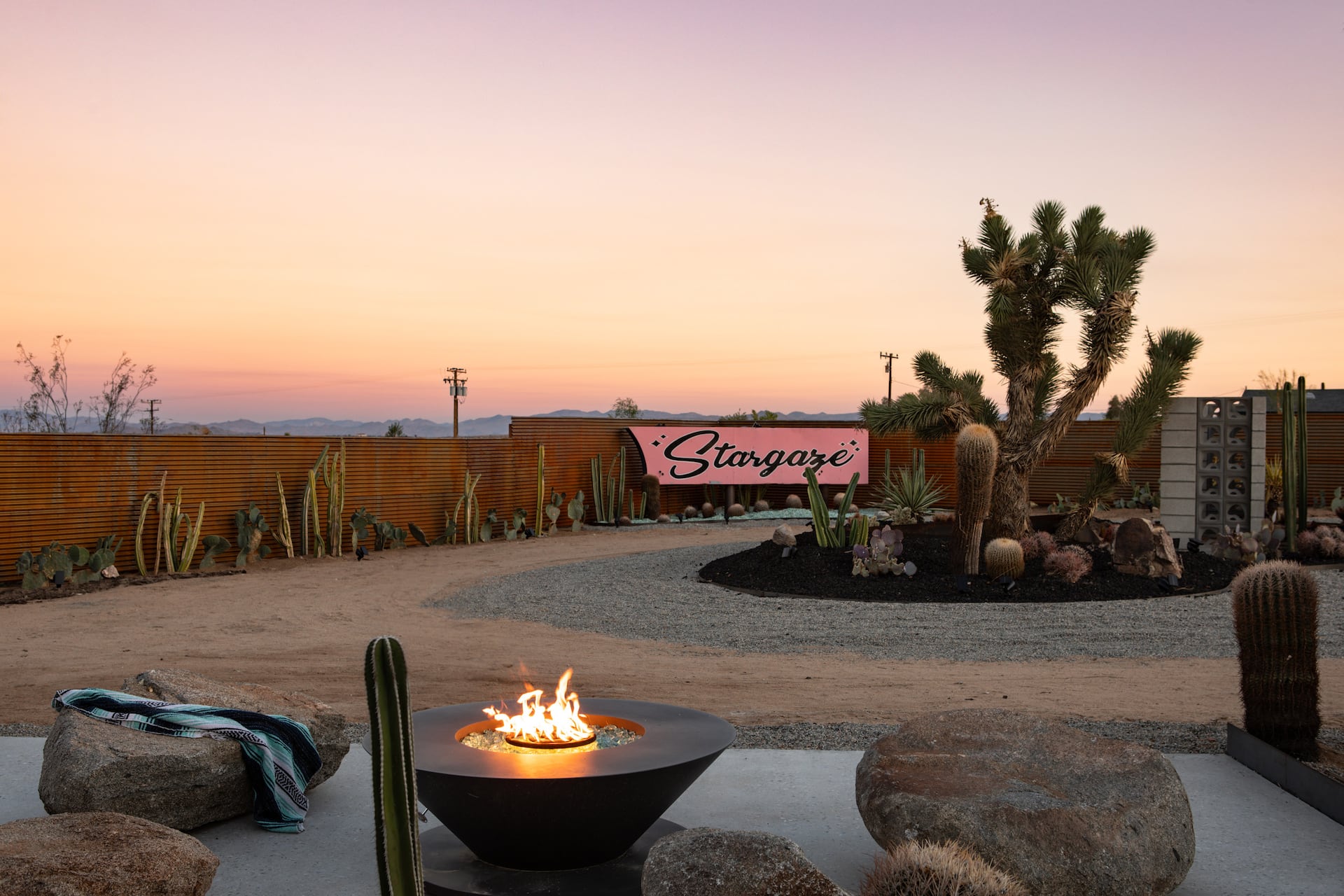
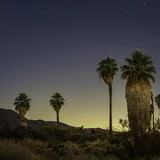
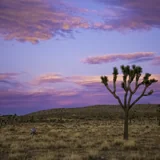
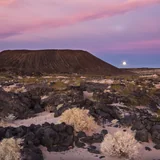
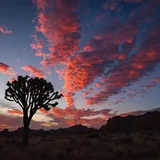
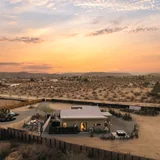
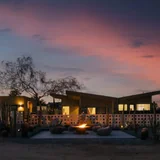
Near midsummer the light holds until close to nine, which gives you a long, generous evening after the heat lets go. Golden hour is the payoff for a well-managed midday. As the sun drops, the light across the cactus and the Joshua trees turns soft, and the sunsets run pink, gold, amber, and violet before the sky goes deep blue. Keys View is a fine high perch for it if you want a wide look over the valley; closer to home, the fenced lot around the house — planted with thousands of cacti, agave, and Joshua trees — puts on a quieter version of the same show.
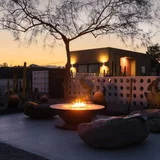
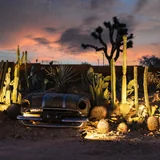
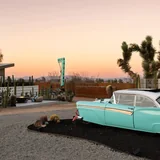
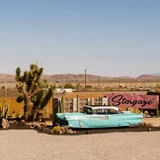
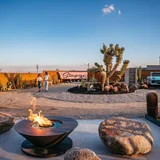
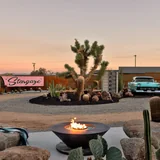
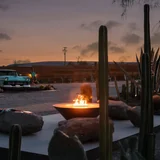
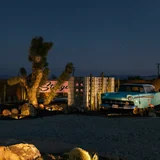
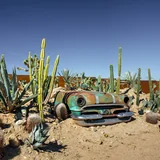
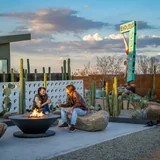
The house is set up to keep you outside once it cools. The gas fire pit, ringed by natural boulders, flips on without hauling wood, which is welcome in a region that keeps a wary eye on wildfire. The dining table is built around a natural boulder, so dinner outdoors has a table already in place, and there's a BBQ grill for the evening cook. When you finally run out of daylight, there's the car bed: a restored 1950s car, parked on the gravel, with a custom stargazing roof that can be pulled back to open it to the sky. On a warm summer night you can lie back in it and wait for the stars. The metalwork that gives the place its character — the car-to-bed conversion and the fire pit among it — was fabricated by Emerick's Ironworks. If a fire and a sky full of stars is the evening you're after, the fire and stars page shows the setup.
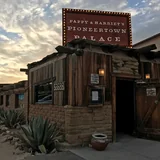
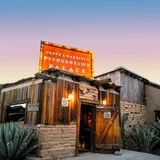
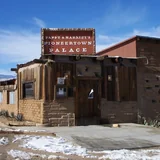
If you'd rather go out, the evening is when the area's small scene gets going. Pappy & Harriet's over in Pioneertown is a western barbecue spot and a well-known live-music stage. For a daytime meal instead, La Copine, out in the Flamingo Heights stretch, does a rotating New American lunch Thursday to Sunday, 11am to 4pm. Hours change, so check before you go. Closer to the house, the Tiny Pony Tavern in Yucca Valley does scratch food and keeps a dog-friendly backyard, and the Joshua Tree Saloon is a western-themed grill with burgers, a full bar, and weekend live music. Over in Twentynine Palms, Kitchen in the Desert turns out Caribbean plates, and the restaurant at the 29 Palms Inn, a property dating to 1928 at the Oasis of Mara, serves dinner poolside with frequent live music. Hours in the hi-desert are short and shift with the season, and several of these places close multiple days a week, so book or check each spot directly before you make the drive.
The Summer Milky Way
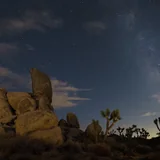
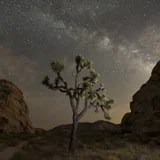
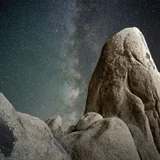
Summer is the season for the Milky Way, and it's the single best reason to be up late here. In deep winter the bright core drops out of the night sky altogether, which is what makes the summer view worth staying up for. The core rides low in the south through Scorpius, marked by the red star Antares, and through Sagittarius, whose "Teapot" shape points straight at the center of the galaxy. Directly overhead sits the Summer Triangle — Vega in Lyra, Deneb in Cygnus, and Altair in Aquila. The core stands highest in the south during the late-evening hours of summer; core season runs roughly from late spring into early autumn, so use a sky app or planner to see exactly where and when it will be up on your night.
The darkness that makes all this visible comes from the park's distance from big cities, its high-desert elevation, and dry, clear air, aided by local efforts to keep lights down. What glow remains sits low on the horizon as light domes from Los Angeles, the Coachella Valley, and Las Vegas, so the darkest sky is the one overhead and to the south. Any of the bright planets — Venus, Jupiter, Saturn, reddish Mars, low quick Mercury — can join the scene on a given night, but which are up changes month to month, so check a current sky guide for your dates.
Joshua Tree has been an International Dark Sky Park since 2017, at the Silver Tier level, and the park's darker interior reaches roughly Bortle Class 2 to 3 on the nine-step darkness scale — dark enough to show the structured band of the Milky Way, airglow, and even the faint cone of zodiacal light to the naked eye. How dark it looks depends on where you stand; the edges and the western entrances are brighter, so treat the Bortle figure as a rough guide. The warm summer nights are a gift for stargazing, because you can lie out for an hour without getting cold. Settle into the car bed, give your eyes twenty to thirty minutes to adjust, and use a dim red light so a glance at a phone doesn't undo it. If you want to photograph it, start with a wide, fast lens (around 14–24mm at f/2.8 or wider), a high ISO (somewhere around 1600–6400), and single exposures of roughly 15–25 seconds on a tripod; the "500 rule" — 500 divided by your focal length — gives a rough longest exposure before the stars begin to trail. Treat those as starting points and adjust to your gear and sky.
The park runs free ranger night-sky programs through the season, and hosts an annual Night Sky Festival in the fall, usually in October, with club telescopes and talks. It's ticketed and the dates change every year, so check the current schedule if you're timing a trip around it. For where to point the car and set up a chair, our stargazing notes and the dark-sky guide both help.
Staying Safe in the Heat
Heat is the one real hazard of a summer trip, and it's manageable if you respect it. Water comes first: carry at least a gallon, about four liters, per person per day, and more if you're hiking or the day is above 100°F. There is no water in the interior of the park, so fill up before you drive in; drinkable water is only at a few edge sites, like the Joshua Tree National Park Visitor Center in downtown Twentynine Palms, the Cottonwood Visitor Center, and the Black Rock Nature Center. There are no gas stations inside the park either, so top off the tank in Yucca Valley, Joshua Tree, or Twentynine Palms first.
The one rule worth over-planning: bring at least a gallon of water per person per day, fill every bottle before you pass the entrance, and don't count on cell service once you're inside.
Beyond water, the plan is the safeguard: hike early, rest through the middle of the day, wear a wide-brim hat and sunscreen, and keep drinking even when you don't feel thirsty. If anyone gets a headache, feels dizzy, or stops sweating, get them into shade and cool them down. Watch the ground, too. Sidewinder rattlesnakes are common in the sandy stretches and are most active at dusk and after dark in warm weather, so mind where you put your feet and hands near rocks. Tarantulas look alarming but are timid and won't bite unless badly provoked, and the big desert hairy scorpion is nocturnal with venom that's mild to people — a UV flashlight will make it glow if you're curious after dark. Give every animal room and handle nothing; the desert tortoise in particular is a threatened species, and it's illegal to touch one. A little more on all of this lives in our note on desert safety and leave-no-trace.
What Summer Is Not Good For
Being straight about the season saves you a bad afternoon. Summer is the wrong time for the park's long, exposed climbs in the heat of the day. Ryan Mountain (three miles round trip and about 1,050 feet up to a 5,457-foot summit), Lost Palms Oasis (around 7.5 miles), Willow Hole (about 7.2 miles), and the Lost Horse Mine routes are all better saved for the cooler months — or, if you can't wait, started at first light and finished by mid-morning, never tackled at noon. The Fortynine Palms Oasis trail is not an option in summer at all, because the park closes it every year from June 1 through September 30.
It's also not the season for wildflowers. The park's bloom runs in spring — roughly February into May or June, peaking in March and April — and only in years with the right winter rain, so it's never a sure thing even then. Joshua trees themselves flower between mid-February and April in good years, and the cholla and ocotillo peak from March into May. A summer monsoon can spark a small, off-season bloom, but if flowers are the point of the trip, come in spring. Wildlife-watching is thinner in the heat, as well: reptiles shelter at midday, and the desert tortoise estivates underground through the hottest weeks, so it's the least likely time of year to see one out. The flip side of all these caveats is the quiet. Summer is the least busy season in the park precisely because it's hot, so if having the trails and the boulders mostly to yourself sounds good, this is the season that delivers it.
Desert Plants in Summer
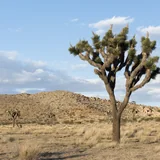
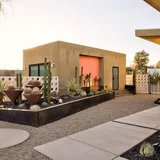
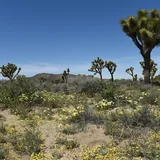
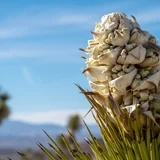
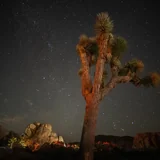
The bloom may be over by summer, but the plants that give the high desert its shape stand out year-round, and the fenced lot around the house is planted with thousands of them — cacti, agave, and Joshua trees you can walk among in the cool of the morning or evening. The Joshua tree itself is worth knowing. Despite the name, it is a yucca, a giant member of the agave family, with no growth rings and no true wood, and it grows slowly, on the order of half an inch to three inches a year. Estimates put the average lifespan around 150 years, with some trees thought to pass 300, and mature ones can stand over 40 feet tall. It depends on a single partner, the yucca moth, which packs pollen onto the flowers and lays its eggs inside them, so neither the moth nor the tree can reproduce without the other. A warming climate and more frequent wildfire both threaten these slow-growing yuccas, which is one more reason the region keeps such a wary eye on wildfire.
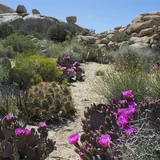
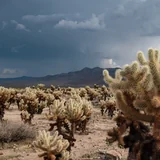
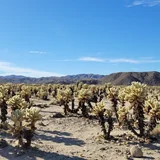
Head south and the plants change with the ground. The Cholla Cactus Garden in the Pinto Basin is a dense stand of teddybear cholla; the cuddly look is a trap, because the stem segments detach at the lightest touch and ride off on barbed spines, which is why it also goes by "jumping cholla" and why the park's sign tells you not to pet it. The ocotillo, most common in the hotter southern reaches, throws out small green leaves within days of rain and drops them again in drought, many times over through the year. And the low, evenly spaced creosote bush that covers so much of the desert floor can grow clonally into slowly widening rings that are among the oldest living things on Earth. The garden around the house gives you a closer, safer look at some of the same plants; there's more on it on the cactus garden page.
Packing for a Desert Summer
Pack for heat, sun, and warm nights, and you'll be set. The short list:
- Water, and then more water. Plan on a gallon (about four liters) per person per day, and keep a filled cooler in the car so you're never rationing.
- Sun cover. A wide-brim hat, high-SPF sunscreen, sunglasses, and a light long-sleeve layer do more against the sun than you'd think.
- Real shoes. Closed, sturdy footwear for hot, rocky, sometimes sandy trails.
- Electrolytes. Salty snacks or a drink mix to go with all that water.
- Offline maps and a red light. Download maps before you arrive, and pack a dim red headlamp for the stargazing.
- A light evening layer. Nights stay warm, but a breeze after dark can take the edge off, and you'll be outside for hours.
- Swimsuits you'll live in. Just remember, no glass by the pool or hot tub.
Bringing the dog? The house welcomes dogs (though not cats, because of a household allergy), which makes it an easy base. Keep in mind that the park's own trails are closed to dogs — they're allowed only within 100 feet of roads and parking areas, leashed to six feet — and summer pavement and sand can burn a dog's paws, so keep their walks early, shaded, and short, and bring water and a bowl. With a full kitchen and an outdoor grill, you can shop once at the Stater Bros. in town and cook at the house, which saves hunting for a table in the heat. For the full rundown, see our post on packing for the high desert.
Planning Your Summer Stay
A few logistics for the planning stage. The house sleeps four in two king bedrooms with one bathroom, sits on a fully fenced desert lot about 25 minutes from the park's west entrance and roughly fifty minutes from Palm Springs, and holds a 5.0 rating across 54 reviews as an Airbnb Guest Favourite. Most guests drive in: Los Angeles is about two to two and a half hours out via I-10 and Highway 62, San Diego around two and a half, and Palm Springs International is the closest airport at roughly an hour. Ontario International is farther west, roughly an hour and a quarter to an hour and three-quarters away with more flights, and LAX is about two and a half hours out. Traffic and the climb up Highway 62 can stretch any of those, so treat the times as rough and give yourself room. If you're bringing kids, the park runs a free Junior Ranger program open to all ages: pick up the activity booklet at any visitor center or entrance station, work through it, and earn a badge, with a version you can finish at home too.
A good high-desert summer comes down to a plan: start at dawn while it's cool, let the pool and the shade take the afternoon, and stay up for the core of the Milky Way over the car bed. Handle the heat that way and the reward is a quieter park and nights warm enough to sit out under the stars. Check your dates and book your stay.