








Seasons
Autumn in the High Desert
Autumn is the easiest season to be outside in the high desert. The worst of the summer heat lifts, the daylight turns lower and softer, and the animals that spent July underground start moving again. This is a guide to an autumn stay at Stargaze Escape, our whole-house rental in Yucca Valley, about a 25-minute drive from the west entrance of Joshua Tree National Park and roughly 50 minutes from Palm Springs.
The return of comfortable weather
Yucca Valley and the surrounding Morongo Basin sit at roughly 3,300 feet, high enough that the air runs cooler here than in the low desert around Palm Springs. Through June, July, and August, daytime highs inside the park regularly climb past 100 degrees, which is the main reason summer is the quietest season. Most people wait it out. By October and November the daytime numbers ease into a milder range, often somewhere around 65 to 80 degrees, though any given day can run warmer or cooler than that, so pull up the forecast for your exact dates before you pack. October through May is the comfortable, high-visitation window, and autumn is the front end of it, after the heat and before the freezing winter nights.
What changes first is the morning and the evening. Even when a midday hour still feels warm on an exposed trail, the desert cools off quickly once the sun drops, and the gap between the daytime high and the overnight low widens through the season. Bring layers you can add and shed through the day. Late-summer monsoon storms are possible into September and can green up the ground with a secondary flush of growth, but by mid-autumn the skies are mostly clear and dry. The park spans two deserts, the higher and cooler Mojave in the north and west and the lower, hotter Colorado in the south and east, and autumn is one of the few stretches when both zones are comfortable to walk in on the same trip. If you want a fuller month-by-month breakdown of the seasons out here, our guide on when to visit the high desert lays it out. The short version: autumn gives you hiking weather in the day and a reason to be outside at night, without the summer heat.
The light in autumn
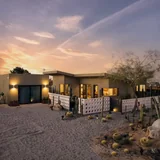
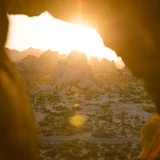
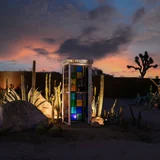
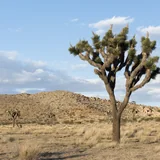
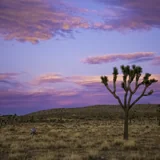
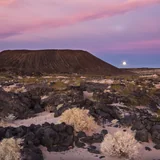
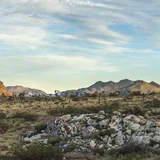
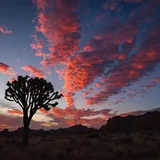
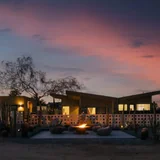
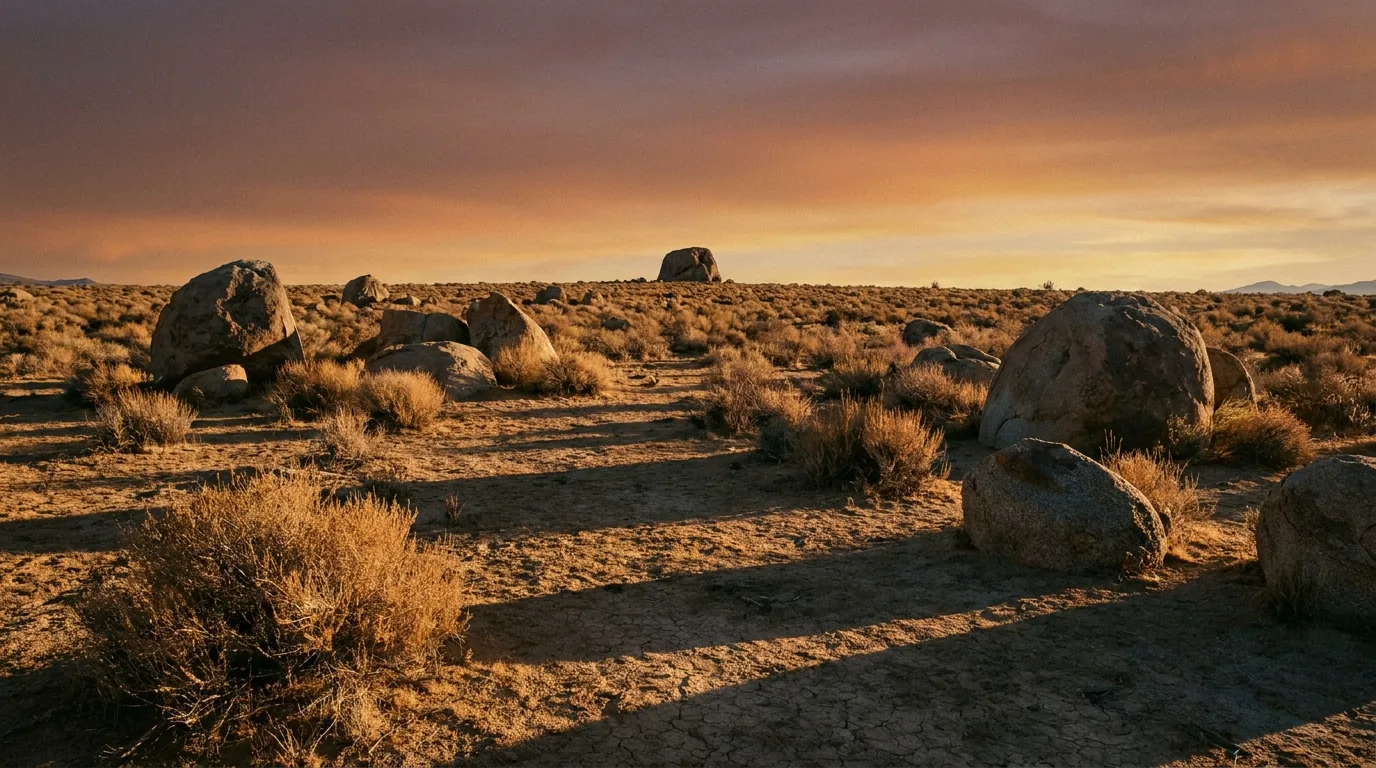
As the season turns, the sun tracks lower across the sky and the days grow shorter, so the good light arrives earlier in the evening and lasts longer once it does. Shadows stretch out across the boulder piles and rake along the arms of the Joshua trees, and the low angle brings out texture in the rock that the flat overhead light of summer washes out. Sunsets settle into pink, gold, amber, and violet before the sky goes dark. Photographers tend to plan their day around the last hour before sundown and the first hour after; one review of the house calls it a place with photo-worthy spots everywhere, and the desert around it works the same way.
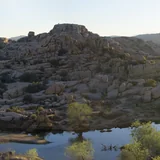
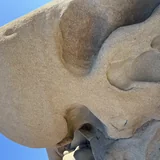
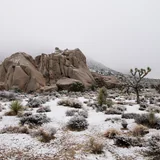
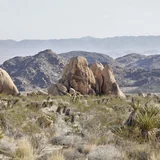
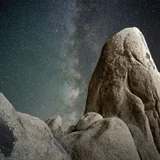
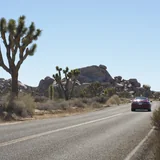
The rock itself is worth understanding, because the low autumn light is what shows it off. The park's stacked boulders are monzogranite, a pale granite that formed from molten rock cooled miles underground more than 100 million years ago. Groundwater worked along a grid of fractures and weathered the rock into rounded shapes, and when the climate dried out, flash floods stripped away the softened material and left the rounded boulders piled one on top of another. Formations like Jumbo Rocks, Split Rock, and the Wonderland of Rocks, a maze of domes up to about 300 feet tall, are all products of that process. Skull Rock, along Park Boulevard beside Jumbo Rocks Campground, got its two eye hollows from water pooling and pitting the granite over thousands of years. In the raking evening light, all of that texture stands out.
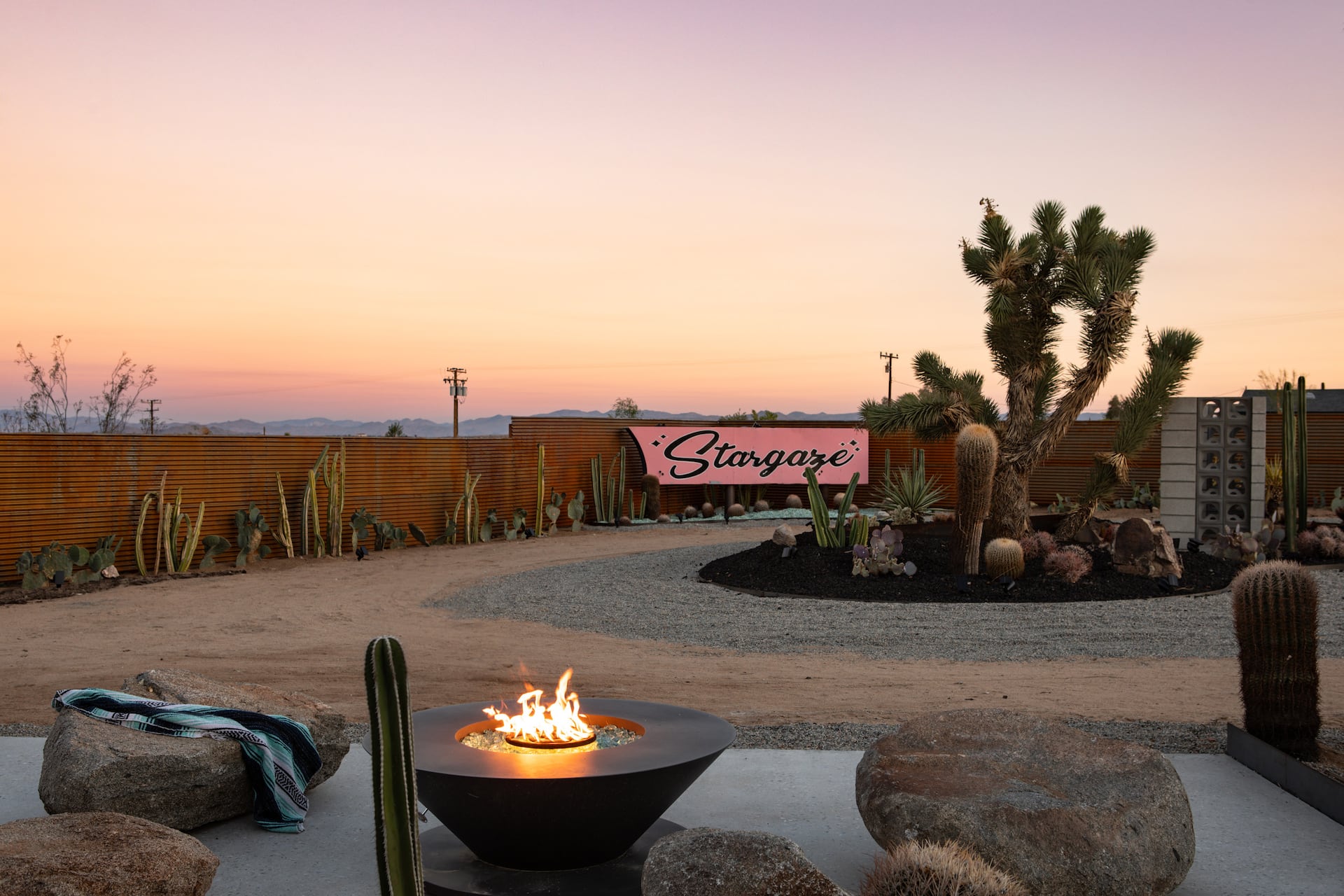
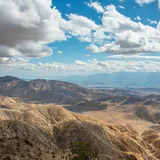
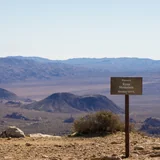
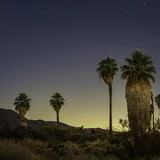
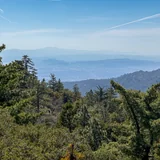
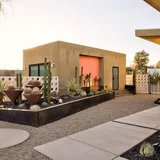
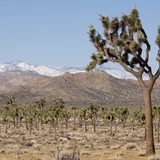
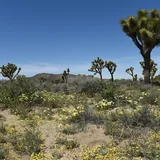
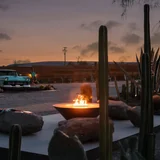
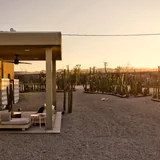
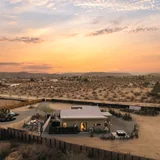
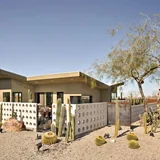
For the widest view, drive up to Keys View, a paved overlook at roughly 5,185 feet. On a clear autumn day, with less of the summer haze in the air, the overlook looks out over the Coachella Valley, the San Andreas Fault running along the valley floor, the Salton Sea in the distance, and the high peaks of San Jacinto and San Gorgonio. It is a short walk from the parking area, and it is one of the best places in the park to watch the light change at the end of the day. Closer to home, the fenced lot around the house fills with thousands of cacti, agave, and Joshua trees, and they catch that same low gold at the end of the afternoon. It is an easy place to wind down a day of driving and hiking with nowhere else to be.
The best autumn hikes
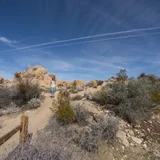
Cooler air is what makes autumn the strong hiking season. The reptiles that share these trails are most active in spring and fall, and so are hikers, because the longer and more exposed routes that turn dangerous under a summer sun become reasonable again. Carry water regardless of the temperature: there is no water available in the interior of the park, and the park service advises bringing at least a gallon per person per day.
Two rules keep desert trips smooth in any season: carry at least a gallon of water per person per day, since there is none inside the park, and download your maps before you arrive, because cell service in the park is very limited and should not be relied on.
A few routes are worth the climb once the weather cooperates. Ryan Mountain is a strenuous 3-mile round trip that gains about 1,050 feet to a summit near 5,457 feet, with one of the widest panoramas in the park. Lost Horse Mine comes in two official versions, so say which one you mean: a 4-mile out-and-back to a well-preserved stamp mill with about 550 feet of gain, or a longer 6.8-mile loop with roughly 900 feet. Mastodon Peak is a moderate loop of about 3 miles with roughly 375 feet of gain, passing the old Mastodon Mine and a summit with views toward the Salton Sea. Fortynine Palms Oasis is a strenuous 3-mile round trip; the park lists about 300 feet of net gain, but the trail climbs over a ridge, so you will feel more climbing than that figure suggests. The park closes this trail every year from June 1 through September 30, so plan it for October or later.
If you want something shorter, the easy classics are still the easy classics. Hidden Valley is a 1-mile loop with about 100 feet of gain, circling a rock-enclosed basin once rumored to hide stolen cattle. Barker Dam is an easy loop of about 1.1 miles that passes a historic water tank and a rock-art site, though other sources measure it a little longer, so treat the distance as approximate. Skull Rock is an easy loop of about 1.7 miles that passes its namesake boulder near Jumbo Rocks, and Arch Rock is an easy lollipop of about 1.4 miles from the Twin Tanks trailhead to a natural granite arch, with a much shorter spur reaching the arch from the White Tank Campground side. Split Rock is a moderate loop of about 2.5 miles among the boulder piles.
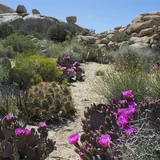
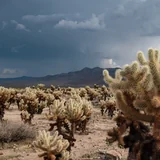
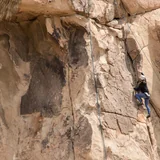
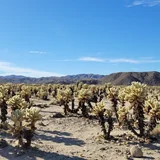
Autumn is also the season to explore the park's warmer south end, which runs too hot for comfort in summer. The Cholla Cactus Garden Loop is a quarter-mile walk through a dense stand of teddybear cholla in the Pinto Basin; that cholla reproduces from fallen stem segments rather than seed, and the segments detach at the lightest touch and hitch onto anything that brushes past, which is why the park nicknames it the jumping cholla and warns visitors not to try to pet it. Farther south, the spindly ocotillo, which is not a cactus, and the wide creosote flats belong to the hotter Colorado Desert that covers the park's lower southern end. The longer Lost Palms Oasis trail, about 7.5 miles round trip from Cottonwood Spring, reaches the largest palm oasis in the park. And autumn is prime climbing weather: Joshua Tree is a world-famous monzogranite climbing area with more than 8,000 routes and over 2,000 boulder problems, and the cooler temperatures bring climbers back to the rock in numbers, though the boulder piles reward scrambling even if you are not roped up. Our guide to the best hikes in Joshua Tree has more detail on each, and the cholla garden and the south covers that lower stretch of the park on its own. Trail distances and elevation figures vary between sources, so check the current numbers with the park before you set out.
Tarantula season and desert wildlife
Autumn is the season people most often spot a tarantula in the open, and there is a reason for it. These are the largest spiders in North America, usually two to three inches across and covered in fine tan-to-dark-brown hairs, and the park service calls them timid, noting they will not bite a person unless seriously provoked. The ones you see out walking in fall are almost always males. As the park puts it, a desert tarantula seen wandering in Joshua Tree in autumn is likely a male searching for a mate. Males mature at around eight to ten years old, then leave the burrow to look for females on a journey that ends their life. Give them room, watch them cross, and let them go on their way.
They are not the only animals stirring. Reptiles are ectotherms, most active in the milder temperatures of spring and fall, so autumn is a good time to spot lizards along the trails. The threatened desert tortoise spends about 95 percent of its life underground in burrows and mates from spring through early October before settling in for winter; it is illegal to handle or move one, so admire it from a distance if you are lucky enough to see it. The round-tailed ground squirrel is one of the few desert rodents active by day, going dormant in the worst summer heat and easier to see once the temperatures moderate. Coyotes, bobcats, kit foxes, and black-tailed jackrabbits are generally most active around dawn, dusk, and after dark.
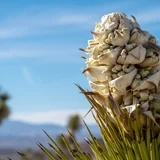
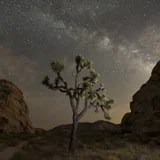
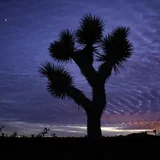
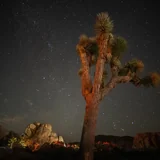
More than 250 bird species have been recorded in the park, and the sparse desert cover makes them easier to pick out than in most parks; watch for the cactus wren, Gambel's quail, the greater roadrunner, and the red-tailed hawk. After dark, the desert hairy scorpion, the largest scorpion on the continent, glows blue-green under ultraviolet light, so a cheap UV flashlight turns a walk around the yard into a small hunt. The Joshua tree that gives the park its name is worth a closer look while you are out. It is not a true tree; it is a yucca, in the same family as the agave, and it grows slowly, perhaps half an inch to a few inches a year, living on average around 150 years with some estimated well over 300. It depends on the yucca moth to pollinate it, and the moth in turn lays its eggs in the flower, so neither can reproduce without the other. Whatever you find, leave the plants, rocks, and animals where they are; collecting anything in the park is prohibited. Our post on sharing the desert wildlife covers how to give these animals room without missing them.
Cooler nights and the fire pit
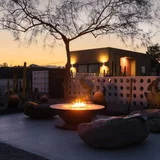
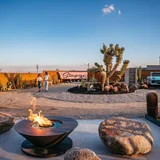
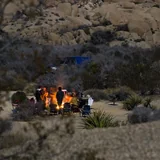
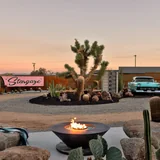
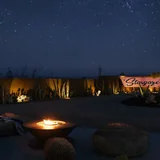
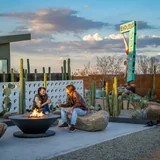
The best change autumn brings might be the evenings. Once the heat breaks, sitting outside after dark stops being a chore, and the overnight lows keep dropping as the season goes on, so by late autumn you may want a jacket by the time the stars are out. The gas fire pit at the house is built for exactly this stretch of the year. It is ringed by natural boulders and it burns gas, so there are no logs to haul, no embers drifting off across a dry desert lot, and no smoke to carry home in your clothes. You turn it on, and you have a warm circle to sit in while the temperature falls.
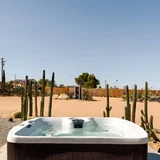
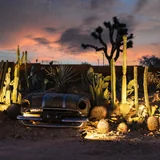
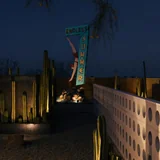
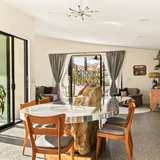
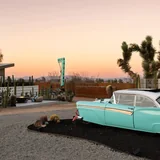
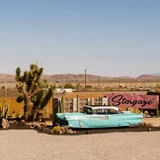
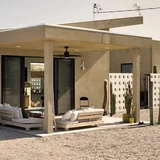
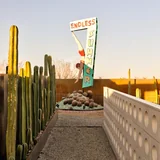
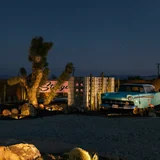
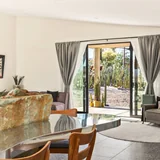
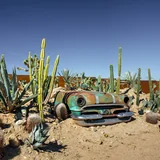
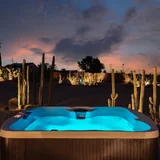
The water stays open too. The private hot tub runs all year, and it is at its best on a cool night when the air is sharp and the water is warm. The stock-tank pool sits under a vintage painted metal sign that reads Endless Summer, and while it is more of a midday feature as the nights cool, plenty of guests still take a quick dip before warming up in the hot tub. Indoors, a freestanding soaking tub sits by a wide window that opens onto a private courtyard, screened from the pool by a steel privacy panel perforated with a pattern of stars, which is a warm place to end a cool evening if you would rather not be outside. One rule to keep in mind: no glass near the pool or hot tub, and quiet hours start at 10pm. If you want to picture how the fire and the sky come together after dark, our fire and stars page and the pool and hot tub page walk through both. There is also a restored 1950s car parked on the gravel that has been turned into an open-air bed, its custom stargazing roof pulled back, which is a fine place to lie down and look up once the fire has burned low.
Clear autumn skies
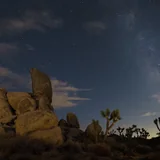
Joshua Tree was designated an International Dark Sky Park in 2017, at the Silver Tier level, and the darker interior of the park reaches roughly Bortle Class 2 to 3, dark enough to show the structured band of the Milky Way, along with fainter airglow and zodiacal light, to the naked eye. Autumn does something useful for stargazers: the nights get dark earlier, so you can be out under a full sky at a reasonable hour instead of waiting up past midnight the way you would in high summer.
The autumn evening sky has its own cast of characters. Look for the Andromeda Galaxy, the most distant object most people can see without a telescope, along with the Great Square of Pegasus, the W-shape of Cassiopeia, and Perseus. The bright core of the Milky Way, which rides high in summer, appears in the early-evening sky in early autumn and sets earlier each night before dropping out of view for the deep-winter months, so an early-autumn trip catches the tail of core season. Give your eyes 20 to 30 minutes in the dark to adjust, and use a dim red light rather than a white one so you do not reset your night vision every time you check your footing. The park rangers run free night sky programs through the season, from basic star-chart reading to deeper astronomy talks, and their schedule is posted by the park. Back at the house, the open-air car bed is the seat most guests reach for, and our guide on where to stargaze in the dark sky has more on finding the darkest spots. Which planets are up changes month to month, so check a current sky chart for your dates.
Fewer crowds
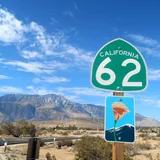
Spring is the busiest, most crowded season in Joshua Tree, driven by the wildflower window and the school holidays. Autumn is popular too, but it does not draw the spring peak, and summer stays the emptiest because of the heat. That leaves fall as the season with the best balance: comfortable weather and thinner trailheads, especially midweek. There is no timed-entry ticket or reservation required to drive into the park, unlike some other crowded parks, so your main crowd-management tool is timing. The west entrance, five miles south of the Highway 62 and Park Boulevard junction, is the busiest of the three, so arrive early in the morning or come on a weekday to skip the longest lines. If the west entrance line looks long, the north entrance at Twentynine Palms, three miles south of the Highway 62 and Utah Trail junction, is an alternative, and the south entrance near Cottonwood Spring comes off Interstate 10 on the Palm Springs side. All three lead into the same park.
The entrance fee is around 30 dollars per vehicle for a seven-day pass, though park fees are revised from time to time, so confirm the current figure before you go. If you visit often, the park-specific annual pass runs about 55 dollars and the America the Beautiful interagency pass is 80 dollars for U.S. residents, with non-residents now paying more under a 2026 change. Autumn also carries a couple of fee-free days when entry is waived; for 2026 the fall dates published by the park include Constitution Day on September 17, Theodore Roosevelt's birthday on October 27, and Veterans Day on November 11. Those dates are re-set every year, and some patriotic fee-free days are now designated for U.S. residents only, so check the current-year list with the park rather than relying on last year's calendar.
Autumn events in the desert
Fall is festival season for stargazers. The park hosts an annual Night Sky Festival, typically held over multiple nights in October, with telescopes provided by Southern California astronomy clubs, guided viewing, talks, and cultural programming. It is a ticketed event, the dates and number of nights change every year, and it can sell out, so look up the current schedule and buy ahead if you want to go. It pairs well with a stay here, since you can drive back to a dark yard and keep looking up after the event winds down.
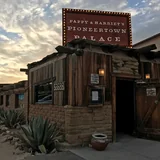
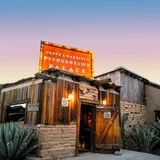
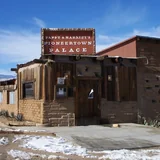
Beyond the park, the towns keep their own rhythm. The Joshua Tree Certified Farmers' Market runs on Saturday mornings, roughly 8am to 1pm, with local produce, prepared foods, and baked goods, though it is seasonal and weather-dependent, so confirm it is on before you drive over. Up in the hills above Yucca Valley, Pappy and Harriet's Pioneertown Palace is the area's best-known live-music venue, a western roadhouse with a bar, a patio, and a concert stage that draws touring acts. Hours and show calendars across the high desert change often, and many spots keep short or seasonal schedules, so check each place's own site or call ahead. Our post on a night at Pappy and Harriet's covers what an evening out there is like. Autumn evenings are long enough that a night of live music in town and a night under the stars at the house both fit into a short trip.
A two-night autumn plan
Two nights is enough to catch the best of a desert autumn without rushing. If you are coming from Los Angeles, the drive is roughly 120 miles, about two to two and a half hours via Interstate 10 and Highway 62, depending on the basin traffic. Arrive in the afternoon, stop for groceries and gas in Yucca Valley on the way in, since there are no gas stations, stores, or restaurants inside the park, and settle in. Spend the first evening close to home: light the gas pit, warm up in the hot tub as the temperature drops, and let your eyes adjust to the dark from the open-air car bed once the stars come out.
Give the full first day to the park. Drive the 25 minutes to the west entrance early, before the mid-morning arrivals, and start with a bigger hike while the air is cool, whether that is Ryan Mountain for the summit view or a gentler loop like Hidden Valley or Barker Dam. Families can pick up a free Junior Ranger booklet at any visitor center or entrance station; kids complete the activities and earn a badge, which gives a day in the park a bit of structure. Break for lunch back at the house or a picnic in the park, then drive out to Keys View in the late afternoon for the long view over the Coachella Valley as the light drops. Head back for another fire-pit evening, or time your day around a ranger night sky program if one is scheduled.
On the second day, point south or into town. The park's warm south end, the Cholla Cactus Garden and the Cottonwood area, is comfortable in autumn and easy to combine with a slower morning. Or spend the day in the towns: coffee and breakfast in Joshua Tree or Yucca Valley, a wander through the shops, and an early dinner before you check the calendar for live music at Pappy and Harriet's. Whatever the day holds, autumn gives you a reason to be back at the house by dark, when the night sky over the yard is the last thing on the itinerary.
What to pack for autumn
Autumn packing is mostly about the range between day and night. Daytime highs in the mild months often sit around 65 to 80 degrees, while overnight lows drop steadily as the season goes on, so bring layers rather than a single heavy coat: a shirt for the trail, a mid-layer for the evening, and a warmer jacket for sitting by the fire pit after dark. Sturdy closed shoes handle the rocky trails, and sun protection still matters even when the air feels cool. A small daypack, a wide-brimmed hat, and a refillable water bottle round out the essentials, and it is worth packing a swimsuit even in fall for the hot tub.
Water is not optional. There is none in the interior of the park, so carry at least a gallon per person per day and fill up in the gateway towns before you drive in. Cell reception inside the park is very limited, so download offline maps before you arrive. Two small lights are worth packing for the nights out here: a dim red flashlight or headlamp to protect your night vision while stargazing, and a cheap UV flashlight if you want to spot a glowing scorpion around the yard. If photographing the stars is on your list, a wide, fast lens in the 14 to 24mm range at f/2.8 or wider, a tripod, and a high ISO around 1600 to 6400 are the usual starting points; the 500 rule gives a rough maximum exposure of 500 divided by your focal length in seconds, so a 20mm lens gives around 25 seconds before the stars begin to trail. Our post on packing for the high desert goes deeper on the rest of the list.
If a dog is coming, the house is dog-friendly, though cats are not welcome because of a household allergy. Keep in mind that dogs are not allowed on park trails, in the backcountry, or in park buildings; they are limited to within 100 feet of roads and parking areas, on a leash no longer than six feet, so plan dog walks around town and on the surrounding public lands, and confirm current access before you rely on it.
When your dates are set, book directly through our site and plan the autumn stay around the weather, the stars, and the fire pit. If you are still deciding when to come, read the seasons guide first, then lock in the nights that fit.