

















Joshua Tree
A Field Guide to Mojave Wildlife
At midday in the high desert, the land can look empty. The heat presses everything into shade, and the loudest thing is the wind moving through the creosote. Wait for the cool hours, though, and it fills in: a lizard doing push-ups on a warm rock, a jackrabbit's ears above the brush, a coyote answering another coyote after dark. This is a field guide to the animals you might meet around Joshua Tree National Park and on the desert lot at Stargaze Escape, our Airbnb Luxe house in Yucca Valley, about a 25-minute drive from the park's west entrance. It covers what the animals are, when they move, and how to watch them without doing any harm.
A Desert Full of Life
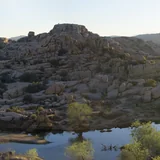
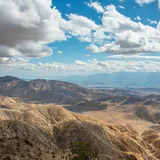
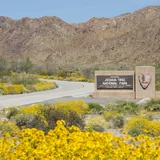
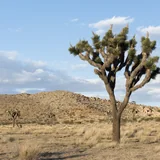
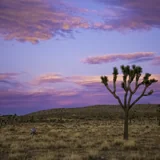
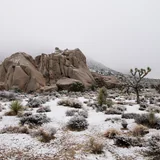
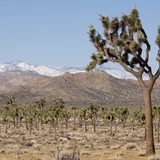
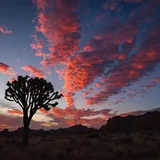
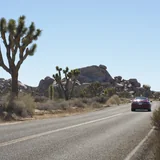
Joshua Tree National Park sits at the convergence of two deserts. The higher, cooler Mojave, home to the Joshua trees and yuccas, covers the western and northern side. The lower, hotter Colorado Desert, with its ocotillo, cholla and creosote, spreads across the east and south. That transition zone is why the park holds animals from both deserts, and why a single day of looking can turn up such a range of them.
The numbers are larger than most first-time visitors expect. The park has recorded 45 reptile species, made up of one tortoise, 18 lizards and 26 snakes. It has logged more than 250 species of birds, and the sparse desert vegetation makes those birds relatively easy to spot, easier than in most other national parks, where denser vegetation keeps them out of view. Mammals are harder to catch in the open, because most of them wait out the heat underground and come out at the edges of the day.
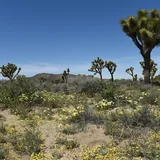
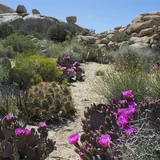
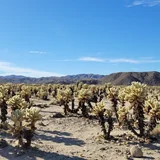
Which animal turns up in a given spot depends on which plants grow there, so it helps to picture the two deserts as two sets of neighbourhoods. The lower, hotter Colorado Desert in the south and east is creosote country: creosote bush is the dominant shrub of these open flats, and its roots release chemicals that keep other plants at a distance, so the bushes stand evenly spaced with bare ground between them. That is the kind of open flat the black-tailed jackrabbit and the desert kit fox work. The same low ground holds the ocotillo and the teddy bear cholla that forms the Cholla Cactus Garden in the Pinto Basin, and the cactus wren builds its bulky nests down in that cholla, where the spines keep most predators out. The higher, cooler Mojave side to the west and north is the land of the Joshua trees and the broader-leaved Mojave yucca, and higher still, where singleleaf pinyon pine and California juniper form a pinyon-juniper woodland, you reach the range of the western scrub-jay. Learning the plants is a shortcut to knowing what you might meet; our post on the plants around the house walks through the ones you can pick out from the lot.
The key to seeing any of it is timing and patience. The desert can look empty by day, when most animals stay still and out of the heat, because staying still and staying cool is how you survive out here. Reptiles are ectotherms, so they take their warmth from the sun and shelter from both midday heat and winter cold. Small mammals mostly move at dawn, dusk and night. If you walk the same wash in the early morning that felt lifeless at noon, you will meet a different desert. Our post on sharing the desert with its wildlife goes further into that mindset, and the area overview maps where the two deserts trade places within an easy drive of the house.
Mammals
The coyote is the mammal you are most likely to hear, even if you never see one. The park service lists it as a common resident parkwide, and coyotes are generally most active at dawn, dusk and after dark, especially in hot weather. From the lot after sunset you may catch a chorus of them calling across the basin, one group setting off another.
The bobcat is also common, keeping to the park's rocky canyons and outcrops. It is a solitary, mostly crepuscular and nocturnal hunter, so daytime sightings are a matter of luck. Out on the open desert flats lives the desert kit fox, another common resident, which is nocturnal and dens underground through the day to escape the heat. These three predators are the ones that shape the desert's night, and all three are far easier to hear or read in tracks than to watch directly.
Among the animals they hunt, hares and rabbits stand out. The black-tailed jackrabbit is a hare rather than a true rabbit, with oversized ears that shed body heat, and it is a common resident of open deserts and flats. It is generally most active at dawn and dusk. The desert cottontail is a common parkwide resident too, out mostly in the cooler early morning and evening. When you see long ears twitching above a bush at first light, you are almost certainly looking at a jackrabbit.
Two rodents show how far desert adaptation can go. The kangaroo rat is common in the park and lives with what one might call an extreme trick: it can go its whole life without ever drinking water, drawing the moisture it needs metabolically from the seeds it eats. It is nocturnal and spends the hot days in burrows. The ground squirrel takes the opposite schedule. The round-tailed ground squirrel is a daytime, diurnal rodent, and during extreme heat it enters a summer dormancy called aestivation, which sets it apart from most of the other small desert mammals that wait out the night.
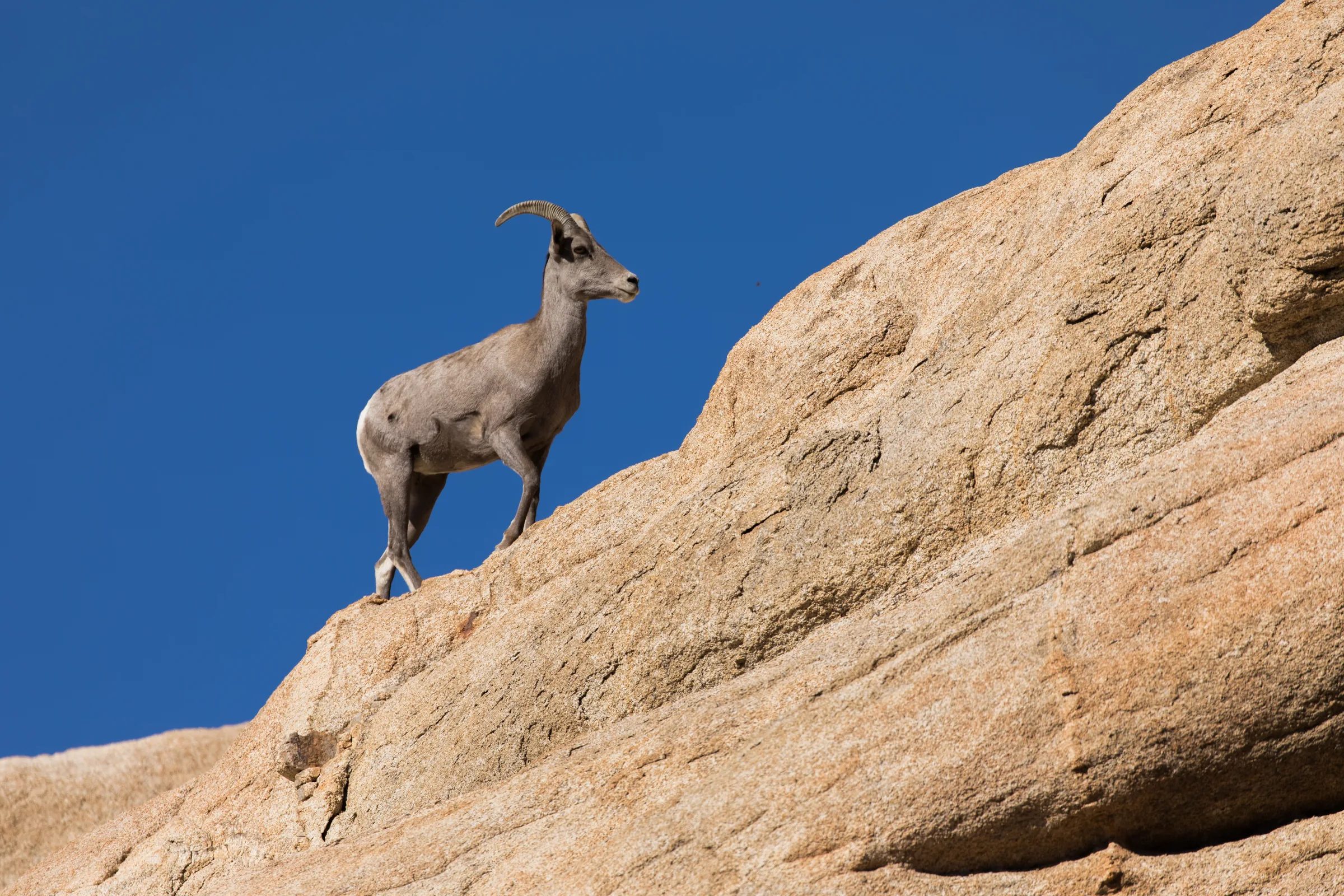
The largest native mammal you might encounter is the desert bighorn sheep, which lives in the park's mountains. The park service lists it as uncommon, so a sighting is a real event, usually of animals picking their way across a steep rocky slope well above the road. You are not going to see one from the pool, but they are out there in the ranges around the basin.
The Desert Tortoise
The Mojave desert tortoise is the animal the whole region protects most carefully, and the one you are least likely to see. It was placed on the California endangered species list in 1989 and the federal list in 1990, and its official status is threatened, one notch below endangered. It is illegal to handle or remove a desert tortoise, and there is a good reason the rule is strict: this is a slow-reproducing animal whose numbers have fallen hard across its range.
Tortoises are masters of staying out of sight. They spend roughly 95 percent of their time underground in burrows, in dens that can run up to about 30 feet long, where the temperature stays far steadier than the surface. They emerge to forage and to look for mates when spring warms the ground, with mating peaking from March through early October. In deep winter they hibernate, and through the hottest stretch of summer they estivate, going dormant again to ride out the heat. Wild tortoises are long-lived animals, thought to reach roughly 50 to 100 years, so an adult you meet may be older than you are.
If you meet a desert tortoise, keep your distance, give it room and let it go on its own way. It is illegal to handle or move one, and it does not need your help.
Because the active window falls in spring and fall, those are the seasons a lucky hiker might spot one plodding between shrubs, most often in the morning. If you are planning walks in those months, the trail notes in our guide to the best hikes in Joshua Tree will point you toward the kinds of open desert flats where tortoises range, though seeing one is never something to count on.
Snakes and Lizards
Of the park's 45 reptiles, the 26 snakes and 18 lizards make up almost all the reptile life you will actually encounter. As ectotherms, they are most active in spring and fall, and they shelter from both midday heat and winter cold, so the shoulder seasons and the cooler hours of the day are prime lizard-watching time.
Because they cannot make their own heat, these reptiles live by the sun. On a mild spring or fall morning a lizard will haul out onto a warm rock to raise its body temperature before it starts hunting, then shuttle between sun and shade as the ground heats through the day. In the depth of summer those same lizards leave the midday surface to whatever can take it and work only the cooler ends of the day, and through the coldest weeks of winter most go still underground. It is the reason the shoulder seasons and the first hours after sunrise are the dependable time to watch them, and the reason a rock that looked empty at noon can be busy at eight in the morning.
The snake most tied to this landscape is the sidewinder rattlesnake, common in the park's sandy deserts, where the park service lists both Mojave and Colorado Desert forms. It gets its name from how it moves, throwing loops of its body sideways across the ground, an adaptation to loose, hot sand that lets it travel without overheating its belly. Sidewinders are mainly active at dusk and into the night during the warm months, which is one more reason to watch where you step at those hours.
Among lizards, a few are worth learning by sight. The common chuckwalla is a large, plant-eating lizard, listed as a species of special concern, and it lives on rocky outcrops, canyons, slopes and alluvial fans. Its defense is memorable: when threatened it wedges into a rock crevice and inflates its body, lodging itself so tightly that a predator cannot pull it out. The desert iguana is a common lizard of sandy flats, dunes and washes, and it is one of the most heat-tolerant lizards in North America, able to stay out on the surface during midday summer heat when other reptiles have retreated to shade. At the other end of the day, the western banded gecko is a common small lizard of sandy flats, occasionally seen in canyons and rocky areas, that hunts insects at night.
The push-up displays you see lizards performing on warm boulders are territorial signals, and the boulder-strewn edges of the park, along with the rocky terrain around the house, are good places to watch them. The sandy Pinto Basin in the park's south is prime sidewinder and desert-iguana country; our guide to the Cholla Cactus Garden and the south covers that lower, hotter stretch and how to read it.
Birds of the High Desert
Birds are the wildlife you are most likely to see, and see well. With more than 250 species recorded and so little cover to hide them, the high desert is one of the best places in the park system to watch birds without a hide or a long lens.
The greater roadrunner is the one most visitors hope for. It is listed as an uncommon resident, a ground-dwelling member of the cuckoo family that would rather run than fly, and it hunts lizards, snakes and insects on the move. Far more common is the cactus wren, the largest wren in North America, which builds its bulky, football-shaped nests down in the protection of cholla cactus and other spiny plants, where few predators will follow. Gambel's quail is a common resident too, a ground-foraging desert quail whose males wear a distinctive teardrop plume on the head; you will usually meet them in coveys, scurrying single file across open ground.
Overhead, the red-tailed hawk is the common resident and the large soaring raptor you will see most often, riding the thermals that build over the rocks as the day heats up. Two smaller songbirds reward a closer look. The phainopepla is a common resident, a glossy black, crested bird whose diet leans heavily on desert mistletoe berries, and in eating them it helps spread the mistletoe to new host plants. The verdin is a common resident as well, a tiny gray desert bird with a yellow head that builds conspicuous round nests in thorny shrubs. Up in the higher, cooler country, in the pinyon-juniper zones, you may add the western scrub-jay, a common resident of those wooded pockets.
Birding here rewards patience more than pace. With so little cover to hide them, a slow scan of the tops of the shrubs and cholla, or sitting still near a flowering plant in the first cool hour of the day, will usually turn up more than a brisk walk does. Listen as much as you look: the cactus wren's dry, ratcheting call and the covey-clucking of Gambel's quail often give a bird away well before it comes into view.
For a dedicated morning of birding, the wetland corridor at Big Morongo is one of the region's best; our Big Morongo Canyon Preserve guide covers the boardwalks and the mix of desert and riparian species you can tally there in a couple of hours.
Tarantulas and Scorpions
The desert's larger invertebrates alarm people more than they should. The tarantula is the largest spider in North America, typically two to three inches long and covered in fine hairs that range from tan to dark brown. The park service describes them as timid animals that will not bite human beings unless they are seriously provoked, so the sensible response to one is to watch and leave it be.
In autumn you may see tarantulas crossing roads and open ground in the daytime, and these wanderers are almost always males. A male matures at about eight to ten years old, then leaves the burrow where it has spent its whole life to search for a female, a journey that ends its life. So a tarantula out in the open on an October afternoon is simply a male on the move, doing the one thing it left the burrow to do.
After dark, the desert holds a stranger sight. The desert hairy scorpion, Hadrurus arizonensis, is the largest scorpion in North America, reaching about 14 centimeters, or five and a half inches. It is nocturnal, and like other scorpions it glows a bright blue-green under ultraviolet light, so a UV flashlight will pick it out against the ground at night. It ranges through the Mojave and Sonoran deserts, and its venom is mild to humans. A short UV walk around a lit patch of ground is one of the desert's quietest surprises, best done with closed shoes and hands kept to yourself.
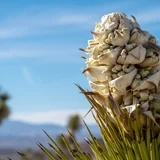
The smallest partnership out here is the one that keeps the Joshua trees going. Joshua trees are pollinated only by the yucca moth, in an obligate mutualism: the moth deliberately packs pollen onto the flower and lays its eggs in the ovary, so the moth feeds its young and the tree sets its next generation of seed. Neither species can reproduce without the other. If you want the fuller story of that tree and its moth, we tell it in the story of the Joshua tree.
Where to Look in the Park
Habitat tells you where to point your attention, and a little of it is worth more than a long checklist. Because water is scarce out here, anywhere it collects gathers life around it, so the park's oases and seasonal tanks reward a slow, quiet look. The historic water tank on the easy Barker Dam loop, a bit over a mile round trip, holds water after wet spells and pulls birds down to drink in the early morning; the palm oases at the ends of longer trails, the Fortynine Palms Oasis hike (closed every year from June 1 through September 30) and the Lost Palms Oasis walk out from Cottonwood Spring at the park's south end, its largest palm grove, sit in rugged country where desert bighorn range the slopes above. The guide to the best hikes in Joshua Tree has the distance and difficulty for each of these before you set out.
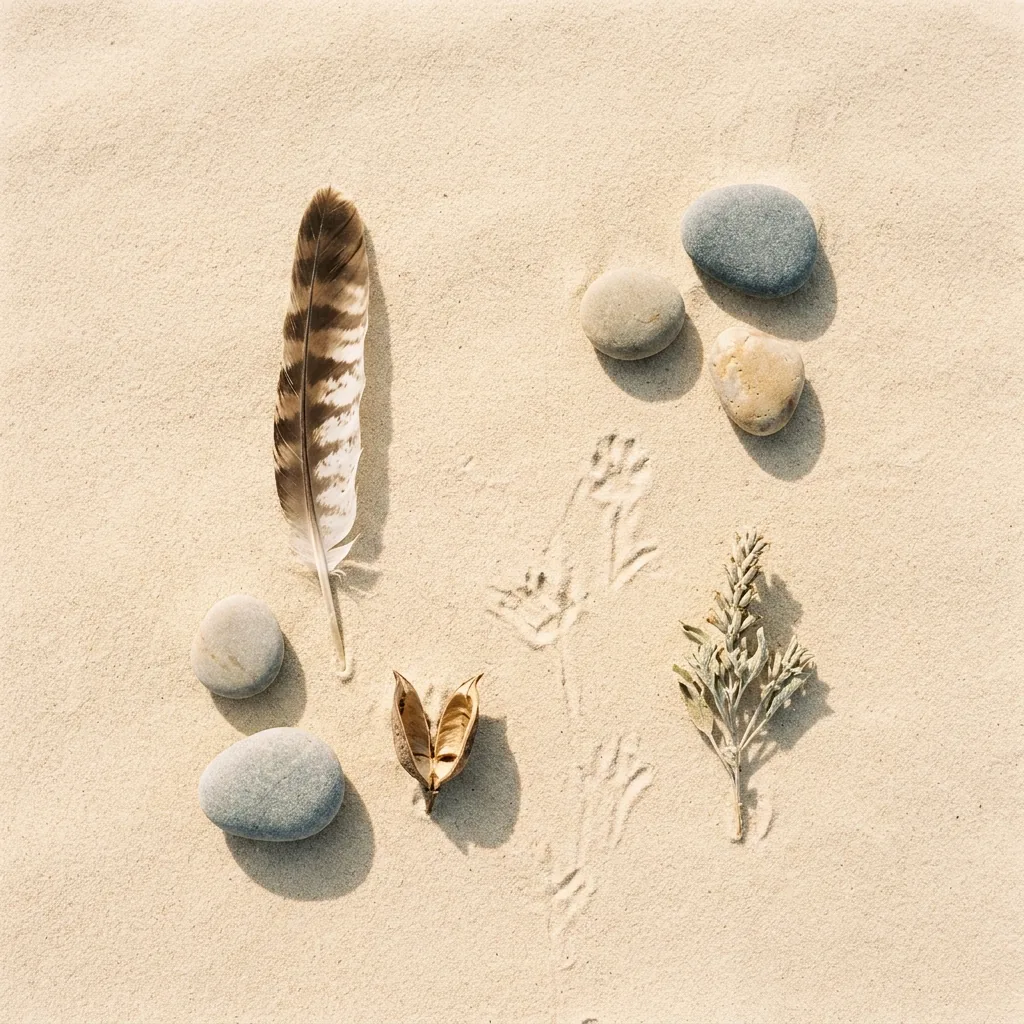
The boulder country in the park's middle is the place for lizards. On the stacked monzogranite around Hidden Valley and through the maze of the Wonderland of Rocks, the warm stone is where lizards bask and run their territorial push-ups by day, and where the chuckwalla wedges itself into a crevice when a shadow passes over. Higher and cooler, the park's pinyon-juniper uplands are the range of the western scrub-jay; the Covington Flats guide covers that high western corner of the park. And wherever the ground is soft, the sandy washes are the easiest place to read the night before: a line of coyote prints, the small paired hops of a kangaroo rat, the disconnected sideways marks a sidewinder leaves in loose sand. You will often learn more from the tracks than from the animals that made them.
When Each Animal Is Active
Almost everything in the desert runs on a schedule built around heat, and knowing it changes how you plan a day. In broad strokes, the reptiles favor the warm hours of spring and fall and disappear in both the summer's midday and the winter's cold, while the mammals mostly work the dark. A few useful patterns are worth keeping in mind:
- Dawn and dusk. The richest windows for mammals. Jackrabbits, cottontails, coyotes, bobcats and kit foxes are generally most active at the edges of the day, and birds are busiest in the first cool hours of morning.
- The heat of the day. Most animals are gone from sight. The desert iguana is an exception, tolerant enough to stay out in midday summer heat, and the round-tailed ground squirrel is a daytime rodent, though it goes dormant in the worst heat.
- After dark. The night shift belongs to the kangaroo rat, the western banded gecko, the desert hairy scorpion, and, in the warm months, the sidewinder.
- By season. Reptiles peak in spring and fall. The desert tortoise is active spring through fall and dormant in deep winter and peak summer. Wandering male tarantulas are a fall sight.
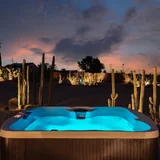
In summer, when daytime highs regularly pass 100 degrees, the practical rule is simple: look for wildlife early and late, and rest in the shade in between. That rhythm suits a stay at the house well, since the hot middle of the day is exactly when the stock-tank pool and hot tub earn their keep, and the animals come back out around the same time you do.
Watching Without Disturbing
The desert is fragile in ways that are easy to miss, and the animals here are living on tight margins. A few habits keep your visit from costing them anything. First, leave everything where you find it. Collecting or removing natural objects, rocks, plants, cactus, wood, wildflowers, is prohibited in the park, and that includes anything living. Never handle a desert tortoise; beyond being illegal, it stresses a threatened animal that is doing fine on its own.
Second, keep your vehicle on established roads. Off-road and cross-country driving is prohibited, because a single set of tire tracks across desert soil can scar it and crush the burrows and plants that wildlife depends on. Drones are also banned in the park, so the quiet the animals rely on stays intact. Watch from a distance and let a lens or a pair of binoculars close the gap rather than your feet.
If you bring a dog, know the rules before you go. In the park, pets are not allowed on trails, in the backcountry or in buildings; they are limited to within 100 feet of roads, parking areas, picnic areas and campgrounds, on unpaved roads, and on the two paved walks, and they must be leashed at all times on a leash six feet or shorter. Our pet-friendly guide lays out what that means for a trip, since most of the good hiking around here is off-limits to dogs and the town and surrounding public lands become the alternative. For the wider set of leave-no-trace habits, from water to trash to keeping your distance, see our post on desert safety and leaving no trace.
Staying Safe Around Wildlife
The desert is a safe place to explore with a little care, and most of the risk comes from the environment rather than the animals. Heat and water come first. There is no water available in the interior of the park, so bring all your own; a common guideline is at least one gallon, roughly four liters, per person per day. Cell phone reception inside the park is very limited and should never be relied on, so download offline maps before you drive in, and fuel up in Yucca Valley, Joshua Tree or Twentynine Palms, because there are no gas stations inside the park.
As for the animals, use ordinary caution and you will be fine. Rattlesnakes, including the sidewinder, are most active at dusk and at night in the warm months, so watch where you put your hands and feet on rocks and in washes, and give any snake a wide berth and time to move off. Tarantulas will not bite unless seriously provoked, and the desert hairy scorpion's venom is mild to humans, but neither is anything to pick up. Shake out shoes left outside, and use a light on night walks. If you have a dog with you, keep it supervised and leashed, since coyotes are common and work the same dawn, dusk and night hours your dog will want to explore.
None of this should keep you inside. It is the same short list any local would give you: carry water, mind your footing, keep your distance, and plan the hot hours around shade. Do that and the desert is a generous place to spend time.
What You Might See From the Lot
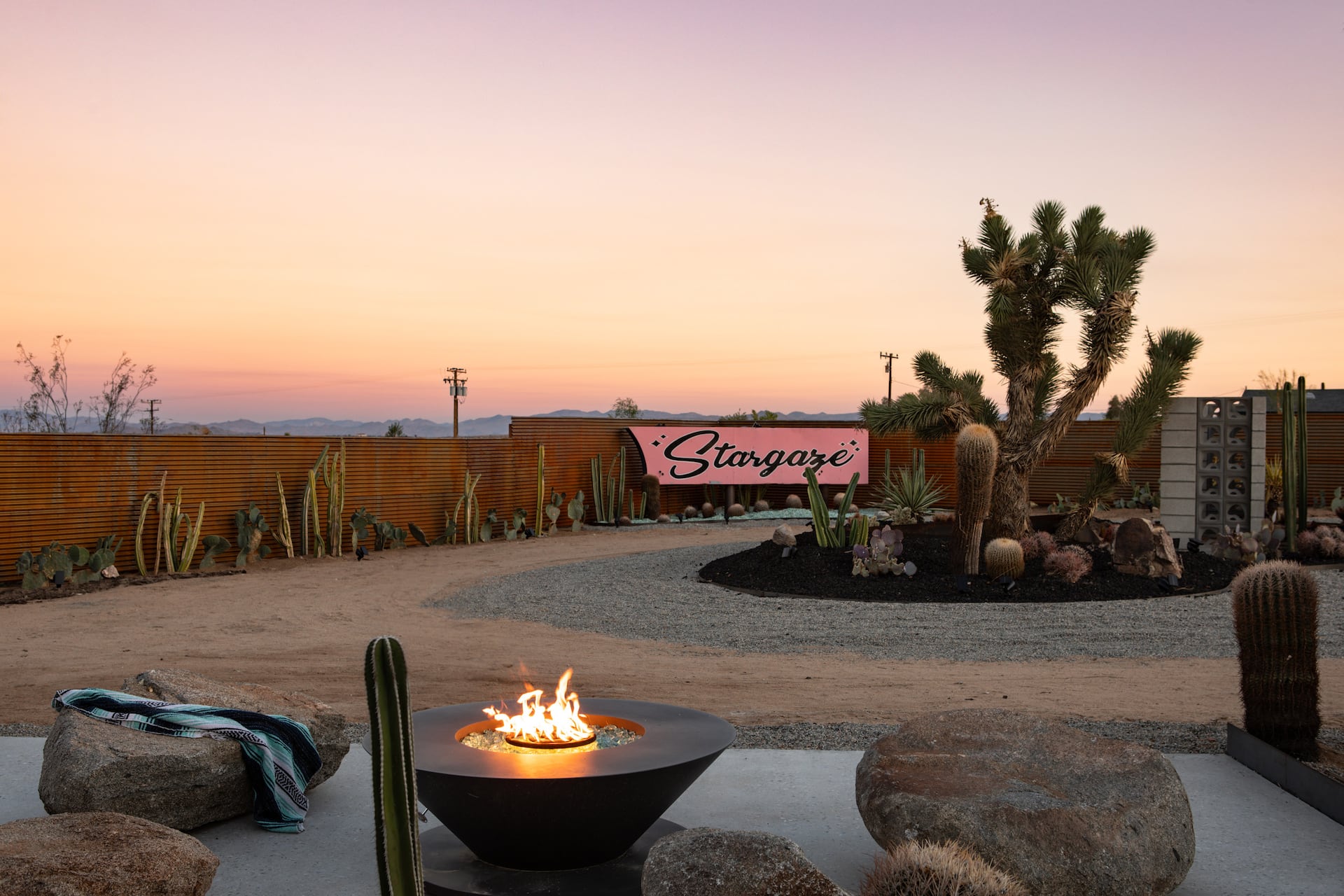
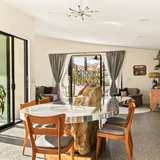
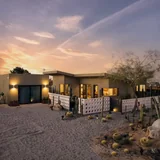
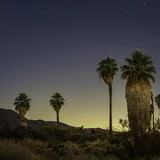
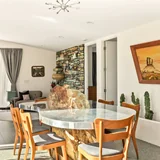
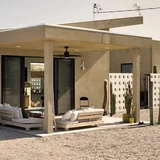
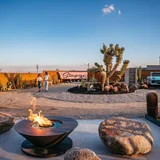
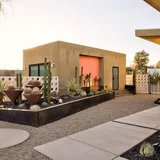
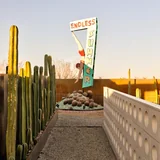
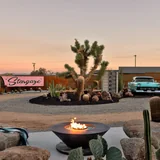
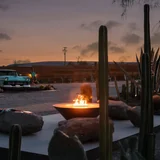
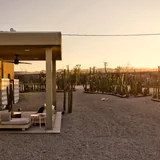
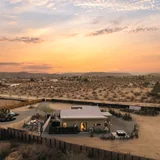
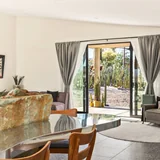
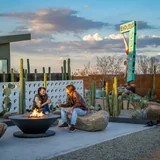
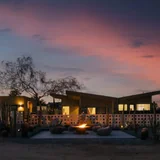
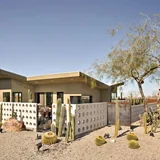
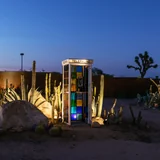
You do not have to enter the park to meet the desert's wildlife. The house sits on a fully fenced desert lot planted with thousands of cacti, agave and Joshua trees, and that landscape brings the animals close. On warm mornings, look for lizards warming up and running their push-up displays on the rocks, including the natural boulders around the gas fire pit and the boulder the dining table is built around. Overhead, red-tailed hawks ride the thermals, and through the day you may pick out a cactus wren working the spiny plants, a covey of Gambel's quail crossing the gravel, or a verdin at a thorny shrub.
One review sums the property up, calling it a place with "photo-worthy spots everywhere."
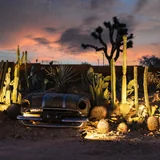
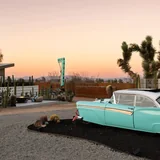
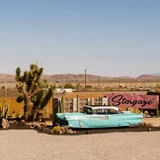
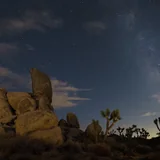
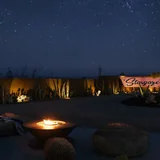
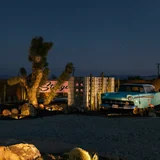
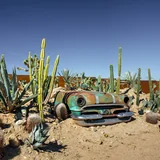
Evenings are the best show. As the light softens, jackrabbits appear at the edges of the lot, and after dark the coyotes start up somewhere out in the basin. That is the hour to lie back on the car bed, the restored 1950s car parked on the gravel with its custom stargazing roof pulled back, and let the sky take over while the desert makes its night sounds around you. Bring a UV flashlight and you can try a slow, careful sweep of the ground for the blue-green glow of a scorpion. If you want the daytime version of this, our post on the cactus garden around the house walks through what grows here and who visits it. Two house notes: dogs are welcome, though cats are not, because of a household allergy, and quiet hours start at 10pm, which the wildlife appreciates as much as the neighbors do. Leave the cacti and rocks as you found them.
The best plan is a simple one. Use the house as your base, watch the lot at dawn and dusk, and save the middle of the day for the pool or a shaded drive, then head into the park early on the mornings you want tortoises, lizards and birds. Check nps.gov/jotr for current conditions and any alerts before you go, since the desert's calendar shifts year to year. When you are ready, book your dates at Stargaze Escape and pick a season that matches the animals you most want to see.