
Itinerary
A Romantic Weekend in the High Desert
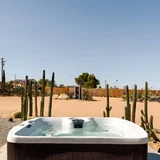
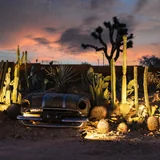
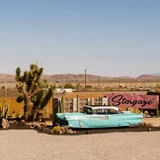
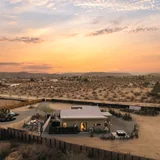
A weekend for two out here is a quiet one, and that suits the desert. The house sits on a fenced lot outside Yucca Valley, about twenty-five minutes from the west entrance of Joshua Tree National Park, with a stock-tank pool, a hot tub that runs all year, and a restored 1950s car turned into an open-air bed for watching the sky. What follows is a plan for two days of slowing down together — the drives, the meals, the long soak, and the stars — built on real places and real distances.
Why the desert suits a weekend for two
The high desert is a long way from the noise, and that is most of the appeal. Los Angeles is roughly two to two and a half hours away by car, depending on traffic through the basin and the climb up Highway 62, so give yourself extra time on a Friday afternoon and check your route before you leave. That distance is the first thing the desert gives a couple: the feeling that you have actually driven somewhere, not just across town. Yucca Valley sits at about 3,300 feet, high enough that its heat is milder than the low desert around Palm Springs, and the town is small, so the evenings go dark and quiet on their own.
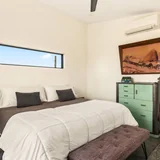
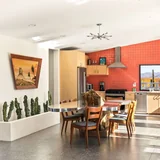
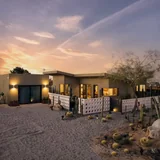
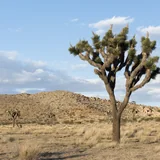
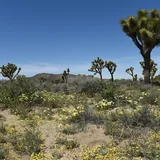
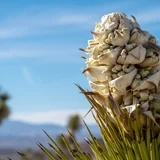
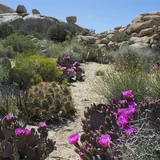
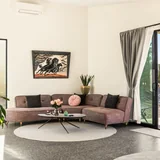
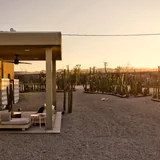
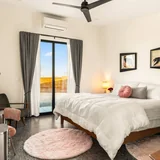
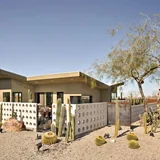
The house is a whole-home rental, so you have it to yourselves. It sleeps four across two king bedrooms and one bathroom, which for two people means room to move and a fenced lot with no shared walls. The ground is planted with thousands of cacti, agave, and Joshua trees, so even the yard reads as part of the surrounding high-desert landscape rather than a suburban backyard.
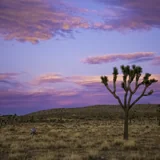
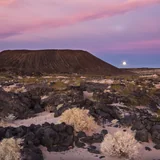
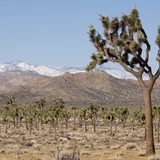
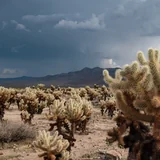
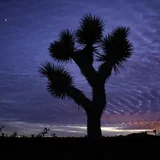
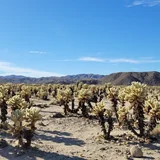
The land around you is more varied than a first glance suggests. Joshua Tree National Park spans two deserts. The higher, cooler Mojave, where the house sits and where the Joshua trees grow, covers the west and north of the park; the lower, hotter Colorado Desert, with its ocotillo and teddybear cholla, takes over to the east and south. For a couple that means you can start the day among yuccas near Yucca Valley and, the same afternoon, drop down into a different-looking country of cholla and creosote flats. You do not have to drive far to feel like the scenery has changed under you.
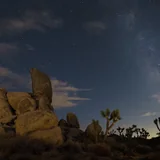
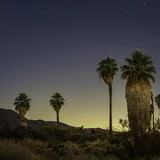
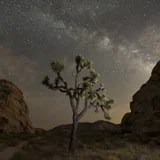
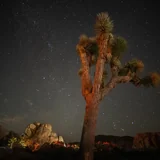
Then there is the sky. Joshua Tree National Park was named an International Dark Sky Park in 2017, at the Silver Tier level, which means the skies are dark enough to show the band of the Milky Way to the naked eye, even though some glow still reaches in from Los Angeles, the Coachella Valley, and Las Vegas. You do not have to drive into the park to see stars — the yard here is dark, and the car bed points straight up at them.
One more thing helps a weekend for two more than it sounds like it would: cell reception inside the park is poor and should not be relied on. The park service asks visitors to download offline maps before arriving. On a work day that is an inconvenience. On a weekend away, the phone going quiet on its own is part of what you came for.
Arriving and slowing down
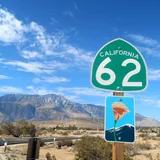
The drive in follows Highway 62, the Twentynine Palms Highway, which is the main east-west road through the Morongo Basin. Fill the tank and buy groceries before you reach the house — there are no gas stations, restaurants, or stores inside the national park, and the gateway towns are where you stock up. Stater Bros. in Yucca Valley is the main grocery anchor, with two stores along the highway; pick up what you want for breakfasts, a couple of steaks for the grill, and drinks in cans rather than glass, since no glass is allowed near the pool or hot tub. Yucca Valley and the town of Joshua Tree sit about seven miles apart, roughly a twelve-minute drive, so nothing you need is far.
If you are flying in rather than driving from Los Angeles, Palm Springs International is the closest airport, roughly a 45-minute to one-hour drive over to the Yucca Valley side, though it is worth padding that and checking your route. Ontario International sits farther west, about an hour and a quarter to an hour and three-quarters out, and usually has more flights while skipping most of the Los Angeles traffic; LAX is farther still, around two and a half hours on a clear run. Couples coming from San Diego are looking at about 150 miles and roughly two and a half hours, and from Las Vegas it is closer to 200 miles and about three and a half. Every one of those is a free-flowing estimate that stretches with traffic and the climb up Highway 62, so hold them loosely and check current times before you leave.
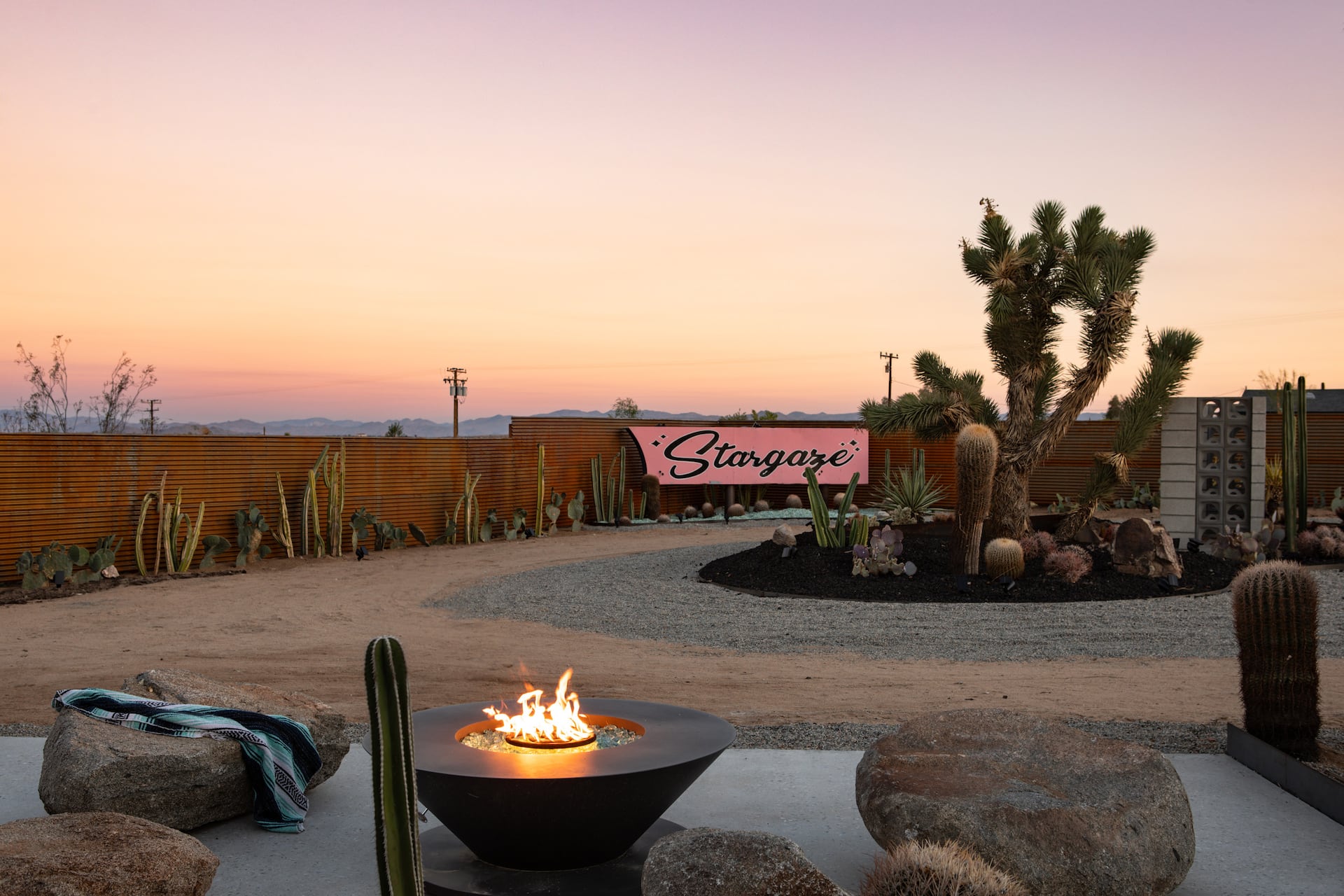
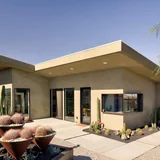
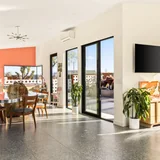
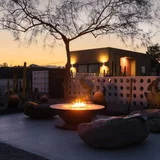
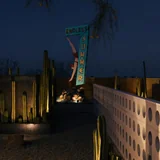
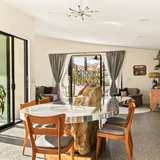
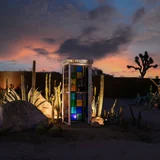
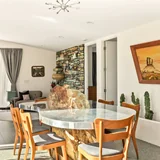
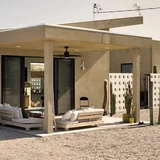
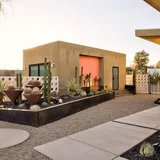
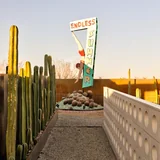
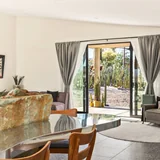
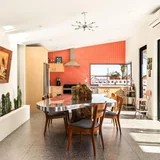
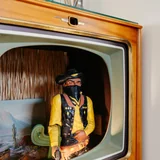
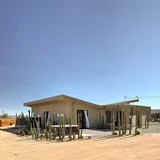
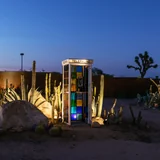
At the house, give the first hour to arriving properly. The lot is fully fenced and the details show themselves slowly: a stock-tank pool under a vintage painted "Endless Summer" metal sign, a stained-glass telephone booth, a dining table built around a natural boulder, white breeze-block walls on a low stucco house. Some of the metalwork around the property — the car turned into a bed, the fire pit — was fabricated by Emerick's Ironworks. Drop the bags, pour something cold, and get in the water.
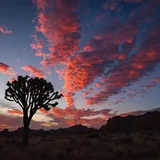
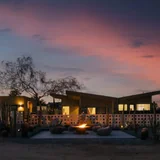
There is no schedule to keep on the first evening, and the house is set up to let you keep it that way. Quiet hours begin at 10pm and there are no parties allowed, which is what you want when the plan is to hear wind and the occasional coyote after dark. Coyotes are common across the region and tend to be most active around dusk and into the night, so an early bark or yip carrying across the flats is normal. They are not the only things moving after dark out here: black-tailed jackrabbits, with the oversized ears that shed their heat, and the small, nocturnal desert kit fox are both common on the flats, and most desert animals here keep to dawn, dusk, and the night, so a rustle beyond the fence is usually nothing more than the desert going about its evening. If you brought the dog, this is a good base — the house is dog-friendly, though cats can't come because of a household allergy. Let the light stretch out, watch the color rise over the yard, and let the drive fall off your shoulders.
Private hours at the house
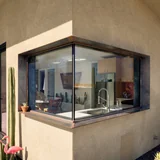
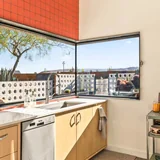
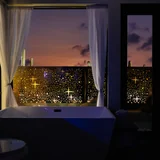
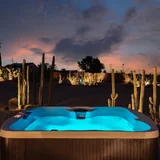
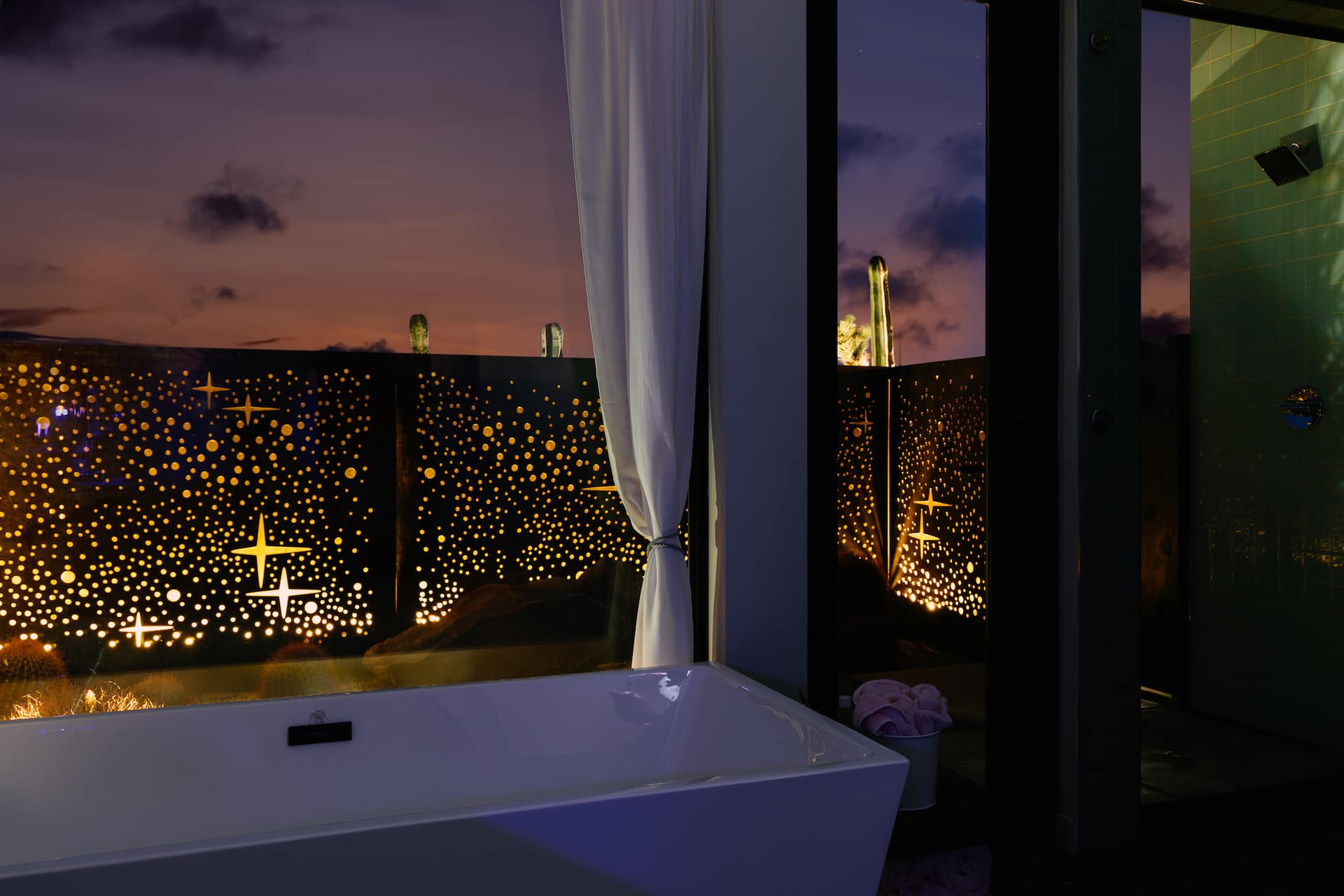
Most of a romantic weekend here happens without leaving the lot, and the house gives you plenty to fill the hours. The stock-tank pool is the daytime center of it, sitting under the painted sign with a star-perforated steel privacy screen set around the pool area. The hot tub runs year-round, which matters more than you would think — even in summer the nights cool off at this elevation, and in winter a hot tub under a cold clear sky is one of the best reasons to come. Inside, a freestanding soaking tub sits by a wide window that opens onto a private courtyard, so a long soak comes with a view of the desert rather than a tiled wall. You can read more about how those water features work across the seasons before you book.
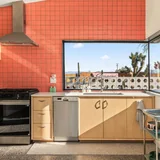
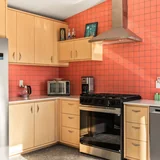
Cooking together is part of the fun and cheaper than eating out every meal. There is a full kitchen indoors and a BBQ grill outside, so a couple can do a slow breakfast in, a lunch by the pool, and a steak on the grill at sunset without ever getting in the car. Air conditioning and heating keep the house comfortable whichever season you pick, and there is wifi and free parking. The whole place is built for two people to lose track of time in, and the layout and the rest of the details back that up.
The property has picked up a 5.0 rating across 54 reviews and carries a Guest Favourite tag, and guests tend to notice the same things you will. As one review put it:
photo-worthy spots everywhere
Take that at face value. There is a lot to look at, and a lot of good places to sit with a coffee or a drink and not talk for a while.
Eating out and the drive home
One night in, one night out is a good rhythm for a weekend. When you go out, the Morongo Basin has more real places to eat than a town this size should, though hours run short and seasonal, so check each spot's own site or call ahead before you go — the hi-desert is full of places that close two or three days a week.
- La Copine. A New American kitchen in the Flamingo Heights stretch (its mailing city is Yucca Valley), with a seasonal menu. It serves lunch, Thursday to Sunday, 11am to 4pm, so plan it as a daytime date rather than an evening. Reservations are by text, up to four weeks out, and walk-ups are welcome. Hours change, so check before you go.
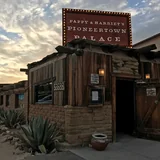
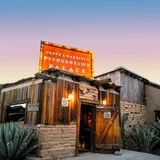
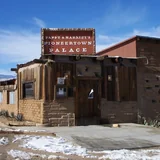
- Pappy & Harriet's Pioneertown Palace. The best-known night out in the area — a western BBQ and Tex-Mex roadhouse in Pioneertown that is also a live-music venue with a national reputation. Good for a couple who wants dinner and a band in one stop.
- Kitchen in the Desert. A small Caribbean and New American spot in Twentynine Palms known for its jerk chicken. It is a destination, so book ahead.
- The Restaurant at the 29 Palms Inn. A historic inn dating to 1928, sitting at the Oasis of Mara, with poolside dining and frequent live music. It closes on several days each week, so check the schedule.
If you want the full rundown on the best-loved kitchen in the area, there is a whole post on what lunch at La Copine is actually like, and another on making a night of Pappy & Harriet's. If you go out at night, the drive home is part of the evening. The roads out here are dark, so download your directions before dinner while you still have signal, keep an eye out for animals crossing at night, and slow down. When you turn onto the last stretch toward the house, cut the music and look up through the windshield — you will see the sky change the closer you get to the dark.
A slow morning
The second morning is the one to protect. Nobody is coming to clean, nobody is knocking, and the point of a weekend for two is that you get to waste a few hours on purpose. Start with coffee in the courtyard while the light is still low and the air is cool, then decide slowly whether you are cooking breakfast in or driving to town for it.
If you go into town, there are a handful of long-running places worth the short drive. Frontier Cafe in Yucca Valley pours coffee made with Joshua Tree Coffee beans and keeps a dog-friendly patio, which is useful if the dog came along. Crossroads Cafe in downtown Joshua Tree is a scratch-cooking diner near the west entrance and a longtime local favorite. JT Country Kitchen bills itself as the village's longest continuously operating restaurant, going back to 1977, and takes no reservations, so expect a wait on a weekend. If you would rather bring beans home, the Joshua Tree Coffee Company roasts small batches at its counter in town. On a Saturday, the Joshua Tree Certified Farmers' Market runs in the morning — roughly 8 to 1, though it is seasonal and weather-dependent, so confirm the current hours before you build a plan around it.
Whatever you choose, bring it back to the house if you can. A slow breakfast at the boulder dining table, then a swim before the day heats up, is a better use of a morning than rushing to a trailhead. The park will still be there in the afternoon, and it is quieter for couples in the late day anyway. If cooking together is more your speed, the kitchen here is set up for a real breakfast, not just coffee and a granola bar.
An easy walk into the park
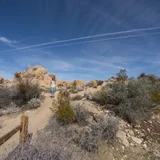
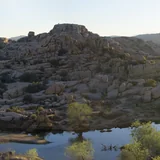
Neither of you needs to hike to enjoy the park, and a romantic weekend is no time to march up a peak, but one short walk together is worth building into the two days. The flattest and prettiest routes take under an hour. The Hidden Valley trail is an easy loop of about a mile that circles a rock-enclosed basin once rumored to have hidden cattle rustlers; it climbs only around a hundred feet and is best in the cool of the morning or the last hour before sunset. Barker Dam is another gentle loop, roughly a mile and a tenth, that passes piles of pale monzogranite boulders, a historic water tank, and a panel of old rock art, though you should check the current trail information with the park, since access and figures shift. If you want something shorter still, Cap Rock is a short loop of about four-tenths of a mile named for the flat boulder balanced on top of the formation, right off Park Boulevard. All of these are rough distances; the park service posts the official numbers, so check them before you count on a length.
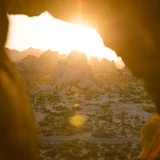
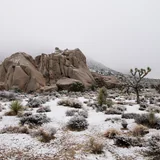
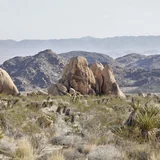
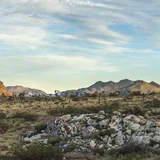
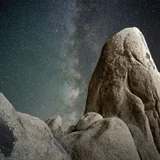
The boulders are the reason those walks photograph so well, and there is a real story in how they got there. The rock is monzogranite, a pale granite that cooled from molten magma while it was still buried miles underground more than a hundred million years ago. Down there it cracked into rectangular blocks along natural joints. In a wetter climate, groundwater seeped along the cracks and weathered the corners into soft clay, rounding the blocks the way water rounds the corners of an ice cube. When the climate turned dry, flash floods washed the loose material away and left the rounded boulders stacked where you see them now. A slow walk with a coffee is a good time to notice the shapes and know what you are looking at.
One thing to plan around if the dog came with you: pets are not allowed on the park's hiking trails, in the backcountry, or in the buildings, and off the trails they have to stay within a hundred feet of roads and parking areas, leashed on a lead no longer than six feet. So a walk inside the park is a leave-the-dog-at-the-house outing; for a hike with the dog you are better off on the public land around the basin, and it is worth confirming the current rules before you go. If you would rather line up a couple of the gentlest routes ahead of time, there is a rundown in the guide to the best walks in the park.
A sunset drive
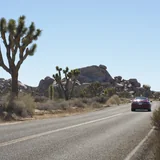
Late afternoon is the time to point the car at the park. The west entrance is about twenty-five minutes from the house, and the drive in is half the experience — the Joshua trees thicken, the boulder piles start to stack up, and the light goes gold across the monzogranite. The private-vehicle pass is around $30 for seven days, though park fees are revised from time to time, so check the current rate at the park before you go. The park is open 24 hours a day, all year, and when the entrance stations are unstaffed at night the gates stay open, so a sunset-and-after drive is easy to do.
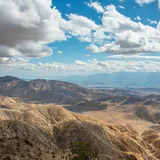
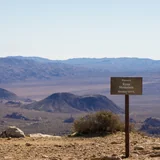
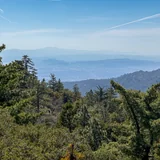
For the view, aim for Keys View. It is a drive-up overlook at roughly 5,185 feet with a short paved loop of about a quarter mile, and on a clear evening it looks out over the Coachella Valley, the San Andreas Fault, the Salton Sea, and the San Jacinto and San Gorgonio peaks. It is a wide-open place to watch the sun go down, and the colors here run pink, gold, amber, and violet as the light drops. Bring layers — it is a couple thousand feet higher than the house and the wind picks up as the temperature falls. Bring water too, since there is no water anywhere in the park's interior; the guidance is to carry your own, around a gallon per person on a full day out.
If you would rather not fight the park's timing, you do not have to leave the neighborhood to catch the light. There is a post on the sunset spots closest to the house for evenings when you want the color without the drive. Either way, plan the return for after dark on purpose. The stretch of road back toward Yucca Valley, with the headlights the only lights around, is a good slow end to the day.
A soak and a fire
Back at the house after a drive, the evening has a natural order to it: warm water, then a fire, then the sky. Start with the soaking tub if you want the quiet version — the freestanding tub sits by the wide window onto the private courtyard, so a soak at dusk comes with the desert going dark on the other side of the glass. There is a whole piece on how good that soak lands right as the light fades, and it holds up. If you want the outdoor version, the hot tub is a few steps away and runs year-round, which is the reason winter nights out here are underrated for couples.
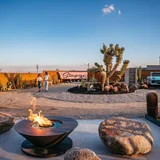
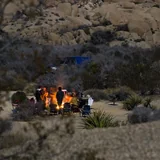
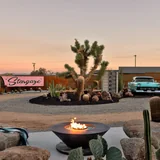
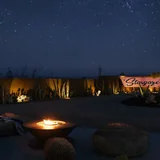
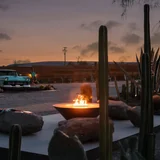
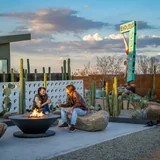
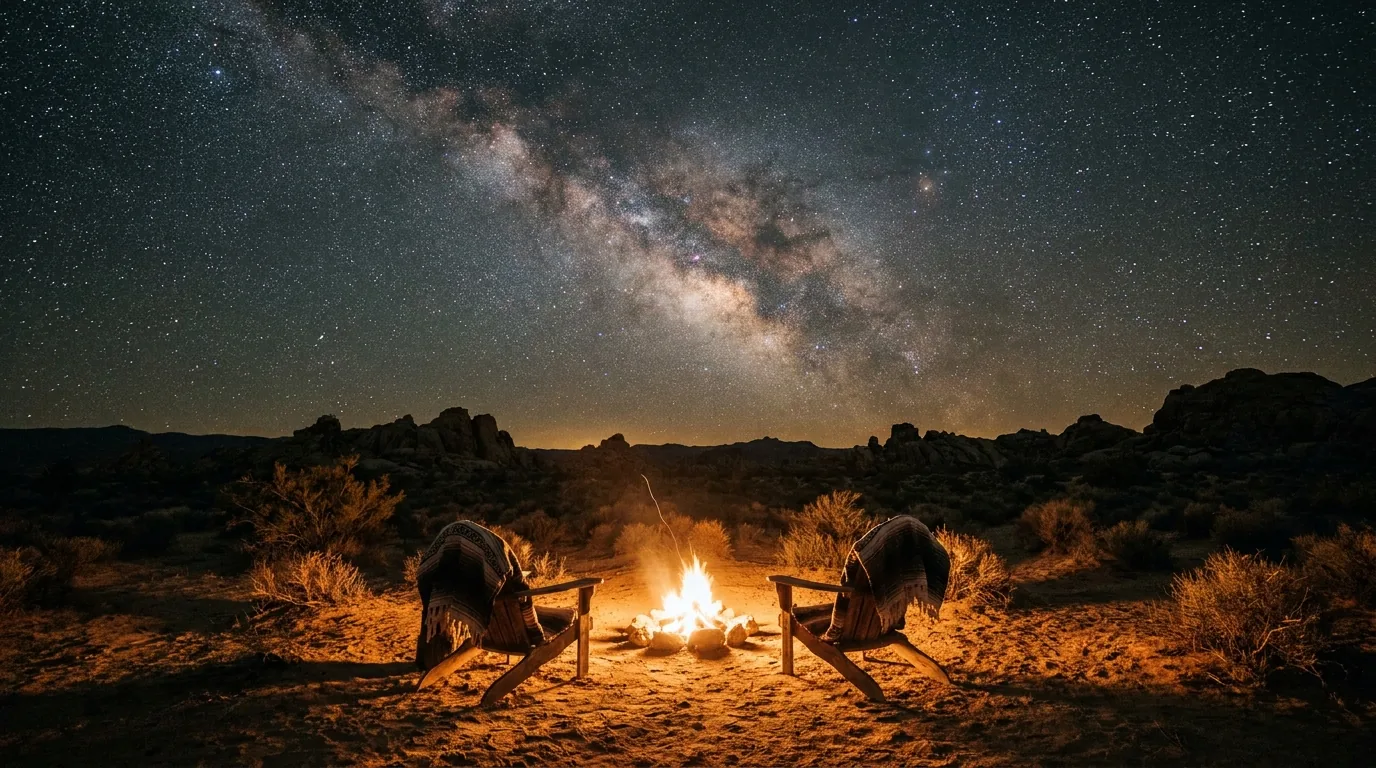
Then the fire. The fire pit is a gas one, ringed by natural boulders — it runs on gas, so there are no logs to haul and no ash to clean, and you can turn it on and off as you like. Pull two chairs up close, keep a blanket handy, and let it take the chill off while you finish a drink. On a summer night you may barely need it; on a winter one, with the temperature dropping toward freezing, it earns its keep. The fire pit and the stargazing area sit close together by design, so you can move straight from the warmth of the fire to lying back and looking up without going far. Keep an ear on the quiet hours from 10pm — sound carries a long way out here, and the neighbors value the same silence you drove out for.
Stargazing together
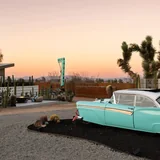
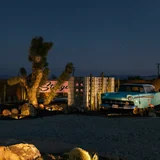
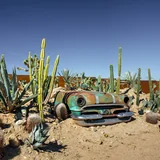
The car bed is the reason to stay up. It is a restored 1950s car, parked on the gravel, with a custom stargazing roof that can be pulled back so you can lie in it and see the whole sky. It is not going anywhere — it is a bed built into an old car body, and it stays put — and it points up, which is the whole idea. Give your eyes time; human night vision takes roughly 20 to 30 minutes in the dark to adjust, and one glance at a white phone screen resets it, so keep the lights off and use a dim red light if you need to see. The interior of the park runs to roughly Bortle Class 2 to 3 on the dark-sky scale, dark enough to show real structure in the Milky Way, though it varies with exactly where you stand and how much haze is in the air.
What you will see depends on the season, and half the fun is knowing what you are looking at. Winter evenings bring Orion with the Orion Nebula, Sirius blazing in Canis Major, and the Pleiades cluster riding in Taurus. Spring turns the sky over to Leo, bright Arcturus in Boötes, and the Big Dipper high overhead. Summer is the big one for the galaxy's core — the bright center of the Milky Way climbs in the south through Scorpius, marked by red Antares, and Sagittarius, whose "Teapot" points toward the galactic center, with the Summer Triangle of Vega, Deneb, and Altair straight up. Autumn brings the Andromeda Galaxy, the most distant thing you can catch with the naked eye, along with the Great Square of Pegasus and the W of Cassiopeia. The bright galactic core is only up from roughly late spring through early autumn, and its timing shifts through the season, so check a sky planner for your exact night rather than counting on it. For a deeper walk through where and when to look, there is a guide to the darkest skies in the area. The park rangers also run free night-sky programs on a seasonal schedule, if you want a telescope and someone to point it for you.
If one of you likes to shoot photos, the car bed doubles as a spot to set up a camera, and the starting settings are not hard to get right. A wide, fast lens — something around 14 to 24 millimeters at f/2.8 or wider — a fairly high ISO in the range of about 1600 to 6400, and single exposures of roughly 15 to 25 seconds on a fixed tripod will get you a first frame of the Milky Way. Treat those as starting points, not fixed numbers; the values that work depend on your lens, your camera, and how dark the night is. There is a rough rule for how long you can leave the shutter open before the stars begin to trail: divide 500 by your focal length in millimeters, so a 20mm lens gives you about 25 seconds, and some photographers use a stricter version for sharper points of light. Bright planets — Venus, Jupiter, Saturn, Mars — can also turn up at a dark site with no gear at all, but which ones are up on a given night changes through the year, so check a current sky guide for your dates rather than counting on one. There is more on shooting the desert after dark in the post on photographing the park.
The seasons for a weekend away
There is no single best time to come, and the season you choose changes the character of the trip more than anything else. It is worth matching it to what you two actually want out of a weekend.
Spring, roughly March through May, is the mildest stretch, with daytime temperatures often around 65 to 80. It is also the busiest, and it is wildflower season — though blooms depend heavily on winter rain and only show in a good year, so check the park's current wildflower report before you promise yourselves a display. Fall, around October and November, is the other sweet spot: warm days, cool nights, and thinner crowds than spring. The park's annual Night Sky Festival usually lands in October over a few nights, but it is ticketed, sells out, and its dates change every year, so look it up on the park's event page if you want to build a weekend around it.
Winter, December through February, is cold at night — often in the 30s and 40s, sometimes down to freezing — which is exactly why the hot tub and the fire pit shine then, and the crowds are light. Snow is rare and does not usually stick, so don't plan on it. Summer, June through August, is the quietest season because daytime highs regularly top 100, but the nights stay warm, often in the 60s and 70s, and this is peak Milky Way season overhead. For a couple, a summer trip means the pool by day and the car bed at night, and the park mostly to yourselves in the early morning. All of these weather figures are averages — individual days run hotter or colder — so check the forecast for your dates.
Making it a special occasion
If the weekend is for an anniversary, a birthday, a honeymoon, or a quiet proposal, the house does a lot of the work, and the rest is small planning. Book early — a 5.0 rating across 54 reviews and a Guest Favourite tag mean the good dates go, especially spring and fall weekends. Bring what you want to toast with, but remember there is no glass allowed near the pool or hot tub, so pour the champagne into cans or plastic before you carry it out to the water. If you are traveling with the dog, it is welcome; cats are the one exception, because of a household allergy.
Keep the occasion simple and real. You do not need a packed itinerary — a single dinner out, one sunset drive, a long morning, and a night under the stars is more than enough for two days. The details that make it feel like an occasion are already here: the soak at dusk, the fire, the car bed with its roof pulled back. One guest summed the place up in two words that are hard to improve on — "curated to perfection" — and that is the feeling to lean into rather than trying to schedule every hour.
When you are ready, the next step is short. Look at the calendar and check your dates and reserve the house, then read through the couples' weekend page to line up the soak, the fire, and the stargazing in the order that suits you. Reserve first, since the dates are the part that runs out; everything else you can decide from a chair by the pool once you're here.